

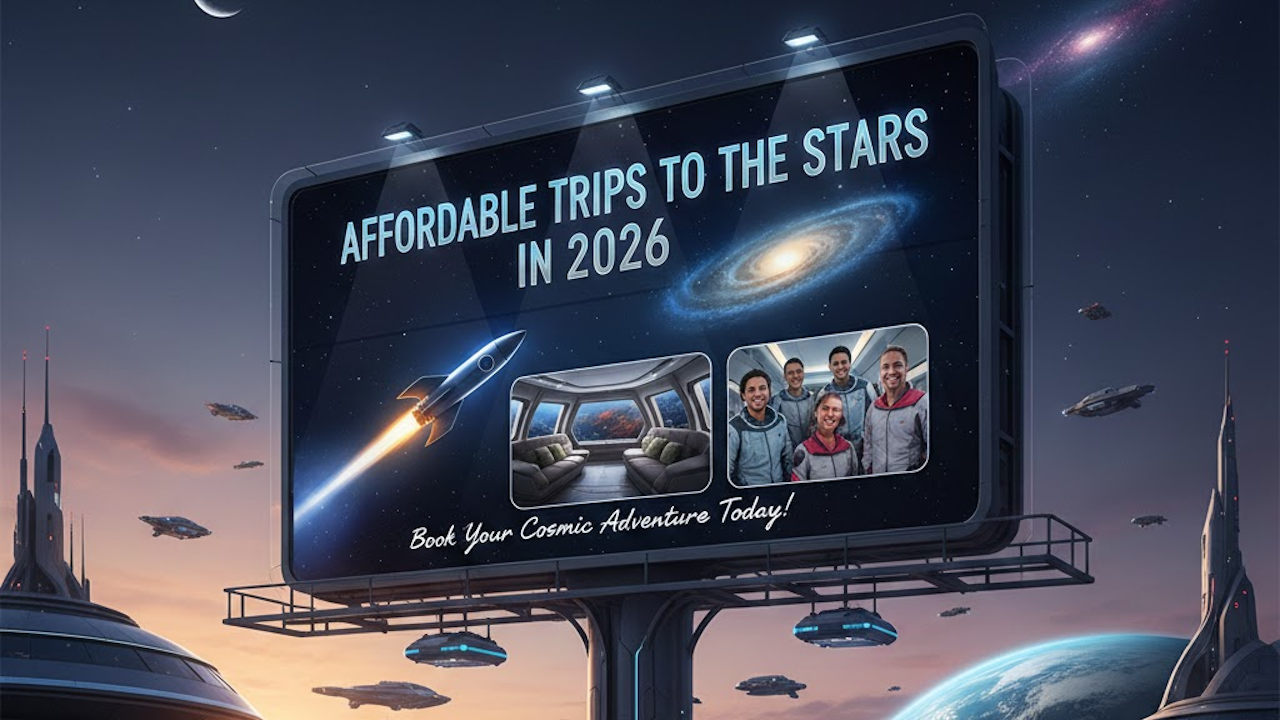
Space tourism has evolved from a distant dream reserved for billionaires into a budding industry with options that, while still expensive, are becoming more accessible in 2026. Prices have dropped significantly since the early 2000s when Dennis Tito paid around 20 million dollars for an orbital trip. Today, suborbital flights start in the low hundreds of thousands of dollars, near space balloon experiences are available for as little as 50,000 dollars, and orbital journeys, though costing tens of millions, are seeing increased activity through commercial operators. This article explores the landscape of space tourism in 2026, highlighting affordable entry points, key players, preparation requirements, and the path toward even greater accessibility.
The year 2026 marks a transitional period. Reusable rocket technology from companies like SpaceX, Blue Origin, and Virgin Galactic continues to drive down costs. Suborbital flights offer a few minutes of weightlessness, while stratospheric balloons provide extended views of Earth curvature without reaching the official boundary of space. Orbital missions deliver multi day experiences in microgravity. Although true affordability for average earners remains a future goal, these experiences are now within reach for high net worth individuals, successful entrepreneurs, and even some motivated savers through financing or group charters.
A Brief History of Space Tourism
Space tourism began in earnest in 2001 with Dennis Tito’s historic flight to the International Space Station aboard a Russian Soyuz spacecraft. That journey set a high financial bar. Subsequent private astronauts followed, but the market remained niche until the 2020s when private companies entered the fray. Virgin Galactic, founded by Richard Branson, pioneered suborbital flights with SpaceShipTwo, offering brief trips to the edge of space. Blue Origin, led by Jeff Bezos, developed the New Shepard rocket for vertical launches. SpaceX, under Elon Musk, revolutionized orbital access with the Crew Dragon capsule, enabling longer stays.
By the mid 2020s, hundreds of passengers had flown. Virgin Galactic has carried dozens, and Axiom Space has facilitated over 20 private missions to the ISS using SpaceX hardware. Prices have trended downward due to reusability and competition, though economic factors and development pauses have caused fluctuations. In 2026, the industry generates billions in revenue, with suborbital flights dominating volume and orbital missions providing premium experiences.
Near Space Balloon Experiences: The Most Accessible Option
For those seeking a taste of space without the intensity of rocket flight, stratospheric balloon rides represent the most affordable entry point in 2026. These journeys reach altitudes around 25 to 35 kilometers, offering stunning views of Earth’s curvature and the blackness of space above, all while maintaining one g of gravity. Flights last six to eight hours or more, with luxurious capsules featuring dining, internet, and observation decks.
World View offers seats for about 50,000 dollars, with departures from various global spaceports near landmarks like the Grand Canyon or Great Barrier Reef. Space Perspective and Zephalto provide similar experiences priced around 125,000 to 195,000 dollars. These are not technically space flights since they do not cross the Karman line at 100 kilometers, but they deliver transformative perspectives and are ideal for families or first timers. Many operators paused commercial operations earlier but are ramping up with deposits as low as 500 dollars to secure spots.
These balloon trips require minimal training, often just a day or two of briefings. Medical screenings are straightforward for healthy adults. They appeal to a broader demographic because of the lower cost and gentler profile.
Suborbital Flights: Minutes of Weightlessness
Suborbital flights take passengers just beyond the Karman line for a few minutes of microgravity. In 2026, Virgin Galactic leads with tickets at 750,000 dollars per seat. The company resumed sales after a pause, with over 650 reservations from passengers in 60 countries. Its Delta class spaceplanes, launched from a carrier aircraft, provide about 90 minutes total flight time, including four minutes of weightlessness. New vehicles increase capacity to six passengers, with commercial operations targeted for late 2026 or early 2027.
Blue Origin’s New Shepard offers vertical launches from West Texas. Flights last about 11 minutes with three to four minutes of weightlessness. Recent prices ranged from 150,000 to 450,000 dollars, though the company paused tourist flights in early 2026 to focus on lunar programs. Resumption could bring renewed availability. Deep Blue Aerospace in China is preparing suborbital options around 210,000 dollars.
Training for suborbital trips typically involves a few days, including medical checks and simulations. Passengers experience high g forces during ascent and descent but report the views and floating sensation as life changing. These flights suit time constrained travelers seeking the official space experience.
Orbital Adventures: Days in Space
Orbital tourism provides the full experience of living in space. Axiom Space arranges missions to the ISS via SpaceX Crew Dragon, with seats around 55 million dollars for 10 to 14 day trips. This includes extensive training, often six months or more, covering spacecraft operations, emergency procedures, and scientific experiments. Passengers conduct research or simply enjoy the view.
SpaceX also supports free flying orbital missions, with whole capsule charters costing around 200 million dollars for four to six passengers over three to five days. Vast Space and other commercial station developers are preparing private habitats for future flights. These longer durations allow for deeper immersion but demand significant commitment and physical fitness.
Lunar options remain emerging. Partnerships like ispace with SpaceX offer cargo slots, hinting at future crewed lunar flybys or landings that could become tourist accessible in the 2030s.
Costs, Booking, and Preparation
In 2026, expect the following price ranges:
- Stratospheric balloon: 50,000 to 195,000 dollars
- Suborbital rocket: 150,000 to 750,000 dollars
- Orbital ISS or free flight: 35 million to 65 million dollars or more for charters
Booking usually starts with operator websites or brokers like Space Adventures. Deposits secure waitlist spots, with full payment closer to flight date. Financing options and corporate incentives are increasingly available for suborbital and balloon tiers.
Preparation varies. Balloon rides need basic health clearance. Suborbital requires short training. Orbital demands rigorous fitness, medical exams, and simulations. Most operators accommodate a wide age range, with passengers in their 70s and 80s having flown successfully.
Additional expenses include travel to launch sites, accommodations, and insurance. The total outlay for a suborbital trip might reach one million dollars when factoring in all costs, but the memories justify it for many.
Challenges Facing the Industry
Safety remains paramount. While reusability improves reliability, each flight carries inherent risks. Regulatory oversight by bodies like the FAA ensures standards, but delays from testing and investigations can occur. Environmental concerns, such as emissions from rockets, prompt development of greener technologies.
Accessibility is improving but limited. Suborbital flights are the gateway for broader participation, with projections of prices dropping below 50,000 dollars by the early 2030s as flight rates increase and competition grows. SpaceX’s Starship aims for dramatic cost reductions, potentially enabling orbital trips in the single digit millions and eventual Mars journeys.
Diversity in participants is growing, with more international travelers and a shift beyond ultra wealthy clients toward high achievers and incentive groups.
The Road to Greater Affordability
Experts anticipate steady progress. Reusable vehicles spread fixed costs across more flights. Mass manufacturing and technological advances in propulsion and life support will accelerate this. By the 2030s, suborbital trips could resemble luxury adventure travel today, while orbital stays become feasible for more through rotating habitats with artificial gravity.
Companies like GRU Space even accept reservations for future lunar hotels in the 250,000 to one million dollar range, signaling optimism. Zero gravity airplane flights, such as those offered by Zero GravityX starting under 5,000 dollars, provide precursor experiences.
Government partnerships, such as NASA’s commercial crew programs, indirectly support tourism by maturing technologies. Public private collaboration will be key to making the stars reachable for humanity at large.
Conclusion
In 2026, affordable trips to the stars are no longer science fiction for the determined traveler. From serene balloon voyages offering panoramic Earth views to exhilarating suborbital hops and immersive orbital sojourns, options cater to different budgets and aspirations. While prices remain high by everyday standards, the trajectory is clear: innovation is democratizing access to space. Whether you book a near space adventure this year or plan for orbital flights in the coming decade, the experience promises profound perspective on our planet and place in the cosmos. The stars are calling, and more people than ever can answer. As technology advances, the era of widespread space tourism draws nearer, turning what was once exclusive into an attainable human adventure.