

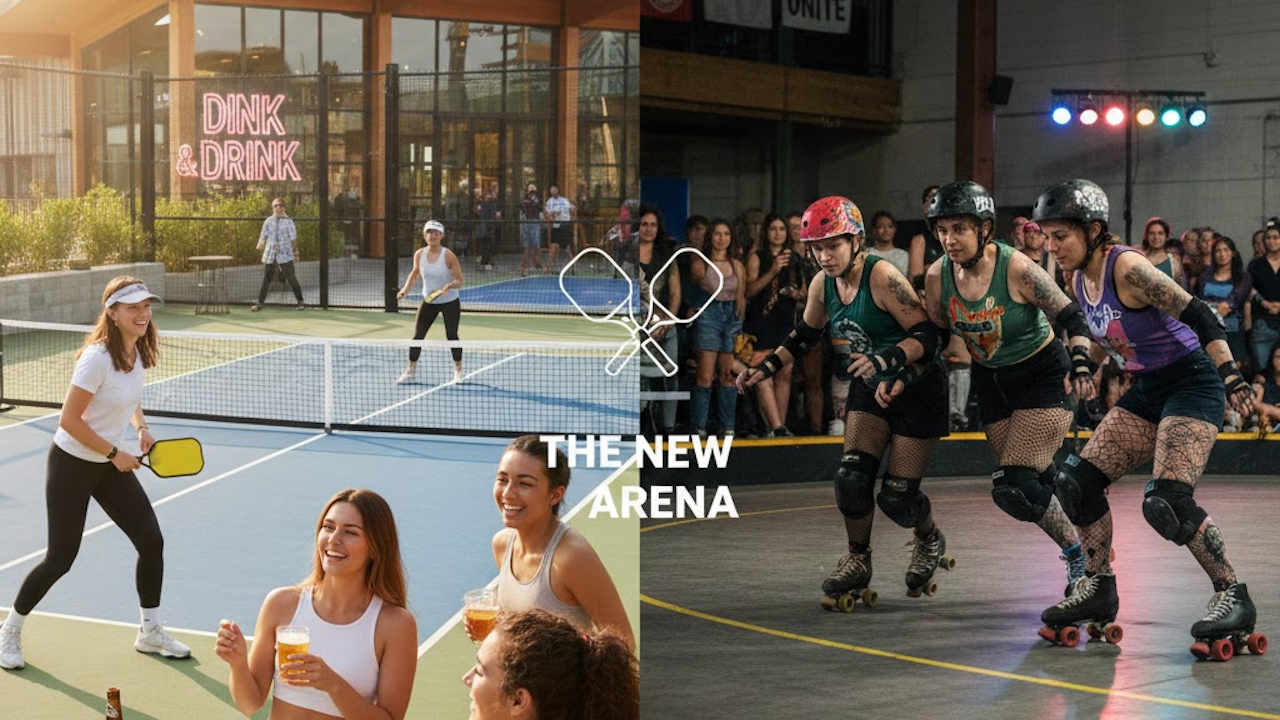
In recent years, two seemingly unrelated sports have surged in popularity across the United States and beyond. Pickleball, a paddle sport blending elements of tennis, badminton, and ping pong, has exploded from a niche activity to one of the fastest growing sports in America. Roller derby, a full contact sport on skates with a rich history of spectacle and community, has rebounded after a pandemic induced pause, drawing new participants eager for its empowering and inclusive vibe. Both sports tap into deep human needs for accessible fun, social connection, physical activity, and community in an era when many people seek alternatives to traditional fitness routines or isolated screen time.
Pickleball stands out as a clear leader in participation numbers. According to reports from the Sports and Fitness Industry Association, participation reached around 24.3 million Americans in recent years, marking a staggering increase of over 170 percent in just a few years and continuing a multi year streak as the fastest growing sport. This growth spans all age groups, with notable increases among younger players including Gen Z and millennials, as well as strong appeal to older adults.
The reasons for pickleball’s resurgence are practical and appealing. The sport has a remarkably low barrier to entry. Players need only a paddle, a plastic ball, and a small court, often converted from existing tennis facilities. Rules are straightforward, allowing beginners to start rallying almost immediately while offering enough depth for advanced play that keeps enthusiasts engaged for years. The smaller court size reduces physical demands compared to tennis, making it gentler on joints yet still providing solid cardiovascular benefits, improved balance, and coordination.
Social interaction drives much of the enthusiasm. Pickleball is frequently played in doubles format, encouraging conversation, laughter, and teamwork. This communal aspect proved especially valuable during and after the pandemic, when people craved safe outdoor or small group activities. Families play together across generations, friends form regular meetups, and local clubs build tight knit communities. Many players cite the social element as the primary reason they return to the courts week after week.
Infrastructure has kept pace with demand. Thousands of new courts have been built nationwide, with dedicated facilities expanding rapidly. This availability lowers costs and increases accessibility in urban, suburban, and even rural areas. Professional leagues such as the PPA Tour and Major League Pickleball have professionalized the sport, boosting visibility through televised events, sponsorships, and celebrity involvement. Franchise valuations have climbed into the millions, and events draw record attendance and viewership.
Health benefits add another layer. Studies show pickleball delivers meaningful cardio workouts while being less taxing than higher impact sports. It supports mental well being through social bonds and a sense of accomplishment. The sport appeals to those seeking sustainable fitness rather than punishing gym sessions. Its adaptability suits various fitness levels, from casual players to competitive athletes.
Cultural shifts have amplified pickleball’s rise. In a time when wellness trends emphasize enjoyment over intensity, pickleball fits perfectly. Celebrity endorsements, social media highlights, and even international growth, including in places like South Korea influenced by pop culture figures, have broadened its reach. Economic factors play a role too, as it remains more affordable than many alternatives amid rising costs of other recreational activities.
The sport’s evolution reflects broader societal changes. It bridges generational gaps, promotes gender balanced participation, and creates spaces for multigenerational bonding. Professionalization has brought legitimacy, attracting investors and top athletes while maintaining grassroots appeal. With projections for continued growth and even Olympic consideration in future years, pickleball shows no signs of slowing.
Roller derby follows a different but complementary path to revival. Originating in the 1930s as an endurance spectacle, the sport evolved through periods of popularity and decline before a modern renaissance in the early 2000s. The contemporary version emphasizes flat track play, skater owned leagues, and a strong DIY ethos, particularly through organizations like the Women’s Flat Track Derby Association.
The pandemic disrupted many leagues with hiatuses, loss of venues, and safety concerns, but the post lockdown period has seen a strong rebound. Leagues across the country, from Charlottesville to Portland, Corvallis, and smaller towns, report renewed interest, new skaters, and thriving seasons. In places like British Columbia and Quebec, new teams and travel squads have formed, signaling regional momentum.
Several factors explain roller derby’s comeback. The sport offers empowerment and confidence building in a uniquely inclusive environment. It welcomes participants of diverse body types, genders, and backgrounds, creating spaces where traditional athletic norms are challenged. Skaters often describe it as transformative, teaching resilience through falls, strategy, and teamwork while fostering deep community bonds.
Nostalgia and cultural resonance play roles as well. Roller skating evokes 1980s and 1990s vibes that align with current retro trends in fashion, music, and entertainment. Films, documentaries, and media coverage, including recent releases highlighting the sport, have reintroduced it to new audiences. The punk inspired, alternative culture of derby appeals to those seeking non mainstream outlets for self expression and physicality.
Accessibility has improved with flat tracks that are easier and cheaper to set up than historical banked versions. Leagues operate on volunteer and community driven models, lowering financial barriers. Practices and bouts build fitness through skating, agility, and contact, providing both exercise and social outlets. Many participants highlight the joy of learning skills, building friendships, and participating in an empowering subculture.
Both sports thrive on community in an increasingly digital world. Pickleball offers low impact, intergenerational fun with rapid skill acquisition. Roller derby delivers high energy, contact driven competition with strong identity and support networks. They address common desires for movement, belonging, and challenge without requiring elite athletic backgrounds or expensive equipment.
Economic and societal trends support their growth. Post pandemic emphasis on outdoor and small group activities, rising interest in inclusive sports, and the search for enjoyable wellness options create fertile ground. Infrastructure investments for pickleball and grassroots organizing for derby demonstrate adaptability and demand driven expansion.
Challenges remain. Pickleball faces court shortages in high demand areas despite rapid building. Roller derby deals with venue access and sustaining volunteer energy. Yet the enthusiasm of participants suggests resilience. Professional structures in pickleball and dedicated leagues in derby provide pathways for sustained engagement.
The resurgence of these sports reveals much about current priorities. People seek activities that combine physical health with mental and social rewards. They value inclusivity, accessibility, and fun over rigid hierarchies or high costs. Pickleball and roller derby exemplify how sports can evolve to meet these needs, drawing millions back to active lifestyles.
As participation numbers climb and communities expand, both sports illustrate the power of simple ideas executed with heart. Pickleball brings paddles and quick rallies to parks and clubs nationwide. Roller derby fills rinks with the sound of skates and cheers from supportive crowds. Their return is not just a trend but a reflection of enduring human desires for play, connection, and vitality. In uncertain times, these activities offer reliable sources of joy and camaraderie that show every sign of continuing their upward trajectories.