

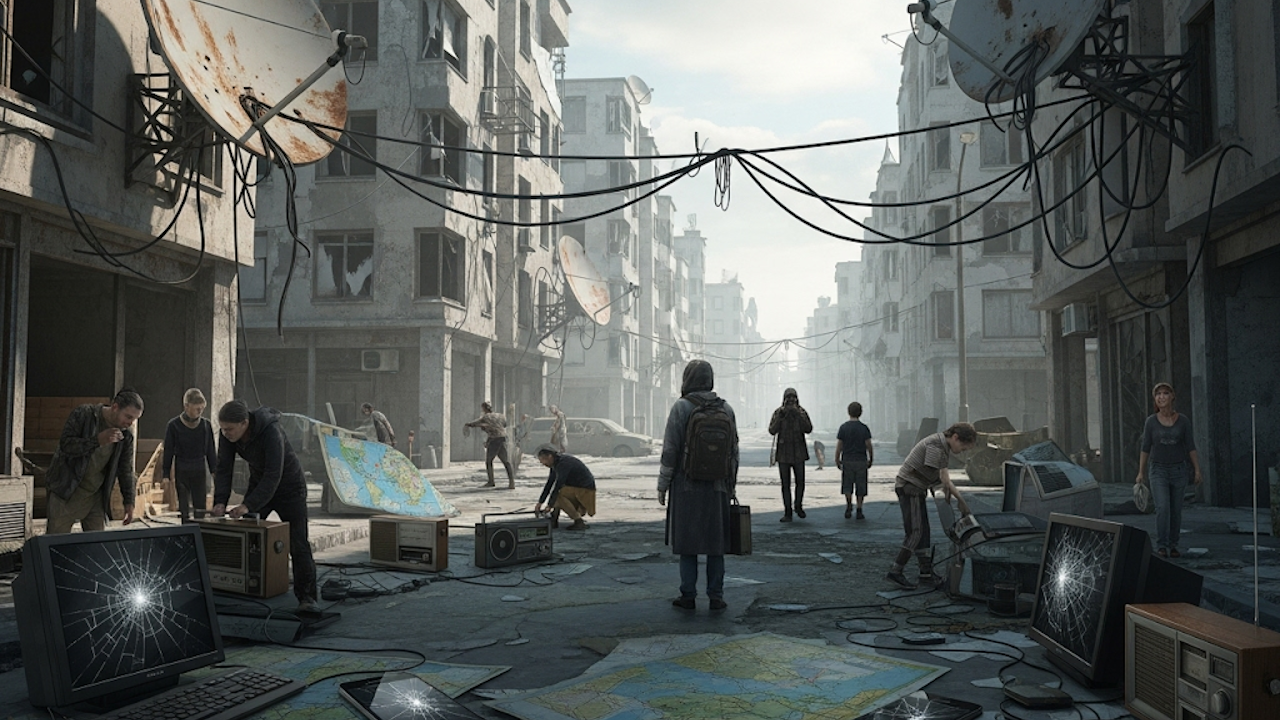
The internet has become the backbone of modern society, connecting billions of people, powering economies, and shaping how we live, work, and interact. A complete global shutdown of the internet would represent one of the most catastrophic events in human history, rivaling major wars or natural disasters in its scope and consequences. While partial outages have occurred in countries during political unrest or technical failures, a total worldwide collapse would be unprecedented. This article explores the immediate, short-term, and long-term ramifications across various sectors of society.
The Nature of a Global Internet Shutdown
First, it is important to define what such an event might entail. The internet is a vast network of networks, relying on undersea cables, satellites, data centers, and countless routers and servers. A shutdown could result from a massive cyberattack, a solar flare disrupting global communications, coordinated physical sabotage, or even an extreme geopolitical conflict. In this scenario, we assume a sudden and complete halt: no websites load, no emails send, no video streams play, and mobile data services fail alongside Wi-Fi networks.
The transition would not be instantaneous everywhere. Some isolated systems with local networks might continue functioning briefly, but the loss of global connectivity would cascade rapidly. People would first notice it through failed app refreshes and unreachable servers. Panic would set in within hours as the realization spread that this was not a temporary glitch.
Immediate Disruption to Communication and Information Flow
In the first minutes and hours, communication would grind to a halt. Social media platforms like Facebook, X, Instagram, and TikTok would become inaccessible, severing the primary channels through which people share news and connect with friends and family. Email services would stop working, affecting both personal and professional correspondence. Messaging apps such as WhatsApp, Signal, and iMessage would fail for users relying on data connections.
Traditional phone calls via landlines and basic cellular voice services might persist initially, but networks would quickly become overwhelmed as people attempted to reach loved ones. Radio and television broadcasts would gain renewed importance, but without internet coordination, news dissemination would slow dramatically. Journalists could not upload reports or verify facts in real time, leading to widespread uncertainty and rumor-mongering.
Families separated by distance would face anxiety. Parents unable to contact children at school or adults away on business would feel immediate distress. In urban areas, people might gather in public spaces to share what little information they had, reminiscent of pre-digital eras.
Economic Impacts: Markets, Commerce, and Finance
The global economy depends heavily on the internet. Stock exchanges around the world would face immediate paralysis. Trading platforms rely on real-time data feeds, and without them, markets would likely suspend operations to prevent chaos. Trillions of dollars in value could evaporate as investors lost confidence.
E-commerce giants such as Amazon, Alibaba, and eBay would shut down, halting online shopping. Consumers would turn to physical stores, causing massive runs on essential goods like food, water, medicine, and fuel. Supply chains, coordinated through internet-based logistics systems, would break down. Ships at sea might continue on predetermined routes, but rerouting or tracking would become impossible, leading to delays and shortages.
Banking systems would suffer enormously. Online banking, ATMs, and digital payments would fail. While some banks maintain offline backups, the inability to process transactions across institutions would freeze accounts and loans. Credit cards might not work if verification servers were down. Cash would become king again, but with limited access to funds, bartering and community sharing could emerge in some areas.
Industries like software development, digital marketing, and remote services would halt abruptly. Millions of workers employed in call centers, data entry, or cloud-based roles would be idled. The ripple effects would push unemployment rates skyward within days.
Effects on Transportation and Critical Infrastructure
Modern transportation systems are deeply intertwined with the internet. Air traffic control relies on digital networks for flight planning, weather updates, and communication. While basic radar and radio might allow some operations to continue, new flights would be grounded to avoid risks. Airports would become overcrowded with stranded passengers.
GPS navigation in cars, trucks, and ships would fail, forcing reliance on paper maps and compasses. Delivery services such as FedEx and UPS would struggle to maintain schedules, exacerbating supply shortages. Public transit systems using automated scheduling might experience delays or cancellations.
Power grids, while often having robust offline controls, could face challenges in coordination. Smart grids that balance loads via internet connections might revert to manual operations, increasing the risk of blackouts in some regions. Water treatment plants and other utilities dependent on remote monitoring would require on-site staff to maintain operations, stretching human resources thin.
Healthcare and Public Safety Challenges
Hospitals and medical facilities would encounter severe difficulties. Electronic health records would become inaccessible, forcing doctors to rely on paper charts or memory. Telemedicine appointments would end, isolating patients in remote areas. Medical supply chains, tracked digitally, would falter, leading to shortages of drugs and equipment.
Emergency services like 911 in the United States would still function through phone lines, but dispatch systems might lose digital mapping and real-time updates. Crime rates could rise in the initial confusion as law enforcement coordination weakened. Without internet alerts, Amber Alerts and disaster warnings would depend on older broadcast methods, reducing their reach and speed.
Mental health would also suffer. People accustomed to constant connectivity might experience heightened anxiety, depression, or withdrawal symptoms from the sudden loss of online communities and information sources.
Daily Life, Education, and Social Structures
Routine activities would transform overnight. Remote work would cease, compelling employees to either commute or stay home without productivity tools. Schools and universities would close or revert to in-person-only instruction without online resources, disrupting learning for millions. Students could not access digital textbooks or submit assignments electronically.
Entertainment industries would collapse initially. Streaming services like Netflix, YouTube, and Spotify would stop, pushing people toward physical media, books, and live gatherings. Board games, sports, and community events might see a resurgence as individuals sought alternative ways to pass the time.
Socially, the shutdown could foster both division and unity. In the absence of online echo chambers, people might engage more in face-to-face discussions, potentially reducing polarization in some cases. However, misinformation spread through word of mouth could fuel conflicts or unfounded fears. Rural communities with less dependence on digital tools might adapt faster than densely populated cities.
Government Response and National Security
Governments would declare states of emergency. Militaries might activate contingency plans, using secure offline networks where available. International diplomacy would slow without instant communication channels, increasing the risk of misunderstandings between nations.
Cybersecurity agencies would investigate the cause, but without the internet, their tools would be limited. Authoritarian regimes might use the chaos to consolidate power through stricter controls on information. Democratic societies would face pressure to restore services quickly while maintaining civil liberties.
Over time, nations with strong analog infrastructures or stockpiled resources would fare better. Countries like North Korea, already operating with limited internet access, might experience minimal relative disruption compared to highly connected nations such as South Korea or the Netherlands.
Long-Term Consequences and Adaptation
A prolonged shutdown lasting weeks or months would reshape society profoundly. Economies would contract sharply, potentially triggering a global recession deeper than any in recent history. Innovation in non-digital sectors might accelerate as necessity drove invention.
People would rediscover skills from earlier generations: handwriting letters, reading physical maps, and maintaining face-to-face relationships. Libraries and community centers could become hubs of activity. Scientific research would slow without collaborative online platforms, though core experiments in labs could continue.
Environmental effects might be mixed. Reduced digital activity could lower energy consumption in data centers, slightly decreasing carbon emissions in the short term. However, increased reliance on physical goods and travel could offset those gains.
Eventually, efforts to rebuild the internet would begin. Governments and companies would prioritize restoring key infrastructure, perhaps starting with regional networks before linking globally. This process could take months or years, depending on the cause of the shutdown. Lessons learned might lead to a more resilient, decentralized internet architecture in the future.
Potential Positive Outcomes Amid the Chaos
While overwhelmingly negative, a global internet shutdown could yield unexpected benefits. Reduced screen time might improve mental health and sleep patterns for many. Stronger local communities could form as neighbors relied on each other more. Environmental awareness might rise if industrial activities slowed.
Creativity could flourish in analog forms, with artists, writers, and musicians producing works unhindered by digital distractions. Political engagement might shift toward local issues and in-person activism rather than viral campaigns.
Conclusion
A complete shutdown of the internet would plunge the world into uncertainty, exposing the fragility of our hyper-connected civilization. From economic turmoil to personal isolation, the impacts would touch every aspect of life. Yet humanity has proven adaptable throughout history. In the aftermath, societies might emerge with a renewed appreciation for both technology and the simple connections that sustain us. Preparing for such scenarios through diversified communication methods and resilient systems is not just prudent but essential in an increasingly uncertain world. The internet has transformed humanity, but its absence would remind us of our underlying strength and ingenuity.