

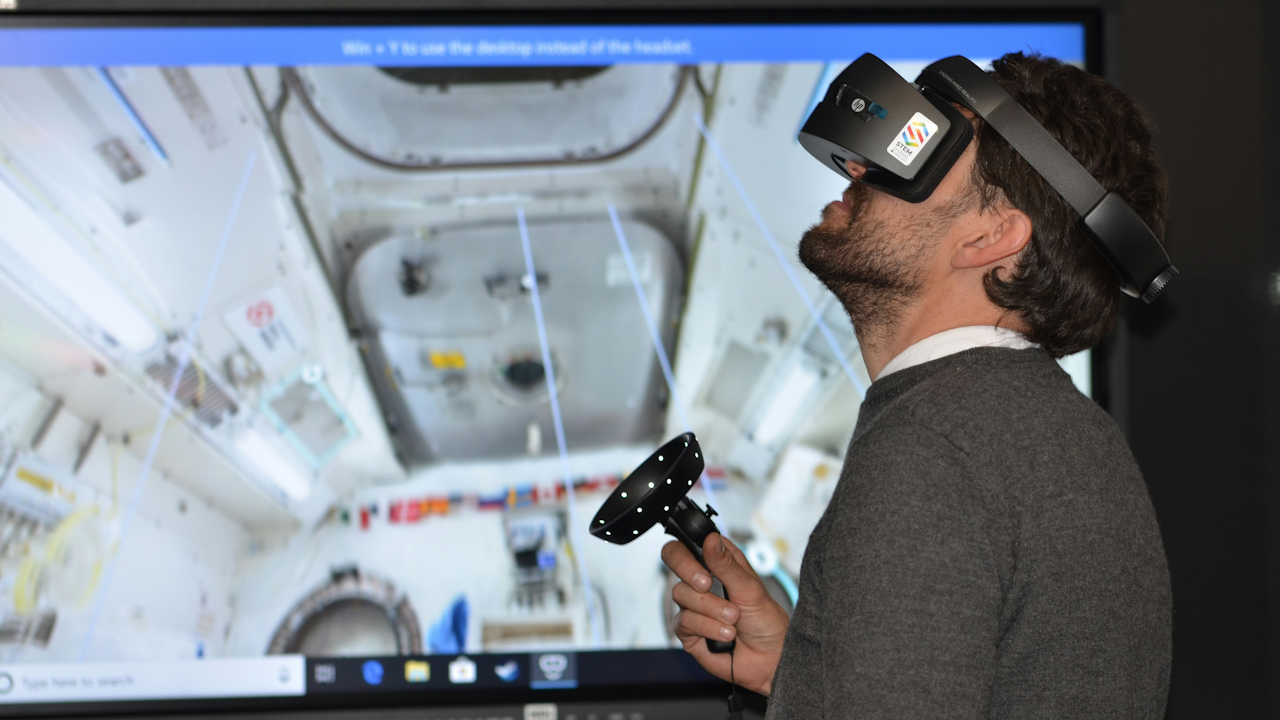
Virtual reality has stepped beyond the realm of video games and training simulations to redefine how stories unfold. VR movies place viewers inside the narrative rather than in front of a screen. Audiences no longer watch events from a distance. They inhabit the world of the story, turning passive observation into active presence. This shift marks a profound evolution in storytelling, one that promises deeper emotional connections, personalized experiences, and entirely new creative possibilities. As hardware improves and creators experiment with the medium, VR cinema stands poised to become the dominant form of immersive entertainment in the coming decade.
The roots of VR storytelling trace back to early experiments in the 2010s. Filmmakers and technologists began exploring 360-degree video and computer-generated environments that allowed viewers to look around freely. One landmark project arrived in 2017 with Alejandro G. Inarritu’s Carne y Arena. This virtual reality installation transported participants into the harrowing journey of migrants crossing the United States-Mexican border. Viewers stood barefoot in a cold, sandy room before donning a headset. Inside the experience, they encountered border patrol agents, heard gunshots, and felt the isolation and fear of the desert crossing. Inarritu collaborated with cinematographer Emmanuel Lubezki and ILMxLAB to blend live-action performance capture with VR technology. The piece earned a special Academy Award for its exceptional storytelling and became the first VR project featured in the official selection at the Cannes Film Festival. It demonstrated that VR could evoke empathy in ways traditional film could not, forcing viewers to confront real human experiences from within rather than at arm’s length.
Other early efforts came from studios like Oculus Story Studio, which produced short animated pieces such as Henry and Pearl. These works tested the boundaries of directing attention in a medium where the audience controls the gaze. Traditional filmmaking techniques like close-ups and cuts had to adapt. Creators learned that guiding viewers required subtle cues such as sound design, lighting shifts, and character movement rather than forced camera angles. The Invisible Hours, a murder mystery set in a Victorian mansion, allowed users to follow different characters through branching paths in real time. Such projects laid the groundwork by showing that VR narratives could combine linear storytelling with interactive exploration.
Today, in 2026, VR movies have moved from experimental art installations into broader entertainment platforms. Major technology companies and film festivals have embraced the format. Apple has previewed new immersive films and episodes for the Vision Pro headset, including titles from Audi, the BBC, CANAL+, CNN, HYBE, MotoGP, and Red Bull. Experiences like Backcountry Skiing and Big-Wave Surfing deliver high-resolution, spatial audio adventures that place viewers on snowy slopes or towering waves. CNN’s Journey to Antarctica to Find Emperor Penguins, scheduled for spring 2026, extends documentary filmmaking into fully realized virtual environments. Meta’s Quest platform hosts a growing library of cinematic experiences, from 3D movie playback in virtual theaters to original interactive stories. Star Wars titles such as Vader Immortal and Tales from the Galaxy’s Edge let users step into the saga, wielding lightsabers or navigating familiar planets.
Film festivals have become hotbeds for innovation. Venice Immersive 2025 showcased a flourishing lineup of XR works, including A Long Goodbye, Blur, The Clouds Are Two Thousand Meters Up, Collective Body, and Dark Rooms. These pieces experimented with hybrid forms that blended live performance, animation, and real-world data. Tribeca Festival’s Immersive program in 2025 featured In Search of Us, an exhibition of eleven groundbreaking projects that pushed narrative boundaries. Platforms like Within offer short-form VR films, music videos, and documentaries that users can access directly through headsets. Volumetric video technology has accelerated this growth by capturing real performers in three-dimensional space, enabling holographic-like playback that feels lifelike even in shared virtual spaces.
The technology powering these experiences continues to advance rapidly. Modern headsets feature higher-resolution displays, wider fields of view, and lighter designs that reduce fatigue during long sessions. Spatial audio creates realistic soundscapes where voices and effects emanate from precise directions. Haptic feedback suits and gloves add tactile sensations, while some prototypes explore scent integration to heighten immersion. Artificial intelligence plays an increasingly central role. Generative AI tools can create dynamic environments, adapt narratives based on user choices, or generate personalized variants of scenes. Cloud streaming eliminates the need for powerful local hardware, making high-end VR accessible on lighter devices. Mixed reality capabilities allow virtual elements to blend seamlessly with the physical world, opening doors to hybrid storytelling where a living room transforms into a cinematic set.
These advancements unlock powerful benefits for storytelling. Immersion fosters a sense of presence that traditional media struggles to match. Viewers do not merely observe a character’s fear or joy. They feel it viscerally, standing in the same virtual space. This capability builds empathy at scale, as seen in projects addressing social issues, historical events, or environmental crises. Interactivity transforms audiences from spectators into participants. Choices can influence plot branches, creating replayable experiences with multiple endings. Personalized narratives adapt to individual preferences, cultural backgrounds, or emotional states, making each viewing unique. VR also expands creative freedom. Directors can craft impossible worlds without physical constraints, while sound designers and composers layer audio in three dimensions. Educational and therapeutic applications benefit too, using VR stories to teach history, explore mental health topics, or simulate real-world scenarios safely.
Despite its promise, VR cinema faces significant hurdles. Motion sickness remains a common issue for some users, caused by discrepancies between visual motion and physical stillness. Eye strain and headaches can occur during extended sessions. High costs for premium headsets and production equipment limit accessibility, though prices have dropped steadily. Content creation demands new skill sets. Traditional screenwriters and directors must learn spatial design, user psychology, and technical constraints unique to VR. The medium requires careful pacing to avoid overwhelming viewers while still maintaining narrative momentum. Limited libraries of high-quality VR movies compared to conventional streaming services slow mainstream adoption. Social concerns arise as well. Prolonged VR use can reduce real-world interactions, raising questions about isolation versus connection in shared virtual theaters.
Production challenges also persist. Capturing high-fidelity volumetric performances is expensive and technically demanding. Editing 360-degree footage requires specialized software to handle stitching, latency, and user comfort. Storytelling techniques differ fundamentally. Over-reliance on traditional cuts can disorient audiences, so creators favor continuous shots, environmental storytelling, and subtle directional cues. Budgets for premium VR experiences often rival those of major films, yet returns depend on headset ownership rates that, while growing, remain modest globally.
Even with these obstacles, the trajectory points toward widespread integration. Market projections show the global VR sector expanding significantly through the decade, with entertainment as a key driver. AI-driven adaptive narratives will allow stories to evolve in real time based on biometric feedback or user history. Shared virtual cinemas could host live events where friends watch movies together from different physical locations. Location-based VR attractions in theaters or theme parks will offer premium, multisensory experiences. As headsets become as common as smartphones, VR movies may evolve into hybrid formats that combine passive viewing with interactive elements. Filmmakers will increasingly collaborate with game developers, technologists, and AI specialists to produce hybrid works that blur lines between cinema, theater, and interactive media.
Notable experiences illustrate the medium’s potential. Battlescar plunges users into the 1970s New York punk scene with raw energy and period detail. Gloomy Eyes tells a sunless love story through stylized animation that feels both intimate and epic. Madrid Noir delivers an interactive mystery where users investigate clues in a rain-soaked city. These titles demonstrate how VR can transport audiences across time, space, and emotion. On the documentary side, projects from festivals and news outlets use VR to place viewers inside climate change impacts, refugee crises, or scientific discoveries, making abstract concepts tangible.
Looking forward, VR movies will likely converge with augmented and mixed reality to create layered experiences. A viewer might start in a physical theater, then don a headset to enter the story’s world, and later share highlights in social VR spaces. Generative tools could let audiences co-create extensions of films, extending narratives indefinitely. Educational VR stories will integrate into school curricula, while therapeutic applications help process trauma or build resilience through guided narratives.
In the end, VR cinema represents more than a technological upgrade. It signals a fundamental change in how humans connect through stories. By placing audiences inside the frame, it collapses the distance between teller and listener. The future of immersive storytelling lies not in watching from afar but in stepping forward into the narrative itself. As barriers fall and creativity flourishes, VR movies will expand the boundaries of empathy, imagination, and shared human experience. The screen has dissolved. The story now surrounds us, invites us in, and waits for us to shape what happens next.