

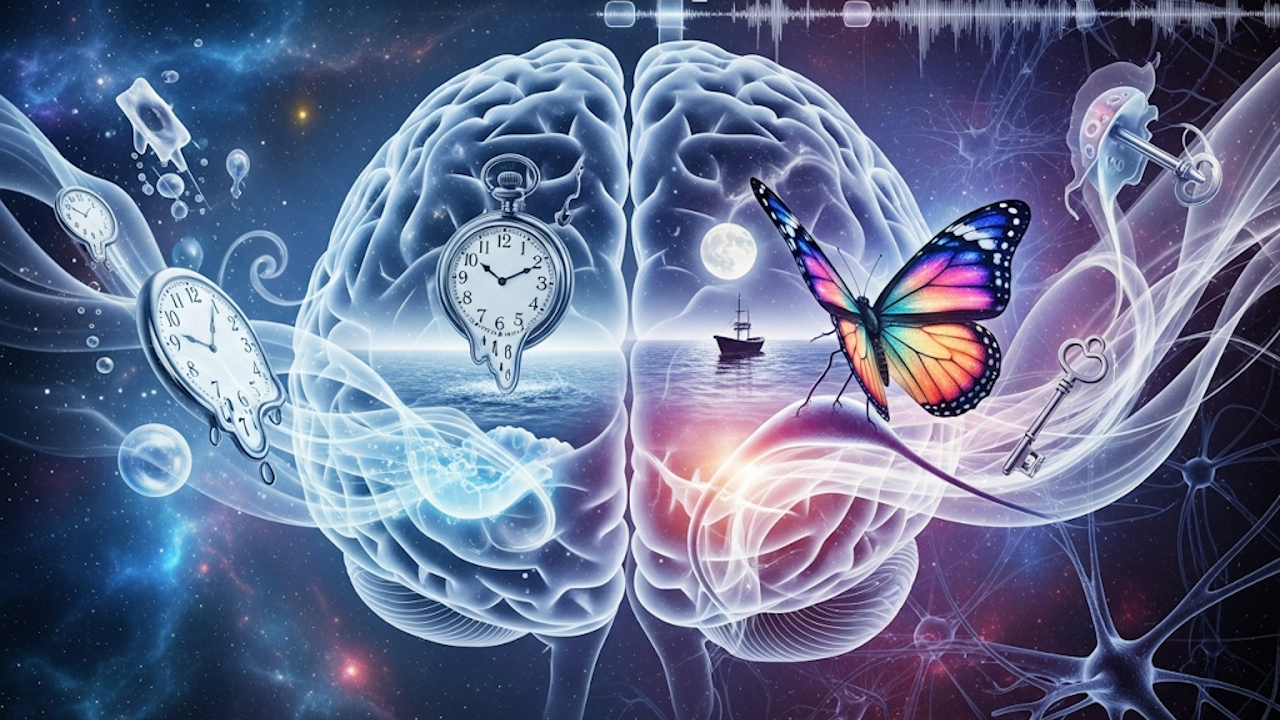
Humans spend roughly one-third of their lives asleep, and a significant portion of that time involves dreaming. Every night, most people experience multiple dreams, though many are forgotten upon waking. Dreams have fascinated philosophers, artists, and scientists for millennia. Ancient civilizations viewed them as messages from gods or glimpses into the future. Today, neuroscience and psychology offer more grounded explanations, revealing dreams as complex products of brain activity shaped by biology, psychology, and daily life. This article explores the science behind why we dream and the factors that determine dream content.
The Biology of Dreaming
Dreams primarily occur during rapid eye movement (REM) sleep, a stage identified in the 1950s by researchers Eugene Aserinsky and Nathaniel Kleitman. During REM, the brain becomes highly active, resembling wakefulness in many ways. Heart rate increases, breathing becomes irregular, and the eyes dart back and forth under closed lids. Meanwhile, the body experiences temporary paralysis, known as REM atonia, which prevents acting out dreams and avoids injury.
Brain imaging studies show distinctive patterns during REM sleep. The prefrontal cortex, responsible for logical thinking and decision-making, shows reduced activity. In contrast, areas like the amygdala (involved in emotions), the hippocampus (key for memory), and visual processing regions light up. This explains why dreams often feel emotionally charged, illogical, and vividly visual yet lack rational oversight.
Non-REM sleep also produces dreams, though these tend to be shorter, less bizarre, and more thought-like. Overall, adults experience four to six REM periods per night, with longer and more intense dreams toward morning. Infants spend far more time in REM sleep, suggesting dreams play a role in early brain development.
Neurotransmitters modulate this process. Acetylcholine levels rise during REM, promoting activation, while serotonin and norepinephrine decrease. Disruptions in these chemicals, through medications or substances, can alter dreaming significantly.
Major Theories of Why We Dream
Several competing theories attempt to explain the purpose of dreams. None fully accounts for all evidence, but each contributes valuable insights.
Freud’s Psychoanalytic View: Sigmund Freud, in his 1900 book The Interpretation of Dreams, proposed that dreams fulfill unconscious wishes. He distinguished between manifest content (the remembered story) and latent content (hidden psychological meaning). According to Freud, dreams protect sleep by disguising forbidden desires, often rooted in childhood experiences or repressed impulses. While influential culturally, this theory lacks strong empirical support and is viewed as largely unfalsifiable by modern scientists.
Activation-Synthesis Hypothesis: Proposed by psychiatrists J. Allan Hobson and Robert McCarley in 1977, this theory argues dreams result from the brain synthesizing random signals from the brainstem during REM sleep. The pons generates bursts of activity that the forebrain then interprets into coherent (or incoherent) narratives. Dreams have no inherent meaning or purpose beyond reflecting the brain’s attempt to make sense of internal noise. This model emphasizes biology over psychology and explains the bizarre, disjointed nature of many dreams.
Memory Consolidation and Information Processing: A leading contemporary view holds that dreams help process and consolidate memories. During sleep, the brain replays experiences from the day, strengthening neural connections. Studies using EEG and functional MRI show hippocampal activity during sleep correlating with improved learning and memory performance afterward. Dreams may integrate new information with existing knowledge, aiding problem-solving and creativity. Famous examples include Dmitri Mendeleev dreaming the periodic table or Paul McCartney hearing the melody for “Yesterday” in a dream.
Emotional Regulation and Threat Simulation: Dreams appear to process emotions, particularly negative ones. The amygdala’s heightened activity during REM supports this. Psychologist Rosalind Cartwright’s research on divorcees found that those who dreamed about their ex-partners recovered emotionally faster. Finnish researcher Antti Revonsuo’s threat simulation theory suggests dreams evolved to rehearse responses to dangers. In ancestral environments, simulating threats improved survival. Modern dreams often feature chases, falls, or conflicts, even when daily life is safe, reflecting this ancient mechanism.
Predictive Processing and World Modeling: Emerging theories frame dreaming as the brain’s way of generating and testing predictive models of reality. The brain constantly predicts sensory input; during sleep, with external input minimized, it runs simulations to refine expectations and minimize surprise. This aligns with findings that dreams incorporate recent experiences but transform them creatively.
Why Do We Dream What We Do?
Dream content is not entirely random. It draws heavily from waking life, filtered through biological and psychological lenses.
Incorporation of Daily Experiences: The “day residue” effect means recent events frequently appear in dreams, often in altered forms. A stressful workday might manifest as being unprepared for an exam. Studies show that about 50 percent of dream content relates to identifiable waking concerns. The continuity hypothesis posits that dreams reflect ongoing waking thoughts, emotions, and preoccupations.
Emotional Salience: The brain prioritizes emotionally charged material. Traumatic events can lead to recurrent nightmares, as in post-traumatic stress disorder (PTSD). Conversely, positive experiences may produce pleasant dreams. This emotional weighting helps prioritize what needs processing.
Personal Concerns and Personality: Dreams often revolve around core personal themes: relationships, identity, achievements, and fears. Extroverts might dream more about social interactions, while anxious individuals report more threatening scenarios. Gender differences appear consistently, with women tending to dream more about relationships and men about physical aggression or achievement, though cultural factors influence these patterns.
Sensory and Bodily Influences: External stimuli can infiltrate dreams. A dripping faucet might become rain in a dream. Internal states matter too: hunger, thirst, or a full bladder shapes content. Sleep position affects dreams, with people sleeping on their backs reporting more vivid or supernatural themes.
Cultural and Media Influences: Societal context shapes dreams. People in different cultures report varying common dream themes. In Western societies, dreams of flying or falling are frequent, possibly influenced by media. Historical analysis shows dreams of being chased by animals were more common before industrialization.
Creative and Problem-Solving Elements: Dreams excel at making novel connections. The relaxed constraints of REM sleep allow the brain to combine ideas freely. This explains breakthroughs in science and art attributed to dreams. A study by Harvard researchers found that participants solving creative problems after REM sleep showed greater insight than after non-REM or wakefulness.
Factors That Shape Our Dreams
Many variables influence what we dream:
- Stress and Mental Health: High stress increases nightmare frequency. Anxiety disorders and depression correlate with more negative dream content.
- Medications and Substances: Antidepressants, beta-blockers, and alcohol suppress REM sleep, leading to rebound vivid dreaming upon withdrawal. Cannabis often reduces dream recall.
- Diet and Exercise: Spicy foods or heavy meals close to bedtime can cause indigestion that enters dreams. Regular exercise promotes deeper sleep but intense late workouts may increase vividness.
- Sleep Environment: Noise, light, or temperature affect dream quality and recall.
- Age: Children’s dreams feature more animals and fantastical elements, becoming more realistic and complex with age. Elderly individuals may experience fewer intense dreams due to reduced REM time.
- Pregnancy: Hormonal changes lead to more vivid dreams, often involving babies or animals.
Dream recall varies widely. People who wake during or shortly after REM remember more. Keeping a dream journal improves recall over time through heightened attention.
Lucid Dreaming and Control
Lucid dreaming occurs when the dreamer becomes aware they are dreaming and can sometimes control the narrative. This phenomenon fascinated scientists like Stephen LaBerge, who developed techniques using reality checks and mnemonic induction. Brain scans of lucid dreamers show increased activity in the prefrontal cortex, bridging the gap between dream illogic and waking rationality.
Lucid dreaming has therapeutic potential for nightmares and offers a unique window into consciousness research. Some athletes use it for mental rehearsal.
Nightmares and Sleep Disorders
While most dreams are neutral or positive, nightmares cause distress. Frequent nightmares may signal underlying issues like trauma or anxiety. Parasomnias such as sleepwalking or REM sleep behavior disorder (where paralysis fails) reveal the tight link between brain states and behavior.
Sleep apnea and insomnia disrupt REM cycles, altering dream patterns. Treatments like imagery rehearsal therapy help rewrite nightmare scripts.
Modern Research and Future Directions
Advances in neuroimaging, AI analysis of dream reports, and large-scale studies continue to deepen understanding. The Dream Database project collects thousands of reports, enabling pattern analysis. Researchers explore whether dreams serve multiple functions simultaneously: memory, emotion, simulation, and creativity.
Future technologies like targeted brain stimulation or sophisticated sleep trackers may allow dream manipulation or enhanced recall. Ethical questions arise about privacy of unconscious thoughts and potential for therapeutic intervention.
Dreams remain deeply personal, yet their universality points to fundamental brain mechanisms. They blend recent experiences with deepest concerns, filtered through evolutionary adaptations and individual psychology. While science demystifies much of the process, the subjective wonder of waking from a vivid dream persists.
Understanding dreams offers practical benefits: better sleep hygiene, emotional insight, and creative inspiration. By paying attention to dreams, individuals gain a richer view of their inner world and the remarkable workings of the human brain during its nightly journey. As research progresses, the question shifts from “why do we dream” to “how can we better harness the power of our dreams?”