

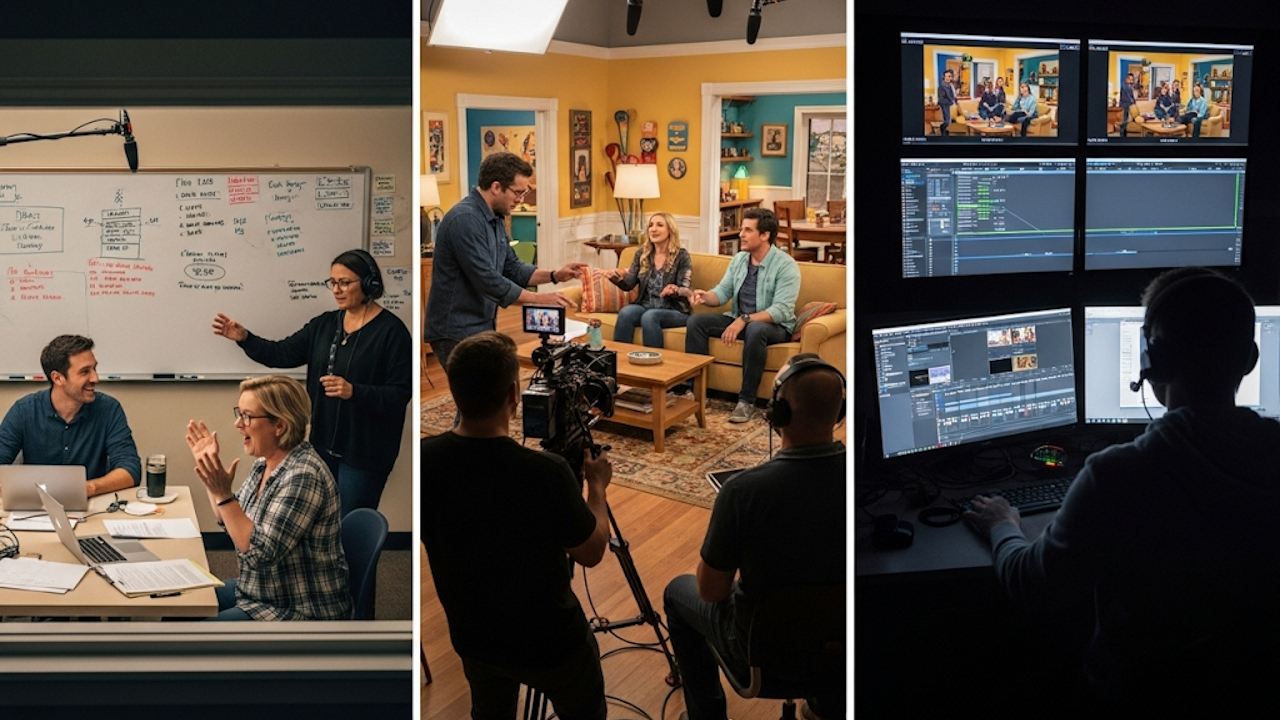
Sitcoms have entertained audiences for decades with their blend of humor, relatable characters, and tightly paced stories. From classics like “I Love Lucy” to modern hits, these shows appear effortless on screen. The reality is far more complex. Creating a sitcom involves hundreds of people working across many months or years in a highly collaborative process that mixes creativity with technical precision and business realities. This article explores the full journey from initial idea to final broadcast.
The Spark: Concept and Development
Every sitcom begins with an idea. Creators, often writers or comedian performers, draw inspiration from personal experiences, observations of everyday life, or cultural trends. A concept might start as a simple premise such as a group of friends living in a big city or a quirky family navigating suburban chaos.
Once the core idea exists, it moves into development. Writers create a pitch document that includes character descriptions, sample storylines, and the overall tone of the show. This pitch goes to network executives or streaming platform producers who evaluate its commercial potential. Factors include target demographics, competition in the time slot, and alignment with the company’s brand.
If the pitch gains interest, the network may order a pilot script. Development executives provide notes on everything from character likability to joke density. Multiple revisions follow. The goal is to create something fresh yet familiar enough to attract viewers. This phase can last months or even years as ideas are refined, tested in focus groups, or shelved entirely if they fail to generate enthusiasm.
Crafting the Words: Writing the Script
Writing forms the foundation of any sitcom. A typical episode script runs about 25 to 35 pages for a 22-minute show once filmed. Staff writers work in a writers’ room, a collaborative space where ideas bounce rapidly. Head writers or showrunners guide the process to maintain consistency across episodes.
The room breaks stories first. Writers outline major plot points, subplots, and character arcs on whiteboards. They identify “A,” “B,” and sometimes “C” stories that interweave. Jokes are tested out loud because dialogue must sound natural when spoken. Table reads with actors often reveal which lines land and which fall flat.
Rewrites are constant. Networks or producers may request changes to tone down controversial elements or heighten emotional stakes. For multi-camera sitcoms especially, scripts emphasize physical comedy and clear setups for audience reactions. Writers also plan for “sweeps” episodes or season finales that need bigger moments to boost ratings.
A single episode might go through five to ten drafts. Freelance writers sometimes contribute, but the core staff ensures the show’s voice remains intact. Budget constraints influence writing too. Scenes with expensive locations or large guest casts get minimized in favor of standing sets.
Finding the Faces: Casting
Casting can make or break a sitcom. Directors and producers hold auditions that attract both established actors and unknowns. Chemistry between potential cast members is crucial. For ensemble shows, actors must feel like a believable group.
Casting directors create character breakdowns that describe personality traits, age ranges, and required skills like physical comedy or singing. Self-tapes and in-person readings follow. Network executives often have final approval on lead roles because of the financial stakes.
Once the main cast is chosen, contract negotiations begin. Actors sign deals that can span multiple seasons with options for renewal. Supporting roles and recurring guest stars fill out the world. Diversity in casting has become more important in recent years to reflect broader audiences and create richer stories.
Rehearsal periods allow directors to see how actors embody the material. Sometimes roles are recast after the pilot if performances do not translate well to camera.
Building the World: Pre-Production
Pre-production ramps up once scripts and casting are locked. Production designers create the visual look of the show. For most multi-camera sitcoms, this means building permanent sets on soundstages. These sets include detailed living rooms, kitchens, offices, or coffee shops that will appear in nearly every episode.
Art directors source furniture, paint walls, and add personal touches that reveal character backstories. Lighting designers plan how to illuminate scenes for both comedy and visual appeal. Costume designers create wardrobes that are distinctive yet realistic enough for weekly wear.
Technical crews prepare cameras, sound equipment, and editing bays. Location managers scout any off-set filming locations if needed. The production schedule coordinates all departments to stay within budget and timeline. A typical season might film 22 to 24 episodes over several months.
Showrunners work closely with department heads to ensure creative vision aligns with practical realities. Insurance, legal clearances for music or brand mentions, and union requirements add layers of administrative work.
Practice Makes Funny: Rehearsals
Rehearsals bridge pre-production and filming. Actors gather to read lines, block scenes, and experiment with physical business. Directors guide pacing and timing because sitcom humor depends heavily on rhythm.
For multi-camera shows, rehearsals often occur on the actual set. Actors practice entrances, exits, and reactions while camera operators mark positions. Writers attend to make last-minute dialogue adjustments based on how lines sound spoken.
Run-throughs simulate the full episode. Producers and network executives watch and offer feedback. These sessions can be intense as everyone works to maximize laughs while keeping the story coherent.
Lights, Camera, Audience: Filming Day
Filming day for a multi-camera sitcom is a unique theatrical event. Episodes are usually shot in front of a live studio audience. This provides immediate reactions that help gauge what works.
The process starts early with final rehearsals and technical run-throughs. Hair, makeup, and wardrobe teams prepare the cast. Warm-up comedians entertain the audience before taping begins.
Taping typically follows this pattern: scenes are performed and recorded multiple times if needed. Directors call for pickups on specific lines or reactions. The audience laughs, claps, or stays silent, giving instant feedback. Writers may rewrite jokes between scenes based on responses.
Four to six cameras capture different angles simultaneously. This allows editors flexibility in post-production. Scenes are shot out of order for efficiency, often grouping all kitchen scenes together regardless of story sequence.
A full episode taping can last three to five hours. Breaks allow for costume changes and set adjustments. The showrunner and director monitor everything from video village, a area with monitors showing all camera feeds.
Single-camera sitcoms, which are more common on streaming platforms, follow a different rhythm. They shoot like films with one camera, multiple takes, and no live audience. This approach allows for more cinematic visuals and location work but requires longer production days.
After the Clap: Post-Production
Once filming wraps, post-production begins. Editors assemble the footage into a coherent episode. They select the best takes, cut for timing, and insert reaction shots.
Sound designers add laughter tracks where needed, though many modern shows prefer natural audience responses. Music supervisors choose or compose incidental music and theme songs. Visual effects teams handle any minor CGI or clean-up work.
Color correction ensures consistent lighting across scenes shot on different days. Dialogue editors clean up audio issues. The final cut receives notes from executives, leading to further adjustments.
Test screenings with sample audiences help determine if the episode succeeds. Producers might reorder scenes or trim jokes based on feedback. Sound mixing balances all elements so dialogue remains clear and laughs enhance rather than overpower.
The completed episode then goes through quality control and closed captioning preparation before delivery to the network or platform.
Promotion and Beyond
Marketing teams create trailers, posters, and social media campaigns to build anticipation. Press interviews with cast and creators help generate buzz. Release strategies vary: traditional networks air episodes weekly while streamers may drop entire seasons at once.
Ratings, streaming numbers, and critical reception determine a show’s future. Successful sitcoms build loyal audiences over years, allowing characters to evolve and actors to grow with their roles.
The Human Element
Throughout this process, the people involved face pressure. Long hours, tight deadlines, and the need for constant creativity take a toll. Yet the collaborative spirit often creates strong bonds. Many crew members work on the same show for years, treating it like an extended family.
Challenges include balancing artistic integrity with commercial demands, navigating network standards, and adapting to changing viewer habits. The rise of streaming has introduced new possibilities like longer episodes or more experimental formats while maintaining core sitcom DNA of character-driven humor.
Ultimately, a sitcom succeeds when it connects with viewers on a human level. Behind the polished jokes and bright sets lies months of hard work by writers, actors, directors, producers, and countless technicians. Their combined efforts create the illusion of effortless fun that millions enjoy from their living rooms each week. The next time you watch your favorite characters argue over pizza or navigate awkward social situations, remember the intricate machine working behind the scenes to bring those moments to life.