

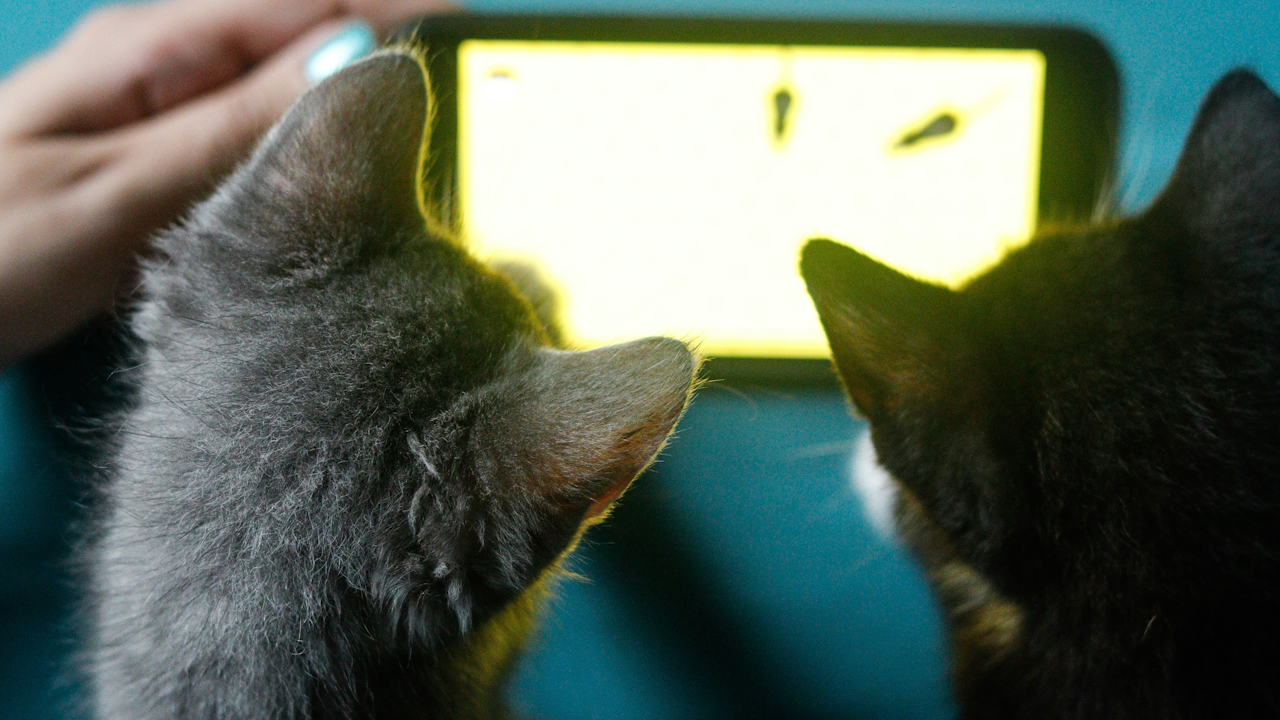
Pet owners around the world often describe their dogs and cats as family members who experience joy during playtime, anxiety during thunderstorms, or sadness after a long day apart. For much of history, such interpretations were dismissed as mere projection or wishful thinking. Science has now begun to catch up with what many have long suspected intuitively. Modern research in neuroscience, behavioral biology, and endocrinology provides compelling evidence that pets do experience a range of emotions. These feelings are rooted in brain structures, hormonal systems, and behavioral patterns that share deep evolutionary roots with those of humans. This article explores the scientific foundations of pet emotions, drawing on studies of dogs and cats as the most common companion animals, while highlighting methods that allow researchers to move beyond guesswork.
A historical perspective helps frame the current understanding. In the 17th century, the philosopher Rene Descartes portrayed animals as mechanical beings without true feelings or consciousness, driven solely by instinct. This view influenced early scientific thought and justified practices that treated animals as emotionless. By the 19th century, Charles Darwin challenged that idea in works such as “The Expression of the Emotions in Man and Animals,” arguing for evolutionary continuity between human and animal emotional expressions. Darwin observed that dogs, for instance, displayed facial and postural cues resembling human fear or happiness. Yet it took until the late 20th and early 21st centuries for rigorous empirical methods to test these ideas systematically. Today, a broad consensus has emerged among animal behavior researchers. A 2024 survey of 100 experts across biology, psychology, anthropology, and philosophy found that a strong majority ascribe emotions to most or all non-human mammals, including dogs and cats. These scientists link emotions to responses to stimuli, subjective experiences, and behavioral motivations, while noting that consciousness may accompany many such states at somewhat lower rates of agreement.
At the core of pet emotions lies a set of basic neural circuits shared across mammals. Neuroscientist Jaak Panksepp identified seven primary emotional systems in mammalian brains, each tied to specific brain regions and neurochemicals. These include SEEKING (curiosity and anticipation), FEAR (avoidance of danger), RAGE (frustration or anger), LUST (reproductive drive), CARE (nurturing), PANIC/GRIEF (separation distress), and PLAY (social joy). Pets exhibit behaviors consistent with these systems. For dogs, the PLAY system manifests in bouncy invitations to chase or wrestle, accompanied by a relaxed open mouth and wagging tail. Cats display similar play-driven joy through pouncing on toys or batting at strings, though their expressions are often more subtle and solitary. These systems operate below the level of higher cognition, meaning emotions arise automatically to guide survival and social behavior. Panksepp’s framework emphasizes that these affects are not mere reflexes but genuine feelings that inform animals about their well-being.
Neuroimaging has provided some of the most direct windows into pet emotions. Gregory Berns, a neuroscientist at Emory University, pioneered functional magnetic resonance imaging (fMRI) studies with awake, unrestrained dogs. In his experiments, dogs were trained over months using positive reinforcement to enter a mock scanner and remain still inside the real machine. Researchers then presented stimuli such as the scent of their owner, praise words, or food rewards while scanning brain activity. A key finding involved the caudate nucleus, a brain region rich in dopamine receptors and associated with reward and positive anticipation in humans. When dogs smelled their owner’s scent or heard praise, this area lit up more strongly than when presented with food or other dogs. In one variation, dogs viewed objects that signaled either a treat or their owner’s appearance with praise. Brain responses were comparable in most cases, and a subset of dogs even showed stronger activation for praise than for food. Berns concluded that dogs experience positive emotions tied to their human companions that go beyond simple conditioning for rewards. Similar scans have revealed that dogs process human voices and faces in areas analogous to the human temporal cortex and amygdala, regions involved in emotion recognition. These studies demonstrate that dogs do not merely react mechanically; their brains register emotional value in ways that parallel human experiences of attachment and affection.
Cats have received less neuroimaging attention due to their independent nature and greater difficulty in training for scanners, but indirect evidence points to comparable emotional processing. Behavioral observations and physiological measures suggest cats possess limbic system structures that support fear, joy, and attachment. For example, cats exhibit distinct facial expressions linked to emotional states, with researchers cataloging hundreds of subtle combinations involving ear position, whisker movement, and pupil dilation. Studies show cats can detect human emotional cues through scent alone, preferring to approach positive human odors and avoiding those associated with fear or anger by using their right nostril more for negative stimuli.
Hormones provide another robust line of evidence for pet emotions, particularly the role of oxytocin in social bonding. Oxytocin, often called the “love hormone,” is released during positive interactions and promotes trust and affiliation. In a landmark 2015 study published in Science, researchers measured urinary oxytocin levels in dogs and their owners before and after 30 minutes of interaction, including petting and mutual gazing. Pairs that spent the most time locking eyes showed dramatic increases: dogs experienced a 130 percent rise in oxytocin, while owners saw a 300 percent surge. A follow-up experiment administered nasal oxytocin sprays to dogs. Female dogs given the hormone spent 150 percent more time gazing at their owners, triggering a corresponding 300 percent oxytocin boost in the humans. Male dogs showed no such effect, possibly due to sex differences in oxytocin sensitivity. These results mirror the positive feedback loop observed between human mothers and infants, suggesting that dogs have co-opted a deeply ancient mammalian bonding mechanism. Subsequent research has replicated these findings across multiple studies, showing that even brief positive contact, such as stroking or talking, elevates oxytocin in both dogs and owners while lowering stress hormones like cortisol. For cats, similar but less pronounced effects occur during gentle petting sessions, though their more aloof style means bonding often relies on proximity rather than intense eye contact.
Behavioral studies further illuminate how pets express and experience emotions. Dogs display clear signs of joy through tail wagging, playful bows, and increased activity when anticipating walks or play. Fear appears as tucked tails, flattened ears, panting, or avoidance. Separation distress, akin to grief, can manifest as vocalizations, destruction, or reduced appetite when owners leave. Cats express contentment through purring, slow blinking, and kneading, while anxiety might appear as hiding, excessive grooming, or dilated pupils. A 2023 survey of over 400 pet owners revealed that people attribute a wide array of emotions to their animals. Dog owners reported an average of 14 emotions per pet, including complex secondary states such as guilt, jealousy, and frustration, while cat owners averaged about 11. Owners relied on different cues: dogs’ emotions were often read from tail position and vocalizations, whereas cats’ states were inferred from ear movements and body posture. Importantly, these perceptions align with scientific measures. For instance, dogs show emotional contagion, mirroring human sadness by approaching distressed owners and offering comfort through nuzzling or paw placement. Cats also alter their behavior in response to owner distress, though they tend to observe from a distance rather than initiate contact.
Specific emotions warrant closer examination. Joy and playfulness are perhaps the most observable. Panksepp’s PLAY system drives rough-and-tumble interactions that release endorphins, fostering social bonds and reducing stress. Dogs and cats both engage in this, though dogs do so more boisterously with humans and other dogs. Fear and anxiety have clear survival value, triggered by the amygdala in response to threats like loud noises or unfamiliar situations. Chronic fear can elevate cortisol, leading to health issues, which underscores the importance of understanding these states for welfare. Sadness or grief-like responses appear in pets after loss. Dogs may search for deceased companions or show lethargy, while cats sometimes stop eating or vocalize more. Attachment, the foundation of the human-pet bond, involves the CARE system and is reinforced by oxytocin. Dogs form particularly strong attachments, often preferring their owner over food in choice tests, while cats display secure base effects similar to human infants, using owners as a source of comfort in novel environments.
Do pets experience more complex emotions such as guilt or embarrassment? The evidence is mixed and often debated. Owners frequently interpret a dog’s averted gaze after knocking over a trash can as guilt, but controlled studies suggest this is more likely appeasement behavior in response to owner anger cues rather than genuine self-reflection. Dogs lack the advanced prefrontal cortex necessary for full human-like guilt, which requires theory of mind and moral reasoning. Still, they do show sophisticated social intelligence, such as recognizing when a human is inattentive and adjusting their begging accordingly. Cats may experience simpler forms of frustration or envy during resource competition, but their emotional repertoire appears more focused on primary states.
Interspecies emotional communication adds another layer. Dogs excel at reading human emotions through facial expressions, tone of voice, and body language. They can distinguish happy from angry faces and voices, often synchronizing their own emotional states in response. Recent research has even detected neural synchrony, where human and dog brain waves align during friendly interactions, similar to patterns seen in human social bonding. This cross-species empathy strengthens the relationship and may explain why dogs are effective in therapy roles for conditions like anxiety or PTSD. Cats are attuned to human moods as well, though their responses are quieter. They may rub against owners during low moods or withdraw during high stress, demonstrating an ability to sense and react to emotional atmospheres.
Studying pet emotions presents challenges. The primary limitation is that animals cannot verbally report their feelings, forcing reliance on indirect measures such as brain activity, hormones, and behavior. Researchers must guard against anthropomorphism, or projecting human traits, while also avoiding anthropodenial, the refusal to acknowledge shared capacities. Ethical considerations require non-invasive methods and voluntary participation, as seen in Berns’ awake-dog fMRI protocols. Future directions include advanced wearable sensors for real-time cortisol tracking, larger cross-species comparisons, and genetic studies of oxytocin receptors that influence individual differences in emotional sensitivity.
The practical implications of this science are profound. Understanding pet emotions improves training methods, favoring positive reinforcement over punishment to avoid fear-based learning. It enhances animal welfare standards in shelters, veterinary care, and breeding programs by prioritizing environments that support emotional health. For owners, recognizing signs of anxiety or joy can prevent behavioral problems and deepen companionship. On a broader scale, these insights challenge society to view pets not as property but as sentient beings deserving of emotional consideration.
In conclusion, the science behind pet emotions reveals a rich inner world grounded in shared biology and refined through domestication. Dogs and cats experience joy, fear, attachment, and other states through mechanisms that echo our own, supported by brain imaging, hormonal data, and behavioral evidence. While gaps remain, particularly in feline research and the subjective quality of feelings, the accumulating data affirms that pets are emotional creatures whose lives are intertwined with ours. By approaching them with scientific curiosity and empathy, humans can foster bonds that benefit both species, enriching daily existence and advancing knowledge of the mind across the animal kingdom. This understanding not only validates what pet lovers have always felt but also calls for responsible stewardship of these remarkable companions.