

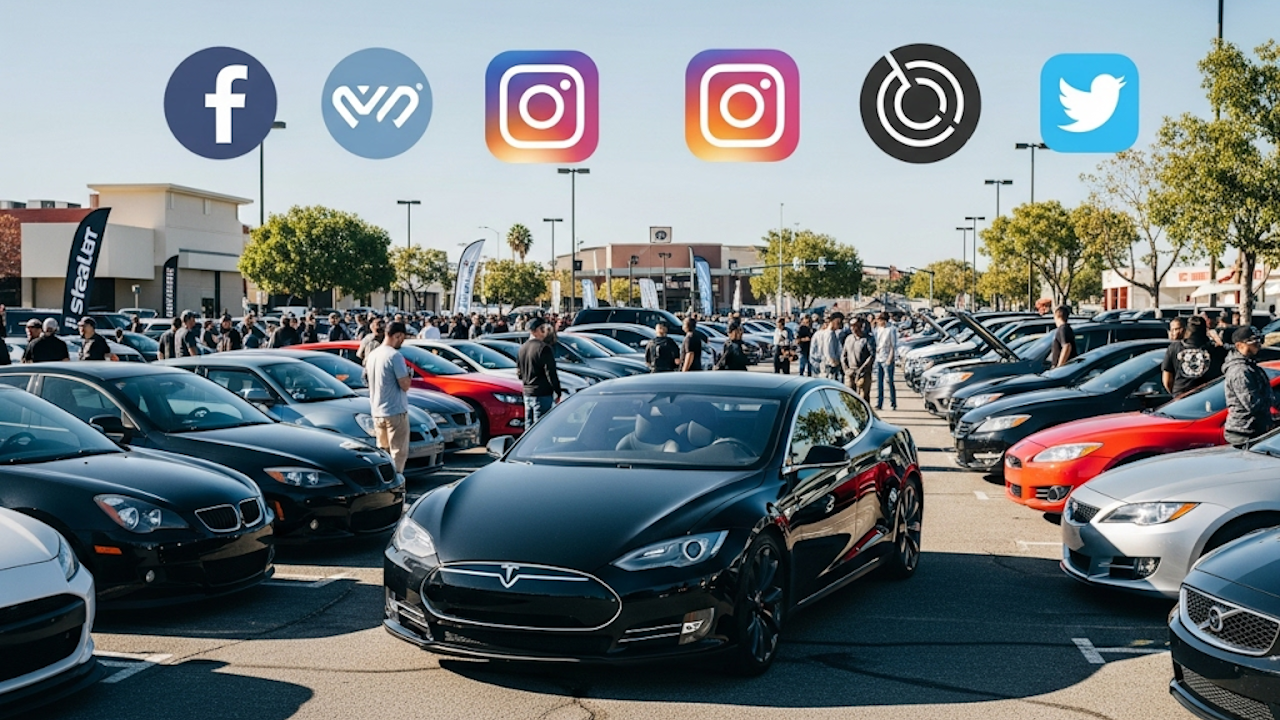
In parking lots across suburbs and city outskirts, engines idle in unison while crowds gather around polished hoods and custom exhaust tips. What began as informal gatherings of friends sharing wrenching stories has become a cultural phenomenon. Car meetups, once limited to weekend hobbyists, now draw thousands on a regular basis. At the same time, auto social media has turned everyday enthusiasts into content creators, influencers, and global connectors. Platforms like Instagram, TikTok, and YouTube have fueled this surge by making car passion accessible to anyone with a smartphone. The result is a vibrant, sometimes chaotic revival of automotive culture that blends real-world camaraderie with digital spectacle.
Car culture has deep roots, stretching back to the earliest days of the automobile. In the 1950s and 1960s, hot rod clubs and drag strips defined American enthusiasm for speed and customization. Muscle cars in the 1970s added raw power to the mix, while the 1980s and 1990s brought import scenes and tuner culture. Formal car shows, such as those at fairgrounds or speedways, provided structured venues for display. Informal meets, however, remained grassroots affairs organized by word of mouth or club newsletters. These events offered a space to admire modifications, trade parts, and bond over shared mechanical obsessions. Yet they stayed relatively small and localized until technology changed everything.
The turning point arrived with the explosion of social media in the 2010s. Early forums and message boards laid groundwork, but visual platforms accelerated the shift. Instagram, launched in 2010, allowed owners to post high-quality photos of their builds with hashtags like #CarMeet or #ModifiedLife. Suddenly, a modified Honda Civic in a small town could gain thousands of likes from strangers across the country. YouTube followed with in-depth build videos and track day footage, turning mechanics into educators and weekend drivers into storytellers. By the late 2010s, TikTok entered the scene with short, addictive clips of exhaust notes, burnouts, and quick mods. Car-related video views on the platform grew more than 25 percent year over year in some periods, drawing in younger audiences who discovered vehicles through gaming simulators and viral trends rather than family hand-me-downs.
This digital foundation set the stage for the post-pandemic boom in physical meetups. Lockdowns in 2020 and 2021 forced enthusiasts online, where they scrolled through endless feeds and joined virtual groups. When restrictions eased, pent-up demand sent people back to parking lots in record numbers. Events like Cars and Coffee, which originated around 2005 as casual Saturday morning gatherings promoted by figures in the automotive media, scaled dramatically. One season opener in the tri-state area drew over 1,000 cars and dozens of motorcycles, shattering previous attendance marks. Similar turnouts became common nationwide, with reports of 2,500 to 3,000 attendees at regional spots. Organizers added food trucks, live music, and vendor booths, transforming simple parking lot hangs into full-day festivals. In 2025, articles noted a massive comeback, describing meets as hubs for community, fashion, and entertainment beyond just engines.
Social media did more than advertise these events. It organized them. Event pages on Instagram and Facebook groups allowed hosts to announce dates, locations, and rules in real time. Stories and reels provided live updates, while influencers broadcasted from the scene to amplify reach. A single viral post could draw hundreds of additional cars, turning a planned gathering of 200 into an overflow crowd of 800. Platforms also democratized participation. Aspiring builders no longer needed connections to elite clubs. A teenager with a budget-friendly project could film a progress video, gain followers, and earn invites to bigger meets. This accessibility broadened the demographic. Women entered the scene in greater numbers, sharing wrenching tutorials and style-focused content. Younger generations, raised on video games and online forums, brought fresh energy through tech-driven customizations like LED lighting kits and app-controlled suspensions.
The economic ripple effects have been significant. Auto social media created new revenue streams for brands and individuals alike. Aftermarket parts companies collaborate with influencers who showcase products in authentic settings, bypassing traditional advertising. Major automakers now court creators with press access and vehicle loans, recognizing that a well-timed reel can reach millions more effectively than a magazine spread. Meetups themselves became commercial opportunities, with sponsorships from tire makers, audio brands, and apparel lines. Local economies benefit too, as large events fill hotels, restaurants, and gas stations. In some regions, what started as free gatherings evolved into ticketed experiences with professional security and designated parking zones to manage crowds.
Yet the rise has not been without friction. Social media’s emphasis on virality has introduced challenges that traditional car culture rarely faced. Attention-seeking behaviors, such as reckless takeovers or street racing spin-offs, have drawn police scrutiny and public backlash. Videos of donuts in crowded lots or high-speed chases circulate quickly, prompting crackdowns. Several meets have been shut down or relocated after complaints about noise, traffic, and safety risks. Critics argue that the platform-driven focus on clout has diluted genuine enthusiasm. Instead of deep conversations about engine tuning or suspension geometry, some gatherings now feature people posing for selfies or filming stunts for likes. Older enthusiasts lament the shift from mechanical knowledge to superficial trends, with comments on forums and videos decrying “attention enthusiasts” over true gearheads.
Safety concerns extend beyond illegal activities. Overcrowded lots increase the chance of accidents, from minor fender benders to more serious incidents involving spectators. Organizers have responded by implementing stricter rules, such as no-burnout policies and designated viewing areas. Some cities have issued warnings or increased enforcement at popular spots. Environmental considerations also arise, as modified vehicles with louder exhausts and higher emissions face pushback in an era of sustainability goals. Despite these issues, many communities self-regulate through dedicated groups that prioritize respect and responsibility, proving that the core spirit of shared passion endures.
Globally, the phenomenon takes on unique flavors. In the United States, muscle cars and exotics dominate many meets, while Europe emphasizes track-focused events and classic restorations. Asia blends JDM heritage with modern hypercars, and emerging scenes in Latin America and the Middle East use social media to connect across vast distances. Hashtags transcend borders, allowing a builder in California to inspire one in Tokyo. This interconnectedness fosters inclusivity, welcoming diverse backgrounds united by a love of four wheels. Gaming platforms further bridge gaps, with virtual car meets in simulation titles spilling over into real-world invitations.
Looking forward, the future of car meetups and auto social media appears resilient even amid industry changes. Electric vehicles present both opportunities and questions. Silent powertrains eliminate traditional exhaust sounds, yet enthusiasts adapt with artificial noise generators and focus on acceleration, handling, and software tuning. Autonomous technology may reduce personal driving thrills, but it could free up time for social aspects of ownership. Virtual reality meetups and augmented reality overlays might complement physical events, letting remote participants join the fun. Brands will likely deepen influencer partnerships, while platforms evolve with new features for live streaming and community moderation.
Ultimately, the rise reflects a fundamental human need for connection in an increasingly digital world. Car meetups provide tangible experiences that screens cannot replicate: the rumble of an engine, the smell of rubber and fuel, the handshake of a fellow enthusiast. Auto social media supplies the spark, the reach, and the inspiration that keeps the fire burning. Together, they have revived a hobby that once seemed confined to older generations and propelled it into a dynamic, inclusive movement. Challenges remain, from managing crowds to preserving authenticity, but the passion that drives people to wrench, drive, and gather shows no signs of slowing. As long as there are roads to explore and stories to share, car culture will continue to accelerate forward, one meetup and one post at a time.