

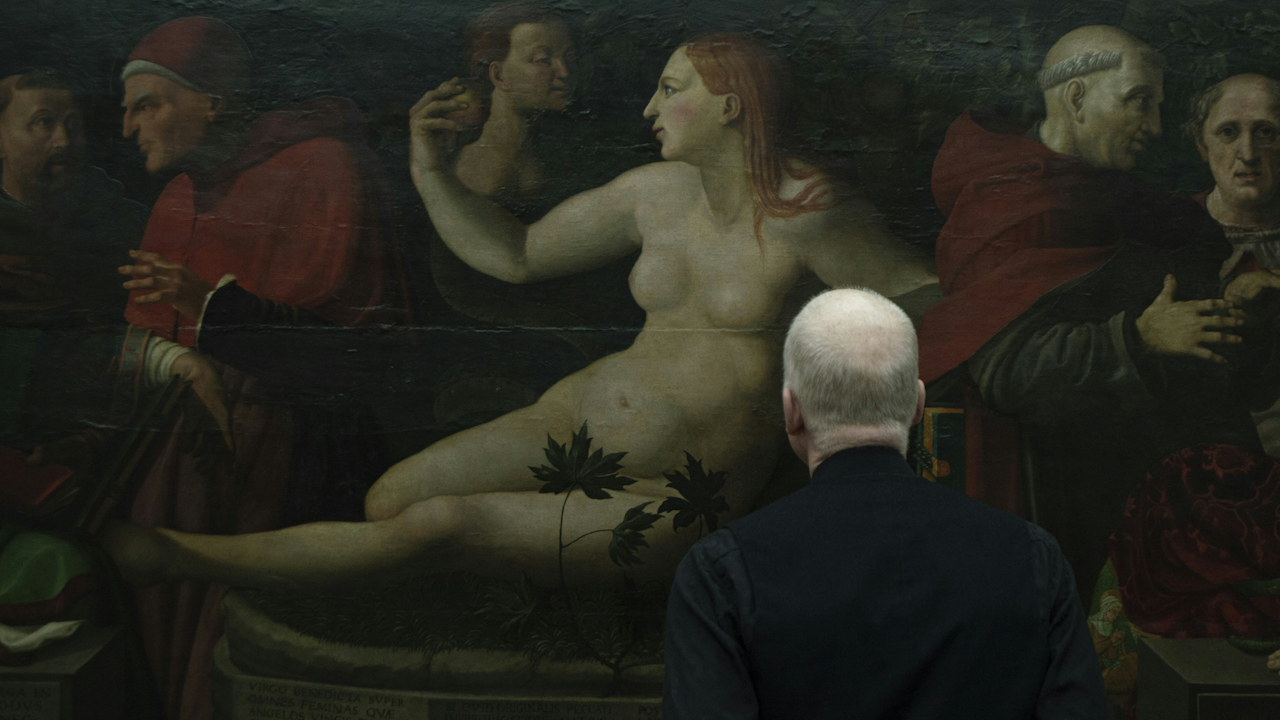
Art has long served as a mirror to society, reflecting its values, fears, desires, and hypocrisies. Throughout history, certain works have not only challenged artistic conventions but also provoked outrage, censorship, public protests, and even violence. These controversies often stem from clashes between innovation and tradition, sacred beliefs and irreverence, or personal expression and societal norms. What follows is an exploration of some of the most divisive artworks ever created, examining their contexts, the reasons for their notoriety, and their lasting impact on art and culture.
One of the earliest modern scandals erupted in 1863 with Édouard Manet’s Le Déjeuner sur l’herbe (Luncheon on the Grass). Exhibited at the Salon des Refusés in Paris after rejection by the official Salon, the painting depicts a nude woman seated with two fully clothed men in a pastoral setting. The composition draws from Renaissance sources like Raphael but subverts them dramatically. Viewers were scandalized not merely by the nudity, which had precedents in classical art, but by the casual, contemporary context. The woman gazes directly at the viewer with unapologetic confidence, while the men appear engaged in conversation, ignoring her. Critics decried it as immoral and vulgar, accusing Manet of flaunting decency and mocking artistic traditions. The work highlighted shifting attitudes toward gender, class, and the role of the artist as provocateur. Manet followed it with Olympia in 1865, another nude that portrayed a prostitute with a confrontational stare, further fueling debates about realism versus idealism in art.
These pieces marked a turning point, paving the way for modernism. Yet few works challenged the very definition of art as profoundly as Marcel Duchamp’s Fountain in 1917. Submitted to the Society of Independent Artists exhibition under the pseudonym R. Mutt, it was simply a porcelain urinal turned on its side. The organizers rejected it, prompting Duchamp to resign in protest. The piece questioned whether art required manual skill or could be anything the artist designated as such. By elevating a mass-produced object, Duchamp introduced the concept of the “readymade,” influencing generations of conceptual artists. Detractors called it a hoax or an insult to craftsmanship, while supporters hailed it as a philosophical breakthrough. Its replicas and ongoing debates underscore its role in dismantling barriers between high and low culture.
Pablo Picasso’s contributions to controversial art are substantial. His 1907 Les Demoiselles d’Avignon shocked even fellow artists with its depiction of five prostitutes in a brothel, their bodies fractured into angular planes and faces inspired by African masks. The raw sexuality and stylistic rupture horrified viewers accustomed to harmonious nudes. Henri Matisse reportedly found it repellent. The painting announced Cubism and confronted colonial attitudes toward non-Western art, but its initial reception was one of bewilderment and disgust. Picasso’s later Guernica (1937) elicited mixed responses for different reasons. Created in response to the bombing of the Basque town of Guernica during the Spanish Civil War, this monumental black-and-white canvas portrays the chaos of violence through distorted figures, a screaming horse, and a grieving mother. While celebrated today as a powerful anti-war statement, it faced criticism from some Spanish Republicans for its lack of explicit political messaging or optimism. Picasso refused to allow its return to Spain until democracy was restored, adding a layer of political contention. The work remains a universal symbol of suffering, yet its abstract style once left some survivors of the event puzzled.
Gustave Courbet’s L’Origine du monde (The Origin of the World, 1866) pushed boundaries of explicitness further. This close-up painting of a woman’s torso and genitals was commissioned by a Turkish diplomat and hidden from public view for decades. Its unidealized realism offended Victorian sensibilities, leading to its concealment behind curtains or other artworks. Even in the 20th century, it sparked debates about pornography versus art. The painting’s frank celebration of the female body challenged religious and moral taboos, influencing feminist reinterpretations and remaining provocative into the present day.
Religious themes have proven especially fertile ground for controversy. Andres Serrano’s Piss Christ (1987) ignited one of the fiercest culture wars in the United States. The photograph shows a plastic crucifix submerged in the artist’s urine, glowing with ethereal light. Intended as a meditation on the commercialization of religion and the suffering of Christ, it was interpreted by many as blasphemous. When exhibited with partial National Endowment for the Arts funding, it drew condemnation from senators and religious leaders, leading to death threats against Serrano, slashed grants, and congressional debates over public arts funding. The work was vandalized multiple times, including in France in 2011. Serrano maintained it was not anti-Christian, but the image’s power lies in its ability to provoke visceral reactions about faith, purity, and artistic freedom.
In a similar vein, Chris Ofili’s The Holy Virgin Mary (1996) caused an uproar when exhibited at the Brooklyn Museum in 1999 as part of the “Sensation” show. The mixed-media painting portrays a Black Madonna adorned with elephant dung and surrounded by cutouts from pornographic magazines. New York Mayor Rudy Giuliani called it sick and attempted to withhold funding from the museum, sparking lawsuits over censorship. Ofili, a British artist of Nigerian descent, explained the work as a celebration of African heritage and a commentary on the objectification of Black women, using dung as a traditional material. Detractors saw sacrilege; supporters defended its cultural hybridity and critique of purity myths.
Conceptual art often courts absurdity or disgust. Piero Manzoni’s Artist’s Shit (1961) consists of 90 tin cans purportedly filled with the artist’s feces, labeled and priced according to the current gold value. Manzoni critiqued the art market’s commodification and the romantic notion of the artist’s genius. Many dismissed it as a juvenile prank, yet it sold for high prices and raised enduring questions about value, authenticity, and authorship. One can was later opened, confirming its contents and amplifying the legend.
Performance and body art have also generated intense backlash. Yoko Ono’s Cut Piece (1964) invited audiences to cut away pieces of her clothing while she sat passively on stage. It explored vulnerability, gender dynamics, and objectification, but some viewers found the participatory element disturbing or exploitative. Hermann Nitsch’s Orgies Mysteries Theatre rituals in the 1960s involved animal blood, carcasses, and mock religious ceremonies, drawing accusations of blasphemy and cruelty from Austrian authorities and the public. These Viennese Actionist works confronted postwar repression and the limits of the body.
Tracey Emin’s My Bed (1998) presented her unmade bed, complete with stained sheets, condoms, and personal detritus, as an installation. Shortlisted for the Turner Prize, it provoked tabloid fury over its apparent laziness and narcissism. Emin defended it as an honest exploration of depression, heartbreak, and femininity. The work humanized the artist and blurred lines between private life and public art, influencing confessional trends in contemporary practice.
Other notable controversies include Robert Rauschenberg’s Erased de Kooning Drawing (1953), which literally destroyed another artist’s work to create something new, questioning originality. Damien Hirst’s preserved shark in formaldehyde (The Physical Impossibility of Death in the Mind of Someone Living, 1991) raised ethical concerns about animal use and commercial spectacle. Marcus Harvey’s Myra (1995), a portrait of child murderer Myra Hindley made from children’s handprints, outraged victims’ families and led to vandalism at its exhibition.
These artworks share a common thread: they disrupt expectations and force confrontation with uncomfortable truths. Controversy often stems from timing, cultural context, or the artist’s intent clashing with audience sensibilities. What shocks one era may seem tame or profound later. Many once-reviled pieces now reside in major museums, their scandals integral to their historical importance.
Ultimately, controversial art performs a vital function. It tests freedoms of expression, exposes societal fault lines, and expands the boundaries of what art can be and do. In an age of rapid cultural shifts and polarized opinions, these works remind us that discomfort can be a catalyst for reflection and change. They endure not despite the outrage they provoked, but because of it, challenging each new generation to reconsider the relationship between creator, creation, and society. As long as art seeks to provoke thought rather than mere decoration, controversy will remain an essential part of its story.