

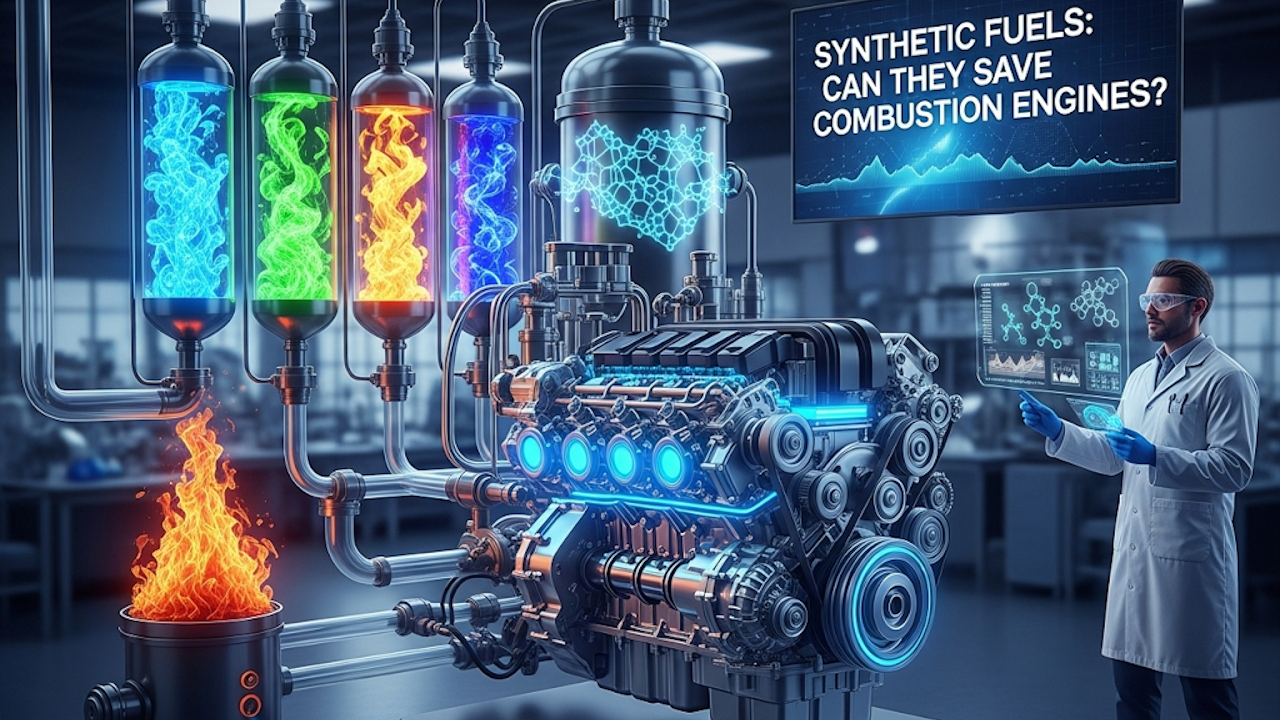
Synthetic fuels, often called e-fuels, represent a promising technological approach to decarbonizing transportation while preserving the internal combustion engine. These man-made liquids mimic the chemical properties of traditional gasoline and diesel but are produced from renewable sources rather than fossil fuels. As governments worldwide push for net-zero emissions and phase out new fossil-fuel vehicles, synthetic fuels offer a potential bridge to keep existing and future combustion engines operational without contributing additional carbon dioxide to the atmosphere. The central question is whether they can truly extend the life of internal combustion engines on a meaningful scale or if they remain a niche solution overshadowed by battery electric vehicles.
What Are Synthetic Fuels?
Synthetic fuels are hydrocarbons created through chemical processes that combine captured carbon dioxide with hydrogen derived primarily from renewable electricity. The most common pathway is known as power-to-liquid technology. First, renewable energy sources such as wind or solar power electricity for electrolysis, splitting water into hydrogen and oxygen. The hydrogen then reacts with carbon dioxide, often captured directly from the air or industrial emissions, in processes like the Fischer-Tropsch synthesis to produce liquid fuels. These fuels are chemically identical to their fossil counterparts, allowing them to be used as drop-in replacements in conventional engines, fuel systems, and infrastructure.
Unlike biofuels, which derive from plant or animal matter and can compete with food production, synthetic fuels rely on abundant raw materials: water, air, and renewable power. When burned, they release carbon dioxide that was previously captured, resulting in near carbon-neutral operation. This closed-loop carbon cycle distinguishes them from fossil fuels, which release ancient carbon stores into the modern atmosphere.
Production Methods and Current Developments
The core production route involves several energy conversion steps. Electrolysis produces green hydrogen, which is then synthesized into methanol or longer-chain hydrocarbons. Companies like Porsche have invested heavily in pilot plants, such as one in Chile powered by wind energy, to demonstrate feasibility. Other players, including startups and established energy firms, explore variations using concentrated solar power or integrated carbon capture to improve efficiency.
Recent advancements aim to reduce costs and energy losses. Some technologies seek to minimize conversion steps or use direct air capture more effectively. Pilot projects have produced small volumes of e-gasoline and e-diesel suitable for road testing. In motorsport and aviation, where high energy density is critical, synthetic fuels show particular promise. Formula 1 and other racing series have explored their use, and aviation faces fewer alternatives for long-haul flights.
Scaling remains the primary hurdle. Current production is limited and expensive, with facilities operating at demonstration scale rather than industrial levels. Projections suggest that with massive renewable energy buildout and technological improvements, costs could fall significantly in the coming decades. Some optimistic analyses claim potential parity with fossil fuel prices at gigawatt-scale operations in favorable locations like sun-rich deserts.
Advantages for Combustion Engines
The strongest argument for synthetic fuels is compatibility. Millions of internal combustion engine vehicles already on the road, from daily commuters to classic cars, can use these fuels without modifications. Refueling stations require minimal changes, preserving the global liquid fuel infrastructure worth trillions of dollars. This avoids the massive capital investment needed for widespread electric vehicle charging networks.
For enthusiasts and manufacturers like Ferrari, synthetic fuels could sustain high-performance engines that deliver the sound, feel, and power delivery impossible to replicate perfectly in electric drivetrains. Luxury and sports car makers view them as a way to continue producing iconic internal combustion models while meeting emissions regulations. In regions with cold climates or long-distance travel needs, liquid fuels offer advantages in energy density and quick refueling compared to batteries.
Synthetic fuels also address sectors difficult to electrify fully, such as heavy-duty trucking, shipping, and aviation. For passenger cars, they could extend the usability of the existing fleet, reducing the environmental impact of premature scrappage. When produced with renewable energy, they enable carbon-neutral driving without forcing consumers to purchase new vehicles.
Challenges and Limitations
Despite the appeal, synthetic fuels face substantial obstacles. Energy efficiency is a major concern. The multiple conversion steps, from electricity to hydrogen to liquid fuel to engine power, result in significant losses. Estimates suggest that only about 10 to 18 percent of the original renewable electricity reaches the wheels in a synthetic fuel vehicle, compared to roughly 70 to 90 percent for battery electric vehicles. This means synthetic fuels require far more renewable energy generation to achieve the same transportation output.
Cost represents another barrier. Today, synthetic fuels command premium prices, often several times higher than conventional gasoline. Even with scale, they may remain more expensive due to high electricity inputs and capital costs for production facilities. Analyses indicate that running a car on e-fuels could cost thousands of euros more over several years than an equivalent electric vehicle.
Production scalability poses questions about resource allocation. Prioritizing synthetic fuels for cars could divert renewable electricity from more efficient direct uses or harder-to-decarbonize sectors. Critics argue that limited renewable capacity would be better deployed charging electric vehicles directly rather than synthesizing fuels. Air pollution concerns persist, as combustion still produces nitrogen oxides and particulate matter, though cleaner formulations can mitigate some emissions.
Infrastructure and policy add complexity. While drop-in compatibility is a strength, building enough production capacity to replace even a fraction of global fuel demand requires enormous investment. Regulatory frameworks, such as the European Union’s potential allowances for e-fuel-only vehicles after 2035, remain in development and could face challenges if supply proves insufficient.
Comparison with Electric Vehicles
Electric vehicles dominate discussions on future mobility due to their superior tank-to-wheel efficiency and falling battery costs. Lifecycle analyses generally show lower overall emissions for electric vehicles, even accounting for battery production, when charged on increasingly clean grids. Electric drivetrains also offer lower maintenance, instant torque, and quieter operation.
Synthetic fuels, however, excel in specific niches. They provide a transitional path for legacy vehicles and applications where batteries struggle with weight or refueling time. A hybrid approach, blending some electrification with synthetic fuels for certain segments, may emerge as pragmatic. Neither technology is perfect, and regional factors such as renewable resource availability, grid strength, and driving patterns will influence the optimal mix.
The Road Ahead
Synthetic fuels will not single-handedly save mass-market combustion engines in everyday passenger cars. Efficiency and cost disadvantages make them less competitive against electric vehicles for most personal transport. However, they could play a vital role in preserving automotive heritage, powering high-performance vehicles, and decarbonizing sectors resistant to electrification. Continued research into more efficient production methods, combined with abundant cheap renewable energy, could improve their viability.
Ultimately, synthetic fuels represent one tool among many in the transition to sustainable mobility. Their success depends on technological breakthroughs, policy support, and investment levels. Combustion engines have powered human progress for over a century. With synthetic fuels, a cleaner version of that legacy might endure where it adds the most value, even as electric power takes the lead in many applications. The coming decades will determine whether this technology fulfills its potential or remains a specialized solution in a predominantly electric future.