

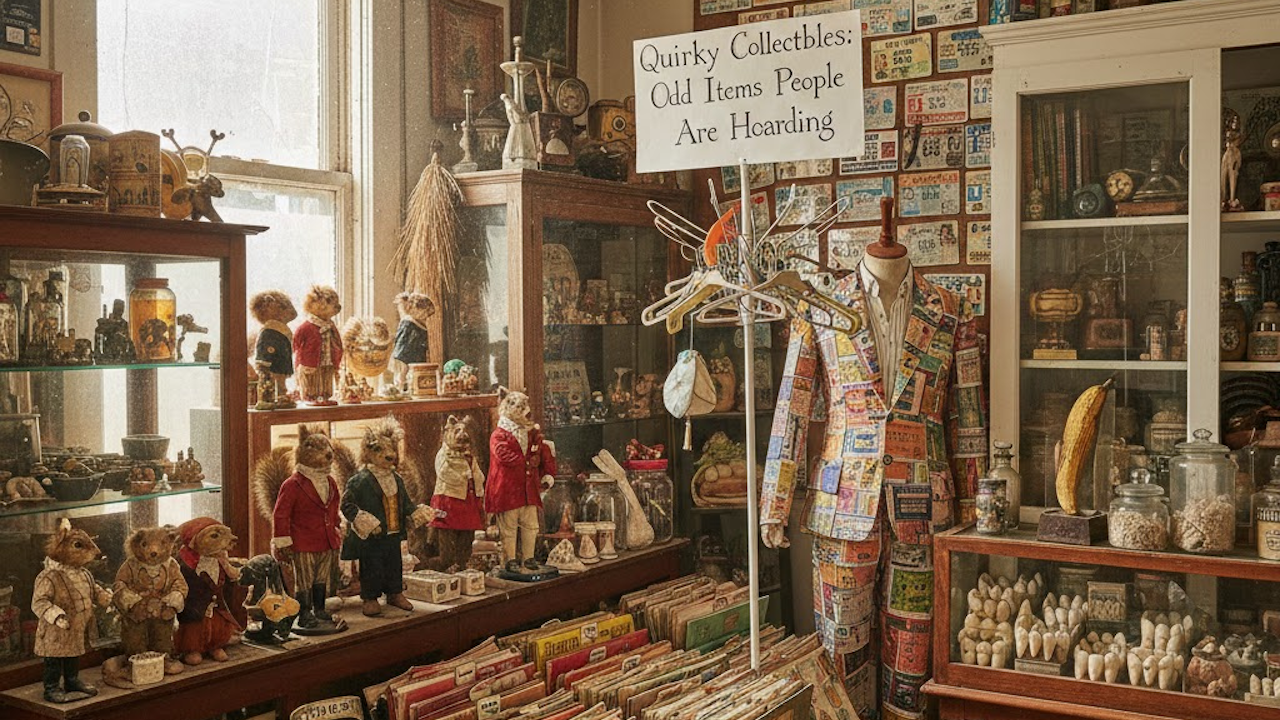
In an age of mass production and digital minimalism, you might expect people to be shedding possessions rather than collecting them. Yet all over the world, individuals are quietly hoarding objects that are strange, hyper specific, and often deeply charming. These quirky collectibles may not make sense to outsiders, but to their owners they represent memory, identity, humor, and sometimes a quiet rebellion against sameness. From obsolete technology to oddly shaped food containers, the world of odd collectibles is thriving.
One increasingly popular category is outdated technology. People are stockpiling floppy disks, early iPods, pagers, and even VHS rewinders. These items are rarely functional anymore, but they carry powerful nostalgia. For some collectors, holding a translucent iMac mouse or a brick sized mobile phone is a way of preserving the feeling of a slower, more tactile digital era. Others see these objects as future museum pieces, artifacts of a time when technology felt experimental rather than invisible. Shelves of tangled cords and chunky hardware become personal archives of progress.
Another surprising collectible is packaging, especially from fast food and consumer goods. Vintage soda cans, discontinued cereal boxes, and old McDonald’s fry containers are being carefully stored in basements and display cases. What makes this especially odd is that many of these items were designed to be thrown away within minutes. Their appeal lies in graphic design, branding history, and the emotional pull of childhood. A faded juice box with a cartoon mascot can spark memories more vividly than a photograph. For collectors, saving trash is not about messiness but about rescuing fleeting moments from oblivion.
Instruction manuals and paperwork are also gaining devoted followers. While most people toss manuals the second a device works, some individuals collect them obsessively. They organize binders full of guides for microwaves, VCRs, printers, and toys, even if they never owned the items themselves. There is comfort in the tone of these documents, with their overly polite warnings and cheerful diagrams. They represent a time when companies assumed customers would read carefully and fix things themselves. In a world of QR codes and online help forums, printed instructions feel oddly intimate.
Then there are collectors of very specific everyday objects. Some people hoard hotel room key cards from every place they have stayed. Others collect matchbooks, bottle openers, coasters, or grocery store loyalty cards. These collections often start accidentally and slowly become intentional. The objects are small, free, and easy to justify keeping. Over time, they form a map of someone’s life, showing where they have been and what routines shaped them. What looks like clutter to one person becomes a personal timeline to another.
Food related collectibles take oddness to another level. People save novelty salt and pepper shakers, oddly shaped pasta, limited edition candy wrappers, and even unopened expired snacks. The appeal is partly visual and partly emotional. Food packaging is playful by design, full of bright colors and exaggerated promises. Limited runs and seasonal releases create urgency, turning ordinary items into trophies. Keeping them untouched feels like freezing a moment of excitement, even if the contents are no longer edible.
Miniatures deserve a special mention. Some collectors seek out tiny versions of normal objects like miniature books, tools, furniture, or grocery items. These objects serve no practical purpose, yet they inspire fascination. They highlight the care and precision involved in shrinking the familiar. For many people, miniatures spark a sense of control and order, as if the world is more manageable when reduced in size. Entire rooms are dedicated to dollhouse scale replicas that mirror real life with uncanny accuracy.
There are also collectors drawn to the bizarre or unsettling. Think of taxidermy insects, medical instruments, antique prosthetics, or obsolete safety signs. These items sit at the edge of comfort and discomfort, which is precisely the point. Collectors of oddities often see themselves as curators of forgotten or misunderstood objects. They preserve things society has decided not to look at anymore. In doing so, they challenge ideas about what is acceptable to keep and display.
What unites all these quirky collectibles is not monetary value but meaning. Most of these items will never appear on an auction show or behind museum glass. Their worth is deeply personal. Collecting odd things allows people to tell stories without words. Each object becomes a prompt for memory, humor, or curiosity. In a culture that often pushes people toward efficiency and decluttering, these collections offer permission to be sentimental, strange, and selective in unconventional ways.
Ultimately, quirky collectibles remind us that humans are not just consumers but storytellers. We attach significance to objects far beyond their intended use. Whether it is a stack of outdated manuals or a drawer full of key cards, these odd hoards reflect individuality in a standardized world. They prove that meaning does not always come from what we are told to value, but from what we choose to keep.