

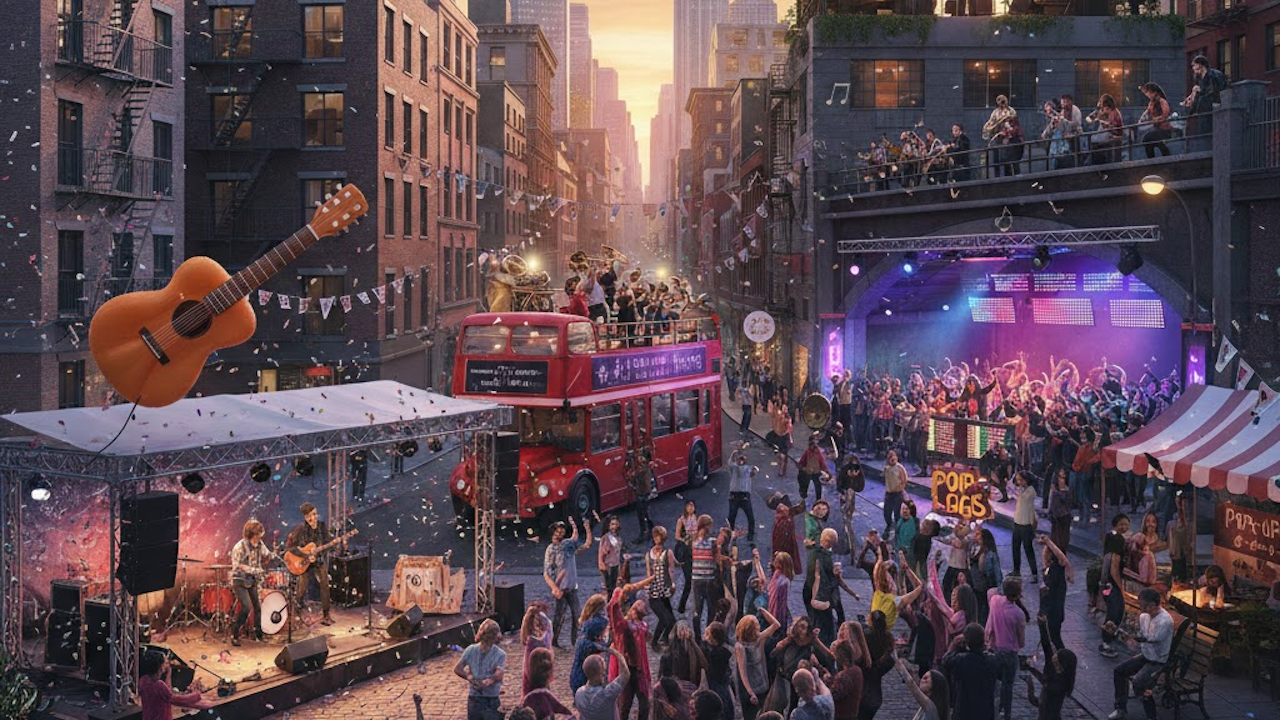
In cities across the globe, ordinary spaces are turning into stages without warning. A quiet warehouse district in Brooklyn erupts with music one evening. A corner bodega in Manhattan hosts an unexpected performance that spills into the street. A rooftop in London or a living room in Berlin becomes the site of an intimate concert announced only hours earlier. These are pop-up gigs, temporary live music events that appear suddenly, draw crowds through surprise or secrecy, and disappear just as fast. They are reshaping how people encounter live music and how cities feel at night.
The trend has accelerated in recent years. What began as niche experiments has grown into a noticeable force in urban entertainment. Traditional venues still dominate major tours, yet pop-up gigs fill gaps with flexibility, intimacy, and accessibility that fixed spaces often lack. They thrive on social media virality, post-pandemic cravings for real-world connection, and the practical advantages of low-overhead production. The result is a layer of spontaneous culture layered over city grids, turning empty lots, underused buildings, and public corners into fleeting hubs of sound and community.
The Roots of the Pop-Up Revolution
Pop-up culture did not emerge overnight. Temporary retail activations gained popularity in the 2000s and 2010s as brands tested markets with short-term stores that generated buzz without long leases. Music scenes borrowed the model. Artists and labels set up brief merchandise or listening experiences tied to tours. Over time, the focus shifted from products to performances themselves.
Early precursors included flash mobs, coordinated public dances or musical actions that assembled and dispersed quickly, often shared online. Guerrilla performances by independent musicians in parks or subways tested the waters. The real catalyst arrived after 2020. Pandemic restrictions closed or limited many traditional venues. Capacity caps, curfews, and economic pressures left artists and promoters seeking alternatives. Pop-ups required less capital, fewer permanent commitments, and could adapt to changing rules. What started as necessity evolved into preference.
Organizations like Sofar Sounds helped formalize the approach. Founded in 2009 in London, the platform grew from a simple frustration. Its creator wanted audiences to focus on music rather than talk over it in noisy bars. The first events took place in a flat with a small group of friends. The model spread: secret locations, small audiences, emerging artists, and short sets in unconventional spaces. Today the network reaches hundreds of cities worldwide. Locations might be rooftops, warehouses, hotel lobbies, or private homes. Tickets are managed through an app, with details revealed close to showtime to preserve intimacy and prevent overcrowding.
This structured version sits alongside looser, artist-driven surprises. Big names now use pop-ups for promotion or genuine connection. The format allows testing material, building direct fan relationships, and creating shareable moments that traditional arena shows rarely match.
Why Pop-Ups Are Thriving in Urban Environments
Several forces converge to make cities fertile ground. Economic realities play a central role. Rent and overhead for permanent venues have risen sharply in many places. Pop-ups sidestep much of that burden. A promoter might need only portable sound equipment, basic lighting, insurance for a single night, and social media promotion. Emerging artists gain stages without competing for scarce club bookings. Cities benefit too. Temporary events activate vacant storefronts, empty lots, and underutilized public areas, bringing foot traffic to nearby cafes, bars, and shops without requiring long-term public spending.
Audience psychology matters equally. Years of streaming and virtual events left many people craving shared, unpredictable experiences. Pop-ups deliver novelty and exclusivity. The uncertainty of location or timing creates excitement and word-of-mouth momentum. A single video posted online can fill a space within hours. Fans value the sense of discovery and the proximity to performers that large venues dilute.
Urban density amplifies everything. Cities concentrate creative talent, potential audiences, and interesting spaces. A warehouse in an industrial zone or a park with a skyline view offers atmosphere that purpose-built rooms sometimes lack. Social media turns these locations into content goldmines. Clips from intimate or surprising shows spread rapidly, attracting both locals and visitors.
Technology lowers barriers further. Smartphones enable instant coordination, ticketing, and live sharing. Platforms allow organizers to reach targeted groups quickly. For bigger surprises, an artist with millions of followers can mobilize a crowd almost instantly. The combination of digital tools and physical spontaneity creates a hybrid energy unique to this era.
Spotlight on New York City: Surprise Performances and Secret Venues
New York exemplifies the trend in full force. The city has seen a noticeable increase in pop-up concerts and events in recent years. Ordinary spaces become stages with little advance notice. In September 2025, Ed Sheeran performed unannounced at Domino Park in Williamsburg, Brooklyn. With the Manhattan skyline behind him, he played songs from his album Play alongside hits. The event drew an enthusiastic neighborhood crowd that sang along, turning a waterfront promenade into a communal celebration. It served both as fan engagement and album promotion, showing how established artists leverage the format.
Cardi B took a different route with a bodega pop-up in Washington Heights. The turnout exceeded expectations dramatically. Organizers described underestimating the response, and the artist expressed emotion at the scale of community support. Such events highlight how pop-ups can feel rooted in specific neighborhoods while drawing wider attention through social sharing.
Sofar Sounds maintains a steady presence across the city, transforming hotel rooms, rooftops, and other non-traditional spots into listening rooms. Free or low-cost public sound series have also appeared, bringing performances to parks and streets. House music collectives organize pop-up parties in Manhattan and Brooklyn venues, sometimes announced with short notice. The density of artists, fans, and media makes New York a natural laboratory. Events range from polished productions tied to major platforms to raw, DIY gatherings in experimental spaces.
The variety reflects the city itself. Some pop-ups emphasize accessibility and surprise for broad audiences. Others prioritize intimacy and discovery for dedicated music fans. Together they contribute to a nightlife ecosystem that extends beyond established clubs and arenas.
London and the Birth of Intimate Gig Movements
London holds a special place as the origin point for organized intimate pop-ups through Sofar Sounds. The model of secret, small-scale shows in everyday spaces has deep roots here. The city’s mix of historic buildings, creative districts, and dense populations supports both structured series and more spontaneous warehouse or rooftop events.
Beyond Sofar, London’s electronic and indie scenes have long embraced temporary activations. Disused industrial spaces and alternative venues host one-off parties that align with the pop-up spirit. The emphasis on experience over spectacle resonates in a city where traditional venue economics can be challenging. Artists and promoters value the ability to create focused environments where music takes center stage without the distractions common in larger rooms.
The global reach of London-originated concepts shows how a local idea can scale. Events in the city continue to influence practices elsewhere, particularly in how secrecy and intimacy are marketed as features rather than limitations.
Berlin’s Underground Pulse and Temporary Spaces
Berlin offers a contrasting but complementary model. The city’s reputation for techno and experimental music rests partly on a fluid, DIY approach to spaces. Warehouse parties and events in disused buildings have been common for years. While not always framed explicitly as “pop-ups,” many operate with similar flexibility: short-notice organization, use of non-permanent locations, and strong community ties.
The scene values artistic freedom and accessibility. Temporary events allow experimentation with sound, visuals, and formats that fixed clubs might constrain. Berlin’s history of alternative culture and relatively permissive attitudes toward nightlife have sustained this energy even as other cities tightened regulations. Pop-up style gatherings contribute to the city’s identity as a destination for those seeking raw, immersive musical experiences.
Cross-pollination occurs too. Artists and organizers move between cities, carrying ideas about intimate versus large-scale events and how to activate urban spaces creatively.
Los Angeles and Beyond: Spreading the Phenomenon
Los Angeles mirrors elements seen elsewhere while adding its own flavor. Sofar Sounds events appear regularly in creative neighborhoods. Warehouse and outdoor activations complement the region’s entertainment infrastructure. Artists tied to film, television, and recording industries sometimes use pop-ups for low-key releases or fan appreciation.
Smaller cities are adopting versions of the model as well. Organized pop-up arts and music festivals bring performances to public locations on regular schedules, turning weekends into cultural explorations without requiring permanent infrastructure. These initiatives demonstrate that the appeal extends beyond global capitals. Communities everywhere seek ways to inject vibrancy into daily life.
Economic Ripples and Community Building
The economic effects extend beyond ticket sales. Pop-up events drive spending at nearby businesses. Attendees often combine a show with meals, drinks, or shopping. Local vendors experience temporary surges. Production roles for sound, lighting, security, and promotion create short-term work for freelancers. Over many events, this supports a broader ecosystem of gig workers in the live music sector.
For artists, especially emerging ones, pop-ups provide crucial exposure and income streams. Direct connections with fans can lead to longer-term support through streaming, merchandise, or future tours. The format lowers barriers compared with securing slots at established venues.
Socially, these events foster connection. Intimate settings encourage interaction among strangers who share musical tastes. Neighborhood-based surprises can bridge longtime residents and newer arrivals. The shared experience of an unexpected performance creates stories and bonds that digital content alone rarely achieves. Cities gain intangible benefits too: enhanced cultural reputation and proof that public and semi-public spaces can serve as vibrant gathering points.
Navigating the Hurdles: Permits, Safety, and Sustainability
Growth brings complications. Many pop-ups, particularly spontaneous ones, operate in regulatory gray areas. Amplified sound in public or semi-public spaces often requires permits covering noise levels, crowd size, and safety measures. When large crowds gather unexpectedly, risks around overcrowding, emergency access, and security increase. Cities and organizers are developing better coordination. Some municipalities streamline approvals for temporary cultural events to encourage activity while protecting public welfare.
Noise complaints from residents represent a recurring tension. What energizes one group disrupts another. Successful events often incorporate time limits, community notification, or careful site selection.
Equity and gentrification concerns also surface. Pop-ups can draw attention to emerging neighborhoods, accelerating interest from developers and changing demographics. Longtime residents and artists who helped build local scenes sometimes feel sidelined. Thoughtful curation and inclusive practices help mitigate these effects.
Environmental considerations are gaining attention. Single-night events can produce waste from temporary setups. Organizers increasingly prioritize reusable materials, waste reduction, and encouragement of public transit use.
Technology’s Role in the Pop-Up Boom
Digital tools are central to the model’s success. Social platforms enable rapid promotion and audience mobilization. Short video clips create anticipation and document moments that extend an event’s reach far beyond physical attendance. Ticketing apps manage capacity and payments efficiently. For secret shows, controlled information release maintains exclusivity while building excitement.
Looking forward, technology may deepen integration. Data can help predict attendance and optimize logistics. Augmented elements could add visual layers to physical performances. Hybrid formats might allow remote participation alongside in-person intimacy. These developments could expand access without diluting the core appeal of shared physical presence.
Looking Ahead: The Future of Spontaneous Sounds in Cities
The trajectory points toward continued growth and professionalization. Cities may designate zones or create supportive policies for temporary events, recognizing their contribution to cultural vitality and local economies. More structured series could coexist with guerrilla surprises. Artists will likely explore new creative uses, from testing experimental work to fostering direct community ties.
Challenges around regulation, safety, and equity will require ongoing attention. Solutions that balance spontaneity with responsibility will determine how widely the model can scale. Sustainability practices will become standard expectations rather than optional features.
Ultimately, pop-up gigs endure because they address enduring human desires. In increasingly structured and digital lives, they restore elements of surprise, intimacy, and collective joy. They activate urban spaces in ways that feel alive and responsive. As more people experience the thrill of a performance appearing where none was expected, the movement embeds itself deeper into city rhythms.
The soundtrack of urban life is evolving. Fixed venues will remain important, yet a parallel world of temporary stages is expanding across neighborhoods. Pop-up gigs are not replacing traditional scenes so much as enriching them, offering new entry points and fresh energy. Cities that embrace this layer of spontaneous culture stand to become more dynamic, connected, and memorable places to live and visit. The takeover is well underway, one surprise set at a time.