

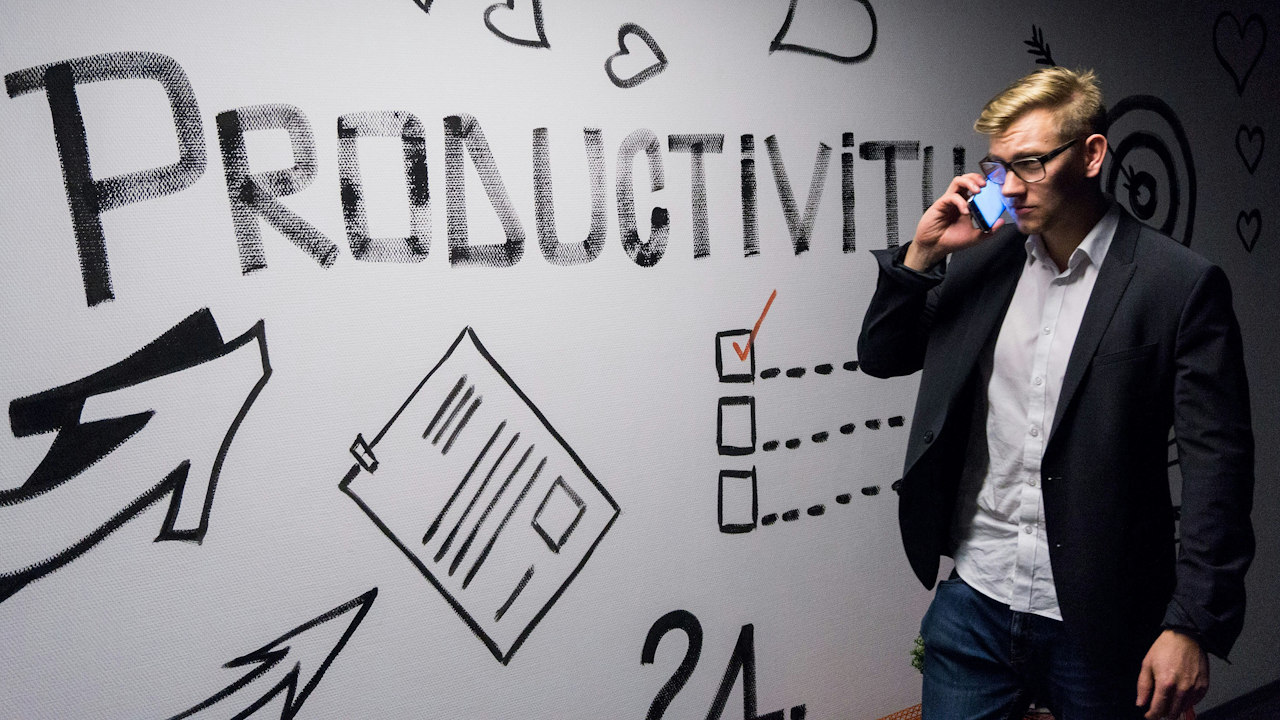
In an era where work and life increasingly blur into a digital tapestry, productivity has become both a personal quest and a professional imperative. The average knowledge worker juggles dozens of tasks daily, from emails and meetings to creative brainstorming and data analysis. Yet, the tools we use can either streamline this chaos or amplify it. Enter productivity applications: software designed to organize, automate, and optimize our workflows. These apps are not mere conveniences; they are strategic allies that can transform scattered efforts into focused achievements.
This article delves into the optimal applications for enhancing productivity across key categories. We will explore task management tools to prioritize and track goals, note-taking apps for capturing ideas, time trackers for mindful allocation, collaboration platforms for team synergy, automation software for efficiency, focus enhancers to combat distractions, and habit builders for long-term discipline. By examining real-world use cases, features, and best practices, we aim to equip you with actionable insights. Whether you are a freelancer, executive, or student, selecting the right apps can unlock hours of reclaimed time and sharper focus. Let us begin by breaking down the landscape.
Task Management Apps: The Backbone of Structured Work
At the heart of productivity lies task management. These apps help users break down projects into actionable steps, set deadlines, and monitor progress. Without them, even the most ambitious plans dissolve into forgetfulness.
One standout is Todoist. Known for its simplicity and power, Todoist allows users to create tasks with natural language input, such as “Schedule team meeting tomorrow at 3 PM.” It integrates labels, priorities, and recurring tasks, making it ideal for personal and professional use. For instance, a project manager might assign subtasks to team members and visualize progress via a Kanban board. Its cross-platform sync ensures seamless access on desktop, mobile, or web. Pricing starts free, with premium features like reminders at $4 per month.
For those preferring visual workflows, Trello shines. Built on the Kanban method, Trello uses boards, lists, and cards to represent projects. A marketing team could have a board for “Content Calendar” with lists like “Ideas,” “In Progress,” and “Published.” Power-ups such as calendar views or automation via Butler add depth without complexity. Free for basic use, it scales to business plans at $10 per user monthly.
Asana takes a more robust approach, suited for larger teams. It excels in dependency mapping, where tasks link sequentially, preventing bottlenecks. A software development team might use timelines to align sprints with milestones. Custom fields for budgets or risks enhance its versatility. The free tier supports up to 15 users, while advanced reporting costs $10.99 per user monthly.
When choosing a task manager, consider your workflow: linear for individuals (Todoist), visual for creatives (Trello), or hierarchical for enterprises (Asana). Integrate with calendars like Google Calendar to avoid silos, and review weekly to refine your system.
Note-Taking and Organization: Capturing the Spark of Ideas
Ideas strike unpredictably, often during commutes or conversations. Note-taking apps serve as digital vaults, ensuring nothing valuable slips away. They evolve beyond scribbles into searchable, interconnected knowledge bases.
Evernote remains a veteran choice, with robust search across text, images, and PDFs. Users can tag notes, create notebooks, and clip web articles effortlessly. A researcher might organize conference takeaways into a “2026 Trends” notebook, then search for “AI ethics” to pull relevant clippings. Offline access and task integration make it indispensable for mobile users. Basic use is free; premium unlocks unlimited devices for $14.99 monthly.
For a more modern, minimalist vibe, Notion redefines versatility. It functions as notes, databases, wikis, and even lightweight project trackers in one. A content creator could build a dashboard with linked pages for outlines, assets, and publishing schedules. Templates abound, from habit trackers to reading lists. Free for individuals, teams pay $8 per user monthly. Its block-based editor allows embeds like YouTube videos or Figma prototypes, fostering creativity.
Obsidian appeals to power users with its markdown foundation and graph view, visualizing note connections like a personal mind map. Writers or students benefit from backlinks, where mentioning a concept auto-creates pathways. It stores data locally for privacy, with sync via their service at $4 monthly. No native collaboration, but plugins extend functionality.
Optimal selection hinges on needs: Evernote for scanning-heavy workflows, Notion for all-in-one hubs, Obsidian for interconnected thinking. Adopt the Zettelkasten method, linking notes to build a second brain, and schedule monthly audits to prune outdated entries.
Time Management Tools: Mastering the Clock
Time is finite; how we spend it defines output. Time management apps quantify hours, reveal patterns, and enforce techniques like Pomodoro (25 minutes focused work, 5-minute break).
RescueTime runs in the background, tracking app and website usage to generate reports. A remote worker discovers 40% of their day lost to social media, prompting adjustments. Goals set boundaries, like limiting email to 30 minutes hourly. Free for basics, premium insights cost $6 monthly.
Toggl Track simplifies manual logging with a timer that categorizes activities. Freelancers bill accurately by client or project, exporting reports for invoices. Pomodoro integration and idle detection add precision. Free for solo users, teams start at $9 per user monthly.
Focus@Will leverages neuroscience-backed music to boost concentration, paired with a timer. Studies suggest it increases focus by 400% for some. Genres like “Alpha Waves” suit analytical tasks. At $9.95 monthly, it includes productivity analytics.
For Pomodoro purists, TomatoTimer (web-based) or Forest (mobile) gamify sessions. Forest grows virtual trees during focus periods; distractions kill them, building accountability. Free web versions exist, with apps at $1.99 one-time.
Pair these with the Eisenhower Matrix: categorize tasks by urgency and importance in your task app. Track weekly to identify time thieves, aiming for 80% focused work.
Collaboration Platforms: Fueling Team Dynamics
Solo productivity pales against collective effort. Collaboration apps synchronize teams, reducing email overload and miscommunication.
Slack revolutionized messaging with channels, threads, and integrations. A sales team uses #leads for updates, bots for reminders, and huddles for quick calls. Free for small teams, pro plans at $7.25 per user monthly include unlimited history.
Microsoft Teams embeds chat, video, and file sharing in one, excelling in Office 365 ecosystems. HR departments host town halls or co-edit docs in real-time. Free personally, business at $4 per user monthly.
Notion and Asana double as collaborators, but for pure communication, Discord adapts well to non-gaming uses with voice channels and screen sharing. Free with nitro upgrades at $9.99 monthly.
Best practices: Establish norms like response times and channel etiquette. Use polls for decisions and integrate with calendars for availability. Measure success by reduced meeting times and faster resolutions.
Automation and Workflow Tools: Eliminating Repetition
Manual drudgery saps energy. Automation apps script routines, from email sorting to data entry.
Zapier connects 5,000+ apps without coding. A trigger like “New Gmail” zaps to “Add Trello card.” Free for 100 tasks monthly, starter at $19.99 scales volume.
IFTTT (If This Then That) offers simpler applets, like syncing RSS feeds to notes. Free for basics, pro at $3.99 monthly unlocks multi-step.
For developers, n8n provides open-source workflows with nodes for APIs. Self-host for free, or cloud at $20 monthly.
Start small: Automate one pain point weekly. Security tip: Review permissions regularly to protect data.
Focus and Distraction Blockers: Guarding Mental Space
Distractions fragment attention; blockers reclaim it. Freedom blocks sites across devices, scheduling focus sessions. At $6.99 monthly, it reports usage.
Cold Turkey freezes apps entirely, ideal for deadlines. One-time $39 purchase.
StayFocusd (Chrome extension) limits site time, free and customizable.
Combine with environmental cues: noise-cancelling headphones and dedicated workspaces. Track deep work hours to celebrate gains.
Habit Trackers: Building Sustainable Discipline
Productivity endures through habits. Trackers reinforce routines.
Habitica gamifies tasks as RPG quests; complete them for rewards. Free, with subscriptions at $4.99 monthly.
Streaks (iOS) chains daily actions, breaking at $4.99 one-time.
Loop Habit Tracker (Android) visualizes progress, free and open-source.
Use the 21/90 rule: 21 days to form, 90 to solidify. Review quarterly for relevance.
Conclusion: Crafting Your Productivity Ecosystem
Optimal applications form an ecosystem, not isolated silos. Audit your day: Identify bottlenecks, then layer tools incrementally. Start with 2-3 apps, integrate via APIs, and iterate based on metrics like completed tasks or energy levels.
Remember, technology amplifies intent; pair apps with principles like single-tasking and rest. In 2026’s accelerated world, those who wield these tools wisely will not just keep pace but lead. Experiment boldly, measure relentlessly, and watch productivity flourish. Your most productive self awaits.