

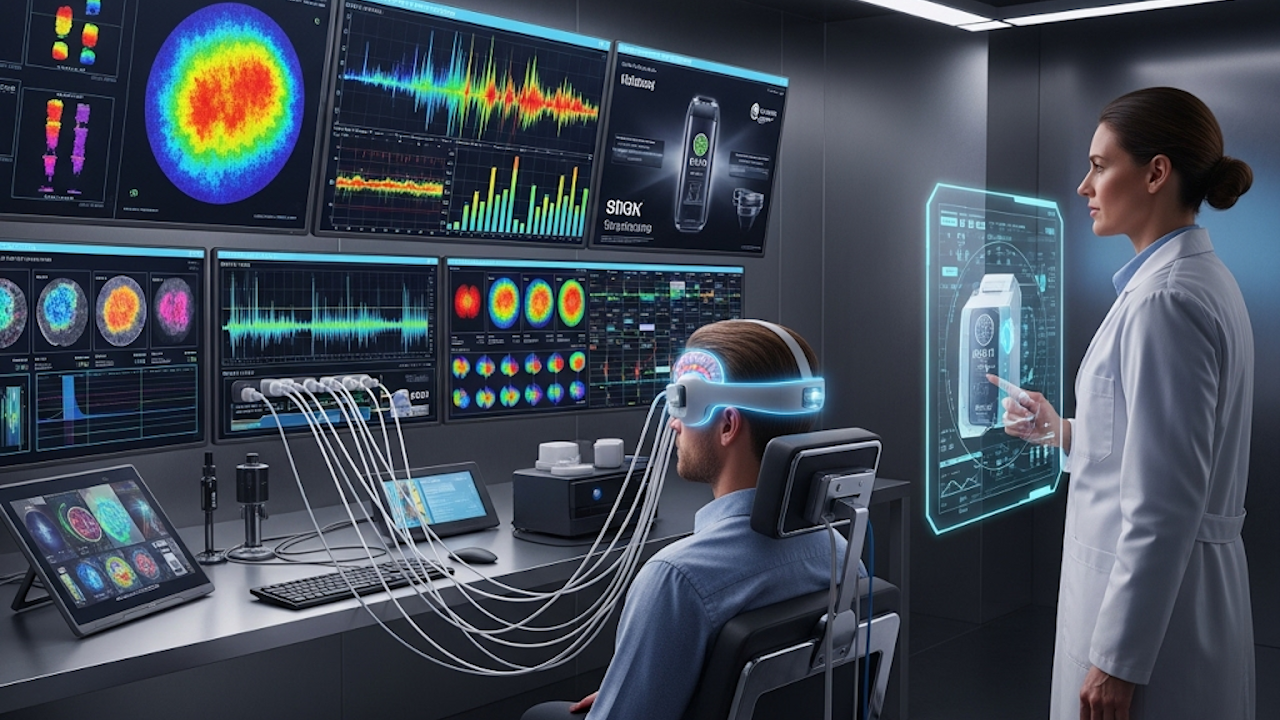
Neuromarketing represents one of the most intriguing intersections of neuroscience and commerce. It applies brain science tools to uncover the subconscious drivers behind consumer choices, preferences, and behaviors. Traditional marketing research relies on surveys, focus groups, and self-reported data, which often capture what people think they feel or decide. Neuromarketing goes deeper by measuring physiological and neural responses directly, revealing reactions that consumers may not articulate or even recognize.
The Origins and Evolution of Neuromarketing
The roots of neuromarketing trace back to the late 1990s. Gerald Zaltman at Harvard developed the Zaltman Metaphor Elicitation Technique, using visual metaphors to probe deeper consumer insights. The term “neuromarketing” itself gained prominence in 2002 when Dutch professor Ale Smidts formalized it as the application of neuroscientific methods to marketing questions.
Early experiments captured public imagination. One landmark study compared Coca-Cola and Pepsi using functional magnetic resonance imaging. When participants knew the brand, brain areas linked to self-identity and memory lit up more strongly for Coca-Cola, illustrating how branding shapes perception beyond taste. Such findings highlighted that much of decision-making, perhaps up to 95 percent according to some estimates, occurs subconsciously.
The field has grown rapidly. Academic consumer neuroscience explores underlying mechanisms, while commercial neuromarketing applies those insights to campaigns, products, and experiences. Hundreds of specialized firms now operate worldwide, blending neuroscience with marketing strategy.
Core Technologies in Neuromarketing
Neuromarketing employs several key tools, each offering unique insights into consumer minds.
Functional Magnetic Resonance Imaging (fMRI): This technique measures blood flow changes in the brain, indicating active regions with high spatial precision. Researchers place participants in a scanner while exposing them to ads, products, or choices. fMRI excels at identifying reward processing, emotional valuation, and memory activation. For instance, it has shown how pricing influences the perceived pleasure of wine consumption. Higher prices can enhance activation in reward centers, making the same product feel better.
However, fMRI requires expensive equipment, controlled lab settings, and participants to remain still, limiting real-world applicability.
Electroencephalography (EEG): EEG records electrical activity via scalp electrodes, providing excellent temporal resolution for tracking responses in milliseconds. Portable and more affordable than fMRI, it suits testing ads, websites, or store environments. Metrics include attention (via certain frequency bands), emotional valence, and cognitive load. Companies use EEG to predict which movie trailers or commercials will resonate at scale.
Eye-Tracking: This technology follows gaze patterns, fixation duration, and pupil dilation using cameras or glasses. It reveals what captures visual attention, in what order, and for how long. Eye-tracking integrates well with other methods and applies easily in retail or digital settings. Studies show how package designs or website layouts direct or lose consumer focus.
Other Physiological Measures: Galvanic skin response (GSR) detects sweat-induced skin conductance changes linked to arousal and emotion. Facial coding software analyzes micro-expressions for subconscious feelings. Heart rate, respiration, and even hormone sampling provide additional layers of data.
These tools often combine in multimodal studies for richer pictures of consumer response.
Real-World Applications and Case Studies
Brands across industries have embraced neuromarketing to refine strategies.
In packaging, Frito-Lay tested designs and discovered that shiny bags triggered guilt in female consumers, while matte bags with potato imagery performed better. They adjusted accordingly. Campbell’s Soup used eye-tracking to identify visibility issues with familiar packaging and refreshed designs for better shelf impact.
Advertising benefits enormously. The National Cancer Institute tested anti-smoking ads with fMRI. The commercial eliciting strongest brain responses correlated with higher real-world hotline calls. TikTok and others optimize video ads by measuring attention and emotional engagement pre-launch.
Product and store design draw on these insights. IKEA layouts guide shoppers through most of the store, leveraging principles of movement and discovery that neuromarketing validates. FedEx incorporated a subtle arrow in its logo, tapping into subconscious associations with speed.
Branding efforts, like Coca-Cola’s red color or Cadbury’s emotional storytelling, align with neural preferences for familiarity, excitement, and positive memory activation. PayPal shifted messaging toward convenience after studies showed it drove stronger brain responses than security emphasis.
In digital realms, neuromarketing evaluates website navigation, call-to-action buttons, and personalized content. Gaming companies like Xbox use reward system insights to boost engagement and retention.
Political campaigns have also experimented with voter response testing, though this raises additional scrutiny.
Advantages Over Traditional Methods
Neuromarketing addresses limitations of self-report data. People often rationalize choices post hoc or lack awareness of influences like emotions and biases. Brain and body measures capture implicit responses in real time, offering predictive power. Studies show neural signals can forecast sales or crowdfunding success better than surveys alone.
It enables pre-testing to reduce costly flops and supports precise segmentation based on neural profiles rather than demographics alone. Ultimately, it fosters more resonant, effective marketing that aligns with how brains actually work.
Criticisms, Limitations, and Ethical Concerns
Despite promise, neuromarketing faces hurdles. Costs remain high for advanced imaging, though EEG and eye-tracking have democratized access. Interpreting data requires expertise; brain activity is complex and context-dependent, risking overgeneralization.
Sample sizes are often small due to expense, raising questions about generalizability. Cultural and individual differences complicate universal claims.
Ethical debates loom large. Critics worry about manipulation, privacy invasion, or exploiting vulnerabilities. Fears of a “buy button” in the brain persist, though reality is more nuanced. No technology yet grants direct mind control. Concerns include data security, consent in commercial settings, and potential misuse for harmful products.
Some countries have regulated brain imaging to medical or research contexts. Industry self-regulation, transparency, and ethical guidelines help address issues. Proponents argue neuromarketing can create better products and experiences, benefiting consumers when applied responsibly.
The Future of Neuromarketing
Advancements point to greater integration with artificial intelligence for analyzing vast datasets, wearable neurotech for everyday contexts, and virtual reality for immersive testing. Portable, affordable tools will expand access beyond large corporations.
Nanomarketing or other micro-level approaches may emerge alongside AI-driven personalization. Ethical frameworks will evolve in tandem with capabilities. As understanding of decision-making deepens, neuromarketing could transform not just commerce but public policy, health campaigns, and education.
Neuromarketing does not read minds like science fiction. It illuminates hidden processes shaping everyday choices. By bridging tech and human behavior, it equips brands to connect more authentically while challenging society to balance innovation with responsibility. As tools refine, the ability to understand consumers at a neural level will likely become central to competitive marketing, promising both opportunity and ongoing dialogue about its proper use.