

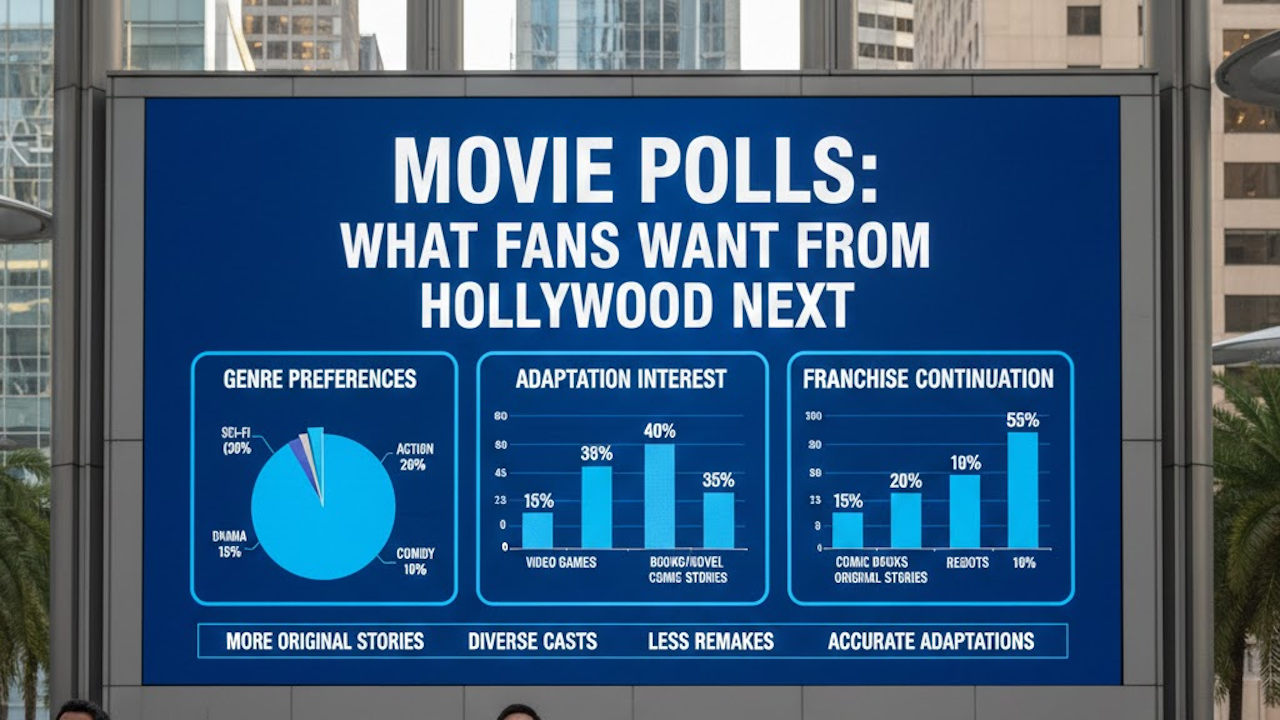
In the middle of 2026, Hollywood finds itself at a familiar crossroads. Box office numbers have shown signs of recovery after years of post-pandemic turbulence, with theatrical attendance climbing and several surprise hits rewriting the usual playbook. Yet beneath the surface of franchise tentpoles and star-driven projects, a clearer picture has emerged from audience surveys, industry reports, and online fan discussions. Moviegoers are sending consistent signals about what they want next. They are not rejecting spectacle or familiar brands entirely. Instead, they are asking for fresher storytelling, broader representation that feels organic, stronger original concepts, and a better balance between safe intellectual property and risk-taking creativity.
Recent data from sources including UCLA’s Hollywood Diversity Report, box office analyses, and audience tracking services paint a portrait of an audience that has grown more selective. Fans still show up for big event movies, but they reward originality and quality more readily than they did a decade ago. The message is not subtle: give us stories that feel new, characters that reflect the world we live in, and fewer recycled plots dressed up as innovation.
Sequel Fatigue Has Reached a Tipping Point
One of the loudest and most consistent complaints from fans centers on the dominance of sequels, prequels, remakes, and reboots. Industry observers and casual viewers alike have voiced frustration with the endless cycle of familiar titles. Comments across social platforms and review aggregators frequently note that audiences feel studios are playing it too safe, relying on brand recognition rather than compelling new ideas.
This sentiment is not purely anecdotal. Analyses of 2025 and early 2026 box office performance show that while established franchises still generate significant revenue, many high-profile installments have underperformed relative to expectations. Some long-running series have seen softer openings and shorter theatrical legs. At the same time, a noticeable number of the year’s stronger performers have been films with little or no prior IP attachment. Original or lightly adapted projects have demonstrated that audiences will turn out when the story itself is the draw.
The fatigue appears particularly acute around certain patterns: endless universe-building that prioritizes setup over payoff, remakes that struggle to justify their existence, and sequels that feel more like obligations than organic continuations. Fans repeatedly express a desire for films that stand on their own merits. They want movies they can recommend to friends without first needing to explain three previous entries or a complicated multiverse timeline.
Original Stories Are Finding Their Audience Again
The counterpoint to sequel fatigue has been the quiet strength of original films. In 2026, several non-franchise titles have posted impressive results, some of them on modest budgets. Low-to-mid budget horror has been especially effective, with certain titles achieving outsized returns that far exceed their production costs. Science fiction and drama projects rooted in strong concepts rather than existing brands have also drawn crowds and sustained interest beyond opening weekend.
This shift is encouraging for filmmakers who have long argued that originality still has commercial value. Audience data suggests that when an original film delivers a clear premise, solid execution, and emotional or intellectual engagement, people respond. Word of mouth remains powerful. Films that generate genuine conversation tend to hold better in subsequent weeks than those that rely primarily on marketing muscle and brand recognition.
Polls and surveys conducted in recent years consistently show a preference among many viewers for new stories. While big IP will always have a place, a substantial portion of the audience wants Hollywood to invest more heavily in original screenplays, unique worlds, and directors with distinctive voices. The success of certain 2026 releases has provided concrete evidence that this appetite exists and can translate into ticket sales.
Diversity That Performs
Representation remains a central topic in discussions of what fans want. UCLA’s latest Hollywood Diversity Report reinforces earlier findings that audiences respond positively to inclusive casting. Films with casts that include meaningful representation of BIPOC talent have, in multiple recent analyses, delivered strong box office results. In some categories, titles with 41 to 50 percent BIPOC casts posted the highest median global and domestic receipts, broader theatrical releases, and stronger opening ranks.
Importantly, this preference is not limited to one demographic. Diverse audiences turn out for a range of genres, and films that reflect a wider cross-section of society often perform well both domestically and internationally. Horror and animation in particular have drawn significant BIPOC viewership in recent tracking. Action titles also attract broad audiences when the casting feels authentic rather than tokenistic.
Fans frequently emphasize that they want representation that serves the story rather than existing as a checkbox. When characters from varied backgrounds are written with depth and agency, audiences notice. When diversity feels forced or superficial, the reaction is often cooler. The data suggests that authentic inclusion correlates with commercial strength, giving studios both a cultural and financial incentive to expand the range of voices both in front of and behind the camera.
Genre Preferences Are Evolving
Genre trends offer another window into audience desires. In recent years, horror and drama have gained ground relative to pure action and broad comedy among top-performing titles. Horror, in particular, continues to demonstrate remarkable resilience. It often requires smaller budgets, delivers high returns when executed well, and maintains a loyal core audience that shows up consistently.
Drama has also found renewed traction, especially when paired with strong performances and timely themes. Audiences appear willing to engage with serious material in theaters when the filmmaking is compelling. At the same time, pure spectacle has not disappeared. Big action and franchise entries still dominate certain weekends. The difference is that audiences seem more discriminating. They expect the spectacle to be supported by coherent storytelling and characters worth caring about.
Comedy remains trickier. Broad theatrical comedies have faced challenges in recent years, with many performers and writers noting that the theatrical comedy landscape has narrowed. Fans still enjoy humor, but they often encounter it more successfully in other formats or in films that blend comedy with other genres. The data points toward a preference for films that deliver emotional range rather than relying solely on one tone.
Quality Over Quantity and the Streaming Factor
Beyond specific genres or casting choices, a recurring theme in fan feedback is the desire for higher overall quality. Many viewers express exhaustion with mediocre mid-budget films that feel like content rather than cinema. They want movies that justify the time and expense of a theatrical outing. Strong writing, confident direction, and memorable performances rank high on lists of what makes a film worth seeing on the big screen.
The relationship between theatrical releases and streaming continues to shape expectations. Some fans appreciate the convenience of streaming but still value the communal experience of theaters for certain kinds of films. Others note that the flood of content on streamers has made them more selective about what they choose to watch in either format. When a film feels distinctive, they are more likely to seek it out in theaters or prioritize it on a platform. When it feels interchangeable with dozens of other titles, it struggles to break through.
Looking Ahead: Practical Signals for Studios
If Hollywood takes fan signals seriously, several practical priorities emerge. First, invest more aggressively in original screenplays and give them the marketing support traditionally reserved for franchises. Second, continue expanding authentic representation in casting and creative roles, recognizing that it aligns with both audience preference and commercial performance. Third, be more selective about sequels. Not every hit needs an immediate follow-up, and not every existing brand benefits from endless expansion. Fourth, support a wider range of budgets and tones so that mid-tier original films have a genuine chance to find their audience.
Fans are not asking for the end of blockbusters or familiar characters. They are asking for balance. They want the excitement of large-scale filmmaking paired with the surprise and emotional payoff that come from fresh ideas. They want stories that respect their intelligence and their time. And they want a Hollywood that treats originality as a viable strategy rather than a risky exception.
The data from recent years supports an optimistic reading. When studios have delivered films that prioritize strong concepts, inclusive casting, and careful craftsmanship, audiences have responded. The path forward is not mysterious. It requires listening to the signals already visible in box office results, survey data, and the ongoing conversation among fans. Hollywood has the resources and the talent. What remains is the willingness to trust that audiences still care about the movies themselves, not just the brands attached to them.
As 2026 continues and planning for the years ahead intensifies, the clearest message from the seats is straightforward. Give us something new worth talking about. Make it good. Make it feel like it belongs to this moment. Do that, and the audience will show up.