

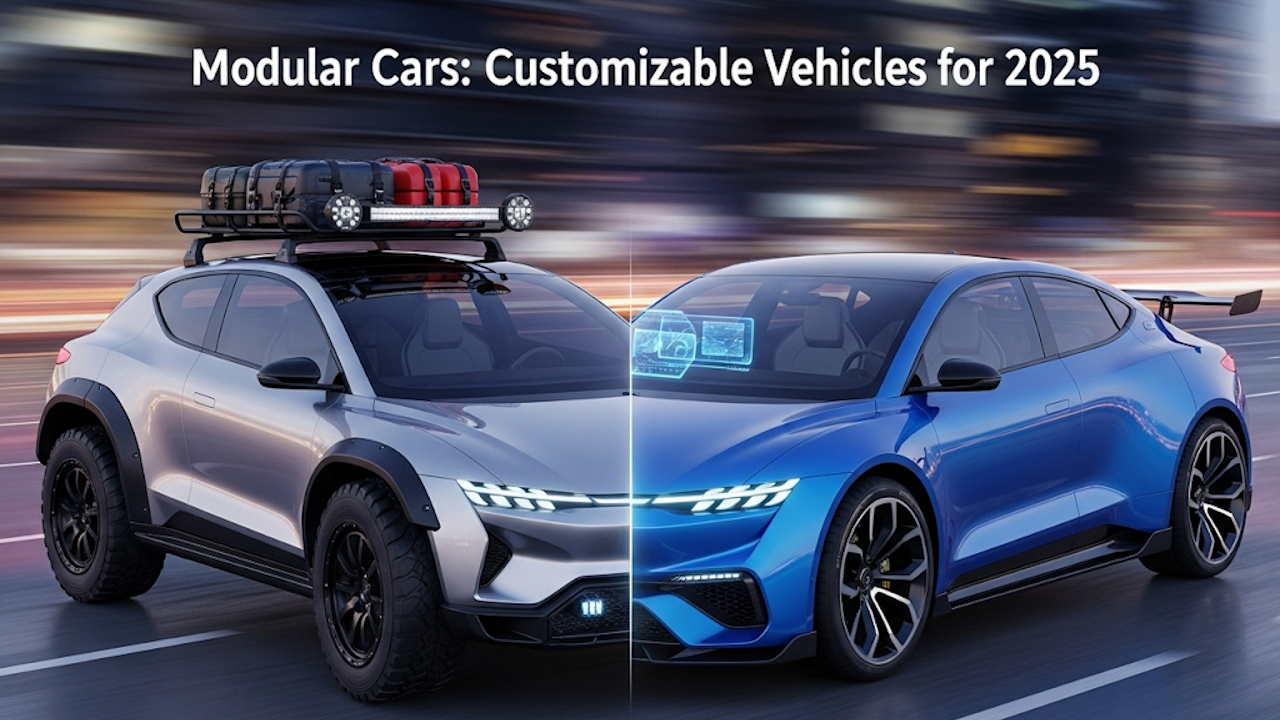
The automotive industry stands at a pivotal moment in 2025. Rising costs, environmental concerns, and consumer demand for personalization drive innovation toward modular vehicles. These cars feature interchangeable components and platforms that allow owners to adapt their vehicles over time. Unlike traditional fixed-design automobiles, modular cars offer flexibility in body styles, features, and functionality. This approach promises affordability, sustainability, and longevity.
Modular design draws inspiration from consumer electronics and furniture industries. Buyers purchase a core chassis and add or swap modules as needs evolve. This reduces waste from frequent vehicle replacements and empowers users to create vehicles tailored to their lifestyles.
The Rise of Modular Architecture in Electric Vehicles
Electric vehicles accelerate the shift to modularity. Battery platforms and skateboard-style chassis serve as foundations for multiple body types. Manufacturers standardize powertrains, batteries, and electronics while varying exteriors and interiors.
Volkswagen Group leads with its MEB platform, which underpins numerous models from compact cars to SUVs across brands like Volkswagen, Audi, Skoda, and Cupra. This shared architecture enables efficient production and scalable battery options for different ranges. General Motors employs the Ultium platform for similar flexibility across sedans, trucks, and commercial vehicles. These systems optimize manufacturing while allowing customization in size, range, and capability.
Startups push boundaries further by emphasizing owner-driven customization. Alpha Motor Corporation highlights modular manufacturing for diverse body styles on a shared EV platform. This method lowers costs through standardized parts and supports rapid adaptation to market demands.
Slate Auto: A Blank Canvas for 2025 and Beyond
Slate Auto emerges as one of the most compelling examples of modular design heading into the latter part of the decade, with production targeted for late 2026 but generating significant buzz in 2025. The company positions its vehicle as a “blank slate,” starting as a simple, affordable electric pickup that owners can transform.
The base Slate Truck measures compact at approximately 174.6 inches long, shorter than many subcompact crossovers. It features a single rear electric motor producing 201 horsepower and 195 pound-feet of torque. Owners choose between a 52.7-kilowatt-hour battery for an estimated 150 miles of range or an optional larger 84.3-kilowatt-hour pack for up to 240 miles. Acceleration to 60 miles per hour takes about eight seconds, with a top speed around 90 miles per hour. Payload capacity reaches 1,433 pounds, while towing is limited to 1,000 pounds.
Pricing stands out as a major draw. The base model aims for under 20,000 dollars after federal incentives, resetting expectations for new vehicle affordability. Every truck leaves the factory in Slate Gray with minimal features, including crank windows and smartphone mounts instead of a built-in infotainment system. This deliberate minimalism keeps costs low and invites personalization.
Customization defines the Slate experience. Owners install flat-pack kits to convert the two-seat pickup into a five-seat SUV with either a squareback or fastback roofline. These kits include necessary safety components like airbags and roll cages. Doors and rear roof panels can be removed for an open-air feel. Over 100 accessories cover wheels, tires, lighting, interior trim, wraps, roof racks, and more. Many upgrades support DIY installation, with instructional resources provided. Professional installation remains available through a network of service centers.
This approach mirrors personal computing. Buyers start with essential hardware and add peripherals as desired. The vehicle evolves with the owner, whether for daily commuting, weekend adventures, or work duties.
Benefits of Modular Vehicles
Modular cars deliver several advantages that align with 2025 consumer priorities.
Affordability and Accessibility: By stripping unnecessary features and using shared platforms, manufacturers reduce production costs. Buyers avoid paying for options they do not need. Over time, modular upgrades cost less than trading in for a new model.
Sustainability: Interchangeable parts extend vehicle lifespans and minimize manufacturing waste. Easier repairs and component swaps reduce landfill contributions. Electric modular platforms further lower emissions. Student projects, such as the TU/ecomotive ARIA city car with its swappable battery modules, demonstrate repairability and resource efficiency.
Personalization: Owners express individuality through wraps, body configurations, and functional add-ons. Families might add seats for passengers one year and remove them for cargo the next. Adventure seekers install off-road kits or roof racks. Businesses adapt vehicles for specific trades.
Future-Proofing: Technology advances rapidly. Modular designs allow battery or electronics upgrades without full vehicle replacement. This adaptability addresses range anxiety and performance improvements over time.
Urban and Practical Versatility: Compact dimensions suit city driving while modular expansions handle occasional larger needs. Removable panels and convertible body styles provide flexibility without multiple vehicles.
Challenges and Considerations
Despite promise, modular vehicles face hurdles. Regulatory approval for owner-installed safety components requires careful engineering. Supply chains for diverse accessories must remain reliable. Consumer education on maintenance and upgrades proves essential.
Quality and durability also matter. Poorly designed modules could compromise structural integrity or safety. Established manufacturers with proven platforms hold advantages here, while startups must demonstrate long-term reliability.
Battery technology remains central. While modular packs offer flexibility, integration and thermal management demand precision. Charging infrastructure must support varied battery sizes efficiently.
Other Notable Modular Concepts and Projects
Beyond Slate, several initiatives highlight the trend. Toyota explores modular kit cars for home or local workshop assembly, inspired by flat-pack furniture. This could democratize manufacturing further.
Concept vehicles from design studios propose stackable or expandable modules for urban mobility. Some envision narrow two-seater bases that attach additional passenger or cargo sections as needed.
Commercial applications thrive as well. Modular platforms suit delivery fleets, emergency services, and recreational vehicles where configurations change frequently.
Student teams and smaller innovators experiment with repairable designs. The ARIA project uses lightweight, separate battery modules and easily replaceable panels to encourage longevity and user involvement.
The Road Ahead for 2025 and Beyond
As 2025 progresses, modular cars transition from niche concepts to mainstream options. Electric platforms provide the perfect foundation due to simplified mechanics compared to internal combustion engines. Government incentives for sustainable transport and consumer frustration with high vehicle prices fuel adoption.
Expect more manufacturers to offer configurable lines. Luxury brands may focus on premium materials and advanced tech modules, while mass-market players emphasize affordability and practicality.
Integration with smart technology adds another layer. Over-the-air updates, app-based controls, and connected accessories enhance the modular experience. Autonomous features could appear as bolt-on modules in future iterations.
Conclusion
Modular cars represent more than a design trend. They embody a philosophy of ownership that values flexibility, responsibility, and creativity. In an era of rapid change, vehicles that adapt with their owners offer practical solutions to economic, environmental, and personal challenges.
The Slate Truck exemplifies this vision with its accessible price, transformable structure, and extensive customization ecosystem. Combined with established platforms from major automakers, modular vehicles point toward a future where cars serve users rather than dictate lifestyles.
For those seeking vehicles that grow and change alongside them, 2025 marks an exciting entry point into customizable mobility. Whether for urban efficiency, family utility, or adventurous exploration, modular designs deliver options previously unavailable in the automotive market. The era of the truly personal car has arrived.