

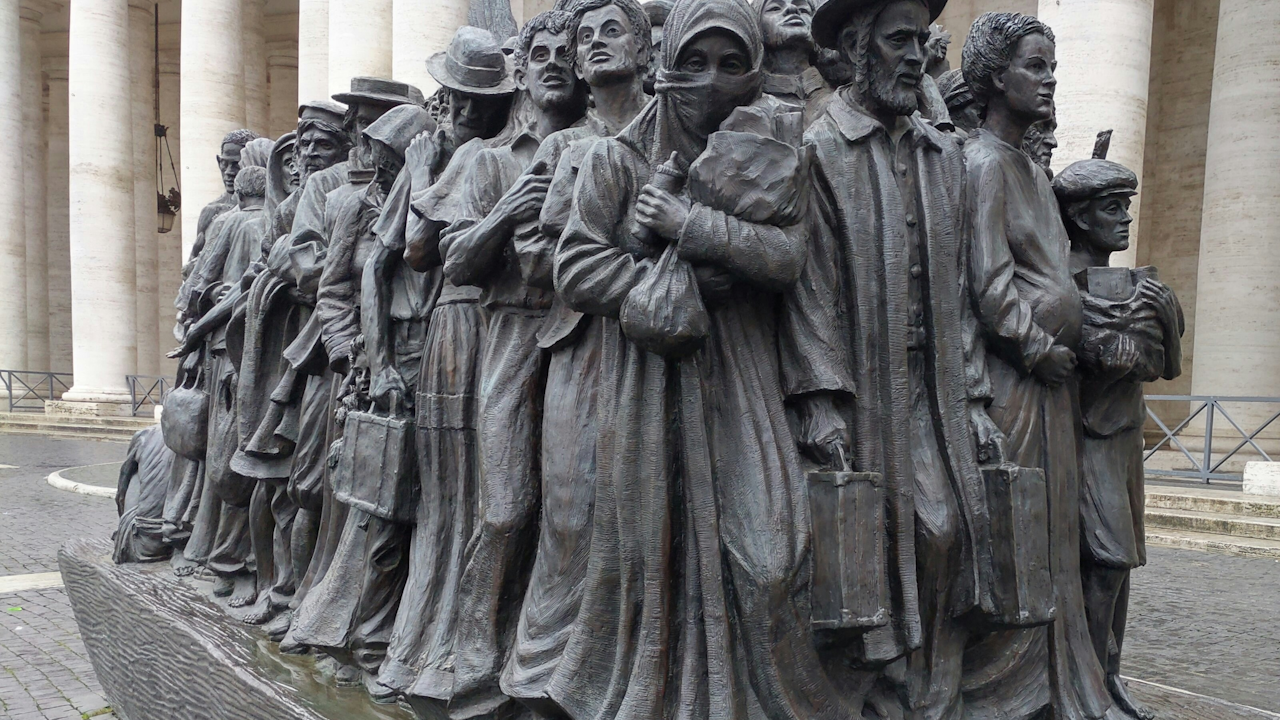
Migration has been a defining feature of human history, shaping societies, economies, and cultures for millennia. From ancient nomadic movements to contemporary global flows driven by conflict, economic opportunity, and climate change, the relocation of people across borders or within countries profoundly influences how individuals perceive themselves and their place in the world. Central to this process is the concept of shifting identities: the ways in which personal, cultural, ethnic, and social senses of self evolve, adapt, or transform in response to new environments, interactions, and challenges. This article explores the multifaceted relationship between migration and identity, drawing on historical patterns, sociological and psychological insights, real-world examples, and broader implications for individuals and societies.
Historical Context of Migration and Identity
Human migration is not a modern phenomenon. Early global movements, such as those during the age of exploration or the transatlantic slave trade, resulted in significant cultural exchanges and hybrid identities. For instance, the African diaspora created through forced migration led to new cultural forms in the Americas, blending African traditions with European and Indigenous influences in music, religion, and language. These shifts were not voluntary but imposed, often disrupting original identities while fostering resilience and innovation in new contexts.
In more recent history, post-World War II labor migrations, such as Turkish guest workers to Germany or South Asian and Caribbean migrants to the United Kingdom, highlighted tensions between maintaining homeland ties and adapting to host societies. Return migrations and circular movements further complicate identities, as individuals navigate dual or multiple belongings. Historical studies show that migration frequently challenges fixed notions of nationality and ethnicity, leading to renegotiated selves over generations.
Causes of Migration and Initial Identity Disruptions
People migrate for diverse reasons: economic prospects, political asylum, family reunification, education, or escaping environmental disasters. Each driver initiates a process of identity disruption. Voluntary economic migrants might experience excitement mixed with loss, while refugees often face trauma that intensifies identity questions.
Upon arrival, migrants encounter new social norms, languages, and power structures. This can lead to “cultural bereavement,” a sense of grief for lost elements of one’s original culture, including rituals, social networks, and landscapes. Such bereavement affects mental health and prompts a reevaluation of self. Social identity theory helps explain this: individuals derive part of their self-concept from group memberships. Migration severs some groups (family, community) and requires forming new ones, creating potential for both stress and growth.
First-generation migrants often maintain strong ties to their origin identity as a source of continuity and comfort. They may emphasize ethnic markers like language, food, or religion to preserve a sense of belonging amid alienation. However, practical necessities, such as learning the host language for employment, introduce incremental changes.
Psychological Dimensions of Identity Shift
Psychology offers valuable frameworks for understanding these shifts. Acculturation models, such as those proposed by John Berry, describe strategies including assimilation (adopting host culture fully), integration (maintaining origin culture while adopting new elements), separation (retaining origin culture while rejecting the new), and marginalization (disengaging from both). Integration is often associated with better mental health outcomes, allowing bicultural competence.
Social Identity Theory, developed by Henri Tajfel and John Turner, posits that people categorize themselves and others into groups, leading to in-group favoritism. For migrants, this can manifest as identity switching: activating different aspects of self depending on context, such as professional identity at work versus ethnic identity at home. Frequent switching can be adaptive but also exhausting, contributing to identity conflict or enhanced flexibility.
Studies on forced migration, like those involving Ukrainian refugees or asylum seekers, reveal how post-migration stress interacts with identity reconstruction. Loss of meaningful groups heightens vulnerability, while gaining new social connections supports wellbeing. The Social Identity Model of Identity Change (SIMIC) emphasizes the importance of identity continuity and acquiring compatible new identities.
Second and subsequent generations often experience hybrid or transnational identities more fluidly. They grow up navigating multiple worlds, sometimes feeling “neither here nor there.” This can foster creativity and cosmopolitan outlooks but also lead to identity crises, particularly if facing discrimination or societal pressures to choose one affiliation.
Cultural Hybridity and Transnationalism
A key outcome of migration is cultural hybridity: the blending of elements from different traditions into new forms. This is evident in cuisine, music, fashion, and language. For example, Mexican-American border cultures exemplify hybridity through Spanglish, fusion foods, and shared artistic expressions shaped by economic and cultural globalization.
Transnationalism extends this by highlighting ongoing connections across borders. Modern technologies, remittances, social media, and affordable travel enable migrants to sustain “simultaneous embeddedness” in multiple societies. Diasporas maintain political, economic, and cultural influence on homelands, while individuals construct identities that transcend national boundaries. Kurdish or African diasporas illustrate how communication technologies facilitate new identity-making in exile or dispersion.
Hybridity challenges essentialist views of culture as pure or static. Instead, identities become dynamic, negotiated processes. However, hybridity is not always harmonious; power imbalances, racism, or xenophobia can marginalize mixed identities or force assimilation.
Case Studies
Consider the experiences of South Asian migrants in the United Kingdom. Post-1940s arrivals from India, Pakistan, and Bangladesh built communities while facing “rivers of blood” rhetoric and discrimination. Over decades, their descendants developed British-Asian identities, evident in bhangra music fusions, literary voices like Salman Rushdie, and political participation. Yet, events like Brexit or religious tensions can reactivate origin identities or create new fractures.
In the United States, Latino communities demonstrate shifting identities amid ongoing migration from Latin America. Second-generation individuals often identify as Mexican-American or simply American, with varying degrees of Spanish proficiency and cultural attachment. Transnational ties via family visits or media sustain hybrid selves.
African migration patterns, including internal rural-urban moves in China or international flows from Nigeria and Morocco, show economic drivers reshaping identities. In China, massive relocation for factory work has urbanized millions, altering family structures and self-perceptions from rural to modern.
Return migration adds another layer. Hungarian returnees, for instance, experience identity changes abroad that complicate reintegration, sometimes leading to feelings of alienation in their original homeland.
Challenges: Discrimination, Mental Health, and Belonging
Migration-related identity shifts bring challenges. Discrimination based on race, ethnicity, or religion can threaten self-esteem and lead to reactive identity assertion or withdrawal. Mental health issues, including anxiety, depression, and cultural bereavement, are common, particularly for those in precarious legal statuses.
Host societies also grapple with shifting demographics. Debates over integration versus multiculturalism reflect anxieties about national identity. Policies that emphasize security over compassion can hinder identity adaptation, increasing stress for migrants.
For women, LGBTQ+ individuals, or religious minorities, migration can offer liberation from restrictive norms but introduce new vulnerabilities. Identity intersections (gender, sexuality, class) add complexity to the migration experience.
Opportunities: Resilience, Innovation, and Social Cohesion
Despite challenges, shifting identities yield opportunities. Migrants often exhibit resilience, drawing on multiple cultural repertoires for problem-solving and entrepreneurship. Hybrid identities fuel innovation in arts, business, and cuisine. Diverse societies benefit from enriched perspectives, as seen in global cities like New York or London.
Transnational networks facilitate knowledge transfer, remittances, and development in origin countries. Diaspora communities advocate for human rights or invest in homelands, creating positive feedback loops.
Education and inclusive policies can support positive identity formation. Bilingual programs, cultural recognition, and anti-discrimination measures promote integration without erasure.
Policy and Societal Implications
Governments face the task of managing migration while fostering cohesive societies. Effective approaches recognize identity as fluid, supporting integration pathways that value diversity. Citizenship policies, education curricula, and media representations play roles in shaping belonging.
International cooperation is essential for addressing root causes like inequality and conflict. Climate-induced migration will likely intensify identity challenges in coming decades, requiring proactive frameworks.
Conclusion
Migration and shifting identities are intertwined processes that reflect humanity’s adaptability and the enduring human need for belonging. While migration disrupts established selves, it also creates space for new, often richer, forms of identification. From historical diasporas to contemporary transnational lives, individuals negotiate continuity and change, loss and gain. Understanding these dynamics demands empathy, nuanced research, and policies that honor complexity rather than impose simplistic categories.
As globalization accelerates mobility, societies must embrace hybridity as a strength. The future of identity in a migratory world lies not in rigid boundaries but in the creative synthesis of experiences. By supporting migrants’ journeys of self-reconstruction, we build more inclusive, dynamic communities capable of addressing shared global challenges. This ongoing evolution underscores a fundamental truth: identities are never fixed; they are stories we continually rewrite through movement, encounter, and reflection.