

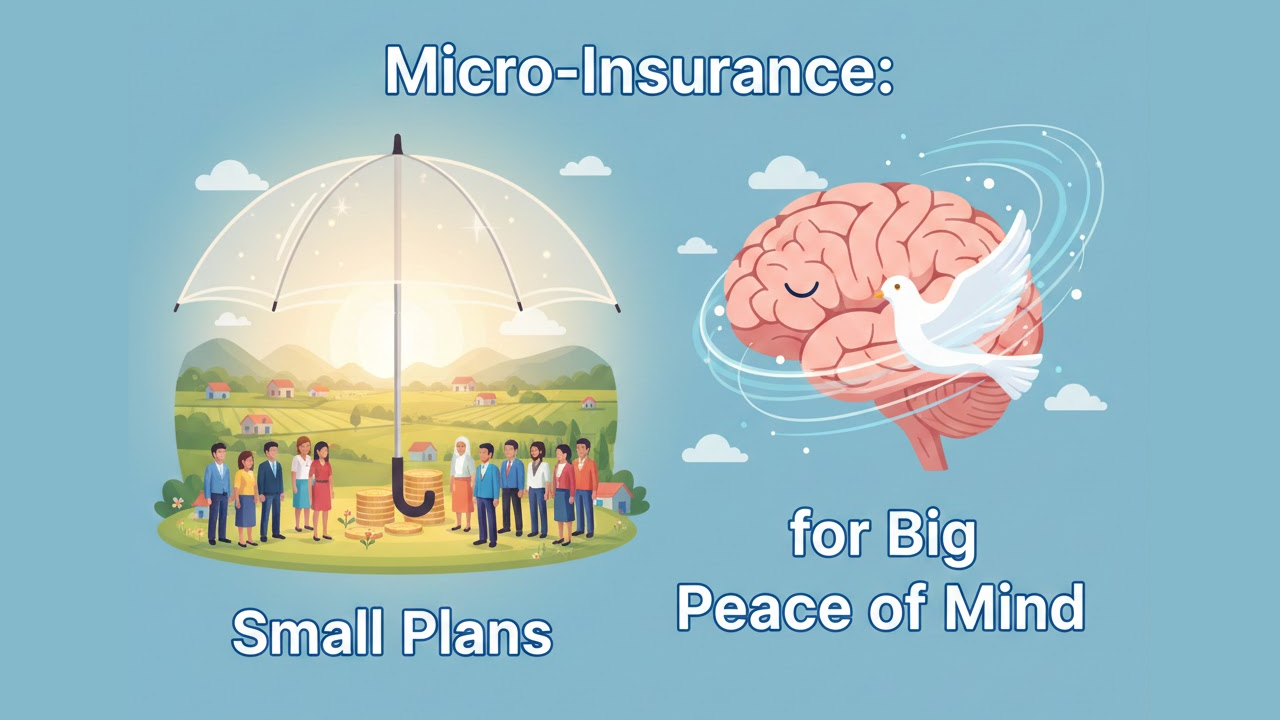
In a world where financial uncertainty can strike at any moment, millions of people in developing economies face daily risks without a safety net. A sudden illness, crop failure, or natural disaster can push entire families into poverty. Traditional insurance products often remain out of reach due to high premiums, complex paperwork, and strict eligibility requirements. This is where micro-insurance steps in as a practical solution. Offering affordable, tailored coverage, micro-insurance delivers small plans that provide big peace of mind to low-income households, small businesses, and vulnerable communities.
Understanding Micro-Insurance
Micro-insurance refers to insurance products designed specifically for low-income individuals and households who earn modest incomes, often on a daily or irregular basis. Premiums are kept low, sometimes as little as a few cents per day or week, making protection accessible. Coverage amounts are also modest but sufficient to mitigate the impact of specific risks.
Unlike conventional insurance, which targets middle- and upper-income groups, micro-insurance focuses on simplicity, flexibility, and community relevance. Policies might cover health emergencies, life events, livestock loss, or agricultural risks. Distribution often occurs through microfinance institutions, cooperatives, mobile networks, or community groups rather than traditional insurance agents.
The core principle is inclusion. Micro-insurance aims to bridge the protection gap for the estimated 4 billion people worldwide who lack access to formal insurance. By pooling small contributions from many participants, it creates a fund that can support those who face covered events.
The Origins and Growth of Micro-Insurance
The concept of micro-insurance traces its roots to the broader microfinance movement that gained momentum in the late 20th century. Pioneers like Muhammad Yunus and the Grameen Bank in Bangladesh demonstrated that small loans could empower the poor. Insurance soon followed as a natural complement to credit and savings services.
Early experiments in the 1990s and 2000s involved partnerships between insurers and microfinance institutions. For instance, programs in India, the Philippines, and parts of Africa began offering health and life micro-insurance bundled with loans. The term “micro-insurance” gained formal recognition through organizations such as the International Labour Organization (ILO) and the Microinsurance Network, which have worked to standardize practices and promote best approaches.
Over the past two decades, the sector has expanded rapidly. Technology has played a key role. Mobile phones enable premium payments via simple SMS or apps, claims processing through digital verification, and outreach to remote areas. Today, micro-insurance covers hundreds of millions of people across Asia, Africa, and Latin America, with growing interest in other regions.
How Micro-Insurance Operates
The mechanics of micro-insurance emphasize efficiency and trust. Providers design products with low administrative costs. Group policies, where entire villages or self-help groups enroll together, reduce individual underwriting expenses and encourage collective responsibility.
Premium collection is straightforward. Many schemes use daily or weekly payments aligned with income patterns, such as market days or harvest seasons. Some integrate premiums into existing financial products like microloans, deducting small amounts automatically.
Risk assessment tends to be community-based or simplified. Instead of lengthy medical exams, policies might rely on basic declarations or group averages. Claims are settled quickly, often within days or weeks, using local agents or mobile technology to verify incidents.
Reinsurance plays a vital role behind the scenes. Larger insurance companies or international reinsurers absorb part of the risk, allowing micro-insurers to remain stable even after major events like floods or pandemics.
Diverse Types of Micro-Insurance Products
Micro-insurance comes in various forms to address specific needs:
- Life and Funeral Micro-Insurance: Provides a lump sum to families upon the death of a policyholder, covering burial costs and immediate expenses. This is one of the most common types due to its simplicity and cultural importance in many societies.
- Health Micro-Insurance: Covers hospitalization, outpatient care, or essential medicines. In regions with weak public health systems, these plans prevent families from selling assets or taking high-interest loans during medical crises.
- Agricultural and Crop Micro-Insurance: Protects farmers against weather-related losses, pests, or market volatility. Index-based products, which pay out based on rainfall data or satellite imagery rather than individual assessments, have proven effective in reducing costs.
- Livestock and Asset Micro-Insurance: Safeguards animals, tools, or small businesses from theft, disease, or damage.
- Disaster and Property Micro-Insurance: Offers coverage for homes and belongings in disaster-prone areas.
- Credit Life Insurance: Automatically pays off outstanding loans if the borrower dies or becomes disabled, protecting both the family and the lender.
Many products are bundled, combining life and health coverage for a single premium.
Key Benefits for Individuals and Communities
The advantages of micro-insurance extend far beyond financial payouts. For policyholders, it reduces vulnerability. A health claim can mean the difference between recovery and long-term debt. Crop insurance helps farmers invest confidently in better seeds or techniques, knowing failure will not lead to ruin.
Peace of mind fosters entrepreneurship. Small business owners can take calculated risks, hire workers, or expand operations without fearing total collapse from unforeseen events. Families gain stability, allowing children to stay in school rather than working to replace lost income.
On a broader scale, micro-insurance contributes to economic resilience. By preventing poverty traps after shocks, it supports community development. Governments benefit from reduced pressure on social welfare systems. Insurers and microfinance institutions achieve scale and sustainability through large client bases.
Studies show that access to micro-insurance correlates with higher savings rates, better nutrition, and improved health outcomes in served populations.
Challenges Facing the Sector
Despite its promise, micro-insurance encounters significant hurdles. Low awareness remains a barrier; many potential clients view insurance with skepticism due to past experiences with unfair practices or lack of understanding.
Affordability is another issue. Even small premiums can strain tight budgets during lean periods. Dropout rates can be high if benefits are not immediately visible.
Operational challenges include high distribution costs in remote areas, fraud risks, and data limitations for accurate pricing. Climate change intensifies agricultural risks, making some products more expensive or harder to sustain.
Regulatory environments vary. In some countries, supportive policies encourage innovation, while in others, overly strict rules hinder growth. Gender disparities persist, with women sometimes facing barriers to enrollment despite their central role in household risk management.
The COVID-19 pandemic highlighted both strengths and weaknesses. While some schemes quickly adapted to cover related health costs, others struggled with liquidity and increased claims.
Real-World Examples and Success Stories
Several initiatives illustrate the impact of micro-insurance. In India, programs like those offered through Self-Help Groups have reached tens of millions. The Rashtriya Swasthya Bima Yojana (RSBY) scheme, though government-led, incorporated micro-insurance principles for below-poverty-line families.
Kenya’s M-PESA mobile money platform has enabled innovative products like agricultural insurance linked to weather stations. Farmers receive payouts directly to their phones when rainfall falls below thresholds.
In Latin America, Peru and Colombia have seen growth in micro-insurance through partnerships with banks and NGOs. One notable case involved livestock insurance for Andean herders, stabilizing incomes amid harsh weather.
The Philippines has pioneered parametric insurance for typhoons, providing fast payouts based on wind speed data. These examples demonstrate how local adaptation drives success.
The Role of Technology and Innovation
Digital advancements are transforming micro-insurance. Blockchain technology promises transparent claims and reduced fraud. Artificial intelligence helps analyze risks using satellite data, social media patterns, or mobile usage for better product design.
Insurtech startups specialize in micro-insurance, using apps for enrollment and education. Chatbots and voice interfaces in local languages lower literacy barriers. Big data enables dynamic pricing and personalized coverage.
Partnerships between traditional insurers, fintech companies, and telecom providers are expanding reach. For example, embedding insurance in mobile airtime purchases has proven popular in Africa.
Looking Ahead: The Future of Micro-Insurance
The sector is poised for continued expansion. As urbanization and climate challenges grow, demand for tailored protection will increase. Integration with universal health coverage goals and sustainable development targets could attract more public funding.
Emerging trends include parametric and index-based products that pay quickly without lengthy assessments. Climate-smart insurance addressing environmental risks will become essential. Efforts to close the gender gap and reach informal workers remain priorities.
Global initiatives by organizations like the World Bank and United Nations are promoting knowledge sharing and capacity building. With supportive regulations and continued innovation, micro-insurance could cover billions more people in the coming decades.
Conclusion: Small Steps, Lasting Security
Micro-insurance proves that protection does not need to be expensive or complicated to be effective. These small plans deliver substantial peace of mind by turning uncertainty into manageable risk. For low-income families, a modest premium can mean preserved livelihoods, educated children, and hope for the future.
As the world seeks inclusive growth, micro-insurance stands out as a powerful tool. It empowers individuals, strengthens communities, and builds economic resilience. By continuing to innovate and address challenges, stakeholders can ensure that even the smallest plans contribute to a more secure and equitable world. For those living on the margins, this form of insurance is more than a policy. It is a pathway to dignity and stability.