

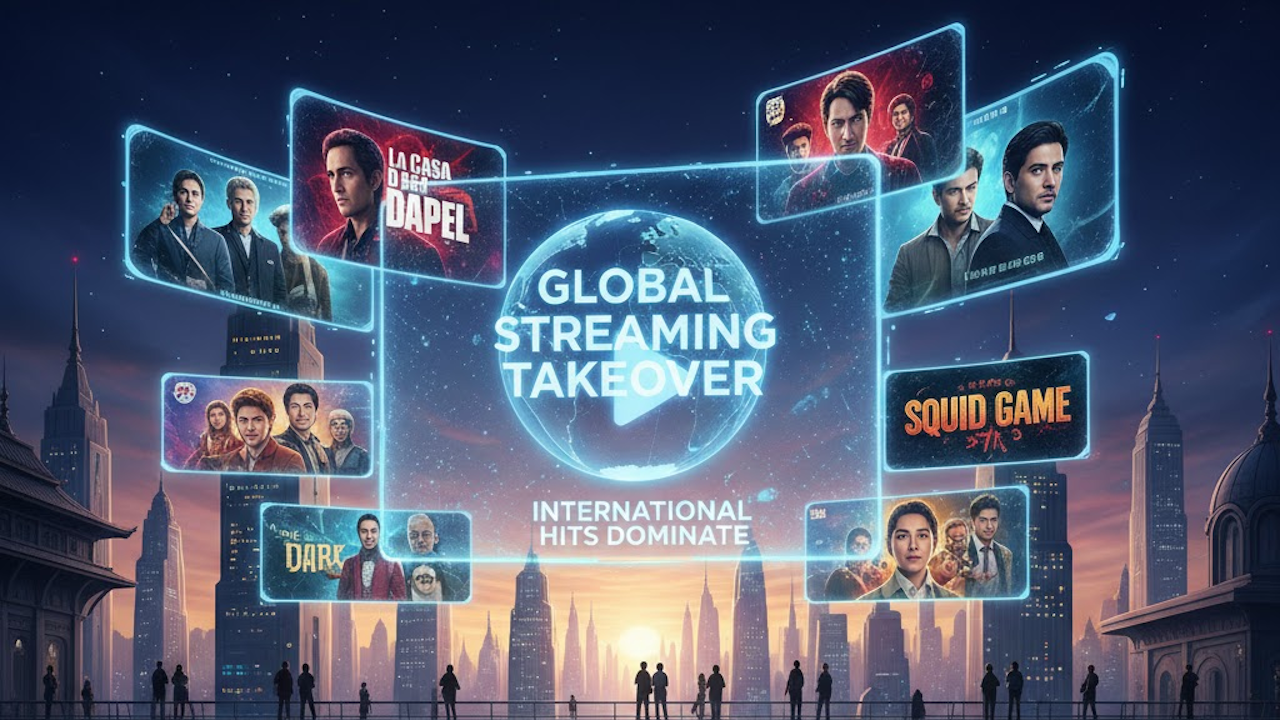
The streaming landscape has undergone a profound transformation in recent years. Once dominated by English-language productions from Hollywood and the United Kingdom, platforms like Netflix, Prime Video, Disney+, and others now feature a vibrant mix of content from around the world. International TV shows, particularly non-English language series, have captured massive global audiences, driven billions of viewing hours, and reshaped how stories are told and consumed. This shift reflects changing viewer preferences, technological advancements in subtitling and dubbing, and strategic investments by streamers in local productions.
Non-English titles now account for more than a third of all viewing on Netflix, with strong contributions from South Korea, Japan, Spain, and other regions. In the first half of 2026, Netflix reported record viewing of 97 billion hours, highlighting the appeal of diverse narratives. Similar trends appear on other services, where international hits frequently top charts and drive subscriber growth. This phenomenon marks a departure from traditional television, where domestic content ruled, and signals a new era of global entertainment.
The Squid Game Catalyst
No single show better illustrates this takeover than Squid Game. The South Korean survival thriller debuted in 2021 and became a cultural phenomenon, amassing billions of viewing hours and topping charts in dozens of countries. Subsequent seasons continued the momentum, with Season 3 breaking records by ranking number one in 93 countries during its premiere week and delivering massive viewership numbers.
The series follows desperate contestants competing in deadly children’s games for a life-changing prize. Its blend of social commentary, suspense, and universal themes of inequality resonated far beyond Korea. Squid Game not only boosted Netflix’s global profile but also opened doors for other Korean productions. Korean content has generated over 12 billion hours of viewing on Netflix in some periods, making it the most-watched non-U.S. origin. Shows like Bloodhounds, Queen of Tears, and The Trauma Code: Heroes on Call have followed suit, proving the success was not a one-off.
The “Squid Game effect” encouraged streamers to invest heavily in Korean talent and stories. Viewers discovered high-quality production values, compelling characters, and fresh genres that contrasted with familiar Western tropes. Korean dramas often combine romance, action, thriller elements, and social issues in ways that feel both specific and broadly relatable.
Diverse Global Success Stories
South Korea leads the charge, but international content from many regions has thrived. Spanish productions such as Money Heist (La Casa de Papel) captivated audiences with clever heists and charismatic anti-heroes. The show became a global sensation, spawning discussions about its political undertones and ensemble performances. Spain has contributed significantly to streaming revenue through titles that travel well across Spanish-speaking markets and beyond.
Indian series have also made strong inroads. On Prime Video, shows like The Family Man, Panchayat, and Paatal Lok have ranked highly in global non-English charts. These series blend espionage, rural comedy, and crime drama with authentic cultural elements that appeal to both domestic and international viewers. India’s growing catalog on streamers reflects a massive audience base and increasing export potential.
Japan contributes through live-action thrillers and anime adaptations. Series like Alice in Borderland mix high-stakes survival with mind-bending plots, drawing comparisons to Squid Game in appeal. European hits include Germany’s Maxton Hall: The World Between Us, which topped Prime Video charts, and various Italian and Swedish dramas that explore family secrets, history, and contemporary issues.
Brazil, Mexico, Turkey, and other markets add further variety. Brazilian crime dramas, Mexican thrillers, and Turkish romantic sagas have found dedicated followings. Even smaller markets benefit as streamers localize content strategies, producing or acquiring titles that resonate locally while traveling globally.
Why International Shows Are Thriving
Several factors explain this surge. First, streaming platforms operate without traditional broadcast constraints. They reach hundreds of millions of subscribers worldwide, allowing niche stories to find audiences across borders. Algorithms recommend content based on viewing habits rather than national origins, helping international titles gain traction.
Second, audiences show growing openness to foreign content. Viewing of non-English shows and movies in English-speaking markets rose by 24 percent over several years. Subtitles and improved dubbing reduce barriers, while viewers seek novelty amid fatigue with formulaic domestic offerings. International shows often deliver bold storytelling, intricate plots, and cultural insights unavailable in mainstream English productions.
Third, economic incentives play a role. Producing in countries with established creative industries can be cost-effective while yielding high-quality results. Local talent brings authenticity that enhances emotional impact. Streamers like Netflix adopt a “local-first” approach, creating hits that succeed domestically before exporting them, as seen with Squid Game.
Cultural specificity paradoxically aids universality. Stories rooted in particular societies often explore universal themes like love, ambition, betrayal, and survival. Korean series excel at emotional depth and visual style, Spanish thrillers at tension and wit, and Indian dramas at family dynamics and social commentary. This combination fosters broad appeal.
Data underscores the trend. Asian series, led by Korean and Japanese titles, dominated Netflix’s 2025 non-English top 10, accounting for about 60 percent of viewing hours in those rankings. Prime Video highlights German and Indian successes. Overall catalogs on major services now feature more non-U.S. content than American titles in many cases.
Industry Impacts and Challenges
The rise of international TV has prompted major investments. Netflix, Prime Video, and others pour resources into local productions, talent development, and co-productions. This stimulates creative economies in producing countries, creates jobs, and elevates global cultural exchange. Korean entertainment, for instance, benefits from Hallyu (the Korean Wave), extending influence through music, food, and tourism alongside TV.
Challenges remain. Language barriers persist despite technological aids, and not every title travels equally well. Cultural sensitivities can spark debates, and competition for talent intensifies. Some critics worry about homogenization if streamers prioritize exportable formulas over pure local storytelling. Yet the overall trend points toward greater diversity.
Awards recognition has followed. International shows increasingly compete at the Emmys and other ceremonies, with wins validating their artistic merit. This visibility encourages further investment and viewer discovery.
The Road Ahead
As streaming matures, international content will likely expand further. Emerging markets in Africa, Southeast Asia, and Latin America offer untapped potential. Advances in AI for translation and personalization will lower barriers even more. Viewers can expect richer genre blends, such as historical epics, sci-fi thrillers, and grounded family dramas from diverse perspectives.
Platforms will continue balancing global blockbusters with hyper-local hits. The goal is not to replace Hollywood but to complement it with a wider array of voices. For subscribers, this means endless options for discovery: a German romance one week, a Japanese mystery the next, or a Spanish comedy that sparks laughter across continents.
The takeover by international TV shows demonstrates that great storytelling knows no borders. In an interconnected world, audiences crave authenticity and innovation, qualities that creators worldwide deliver in abundance. As viewing data and industry strategies evolve, one thing is clear: the future of streaming is decidedly global. This enriches the medium and offers viewers a more nuanced, exciting television experience than ever before.