

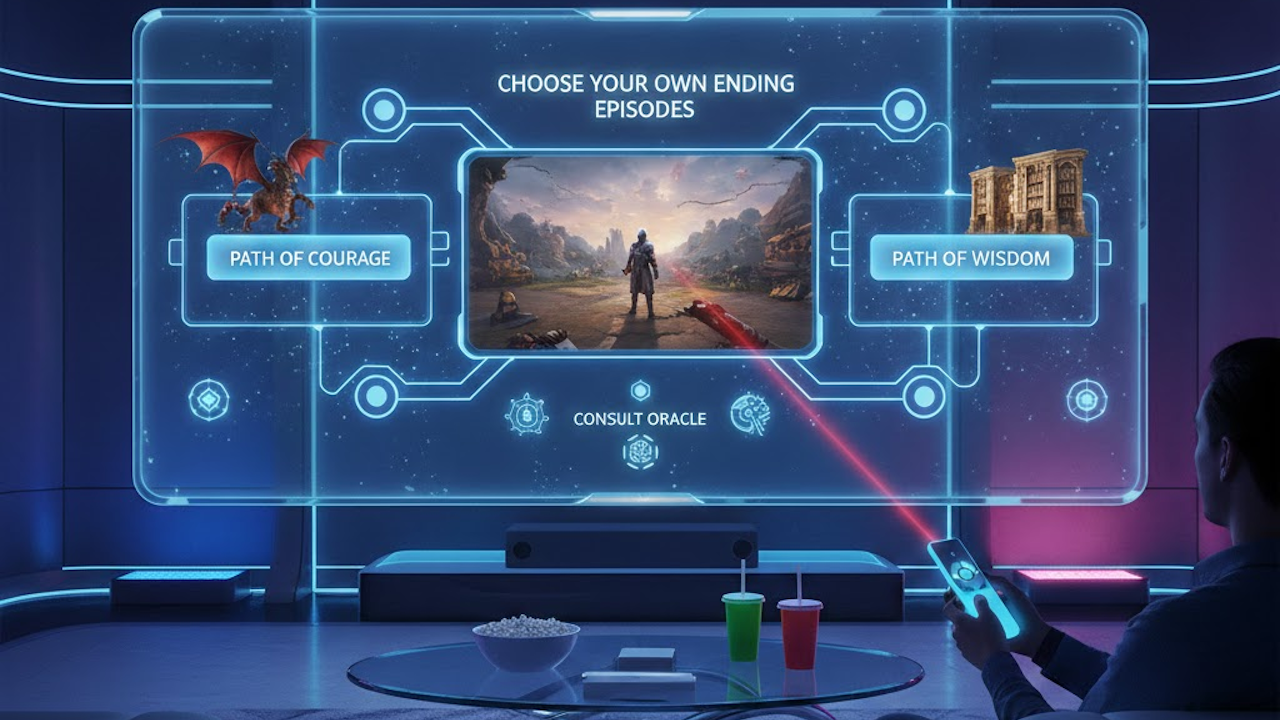
Interactive television represents one of the most significant shifts in storytelling since the advent of serialized drama. In choose-your-own-ending episodes, viewers step beyond passive observation to actively shape narratives through decisions that branch into multiple paths and conclusions. This format transforms entertainment into a participatory experience, blending elements of gaming, cinema, and traditional television. While the concept has deep roots, modern streaming technology has brought it to the forefront, raising questions about narrative control, viewer agency, and the future of scripted content.
The Historical Foundations of Branching Narratives
The idea of audiences influencing story outcomes predates digital media by centuries. Ancient texts like the I Ching offered divinatory paths based on choices, while 20th-century literature popularized structured interactivity. Lawyer Edward Packard conceived the core concept for Choose Your Own Adventure books in 1969 while telling bedtime stories to his daughters. The series launched officially in 1979 with The Cave of Time, allowing readers to navigate adventures by selecting options that directed them to different pages and endings.
These books sold millions and inspired generations. Co-founder of Games Workshop Ian Livingstone helped define the genre through Fighting Fantasy titles like The Warlock of Firetop Mountain in 1982. Readers made choices, rolled dice for combat, and experienced empowerment through control over the protagonist’s fate. The format stimulated imagination while providing clear structure for young audiences.
Early television experiments echoed this participatory spirit. Game shows such as The Dating Game from the 1960s involved audience-like selection processes, though indirectly. In the 1980s and 1990s, some programs tested viewer voting via phone or early online methods. For instance, certain episodes of Hawaii Five-0 allowed audiences to influence endings through social media and web polls. Spanish and Latin American productions like Si fueras tú and Quiero, lo que tú quieras incorporated weekly viewer votes to determine plot directions.
These efforts were limited by broadcast technology. Linear transmission made true branching difficult without multiple airings or supplementary materials. DVD special features later enabled some choose-your-own-path viewing, as in certain horror films, but the experience remained cumbersome.
The Breakthrough: Netflix and Black Mirror: Bandersnatch
Netflix accelerated interactive television in the late 2010s, beginning with children’s content before targeting adults. Puss in Book: Trapped in an Epic Tale debuted in 2017 as an interactive special tied to The Adventures of Puss in Boots. Viewers guided the feline hero through decisions, marking Netflix’s first foray into branching stories.
The landmark release came in December 2018 with Black Mirror: Bandersnatch. Created by Charlie Brooker and directed by David Slade, this feature-length episode placed viewers in control of Stefan Butler, a young programmer in 1984 adapting a choose-your-own-adventure novel into a video game. The story mirrored its format: Stefan’s increasingly paranoid journey reflected the viewer’s own decision-making process.
Bandersnatch featured over 150 minutes of unique footage divided into hundreds of segments, yielding trillions of possible paths though most viewers experienced one of several main routes in about 90 minutes. Choices ranged from mundane (cereal selection or music) to life-altering (whether to jump from a balcony or collaborate with a rival programmer). The episode included meta elements, such as Stefan becoming aware of external control, breaking the fourth wall in ways that commented on free will and determinism.
Critics praised its psychological depth. Themes of authorial control, multiverses, and the illusion of choice resonated strongly. Some endings felt satisfying, others abrupt or tragic, encouraging replays to explore alternatives. Netflix reported strong engagement, with the format proving technically feasible at scale.
Following Bandersnatch, Netflix expanded the approach. Unbreakable Kimmy Schmidt: Kimmy vs. the Reverend offered comedic branching. You vs. Wild with Bear Grylls let viewers guide survival decisions. Children’s titles like Carmen Sandiego: To Steal or Not to Steal and Boss Baby specials further demonstrated broad appeal.
Other Platforms and Innovations
While Netflix led in visibility, other companies contributed meaningfully. Eko, an interactive startup, produced live-action choose-your-own-adventure series including The Coop (a reality parody murder mystery), Wizard School Dropout, and Epic Night (a rom-com with over 120 minutes of content and multiple endings). These titles appeared on Eko’s platform and app, sometimes incorporating subtle shopping integrations.
That Moment When, a collaboration between Eko and Sony Pictures, delivered short situational comedy vignettes where viewers helped characters navigate social dilemmas within time limits. The format emphasized quick, repeatable engagement rather than epic scope.
International productions added cultural variety. Spanish series like Si fueras tú used social voting for weekly plot progression. Argentine web series Elige allowed choices at episode ends. Chilean and other Latin American efforts similarly experimented with audience input via texts or online polls.
Gaming influences appeared in adaptations like Batman: Death in the Family, an interactive animated film based on the comic where viewer choices determined Robin’s fate, echoing the original reader-voted storyline.
Creative and Technical Challenges
Producing choose-your-own-ending episodes demands substantial resources. Writers must craft coherent branching structures while maintaining character consistency and thematic integrity across paths. Directors film multiple versions of scenes, and editors manage complex decision trees. Bandersnatch reportedly used tools resembling game development software to track viewer memories and narrative states.
Pacing poses another hurdle. Choices must feel meaningful without frustrating viewers through excessive repetition or dead ends. Default selections prevent stalls if users hesitate. Replayability encourages multiple viewings but risks alienating those seeking a single, linear experience.
From a technical standpoint, streaming platforms require robust backend systems to serve different video segments seamlessly. User interfaces must be intuitive across devices, with clear prompts and timers. Accessibility considerations, such as options for those with motor or cognitive challenges, add further complexity.
Critics note potential drawbacks. Overemphasis on choice can dilute emotional investment if paths feel too fragmented. Some argue that true interactivity reduces the power of a singular, authored vision. Others worry about decision fatigue in longer formats.
Impact on Viewers and the Entertainment Industry
Interactive episodes engage audiences differently. Viewers report heightened investment, as personal decisions create ownership over outcomes. This fosters discussion, theory-crafting, and community around optimal paths or hidden endings. For younger viewers, the format builds decision-making skills and media literacy.
Industry-wide, the approach opens new revenue and engagement models. Advertisers might integrate choices that influence branded content. Data from viewer decisions provides insights into preferences, informing future productions. However, higher production costs could limit widespread adoption to premium projects or tentpole events.
The format also blurs lines between television, gaming, and film. Narrative-driven games and interactive apps already thrive, suggesting convergence. As virtual reality and augmented reality mature, choose-your-own stories could evolve into fully immersive experiences.
Looking Ahead: The Future of Interactive Television
Interactive TV appears poised for growth, though not necessarily dominance. Advances in artificial intelligence could streamline branching creation, generating variations or personalizing stories based on user history. Generative tools might allow audiences to co-create elements beyond predefined choices.
Challenges remain. Not every genre suits interactivity equally; character-driven dramas may benefit less than thrillers or adventures. Viewer fatigue could set in if the novelty wears off without strong writing. Regulatory and platform fragmentation might slow standardization.
Despite hurdles, the demand for agency in media consumption grows. Audiences accustomed to video games, social media polls, and personalized recommendations expect more involvement. Choose-your-own-ending episodes satisfy this desire while pushing creators toward innovative storytelling.
In conclusion, interactive television with choose-your-own endings revives ancient narrative traditions in a digital age. From Choose Your Own Adventure books to Bandersnatch and beyond, the format empowers viewers while challenging traditional production models. As technology evolves, these episodes may become more commonplace, offering richer, more personal connections to stories. The ultimate path forward depends on balancing innovation with compelling human drama, ensuring that choices enhance rather than overshadow the art of storytelling. Whether leading to triumphant resolutions or cautionary twists, the power now rests partly in the audience’s hands.