

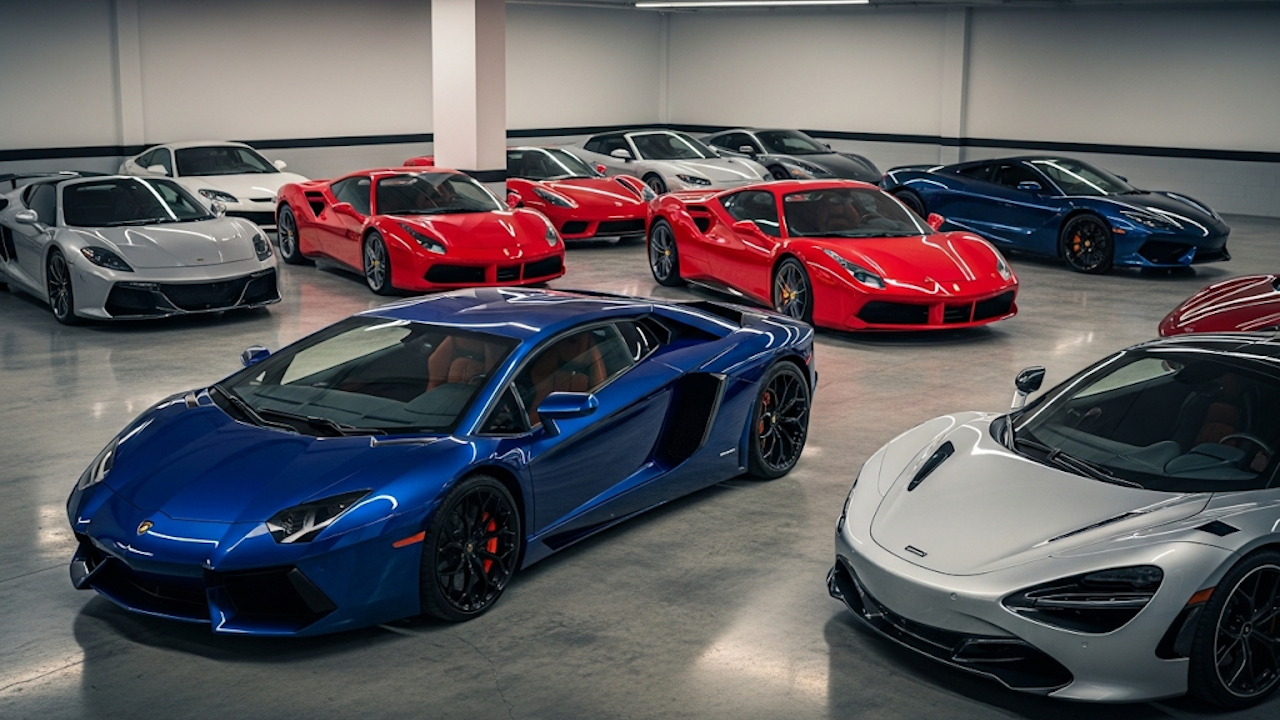
Car collectors inhabit a world that outsiders often view as eccentric at best and excessive at worst. Picture a person who spends weekends in a dimly lit garage, surrounded by half disassembled engines, stacks of faded service manuals, and rows of polished chrome that gleam under fluorescent lights. This is not mere hobbyism. For the dedicated collector, automobiles represent far more than transportation. They embody stories, engineering triumphs, personal histories, and a relentless pursuit of perfection that borders on compulsion. What drives this obsession? It is a complex interplay of psychology, emotion, memory, and culture that turns a practical machine into an object of profound devotion.
To understand the collector’s mind, one must first recognize that cars have always been more than utilitarian devices. From the moment Karl Benz rolled out his Patent Motorwagen in 1886, the automobile symbolized freedom, speed, and human ingenuity. Early adopters treated them as status symbols and engineering marvels. By the mid twentieth century, models like the Ford Mustang, Chevrolet Corvette, and Ferrari 250 GTO had transcended their origins to become cultural icons. Collectors today chase these vehicles not simply because they are rare, but because each one carries a tangible link to a specific era of innovation, rebellion, or glamour. Owning a 1965 Shelby Cobra is not about having a fast car. It is about possessing a piece of Carroll Shelby’s audacious vision, a fragment of American muscle car lore that roared through the 1960s.
At the core of the obsession lies nostalgia, a powerful emotional force that pulls collectors backward through time. Many begin their journeys in childhood, perhaps riding shotgun in a parent’s classic convertible or staring at posters of sleek sports cars on bedroom walls. Those early impressions lodge deep in the psyche. Decades later, when finances allow, the collector seeks to reclaim that wonder. A 1957 Chevrolet Bel Air might evoke Sunday drives with grandparents or the thrill of a first date at a drive in theater. Psychologists describe this as autobiographical memory reinforcement. The car becomes a physical anchor for intangible feelings of safety, excitement, or belonging. It is not unusual to hear collectors speak of their vehicles in familial terms, calling a particular Porsche “the one that got away” or referring to a restored Jaguar E Type as “she” with genuine affection.
The thrill of the hunt amplifies this emotional pull. Car collecting is a scavenger hunt played across auctions, barns, online forums, and private sales. The search itself delivers dopamine hits comparable to any competitive sport. Locating a barn find, a neglected but authentic example hidden under decades of dust, feels like uncovering buried treasure. Authenticity matters intensely. Collectors scrutinize provenance, matching numbers, and originality with the rigor of forensic investigators. A vehicle with a documented history from a famous racer or celebrity commands exponentially higher value, but the true reward is the narrative it adds to the collection. This quest requires patience, knowledge, and a willingness to travel far and negotiate hard. It transforms weekends into expeditions and evenings into research marathons spent poring over catalogs and forums.
Once acquired, the obsession shifts to stewardship and restoration. Many collectors describe the process of bringing a car back to life as meditative. Disassembling an engine block, sourcing period correct parts, and reassembling it to factory specifications demands mechanical intuition and artistic precision. The hours spent under a car on jack stands or in a paint booth foster a deep sense of accomplishment. Each completed project represents mastery over entropy. Rust, wear, and neglect are enemies to be vanquished. The finished product is not merely functional. It is a resurrection, a testament to the collector’s skill and dedication. Some enthusiasts even learn welding, upholstery, or machining specifically to restore their cars, turning the garage into a personal workshop that doubles as a sanctuary from everyday pressures.
Sensory experiences further entrench the obsession. Cars engage multiple senses in ways few other objects do. The sound of a flat plane crank V8 idling at low rpm, the scent of warm leather and gasoline on a summer morning, the tactile feedback of a perfectly weighted steering wheel, and the visual poetry of sweeping fenders and chrome accents create an immersive encounter. Driving a collected car is rarely about reaching a destination efficiently. It is a performance, a ritual that reconnects the owner with mechanical harmony. Collectors often plan routes that highlight the vehicle’s strengths, such as winding mountain roads for a lightweight roadster or long straightaways for a high speed grand tourer. Even static display at concours events provides satisfaction. Judges scrutinize every detail, from panel gaps to interior stitching, and a blue ribbon validates the countless hours invested.
Identity formation plays a subtle yet powerful role. For many, the collection becomes an extension of self. A garage filled with Italian exotics signals a passion for design elegance and performance heritage. A lineup of American classics might reflect values of rugged individualism and postwar optimism. The cars chosen often mirror the collector’s personality, life stage, or aspirations. A young professional might gravitate toward modern supercars that convey success, while a retiree restores prewar classics that recall simpler times. This curation of identity offers a private narrative that outsiders rarely grasp. In a world where most people define themselves through careers or social media, the collector crafts a tangible autobiography through steel, rubber, and glass.
Social dynamics within the collector community reinforce the obsession. Car shows, auctions, and clubs create networks of like minded individuals who speak a shared language of torque curves, compression ratios, and model codes. Events like the Pebble Beach Concours d’Elegance or the Goodwood Festival of Speed function as high stakes social arenas where knowledge and taste are displayed and judged. Friendships form around mutual admiration for a particular marque or era. Stories are exchanged late into the night about near misses at auctions or miraculous mechanical saves on the road. These bonds provide validation that family or coworkers may withhold. Spouses sometimes joke about being “the other woman” in a marriage to a collection, yet many partners eventually appreciate the community and shared adventures that come with it.
Financial considerations complicate but rarely deter the true collector. While some vehicles appreciate dramatically, serving as alternative investments, most collectors lose money when factoring in storage, insurance, maintenance, and opportunity costs. A pristine Ferrari 275 GTB might fetch millions at auction, yet the average enthusiast pours resources into cars that will never break even. The obsession persists because passion trumps profit. Collectors view their expenditures as investments in joy, heritage, and personal fulfillment rather than portfolios. This mindset separates the dedicated from the speculator. The latter buys and flips for gain. The former nurtures and preserves for the sheer sake of it.
The obsession carries challenges that test commitment. Space becomes a perpetual issue. Garages overflow, leading to climate controlled warehouses or creative solutions like converting barns. Maintenance demands constant vigilance. Even a well sorted car requires specialized tools, expert mechanics, and rare parts that can take months to locate. Time allocation shifts dramatically. Vacations are planned around car events, and family schedules bend around restoration deadlines. Some collectors admit the hobby strains relationships or delays retirement dreams, yet they persist because the rewards outweigh the sacrifices. The psychological payoff, that moment when a long dormant engine fires to life after months of work, creates an emotional high few other pursuits match.
Famous examples illustrate the depth of this fixation. Television personality Jay Leno maintains one of the world’s largest collections, housing over 180 vehicles in a vast Burbank facility. He speaks of cars as living history lessons and spends hours tinkering personally. Designer Ralph Lauren has curated a museum quality array of rare automobiles that reflect his aesthetic sensibility, displayed in a dedicated space that rivals public galleries. These high profile collectors normalize the behavior for enthusiasts worldwide, showing that obsession can coexist with professional success and public admiration. Their stories inspire others to pursue their own scaled down versions, proving the appeal transcends wealth brackets.
Modern trends have broadened the collector base while preserving its essence. Younger enthusiasts enter through online marketplaces, social media groups, and virtual auctions. Electric vehicles now appear in collections, blending traditional passion with forward looking innovation. Models like the Porsche Taycan or Rivian R1T attract buyers who value sustainability alongside performance. Meanwhile, classic car values continue to climb for certain icons, driven by limited supply and growing global demand from emerging markets in Asia and the Middle East. Online communities democratize knowledge, allowing novices to learn from veterans without gatekeeping. Yet the fundamental psychology remains unchanged. Whether chasing a 1930s Duesenberg or a 2020s hypercar, collectors seek the same connection to beauty, history, and self expression.
Ultimately, the obsession endures because cars offer a rare combination of tangible achievement and emotional resonance in an increasingly digital world. They ground their owners in physical reality while transporting them across time. In an era of fleeting experiences and virtual interactions, a well maintained collection provides permanence. Each vehicle stands as proof of effort, taste, and perseverance. The collector’s mind operates on a different frequency, attuned to details others overlook and motivated by rewards others cannot measure. What appears as fixation to the casual observer is, to the insider, a lifelong conversation with machines that speak of human ambition, creativity, and the simple joy of motion.
This pursuit will likely continue as long as automobiles exist. New generations will discover the same magnetic pull that captivated their predecessors, finding in steel and engineering the perfect canvas for their dreams. The garage light will stay on late into the night, tools will clatter, and engines will rumble to life once more. For the car collector, that sound is not noise. It is the heartbeat of a passion that refuses to idle.