

Fashion Weeks have long served as the beating heart of the global fashion industry. For decades, the Big Four events in New York, London, Milan, and Paris operated as tightly guarded rituals. Editors, buyers, celebrities, and select influencers gathered in grand venues to witness runway presentations that set trends for the coming seasons. These shows were about more than clothing. They were cultural spectacles, networking hubs, and carefully orchestrated displays of prestige. Invitations were scarce, front-row seats signaled status, and the entire experience remained largely inaccessible to the general public.
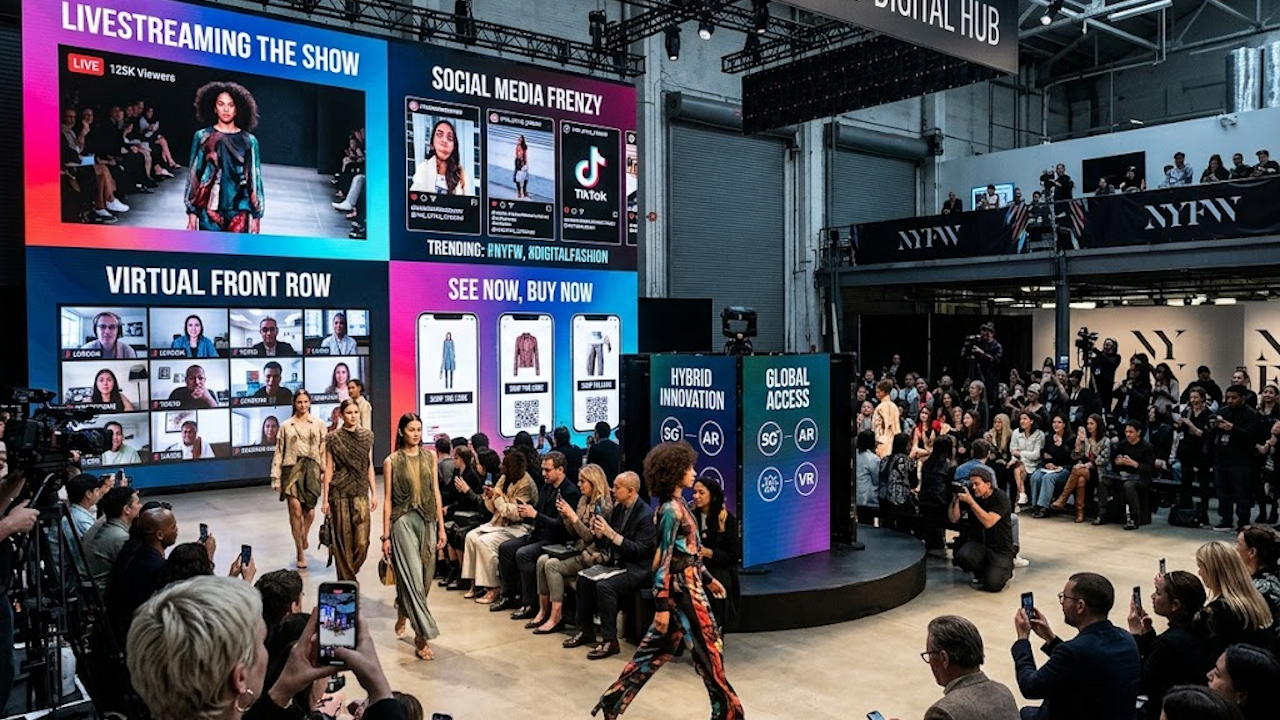
That model, however, no longer defines the landscape. In the digital age, Fashion Weeks have undergone a profound transformation. Technology has democratized access, accelerated communication, and reshaped the very purpose of these events. What began as a response to external pressures has evolved into a strategic reinvention. Hybrid formats, live streaming, artificial intelligence, and immersive virtual experiences now sit alongside traditional catwalks. The result is a more inclusive, interactive, and commercially driven industry calendar. Fashion Weeks today reach millions instantaneously while still preserving elements of their original glamour.
The shift did not happen overnight. Traditional Fashion Weeks trace their modern form to the mid-20th century, when designers in Paris and New York began coordinating seasonal presentations. By the 1990s and early 2000s, the events had solidified as global benchmarks. Media coverage relied on print magazines and delayed television segments. Buyers placed orders weeks later based on physical samples and lookbooks. This pace suited an industry built on exclusivity and anticipation.
The COVID-19 pandemic acted as the decisive accelerator. When lockdowns halted in-person gatherings in 2020, brands scrambled to maintain momentum. Digital Fashion Weeks emerged almost immediately. Designers released short films, virtual runways, and 3D presentations instead of live shows. Milan and Paris experimented with livestreams on YouTube and Instagram. New York featured panel discussions and digital lookbooks. These early efforts proved that collections could still generate buzz without physical venues. More importantly, they revealed untapped potential for broader reach. A single livestream could attract viewers from continents that previously had no seat at the table.
Even as physical events resumed, the digital infrastructure remained. By 2025 and into 2026, hybrid models have become the standard rather than the exception. Many shows now combine a limited in-person audience with high-quality broadcasts. Brands produce polished runway videos that stream simultaneously on official platforms and social media. Viewers can watch in real time from anywhere, pause to examine details, and share clips within seconds. This immediacy has collapsed the traditional timeline between presentation and public consumption.
Social media stands at the center of this evolution. Platforms like Instagram, TikTok, and YouTube have turned Fashion Weeks into participatory spectacles. Influencers and content creators now occupy prominent roles once reserved for magazine editors. Front-row seats often go to those with the largest online followings because their posts generate measurable media impact. Hashtags such as #NYFW or #PFW trend globally during each season, amplifying reach far beyond the venue walls.
TikTok has introduced a particularly dynamic layer. Short-form videos capture backstage moments, street-style looks, and rapid-fire reactions. Creators stitch together runway highlights with commentary, turning shows into viral conversations. Brands have responded by embracing shoppable livestreams. During select presentations, viewers can tap to purchase items directly from the stream. This integration moves Fashion Weeks closer to immediate commerce rather than seasonal previews. Data from recent seasons shows that live shopping tied to runway events can drive significant conversion rates, especially among younger demographics who prefer instant gratification over delayed retail drops.
Interactivity has also deepened. Augmented reality filters allow users to virtually try on runway pieces from their phones. Virtual showrooms enable 360-degree exploration of garments. Some brands host post-show Q&A sessions or digital meet-and-greets with designers. Storytelling has gained prominence as well. Instead of simply displaying clothes, many presentations now embed narratives about sustainability, cultural heritage, or social issues. These messages travel instantly across borders, positioning Fashion Weeks as platforms for values-driven communication rather than pure commerce.
Technological innovation extends beyond streaming and social media. Three-dimensional design tools and digital sampling have streamlined the production process itself. Designers can prototype garments in virtual environments before committing to physical samples. This reduces waste, shortens lead times, and lowers costs. In 2026, reports indicate that a majority of premium brands now prioritize 3D virtualization as a core investment. Artificial intelligence assists with trend forecasting, pattern generation, and even personalized recommendations for consumers watching the shows.
The metaverse and related virtual worlds have added another dimension. Digital Fashion Weeks operate as standalone events or parallel tracks to physical calendars. New York has hosted editions featuring hologram runways, motion-capture presentations, and immersive exhibits. Participants create avatars, explore virtual boutiques, and engage with tokenized fashion assets. Paris has launched its own Digital Fashion Week in February 2026, focusing on tech-integrated experiences for emerging designers. These formats lower barriers for independent creators who cannot afford traditional runway slots. They also appeal to younger audiences fluent in gaming and virtual environments.
Sustainability has emerged as a key driver of digital adoption. Physical Fashion Weeks involve substantial carbon footprints from travel, venue construction, and garment production for shows that may only appear once. Digital alternatives minimize these impacts. Virtual presentations require no physical samples shipped across oceans. Hybrid events reduce the number of attendees flying in, while digital twins of collections allow brands to test market response before full-scale manufacturing. Industry analyses highlight that digital tools support traceability through blockchain and NFTs, helping verify authenticity and ethical sourcing.
The effects ripple across every stakeholder group. For designers, the digital age offers creative freedom and global exposure. Emerging talents can bypass gatekeepers by uploading collections to dedicated platforms or partnering with influencers. Established houses gain real-time feedback through social analytics, allowing mid-season adjustments. Buyers and retailers benefit from instant access to high-resolution imagery and video, speeding up decision-making and reducing reliance on costly showroom visits.
Consumers stand to gain the most from democratization. Anyone with an internet connection can now witness the same collections that once required elite credentials. This visibility fuels aspiration and education. It also empowers direct participation through comments, polls, and purchases. Younger generations, particularly Gen Z and millennials, report that social media influences their fashion choices more than traditional runway coverage. Fashion Weeks have thus evolved from industry trade shows into cultural events with mass appeal.
Yet the transformation is not without challenges. Critics argue that excessive digital focus risks diluting the sensory magic of live presentations. The tactile experience of fabric, the sound of heels on the runway, and the collective energy of a live audience cannot be fully replicated online. Some worry that over-reliance on algorithms and virality prioritizes spectacle over substance. Collections designed for maximum shareability may favor dramatic effects rather than wearable innovation.
Exclusivity, once a cornerstone of luxury branding, has eroded. Brands must balance broad accessibility with the prestige that justifies high price points. Not every consumer segment responds equally to digital formats. Older demographics or those in regions with limited high-speed internet may feel left behind. Data privacy concerns arise when livestreams collect viewer information for targeted marketing. Additionally, the flood of content during Fashion Weeks can overwhelm audiences, making it harder for individual brands to stand out amid constant scrolling.
Economic realities add pressure. While digital tools reduce some costs, producing high-quality virtual experiences demands investment in technology, content creation, and analytics. Smaller brands may struggle to compete with luxury houses that allocate substantial budgets to hybrid productions. Measurement of success has also shifted. Traditional metrics like buyer orders now coexist with media impact value scores derived from social engagement, press mentions, and online impressions.
Case studies illustrate the diversity of approaches. London Fashion Week has leaned heavily into hybrid formats since 2020, blending intimate physical shows with extensive digital archives and AR enhancements. The result is greater accessibility without sacrificing the city’s reputation for creative experimentation. Milan has emphasized cinematic storytelling in its digital presentations, using film-like narratives to highlight Italian craftsmanship. Paris maintains its position as the pinnacle of haute couture while integrating livestreams and influencer partnerships that extend its influence worldwide. New York, known for commercial pragmatism, has pioneered shoppable streams and collaborations with tech platforms.
Dedicated digital-only events provide further evidence of momentum. Digital Fashion Week New York has run multiple editions featuring phygital runways, virtual try-ons, and panel discussions on innovation. These gatherings attract participants who value technology as much as aesthetics. Similar initiatives in other cities demonstrate that digital formats can sustain their own calendars rather than merely supplementing traditional ones.
Looking toward the remainder of 2026 and beyond, several trends appear poised to accelerate. Agentic commerce, where AI agents handle personalized shopping based on runway data, will likely tie shows more tightly to sales. Greater integration of virtual reality could allow remote audiences to feel present in the front row through immersive headsets. Brands may experiment with decentralized fashion weeks hosted entirely in the metaverse, complete with global voting on trends or collaborative design sessions.
Sustainability regulations will push further digitalization. As governments impose stricter environmental standards, brands that master virtual prototyping and on-demand production will hold a competitive edge. At the same time, calls for authenticity may encourage a return to smaller, more intimate physical gatherings for select audiences, while reserving mass-scale digital experiences for broader outreach.
Fashion Weeks will not disappear. Their cultural and commercial importance endures. What has changed is their character. They have become fluid, multi-channel experiences that blend the tangible with the virtual. Designers now speak simultaneously to industry insiders and global consumers. The runway remains a stage for creativity, but it is no longer confined by geography or invitation lists.
This evolution reflects broader shifts in how society consumes culture. In an era of instant connectivity, exclusivity gives way to engagement. Prestige arises not only from scarcity but from relevance and resonance. Fashion Weeks have adapted by opening their doors, albeit digitally, to a wider world. The result is an industry that is more vibrant, more responsive, and ultimately more reflective of the digital age it inhabits. As technology continues to advance, these events will keep evolving, ensuring that the spirit of fashion remains alive even as the medium through which it is presented transforms.