

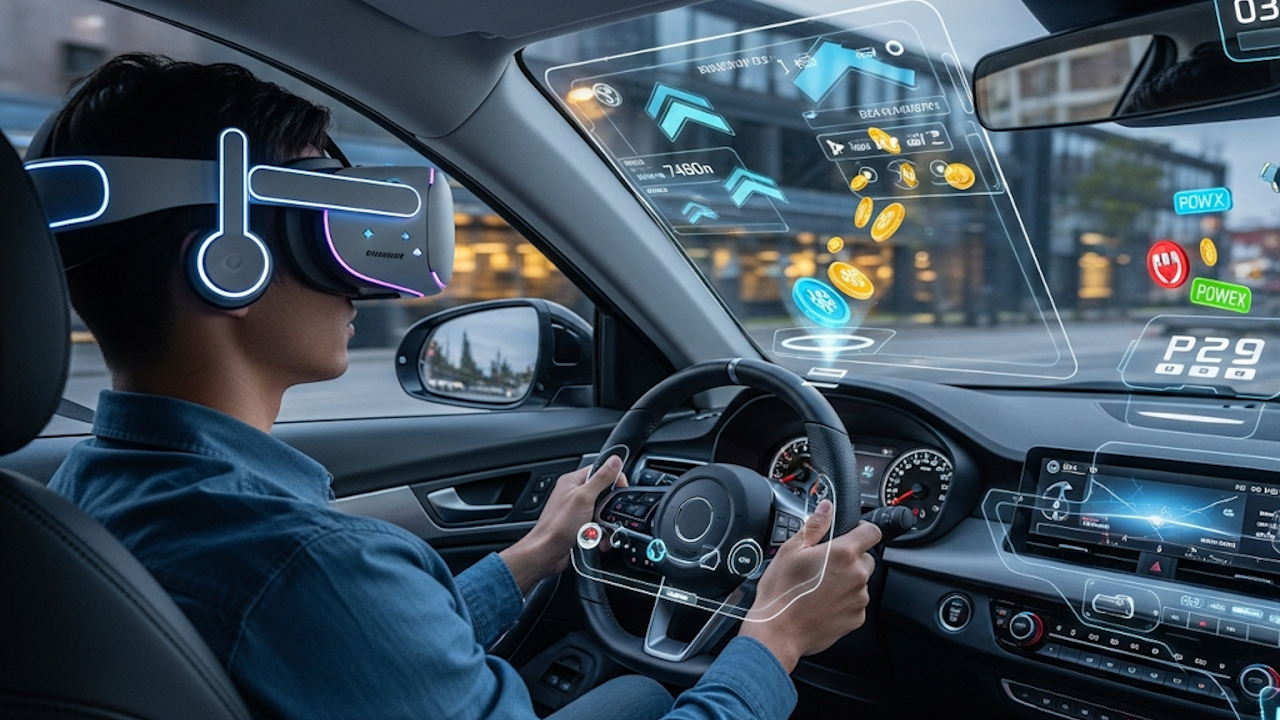
The evolution of in-car entertainment has transformed vehicles from simple modes of transportation into sophisticated mobile environments that blend functionality, safety, and leisure. Traditional radio and cassette players gave way to CD players, then satellite radio, touchscreen infotainment systems, and streaming services. Today, virtual reality (VR) and augmented reality (AR) represent the next frontier, promising immersive experiences that redefine how drivers and passengers interact with their surroundings. These technologies promise to make commutes more engaging, long trips less tedious, and even enhance safety through intuitive overlays. This article explores the current state, applications, benefits, challenges, and future potential of VR and AR in driving experiences.
The Shift Toward Immersive In-Car Experiences
In-car entertainment systems have historically focused on audio and basic visual displays. Modern vehicles now feature large central touchscreens, rear-seat entertainment monitors, and integration with smartphones. However, these systems often require drivers or passengers to divert their attention, which can compromise safety. VR and AR address this by integrating digital content more seamlessly with the real world or creating entirely new virtual environments.
AR enhances the real-world view with digital overlays, typically through heads-up displays (HUDs) projected onto the windshield or specialized glasses. VR, by contrast, immerses users in fully simulated environments, usually via headsets, making it more suitable for passengers in autonomous or semi-autonomous vehicles. The combination of these technologies with vehicle sensors, GPS, and real-time data creates dynamic, context-aware experiences that sync with the car’s motion, speed, and route.
Augmented Reality: Enhancing the Driver’s View
AR has made significant inroads through AR-enabled HUDs, which project critical information directly into the driver’s line of sight. Unlike traditional dashboards or center screens, AR HUDs overlay navigation arrows onto the actual road ahead, highlight lane markings, display speed limits, and warn about potential hazards such as pedestrians or obstacles. This reduces the need to glance down at instruments, potentially lowering distraction-related risks.
Several manufacturers have pioneered this technology. Mercedes-Benz introduced an advanced AR navigation system in models like the EQS, where directional arrows appear to paint the pavement and street numbers float over buildings. Porsche offers an AR HUD in vehicles like the Macan, integrating navigation cues and driver assistance alerts seamlessly. BMW, Harman, and Huawei have developed systems with wide fields of view, sometimes projecting virtual images up to 7.5 meters ahead for a 70-inch equivalent display size.
Beyond navigation, AR supports advanced driver assistance systems (ADAS). It can mark lane violations, highlight traffic signs, or provide real-time alerts about surrounding vehicles. In electric models from brands like Volkswagen, AR integrates interactive elements for a more engaging drive. These systems use cameras, sensors, and powerful processors to align virtual elements precisely with the physical world, often incorporating eye-tracking to personalize the view.
For passengers, AR extends to windows or screens that overlay information about landmarks, points of interest, or even educational content during travel. This turns a routine drive into an informative journey without pulling out a phone.
Virtual Reality: Immersive Entertainment for Passengers
While AR primarily aids drivers, VR shines in passenger entertainment, particularly in the back seats or in vehicles with higher levels of automation. VR headsets can transport users to virtual worlds while the car handles real-world navigation. Companies like Audi have partnered with platforms such as Holoride to create motion-synced VR experiences. The system uses vehicle data on acceleration, steering, braking, and location to synchronize virtual content with the actual journey. A roller-coaster game, for instance, might incorporate real turns and speed changes, reducing motion sickness and enhancing immersion.
Holoride and similar solutions allow passengers to play games, watch movies in expansive virtual theaters, or explore simulated environments that adapt to the trip duration and route. In autonomous vehicles, where drivers become passengers, VR could enable full productivity or leisure sessions. Passengers might attend virtual meetings, tour distant cities, or engage in multiplayer games with others in connected vehicles.
BMW’s AREA M Mixed Reality project fuses real cars with virtual racing worlds, initially for demonstrations but now extending to customer experiences. Partnerships involving Unity Technologies with Mazda and Valeo focus on extended reality gaming for passengers, creating interactive environments that feel responsive to the vehicle’s movement.
Benefits and Transformative Use Cases
The integration of VR and AR offers multiple advantages. For safety, AR HUDs keep eyes on the road, with studies and implementations showing potential reductions in distraction. Real-time overlays for navigation and hazards improve decision-making, especially in poor weather or complex traffic.
Entertainment value increases dramatically for families and long-distance travelers. Children can enjoy age-appropriate VR adventures synced to the ride, while adults might relax with virtual cinema experiences. In shared or autonomous mobility services, these technologies could differentiate premium offerings, turning travel time into productive or enjoyable periods rather than wasted downtime.
VR also finds applications beyond consumer use. Automotive manufacturers employ it for design prototyping, training, and virtual test drives, allowing customers to experience vehicles in simulated conditions before purchase. This extends to service training, where technicians practice repairs in virtual environments.
Environmental and efficiency gains appear indirectly: by making commutes more tolerable, these systems might encourage shifts toward electric or shared vehicles optimized for passenger comfort.
Challenges and Safety Considerations
Despite the promise, significant hurdles remain. Motion sickness poses a primary concern for VR in moving vehicles, as discrepancies between visual cues and physical motion can cause discomfort. Solutions like Holoride mitigate this through tight synchronization with car sensors, but individual variability persists.
Technical challenges include hardware limitations. VR headsets must be lightweight, comfortable for extended wear, and resistant to vehicle vibrations. Battery life, processing power, and heat management in confined spaces add complexity. AR systems require bright, clear projections visible in all lighting conditions without causing glare or ghosting.
Safety remains paramount. For drivers, AR must avoid information overload or false alerts. Regulatory approval for Level 3 and higher autonomy, where drivers may disengage, will influence VR adoption. Data privacy concerns arise from the constant collection of vehicle and user data needed for personalized experiences.
Cost represents another barrier. Advanced AR HUDs and VR setups increase vehicle prices, limiting accessibility to luxury segments initially. Integration with existing vehicle architectures demands substantial engineering investment.
The Road Ahead: Integration with Autonomy
The future of VR and AR in vehicles ties closely to the progression of autonomous driving. In fully self-driving cars, passengers gain freedom to use immersive technologies without safety trade-offs. Windows could become transparent screens for AR tours, or entire cabin interiors could transform into virtual spaces.
Advancements in mixed reality (MR) will blend AR and VR more fluidly. Eye-tracking, AI-powered content adaptation, and 5G or faster connectivity will enable seamless multi-user experiences across vehicles. Partnerships between automakers, tech firms like Unity, and specialized companies signal accelerating innovation.
Sustainability efforts may incorporate VR for virtual commuting simulations or eco-friendly travel visualizations. As battery technology improves and sensors become more affordable, these features could proliferate to mainstream vehicles.
Conclusion
VR and AR are poised to revolutionize in-car entertainment by merging digital immersion with real-world driving. AR enhances safety and awareness for drivers through intuitive overlays, while VR transforms passenger time into captivating adventures. Though challenges in motion comfort, cost, and regulation exist, ongoing developments in automotive technology and partnerships indicate rapid progress.
As vehicles become smarter and more autonomous, the line between transportation and entertainment will blur further. The result could be journeys that are not only safer and more efficient but also genuinely enjoyable, turning every drive into an opportunity for exploration, relaxation, or connection. The automotive industry stands at the threshold of an immersive era where technology does more than move us from place to place. It enriches the experience along the way.