

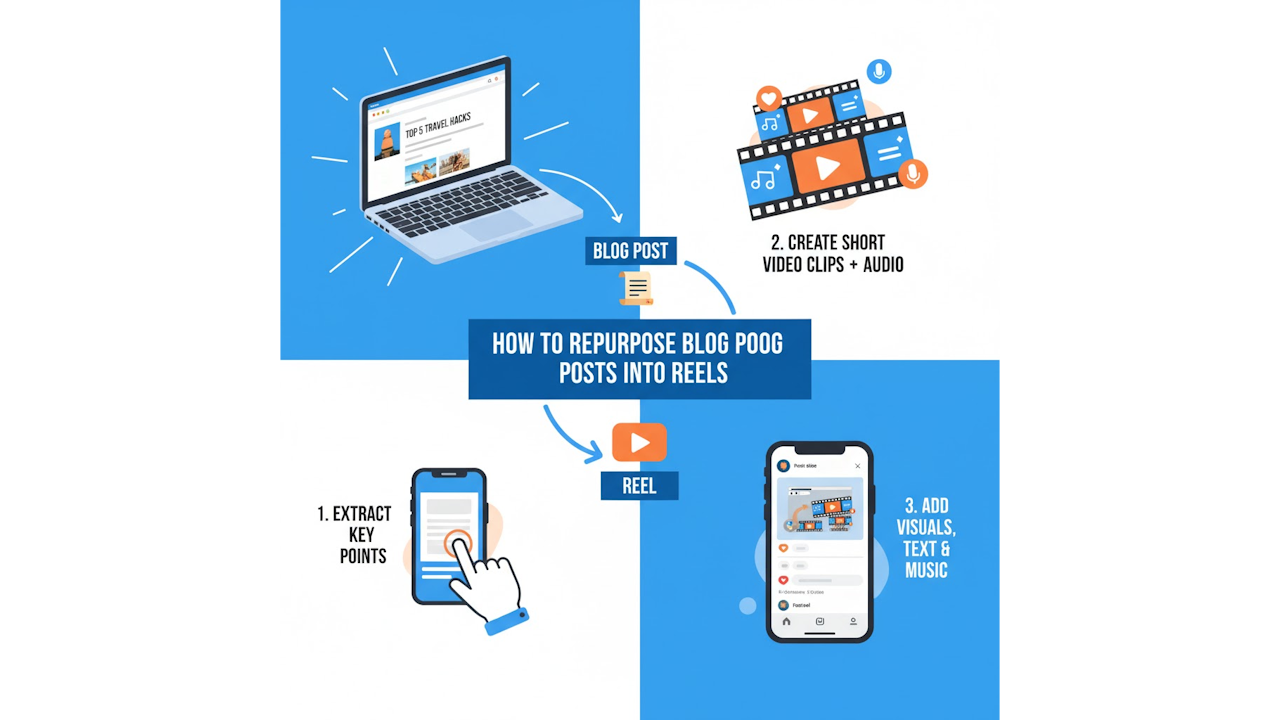
Repurposing blog posts into Reels is one of the smartest ways to extend the life of your content. Blog posts often contain deep insights, research, and stories that can be transformed into short, engaging videos. These videos thrive on platforms like Instagram, TikTok, and YouTube Shorts. With attention spans shrinking, turning long-form written content into quick visual bites helps you reach new audiences, boost engagement, and drive traffic back to your website.
This comprehensive guide walks you through the entire process. You will learn why it works, how to plan it, step-by-step execution methods, tools to use, advanced tips, and ways to measure success. Whether you are a solo blogger, content marketer, or business owner, these strategies will help you create a steady stream of Reels from existing blog material.
Why Repurpose Blog Posts Into Reels
Blog posts take significant time and effort to create. Many sit unread or get buried in search results over time. Reels, on the other hand, get pushed by algorithms to users who might never find your blog otherwise.
Repurposing achieves several goals at once. It saves creation time because the core ideas already exist. It multiplies your content output without starting from scratch. It caters to different learning preferences: some people prefer reading detailed articles while others enjoy quick videos.
Data from various platforms shows that video content receives higher engagement rates than static posts. Reels can increase profile visits, link clicks, and newsletter sign-ups. They also improve SEO indirectly when users share clips that link back to the full post.
Another advantage is consistency. Instead of writing new blog posts every week, you can extract multiple Reels from one strong article. This approach supports a sustainable content strategy.
Benefits of Turning Blog Content Into Short Videos
- Wider Reach: Algorithms favor video, exposing your ideas to audiences beyond your email list or regular readers.
- Higher Engagement: Likes, comments, shares, and saves happen more frequently with dynamic content.
- Brand Authority: Sharing expertise in video format builds trust and positions you as a thought leader.
- Traffic Generation: End screens or captions can direct viewers to the original blog post.
- Cost Efficiency: Minimal new production needed since research and writing are done.
- SEO Synergy: Reels can rank in video search results, complementing your written content.
- Audience Insights: Comments on Reels reveal what resonates, informing future blog topics.
Preparing Your Blog Post for Repurposing
Start by reviewing your existing content. Not every blog post works equally well for Reels. Choose posts that are:
- Evergreen or timeless rather than tied to fleeting news.
- Packed with actionable tips, lists, how-tos, or stories.
- Structured with clear sections, headings, and bullet points.
- Supported by data, quotes, or personal anecdotes.
Read through the post and highlight key sections. Identify the main thesis, top takeaways, statistics, and any surprising facts. Create a summary document or outline that distills the post into 5 to 10 core points. This outline becomes your blueprint for video scripts.
Consider audience pain points addressed in the blog. Reels perform best when they solve problems quickly or spark curiosity.
Step-by-Step Process to Create Reels From Blog Posts
Step 1: Extract Key Hooks and Segments
Break the blog post into bite-sized pieces. A typical Reel lasts 15 to 30 seconds, so focus on one idea per video.
Examples of extractable segments:
- The introduction or problem statement as a hook.
- Individual tips from a numbered list.
- A powerful statistic or quote.
- Before-and-after scenarios.
- Common mistakes section.
- Conclusion or call to action.
Aim to create a series of related Reels from one post. For instance, a 2000-word blog on productivity could yield 8 to 10 separate Reels.
Step 2: Write a Compelling Script
Scripts for Reels must be conversational and energetic. Read your selected segment aloud and rewrite it to sound natural when spoken.
Structure a good script:
- Hook in the first 3 seconds (question, bold claim, or visual surprise).
- Deliver value quickly.
- End with a clear call to action (watch the full post, comment below, follow for more).
Keep language simple. Use contractions and short sentences. Time yourself reading the script to fit the Reel length.
Example script from a hypothetical blog on email marketing: “Struggling with low open rates? Here is the exact tweak that boosted mine by 40 percent. Number one: personalize subject lines with first names. Number two: send at peak times. Full guide linked in bio.”
Step 3: Plan Visuals and Structure
Reels need motion and interest. Decide on format:
- Talking head with text overlays.
- Screen recordings of blog excerpts.
- B-roll footage related to the topic.
- Animated text and graphics.
- Slides transitioning between points.
Match visuals to the script. For list-based content, show numbered graphics. For stories, use relevant stock footage or personal clips.
Storyboard each Reel on paper or a digital tool. Note timing for each element.
Step 4: Record the Video
Use your phone or camera for recording. Good lighting and clear audio matter most. Speak clearly and with enthusiasm.
Tips for recording:
- Film in a quiet space.
- Use natural light or a ring light.
- Hold the camera at eye level.
- Record multiple takes and pick the best.
For non-talking Reels, capture screen recordings while narrating with voiceover.
Step 5: Edit the Reel
Editing turns raw footage into polished content. Add:
- Captions for accessibility and silent viewing.
- Trending audio or original voiceover.
- Transitions between clips.
- Text animations that pop on screen.
- Stickers, effects, or subtle branding.
Keep edits fast-paced to hold attention. Trim any dead space.
Step 6: Optimize and Publish
Write a strong caption that includes keywords, emojis, and hashtags. Add the blog link in your bio or use a link sticker if available.
Post at times when your audience is active. Use platform analytics to refine timing.
Essential Tools for Repurposing Content
You do not need expensive equipment. Start simple and scale up.
- Recording: Smartphone camera, free voice recorder apps.
- Editing Apps: CapCut (free and powerful), InShot, or Adobe Premiere Rush.
- Text and Graphics: Canva for creating overlays and thumbnails.
- Screen Recording: Loom or built-in tools on Mac/Windows.
- Audio Enhancement: Audacity for cleaning voiceovers.
- Scheduling: Platform native tools or Buffer/Later for batch posting.
- Analytics: Instagram Insights, TikTok Analytics.
For advanced users, tools like Descript allow editing video by editing text transcripts.
Advanced Techniques for Better Results
Create Content Pillars and Series
Group Reels into themed series. Title them consistently like “Blog to Reel Tip 1” to encourage binge-watching.
Use Data and Proof
Incorporate charts, screenshots from the blog, or animated infographics to add credibility.
Incorporate User-Generated Content
Ask followers to share their results after trying tips from your blog, then feature them in follow-up Reels.
A/B Test Elements
Experiment with different hooks, lengths, and music. Track which versions perform best.
Cross-Promote Across Platforms
Adapt one Reel for multiple formats: square for Instagram, vertical for TikTok, and landscape for YouTube.
Add Interactive Elements
Pose questions in captions or use poll stickers to boost comments.
Common Mistakes to Avoid
- Making the video too wordy or reading the blog verbatim. Reels demand brevity.
- Ignoring trends. Blend your content with popular sounds or challenges.
- Poor quality visuals or audio that distract from the message.
- Forgetting calls to action. Always guide viewers on next steps.
- Posting inconsistently. Regular Reels build momentum.
- Neglecting captions. Many users watch without sound.
- Over-promoting without delivering value first.
Test Reels frequently and learn from low-performing ones by analyzing drop-off points.
Measuring Success and Iterating
Track these metrics:
- Views and watch time.
- Engagement rate (likes, comments, shares).
- Profile visits and link clicks.
- Follower growth.
- Traffic from Reels to your blog.
Use UTM parameters on links to attribute visits accurately in Google Analytics.
Review top-performing Reels to identify patterns. Double down on similar formats or topics. Update older blog posts based on Reel feedback.
Over time, build a content calendar that mixes new blogs with repurposed material.
Real-World Examples
Consider a fitness blog post about home workouts. Possible Reels:
- Quick demonstration of one exercise with form tips.
- “3 Mistakes Beginners Make” list.
- Transformation story excerpt.
- Equipment-free routine highlight.
A business advice post could become Reels on negotiation tactics, each focusing on one strategy with role-play examples.
Many creators report that one in-depth blog can generate weeks of social content.
Scaling Your Repurposing Workflow
Once comfortable, create templates for efficiency. Develop standard script structures, color schemes for branding, and preset editing sequences.
Batch process multiple Reels in one session. Record several voiceovers, edit in batches, then schedule posts.
Outsource parts like editing if your time is limited, but keep creative control over messaging.
Automate where possible with tools that transcribe blogs into initial scripts or suggest hooks.
Final Thoughts
Repurposing blog posts into Reels transforms static content into dynamic assets that fuel growth across platforms. It requires initial planning but pays off through saved time and expanded reach. Start small by selecting one strong blog post and creating three to five Reels from it. Experiment, analyze results, and refine your approach.
Consistency beats perfection. The more you practice, the faster and more effective the process becomes. Your expertise deserves to be seen by more people, and Reels provide the perfect vehicle. Begin today, and watch your content ecosystem thrive.
This method not only amplifies your voice but also deepens connections with your audience through multiple touchpoints. Happy creating.