

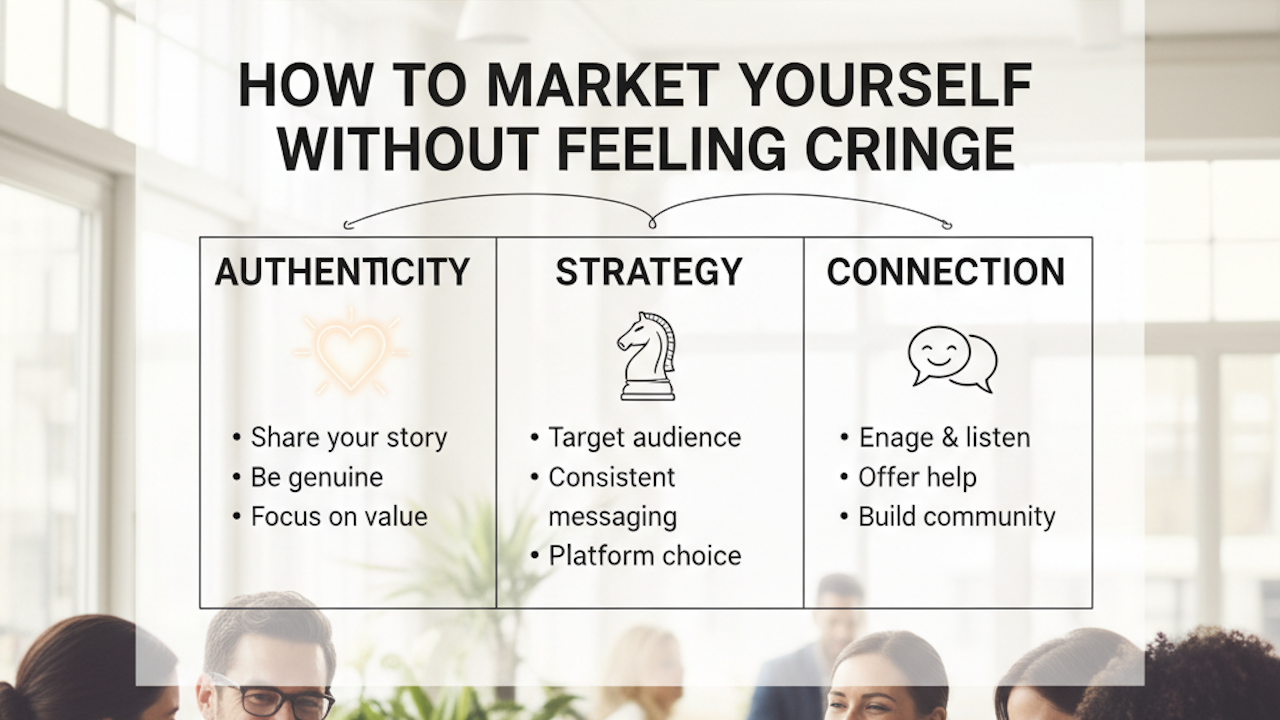
In today’s competitive world, marketing yourself is no longer optional. Whether you are a freelancer, entrepreneur, job seeker, or professional climbing the career ladder, the ability to showcase your skills and value matters. Yet for many people, self-promotion triggers deep discomfort. It feels salesy, boastful, or inauthentic. The good news is that effective self-marketing does not require exaggeration or slick tactics. You can promote yourself with integrity, confidence, and genuine connection.
This article explores practical strategies to market yourself without the cringe factor. We will focus on building authenticity, providing value, and creating sustainable habits that align with your personality. By the end, you will have a clear framework to present your best self while staying true to who you are.
Why Self-Marketing Feels Cringe and Why You Should Do It Anyway
Self-promotion often clashes with cultural norms that discourage bragging. Many of us grew up hearing phrases like “don’t toot your own horn.” Social media amplifies this tension. Feeds overflow with polished success stories and highlight reels that seem unrealistic. When we try to join in, it can feel forced or desperate.
However, avoiding self-marketing entirely comes with real costs. Opportunities pass you by. Talented people remain invisible while less skilled but louder voices get ahead. The solution lies in reframing marketing as sharing value rather than boasting. When done right, it becomes a natural extension of your work and personality.
Start by examining your mindset. Ask yourself what makes promotion uncomfortable. Is it fear of judgment? Concern about seeming arrogant? Once you identify the root, you can address it directly. Remember that quiet competence alone rarely opens doors in a noisy world. Strategic visibility helps you connect with people who need exactly what you offer.
Define Your Unique Value Without Overstating It
Effective marketing begins with clarity about what you bring to the table. Instead of generic claims like “I am the best at X,” focus on specific strengths and experiences that set you apart.
Conduct a honest self-audit. List your skills, accomplishments, and the problems you solve for others. Be concrete. For example, rather than saying “I am a great writer,” note that you helped three clients increase their website traffic by an average of 45 percent through targeted content strategies. Facts ground your message and reduce the need for hype.
Identify your audience next. Who benefits most from your expertise? What challenges do they face? When you understand their needs, your marketing shifts from self-centered to helpful. This perspective makes promotion feel service-oriented instead of self-serving.
Create a personal value statement. Keep it short and factual: “I help small businesses streamline operations using automation tools, saving them an average of 15 hours per week.” This statement serves as an anchor for conversations, profiles, and content. It communicates capability without exaggeration.
Craft an Authentic Personal Story
People connect with stories more than bullet points. Sharing your journey humanizes you and makes marketing feel conversational rather than promotional.
Think about your professional path. What experiences shaped your expertise? What failures taught you important lessons? What successes genuinely excite you? Craft a narrative that highlights growth and resilience rather than perfection.
For instance, instead of listing every job title, describe a pivotal moment: “After struggling with manual inventory systems in my first retail job, I developed a simple tracking method that reduced errors by 60 percent. That experience led me to specialize in inventory management software implementations.”
Practice telling your story in different lengths. Have a 30-second version for casual encounters, a two-minute version for interviews, and a longer written version for your website or LinkedIn summary. The key is consistency across platforms while adapting to context.
Avoid the temptation to embellish. Authenticity builds trust. When your story aligns with reality, people sense it and respond positively. Over time, this narrative becomes your brand without feeling manufactured.
Build Genuine Relationships Instead of Pushing Sales
The most effective self-marketing happens through relationships. When people know and trust you, they naturally advocate for you. Focus on connection rather than conversion.
Attend industry events, join online communities, and participate in conversations without immediate agendas. Listen more than you speak. Ask thoughtful questions about others’ work and challenges. Offer help when appropriate, even if it does not lead to immediate opportunities.
Follow up after meetings with personalized messages. Reference specific points from your conversation: “I enjoyed hearing about your team’s expansion plans. The article I mentioned on scaling operations is here if you would like to read it.” Small gestures like this demonstrate genuine interest.
Collaborate on projects. Co-author articles, join panels, or contribute to open-source work. These activities showcase your abilities through action rather than direct promotion. People observe your competence and character organically.
Remember that relationships take time. Nurture them consistently without keeping score. The marketing benefits emerge naturally as your network grows and opportunities flow from mutual support.
Create Content That Demonstrates Your Expertise
Content creation offers one of the strongest ways to market yourself without sounding promotional. When you share useful information, you position yourself as a helpful expert.
Choose formats that match your strengths and comfort level. Some people excel at writing blog posts or LinkedIn articles. Others prefer short videos, podcasts, or infographics. Start with what feels least awkward.
Focus content on solving problems for your target audience. Share practical tips, case studies (with permission), lessons from your experience, or curated resources. For example, a graphic designer might post before-and-after project examples with explanations of the design choices rather than generic portfolio showcases.
Maintain a consistent schedule. Even posting once every two weeks builds momentum. Quality matters more than quantity. Well-researched, thoughtful content attracts the right attention.
Engage with your audience in the comments. Answer questions, thank people for feedback, and continue conversations. This interaction transforms content from broadcasting to dialogue, reducing any sense of self-promotion.
Over time, your body of work becomes a powerful marketing asset. Potential clients or employers can see your thinking and approach without you needing to pitch aggressively.
Optimize Your Online Presence Strategically
Your digital footprint plays a major role in how others perceive you. Curate it thoughtfully to reflect your authentic self.
Update your LinkedIn profile, personal website, or professional bio with clear, benefit-focused language. Use first-person writing to keep it conversational. Include specific achievements with measurable results where possible.
Choose a professional yet approachable photo. Dress in a style consistent with your industry while showing personality. Smile naturally. The goal is to look like someone others would enjoy working with.
Be selective about what you share publicly. Maintain boundaries that protect your privacy while allowing enough openness to build connection. Consistency across platforms helps reinforce your personal brand.
Use keywords relevant to your field naturally in profiles and content. This improves discoverability without resorting to spammy tactics. Tools like Google or LinkedIn search suggestions can help identify common terms in your industry.
Review your online presence periodically. Search your name and see what appears. Address any outdated or inconsistent information that could undermine your efforts.
Practice Confident Communication Without Arrogance
Many people struggle with the delivery of their marketing message. They swing between overly humble and overly bold. Finding the middle ground takes practice.
Use “we” language when discussing team accomplishments, but own your individual contributions clearly. Statements like “I led the project that resulted in…” acknowledge both personal effort and collaboration.
Prepare responses for common questions. When someone asks “What do you do?” have a clear, engaging answer ready. Practice until it feels natural rather than rehearsed.
Seek feedback from trusted mentors or peers. Ask them how your self-description comes across. Adjust based on their honest input while staying true to your voice.
Celebrate wins publicly in moderation. Share lessons learned alongside successes. This approach makes your achievements relatable rather than boastful. For example: “We just wrapped up a challenging campaign. Here are three things I learned about client communication that made the difference.”
Handle Discomfort and Rejection Gracefully
Even with the best strategies, self-marketing can still trigger awkward feelings. Expect some discomfort and develop tools to manage it.
Start small. Practice in low-stakes environments before tackling bigger opportunities. Send one connection request per day with a personalized note. Share one piece of content weekly. Build momentum gradually.
When rejection happens, and it will, treat it as data rather than personal failure. Analyze what you can improve while recognizing that not every opportunity fits. Timing, budget, and chemistry all play roles beyond your control.
Develop a support system. Connect with others who are also building their personal brands. Share experiences and encouragement. Knowing you are not alone reduces the emotional weight.
Track your efforts and results. Keep a simple log of outreach, content published, and positive outcomes. Seeing progress over time builds confidence and motivation.
Maintain Consistency and Long-Term Perspective
Sustainable self-marketing requires ongoing effort rather than sporadic bursts. Treat it as a professional habit similar to skill development or networking.
Set realistic goals. Perhaps commit to one networking conversation per week and two content pieces per month. Use tools like calendars or simple spreadsheets to stay organized.
Review your approach every few months. What is working well? What feels misaligned? Adjust based on results and your comfort level. Personal branding evolves as you grow.
Avoid burnout by integrating marketing into your existing workflow where possible. Turn client work into case studies. Record meetings (with permission) for potential podcast clips. Repurpose content across platforms.
Focus on the long game. Authentic marketing compounds over time. Relationships deepen, your reputation strengthens, and opportunities arrive with less direct effort. Patience and persistence separate those who succeed from those who quit when it feels uncomfortable.
Ethical Considerations in Self-Marketing
Stay honest in all your promotions. Never claim credentials you lack or results you did not achieve. Misrepresentation damages trust permanently and creates unnecessary stress.
Give credit where due. Acknowledge collaborators, mentors, and inspirations. This practice not only shows integrity but also strengthens your network.
Respect others’ boundaries. Do not spam inboxes or aggressively pitch in inappropriate contexts. Quality connections matter more than quantity of contacts.
Consider the broader impact of your marketing. Aim to contribute positively to your industry or community. When your efforts uplift others alongside yourself, the process feels far more rewarding and less self-centered.
Putting It All Together: Your Personal Marketing Plan
Create a simple action plan to implement these ideas:
- Clarify your value proposition and core story.
- Optimize your key online profiles.
- Schedule regular content creation and sharing.
- Set networking goals with follow-up systems.
- Track efforts and adjust monthly.
- Practice communication in safe settings.
Review this plan quarterly and celebrate small wins along the way. Marketing yourself effectively is a skill that improves with deliberate practice.
Final Thoughts
Marketing yourself without feeling cringe is entirely possible when you ground your efforts in authenticity, value, and genuine connection. It requires self-awareness, consistent action, and a willingness to step outside your comfort zone gradually.
Remember that you do not need to become someone else to succeed. The most compelling personal brands emerge from real strengths, experiences, and passions. By focusing on helping others and sharing your journey honestly, you create marketing that feels natural rather than forced.
Start today with one small step. Update your bio, reach out to one contact, or draft your first piece of content. Over time, these actions compound into visibility, opportunities, and confidence. You have valuable contributions to make. The world needs to know about them, and you can share that knowledge with integrity and grace.