

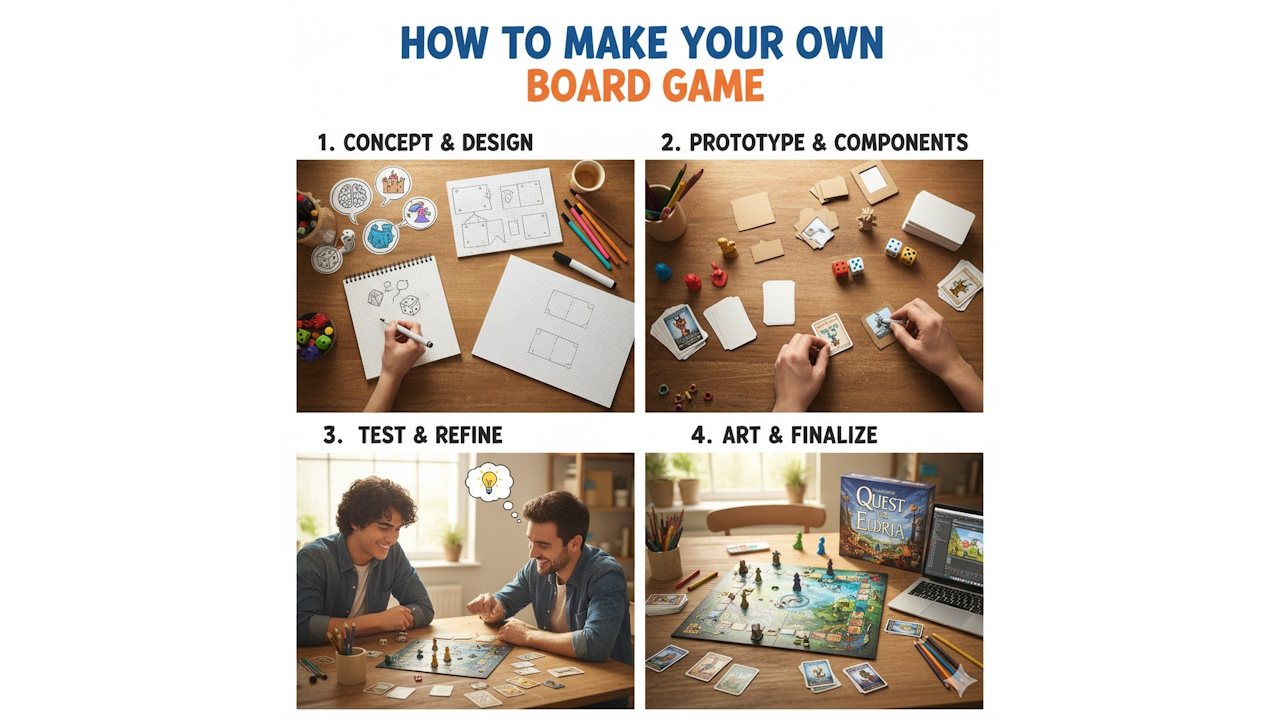
Board games have seen a remarkable surge in popularity over the past decade. People of all ages gather around tables to share stories, compete strategically, cooperate against challenges, or simply enjoy creative downtime together. Creating your own board game offers a unique creative outlet. It lets you shape experiences that reflect your interests, solve interesting problems through play, and potentially bring joy to countless others. Whether your goal is a fun family activity, a complex strategy title for enthusiasts, or even a commercially released product, the process follows a clear path of ideation, prototyping, testing, refinement, and production. It demands patience, openness to feedback, and a willingness to revise repeatedly. Many successful designers began with simple ideas scribbled on paper and turned them into polished games through persistence and iteration.
This comprehensive guide walks you through every major stage. It draws on proven practices from experienced designers and resources in the tabletop community. You will learn how to move from a spark of inspiration to a finished game ready for friends, conventions, or wider audiences. The journey is rarely linear. Expect loops of creation and revision. Yet the satisfaction of watching players engage deeply with something you built makes every step worthwhile.
Developing Your Core Concept and Theme
Every great board game begins with a strong central idea. Start by brainstorming freely. Write down themes that excite you, such as exploring national parks, building bird habitats, managing a fantasy realm, or surviving in space. You might begin with a mechanic that intrigues you, like clever tile placement or clever resource conversion, and then wrap a theme around it. Neither approach is wrong. What matters is finding a concept that feels fresh yet approachable.
Research existing games thoroughly. Sites like BoardGameGeek provide databases, reviews, and forums where you can see what has already been done. This step helps you identify gaps or opportunities for a unique twist. For example, many games feature resource gathering, but few combine it with seasonal progression and shared paths in the way PARKS does to evoke real hiking experiences. Your goal is not to copy but to differentiate through specific combinations of theme and play.
Define your target audience early. Consider player count, typically ranging from two to six for many designs, recommended age, and desired playtime, such as thirty to ninety minutes. Think about the emotional experience you want players to have. Do you aim for tense competition, collaborative problem solving, lighthearted laughs, or thoughtful strategy? Write a short mission statement or one sentence pitch that captures the essence. This document will guide later decisions and keep the project focused.
Test the core idea quickly with a rough sketch or minimal paper version. Even a few turns can reveal whether the concept sparks interest. If players seem bored or confused immediately, adjust before investing more time. Strong concepts integrate theme and mechanics so deeply that every action feels like it belongs in the world of the game. Avoid bolting on flavor later. When theme and rules reinforce each other, the game becomes more memorable and intuitive.
Selecting and Integrating Game Mechanics
Mechanics form the engine that drives player decisions, pacing, and interaction. Common categories include worker placement, where players assign limited resources to action spaces; deck building, in which players improve personal card pools over time; set collection, focused on gathering matching items for points; area control, centered on claiming and defending spaces; engine building, where early choices create powerful combinations later; and dice rolling with various mitigation tools to reduce pure luck.
Choose mechanics that support your desired player experience and theme. A game about chefs competing in a kitchen might use set collection for recipes and worker placement for station management. A cooperative survival game could combine shared resource pools with tense card play that forces difficult choices. Start simple. Many first time designers succeed by focusing on one or two core mechanics and layering complexity only where it adds meaningful decisions.
Ensure mechanics create interesting trade offs rather than obvious optimal moves. Good design forces players to weigh short term gains against long term strategy. Consider replayability through variable setups, asymmetric player powers, or multiple paths to victory. Test scalability across different player counts during early development. Some mechanics shine at two players but falter at five, or vice versa.
Avoid gimmicks that sound clever but fail to deliver engaging play. Every rule should serve a clear purpose. As you combine systems, watch for unintended interactions that break tension or create runaway leaders. Modular development helps here. Design and test one system, such as movement or combat, in isolation before integrating it with others. This approach prevents overwhelm and lets you refine pieces before they interact.
Building a Playable Prototype
Once you have a concept and rough mechanics, create a prototype as soon as possible. The first version should be quick, cheap, and ugly. Use paper, index cards, markers, printed templates, coins, buttons, or wooden cubes from craft stores. Print cards on regular paper, cut them out, and slide them into cheap card sleeves for easy rewriting. Draw boards on poster board or graph paper. Use stickers for custom tokens or dice faces. The goal is functionality, not beauty. Beautiful components too early can make you reluctant to change rules that need revision.
Focus on a minimum viable product. Create just enough components for one complete playthrough. If your game needs one hundred cards eventually, start with ten or twenty that cover the core loop. This keeps momentum high and allows major changes without wasting effort. Digital tools can help with layout. Programs like Canva or free vector editors assist with consistent card templates. Virtual platforms such as Tabletop Simulator or Tabletopia let you test remotely and experiment with components without physical production.
Organize your materials for speed. Keep a kit of blank cards, sleeves, tokens, and dice ready. Use icon libraries or simple drawings so players understand actions at a glance. Label everything clearly during early tests. Remember that the prototype exists to be broken and rebuilt. Designers often go through dozens of versions. Each iteration teaches something new about what works and what frustrates players.
Conducting Thorough Playtests
Playtesting is the heart of game design. No amount of solo thinking replaces real human interaction with your creation. Begin with internal tests. Play alone to smooth major issues, then invite friends or family. Observe reactions closely without over explaining. Note moments of confusion, downtime, excitement, or frustration. Ask targeted questions afterward: Which decisions felt meaningful? Where did the rules feel unclear? What would you change?
Progress to external playtests with strangers. Local board game groups, designer meetups, and conventions often have dedicated playtest areas. Blind playtesting proves especially valuable once the game is functional. Provide only the rules document and components, then watch quietly as players figure everything out. This reveals whether the game teaches itself and highlights ambiguities in the rulebook.
Structure sessions with clear goals. Early tests might focus on rule clarity and basic fun. Later ones examine balance, pacing, and engagement across different player counts and experience levels. Use feedback forms or simple surveys to collect consistent data on ratings, win conditions, and specific likes or dislikes. Record notes immediately after each session while memories remain fresh. Track patterns across multiple groups rather than reacting to single opinions.
Aim for volume. Dozens of playtests with varied participants provide the data needed for confident decisions. Remote options expand your reach when in person sessions are limited. The process feels messy at times, with frequent rule rewrites and component tweaks. Embrace it. Each round of testing moves the game closer to its best form.
Iterating and Balancing the Design
Analysis follows every round of playtesting. Review notes and data for recurring themes. Common issues include unclear rules, excessive downtime, overpowered strategies, or imbalanced player positions. Address one major change at a time so you can measure its impact in the next test. Keep a changelog documenting what you altered and why. This prevents repeating mistakes and shows progress over months of development.
Balancing requires attention to several factors. Mitigate first player advantage through mechanisms like extra starting resources or turn order auctions. Adjust probabilities and scoring so multiple strategies remain viable. Introduce randomness thoughtfully and pair it with mitigation tools so skilled play still matters. Watch for runaway leaders where early success snowballs uncontrollably. Multiple viable paths to victory increase replayability and keep all players engaged until the end.
Use quantitative data when possible. Track win rates, average scores, and game length across sessions. Spreadsheets help organize this information. For math heavy designs, some creators even code simple simulations to explore edge cases. Combine data with your own intuition and the qualitative feel of sessions. A game earns the label “balanced” when players of different skill levels report close games and meaningful choices regardless of who wins.
Iteration continues until feedback stabilizes. When new playtesters consistently rate the experience highly and offer only minor suggestions, the core design is likely ready for the next phase. Resist the urge to add more content once the foundation feels solid. Scope creep can dilute what makes the game special.
Crafting Clear Rules and Documentation
Clear rules transform a prototype into a game others can enjoy independently. Structure the rulebook logically. Begin with an overview and components list. Follow with setup instructions, the core gameplay loop, end game conditions, and scoring. Include a glossary for specialized terms and several worked examples that illustrate key situations.
Write in short, active sentences. Use diagrams or text based examples to clarify complex interactions. Test the rules by giving them to new players and observing where they stumble. Revise accordingly. Many designers create a living document that evolves alongside the prototype. Once the game stabilizes, polish the language and layout for readability.
Consider variants for different player counts or optional advanced rules. These add depth for experienced groups without complicating the base game. A well written rulebook reduces teaching time and increases the chance that players will want to replay your game.
Enhancing with Artwork, Theme, and Components
After mechanics and balance solidify, turn attention to presentation. Theme comes alive through flavor text, consistent world building, and artwork that supports the setting. Hire artists through platforms like ArtStation or specialized board game communities when your budget allows. Provide clear briefs including references, tone, and specific component needs. Commission contracts should cover rights, revisions, and timelines.
Graphic design ensures clarity and appeal. Icons should communicate actions instantly. Color coding and typography reduce cognitive load. Professional layout makes the game feel premium even before players open the box. Component choices affect both usability and table presence. Heavier cards and wooden tokens create satisfying tactile experiences, while thoughtful box inserts speed setup and teardown.
Begin visual work only after the rules are stable. Early art investment can make later mechanical changes painful. Use placeholder graphics during most of development. When the time comes, strong visuals help the game stand out and communicate quality to potential players or publishers.
Preparing for Production and Manufacturing
Decide early how you intend to share your game. Print and play versions distributed as PDFs offer a low barrier entry for testers and fans. For physical copies, several paths exist. Services like The Game Crafter allow small runs or even single copies with professional components and no minimum order. This option suits early sales, conventions, or proof of concept before larger commitments.
Larger production runs typically involve overseas manufacturers. Research thoroughly, request samples, and calculate total costs including art, graphic design, manufacturing, shipping, duties, and marketing. Minimum order quantities often start at several hundred or thousand units. Factor in quality control and fulfillment logistics. Many designers begin with small batches to test the market before scaling.
Component quality and packaging influence perceived value. Durable materials encourage repeated play. Clear instructions and organized inserts reduce frustration. Production is a business decision as much as a creative one. Plan budgets realistically and build in contingencies for unexpected expenses.
Exploring Publishing Options
You have several routes to get your finished game into players hands. Self publishing through crowdfunding platforms lets you retain control and build an audience directly. Successful campaigns require professional presentation, compelling video, clear rewards, and a strong fulfillment plan. Start building interest through social media, newsletters, and convention demos well before launch.
Pitching to established publishers offers another path. Prepare a sell sheet that summarizes theme, mechanics, components, unique features, target audience, playtime, and player count on a single page. Attend industry events or submit digitally through publisher websites. Publishers bring manufacturing expertise, distribution networks, and marketing support, though they typically take a significant share of revenue and creative input.
Other avenues include selling print and play files directly, listing physical copies on specialty sites, or approaching local game stores for consignment. Each option carries different risks and rewards. Many designers combine approaches, using crowdfunding for initial visibility and publisher relationships for broader reach.
Legal, Business, and Marketing Considerations
Treat your project professionally from the start if commercial release is a goal. Form a business entity such as an LLC to protect personal assets and present credibility to partners. Track expenses meticulously for taxes and budgeting. Copyright protects your specific rule text and artwork. Trademarks can secure your game name and logo if you plan significant investment. Consult legal resources familiar with intellectual property in games, as mechanics themselves generally cannot be copyrighted.
Marketing begins long before release. Share development updates, playtest stories, and behind the scenes content to build anticipation. High quality photography and video of the prototype in action help. Engage with the community on forums, social platforms, and at events. Authentic interaction fosters goodwill and organic interest.
Budget for marketing alongside production. Advertising, convention presence, and review copies all require resources. A well executed campaign can turn a strong game into a visible success.
Resources and Community Support
The tabletop design community is generous with knowledge. BoardGameGeek offers an immense database, prototype files, and active forums. Board Game Design Lab provides articles, podcasts, and a supportive Facebook group focused on practical advice. Jamey Stegmaier of Stonemaier Games shares detailed insights on prototyping, blind playtesting, and data driven iteration through his site and related resources.
Books compiling advice from veteran designers offer deeper dives into specific topics. Online tools assist with card layout, icon creation, and virtual play. Local and online groups host regular playtest nights. Conventions frequently feature designer tracks and unpub rooms where you can test games and meet peers.
Play as many published games as possible across genres. Analyze what makes them succeed or fall short. This practice sharpens your design instincts and reveals market trends. Join designer Discords or Facebook groups to ask questions and share progress. The community thrives on mutual support.
Conclusion
Making your own board game is a rewarding creative endeavor that combines storytelling, systems thinking, visual design, and human psychology. The process begins with a spark of inspiration and unfolds through cycles of building, testing, and refining. Start today with paper, markers, and a few friends willing to try your rough idea. Embrace the early ugly prototypes and the inevitable revisions. Each playtest brings clarity, and each iteration brings the game closer to its potential.
Success does not require perfection on the first attempt. Many acclaimed titles evolved dramatically from their initial concepts. What matters most is persistence, genuine listening to players, and a commitment to creating fun experiences. Whether your game remains a beloved home project or reaches tables around the world, the skills and insights gained will enrich your appreciation of the hobby and open doors to further creative projects.
The tabletop world welcomes new voices. Your unique perspective could introduce mechanics, themes, or combinations no one has quite seen before. Gather your materials, invite some players, and begin. The table is waiting for what you will create.