

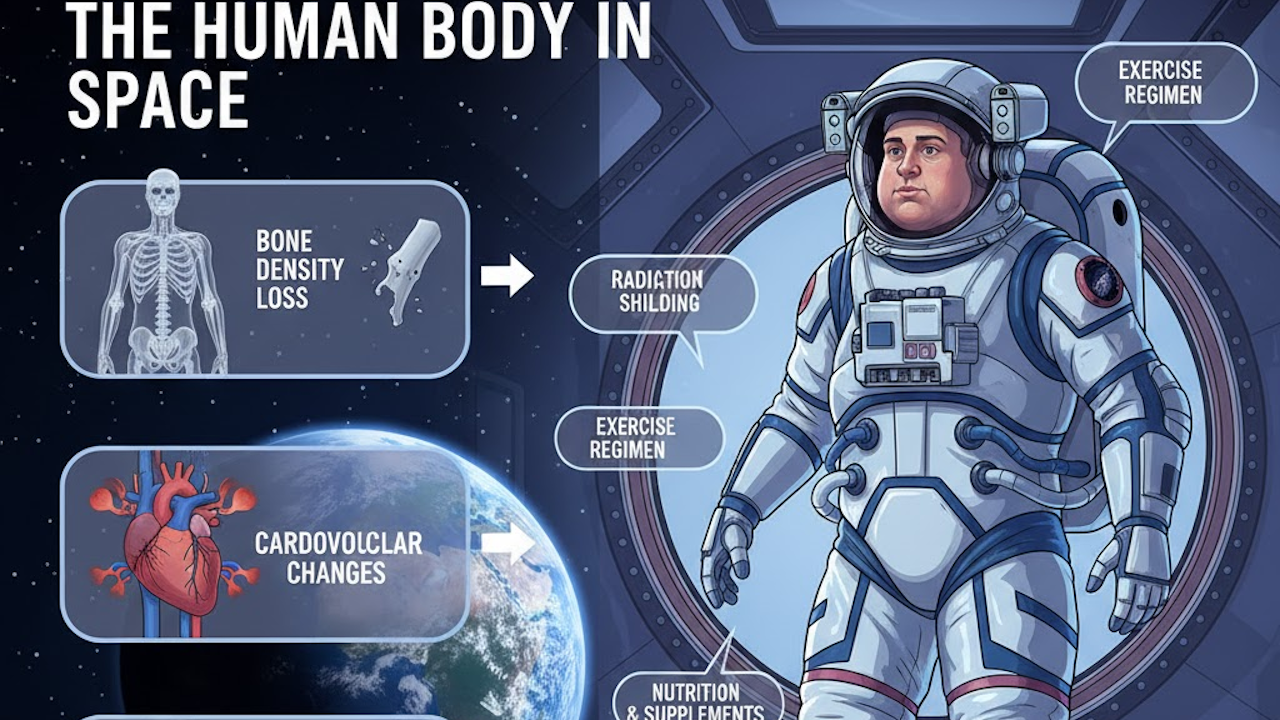
Space travel presents one of the most extreme environments for the human body. Away from Earth’s gravity, protective atmosphere, and familiar conditions, astronauts experience profound physiological changes. These adaptations and challenges affect nearly every system, from the immediate effects of microgravity to the cumulative impacts of radiation and isolation. Understanding these reactions is essential for long-duration missions to the Moon, Mars, and beyond.
Initial Adaptation: Space Motion Sickness and Sensory Disruption
One of the first challenges astronauts encounter is Space Adaptation Syndrome, also known as space sickness. This condition resembles motion sickness on Earth but arises from the sudden absence of gravity. On Earth, the vestibular system in the inner ear relies on gravity to sense orientation, movement, and balance. In microgravity, the otoliths (small crystals in the inner ear) no longer settle predictably, sending conflicting signals to the brain alongside visual inputs from the eyes.
Symptoms typically include nausea, vomiting, dizziness, headaches, fatigue, and a general sense of malaise. These effects often peak within the first few days of a mission and usually subside as the body adapts over several days. Not all astronauts experience severe symptoms, but for some, it can impair their ability to perform tasks effectively during the initial phase of flight. Post-flight, when returning to gravity, similar disorientation can occur as the body readjusts.
Balance and coordination are also disrupted. Astronauts may feel unsteady, with altered proprioception (the sense of body position). This leads to difficulties in precise movements, such as handling tools or navigating the spacecraft. Over time, the nervous system recalibrates, but full recovery upon return to Earth can take weeks.
Fluid Shifts and Cardiovascular Changes
On Earth, gravity pulls bodily fluids downward, concentrating more in the lower extremities. In space, without this pull, fluids shift upward toward the head and upper body. This redistribution causes noticeable changes often described as “puffy head, bird legs” syndrome. Astronauts’ faces become swollen and flushed, while their legs appear thinner due to reduced fluid volume in the lower body.
This fluid shift affects the cardiovascular system significantly. Initially, the heart experiences an increased workload as blood volume moves centrally, leading to a temporary rise in cardiac output. Over time, the body responds by reducing overall plasma volume, sometimes by as much as 10 to 20 percent, through increased urine production. This helps restore balance but results in lower blood volume upon return to Earth.
Cardiovascular deconditioning becomes a concern during longer stays. The heart muscle can atrophy slightly because it does not need to pump as forcefully against gravity. Blood vessels may become stiffer, and astronauts can develop orthostatic intolerance upon re-entry to gravity. This means they may feel lightheaded or faint when standing up, as the body struggles to maintain blood pressure to the brain. Countermeasures like regular exercise, fluid intake, and compression garments help mitigate these effects.
Musculoskeletal System: Atrophy and Bone Loss
Without the constant mechanical loading from gravity, muscles and bones weaken rapidly in space. This is often called the “use it or lose it” principle. Weight-bearing muscles, such as those in the legs, back, and core, lose mass and strength because they no longer work against Earth’s pull during everyday movements.
Muscle atrophy can occur quickly. Studies show losses of up to 20 percent in some muscle groups within weeks. The quadriceps, calves, and postural muscles are particularly affected. This reduces strength, endurance, and overall physical performance. Astronauts combat this through rigorous daily exercise regimens on treadmills, resistance machines, and cycling equipment, often for two hours or more each day.
Bone loss is even more pronounced. In microgravity, bones lose mineral density at a rate of about 1 to 1.5 percent per month, especially in weight-bearing areas like the hips, spine, and legs. Calcium is released from bones and excreted, increasing the risk of kidney stones. Upon return to Earth, bone recovery can take years, and some loss may persist. Nutrition rich in calcium and vitamin D, along with resistance training, serves as key countermeasures.
Vision and Neurological Effects
Fluid shifts also impact the eyes and brain. Increased pressure in the head can lead to Spaceflight-Associated Neuro-Ocular Syndrome (SANS). This condition involves swelling of the optic nerve, flattening of the eyeball, and changes in vision. Some astronauts report blurred vision or shifts in their ability to focus, which may persist after flight.
Brain structure can change subtly, with shifts in gray and white matter observed in imaging studies. Cognitive functions, such as memory and attention, may be affected by stress, radiation, and isolation, though astronauts undergo extensive training to maintain performance. Sleep disruption is common due to the 90-minute day-night cycle on the International Space Station, further influencing neurological health.
Immune System and Blood Changes
The immune system undergoes alterations in space. Astronauts may experience reactivation of latent viruses, such as herpes, and reduced effectiveness of white blood cells. This increases susceptibility to infections, though the closed environment of spacecraft helps limit external pathogens.
Red blood cell production decreases, leading to a form of space anemia. This helps the body adapt to the lower fluid volume but can contribute to fatigue. White blood cell counts and overall immune response require careful monitoring.
Radiation Exposure and Long-Term Risks
Beyond microgravity, space radiation poses a major threat. Cosmic rays and solar particle events bombard astronauts without the protection of Earth’s magnetic field and atmosphere. This exposure increases the risk of cancer, cataracts, and degenerative diseases over time.
DNA damage from radiation can accumulate, potentially leading to mutations. Shielding materials, monitoring, and pharmacological countermeasures are areas of active research. For missions to Mars, which could last years, radiation remains one of the biggest hurdles.
Other Systems and Psychological Factors
The digestive system may slow due to fluid shifts and reduced activity, sometimes causing constipation. Kidney function changes with altered calcium handling. Hormonal systems adjust, with potential impacts on stress hormones and reproductive functions, though data on long-term effects remains limited.
Psychological stressors include confinement, isolation, and distance from Earth. These can lead to mood changes, sleep issues, and interpersonal challenges. Crew selection, training, and support systems play vital roles in maintaining mental health.
Countermeasures and Future Outlook
Astronauts rely on a combination of exercise, nutrition, medication, and technology to counteract these effects. Artificial gravity through rotating habitats is a proposed solution for future deep-space missions. Genetic studies and personalized medicine may also help tailor protections.
Research from the International Space Station continues to inform our understanding. As private spaceflight grows and plans for Mars missions advance, addressing these bodily reactions becomes increasingly urgent. The human body is remarkably adaptable, but space demands careful preparation to ensure safety and performance.
In summary, the reactions of the human body in space highlight both its resilience and vulnerability. From fluid shifts and muscle loss to radiation risks, each challenge requires ongoing scientific innovation. With continued study, humanity can expand its presence in space while safeguarding those who venture there.