

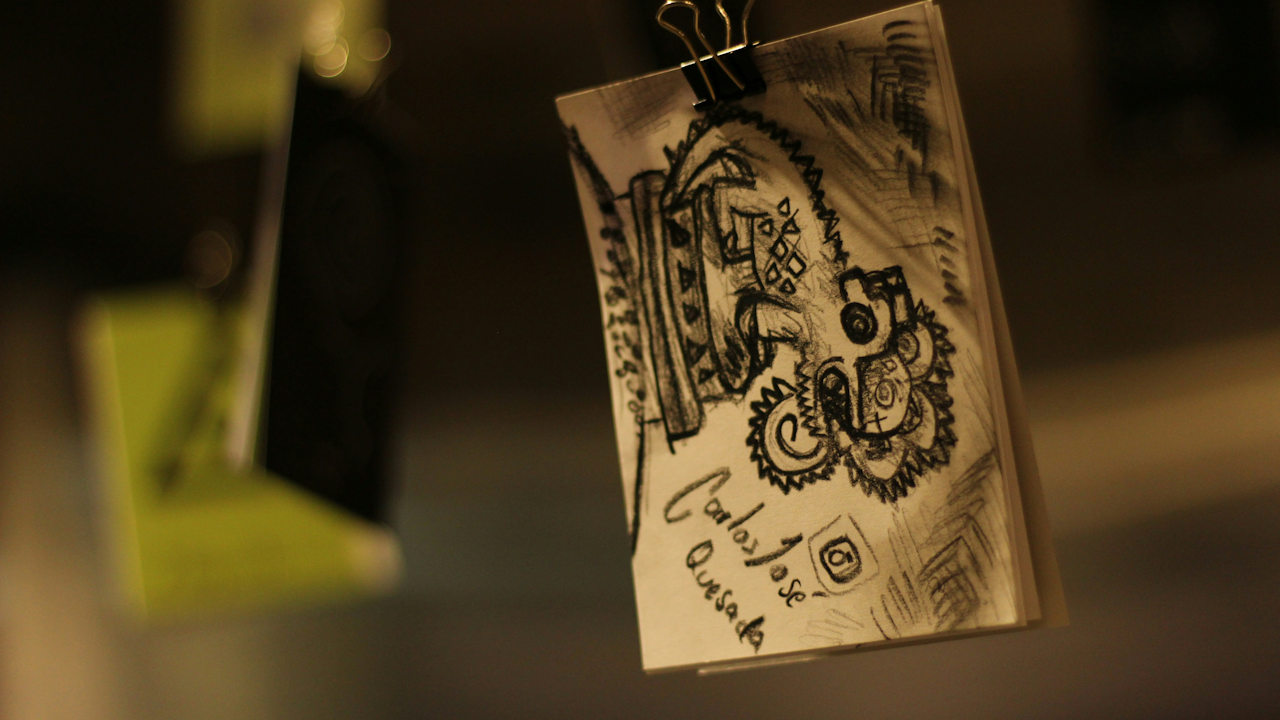
In studios, cafes, subways, and bedrooms around the world, people reach for a pencil, pen, or stylus and make a quick mark. These everyday sketches, born from observation, boredom, inspiration, or necessity, rarely look like finished masterpieces. They are often rough, imperfect, and private. Yet time and again, these unpolished lines and forms have seeded entire movements, redefined aesthetics, and influenced what appears in galleries, on runways, in advertisements, and across digital platforms.
Everyday sketches function as the raw material of visual culture. They allow ideas to emerge without the weight of perfection. A single doodle can capture a fleeting emotion, test a composition, or record a scene from daily life. When these sketches accumulate, get shared, iterated upon, or studied by others, they ripple outward. They shape how artists see, how designers create, and how audiences engage with visual trends. This process has operated across centuries, from the notebooks of Renaissance masters to the hashtag challenges of today.
The Quiet Power of the Spontaneous Mark
Sketches differ from finished paintings or polished illustrations because they carry low stakes. There is freedom in the imperfection. An artist can explore proportion, gesture, light, or abstraction without committing to expensive materials or public judgment. This freedom fosters experimentation. Quick lines reveal what works and what does not. Repeated sketching builds observation skills and muscle memory. Over time, the hand learns to translate what the eye sees and what the mind imagines.
Daily practice turns sketching into a habit that feeds larger work. Many creators keep sketchbooks specifically to catch ideas before they fade. A concept for a character, a pattern, or a scene might arrive during a commute or while waiting in line. Capturing it in a few minutes preserves the spark. Later, that rough drawing becomes the foundation for a painting, a product design, or a series. The sketch acts as a bridge between thought and realization.
Psychologically, sketching encourages presence. It slows the mind and sharpens attention to details that might otherwise go unnoticed: the way fabric drapes, the angle of a shadow, the rhythm of a crowd. These observed details often surface later in finished works and influence broader trends toward greater realism, expressive distortion, or stylized simplification. The habit also builds resilience. Not every sketch succeeds, yet the act of making many builds confidence to take risks in more ambitious projects.
Historical Foundations: Notebooks as Laboratories of Vision
Throughout art history, the most influential creators relied on sketchbooks as private laboratories. Leonardo da Vinci left behind more than ten thousand pages of notes and drawings across surviving codices and manuscripts. He filled these pages with quick sketches made on loose sheets or small pads he carried. Many entries used mirror writing, a habit likely tied to his left-handedness. Drawings dominated over text because Leonardo viewed images as superior demonstrations of ideas.
His anatomical studies stand as prime examples. Leonardo dissected around thirty human bodies across different cities. He recorded skeletons, muscles, and internal organs with remarkable precision. To convey complex structures, he employed transparent layers, perspective sections, dotted lines for hidden elements, and systematic hatching. These techniques synthesized direct observation into clear visual explanations. The results went far beyond artistic preparation. They established core principles of modern scientific illustration, where accuracy and clarity serve both art and knowledge. His proportion study known as the Vitruvian Man, with its geometric analysis of the human figure inscribed in a circle and square, remains one of the most recognized images in Western culture. It demonstrates how a single exploratory drawing can encapsulate enduring ideas about harmony, measurement, and the body.
Leonardo also sketched inventions extensively. Pages show designs for flying machines inspired by bird flight, including an ornithopter and a helical airscrew. He drew military devices resembling early tanks, screw-cutting machines, gears, hydraulic systems, and architectural plans with domes and urban layouts. These sketches fused artistic skill with mechanical inquiry. They influenced later engineering visualization and conceptual design practices. Even his painting studies, such as those exploring dynamic poses and the sfumato technique of soft light transitions, originated in sketch form before appearing in works like The Last Supper. The private, iterative nature of these drawings allowed radical ideas to develop gradually. When later generations studied the notebooks, they absorbed not only specific images but also a mindset of relentless observation and synthesis that shaped Renaissance ideals and beyond.
Other masters followed similar paths. Preparatory drawings by artists of later periods often reveal the evolution of style long before the public saw finished canvases. The habit of working through ideas on paper allowed risks that might have seemed too bold in a large-scale painting from the start. These historical sketchbooks, preserved and exhibited, continue to inspire contemporary artists who study them for technical insight and creative process.
Collaboration and Breakthrough: Sketches in the Birth of Modern Movements
The development of Cubism offers a compelling case of how shared exploration through drawing and study produced a seismic shift. Pablo Picasso and Georges Braque began their close collaboration around 1907 after Braque visited Picasso’s studio in Paris. They worked in dialogue, scrutinizing each other’s efforts and challenging assumptions about representation. Their experiments drew from Paul Cézanne’s faceted planes and from non-European sculptures encountered in Paris museums. These influences encouraged simplification and the rejection of single-point perspective.
While their most famous outcomes were paintings, the underlying process involved extensive studies of form. Picasso’s early landmark work Les Demoiselles d’Avignon emerged from a period of intense drawing and rethinking of the figure. Braque’s landscapes from 1908 prompted the critic Louis Vauxcelles to coin the term “cubism” after describing the works as “bizarreries cubiques.” The artists moved together through Analytical Cubism, with its fragmented shapes and muted tones, into Synthetic Cubism featuring brighter colors and collage elements. This progression relied on repeated visual analysis and reconstruction. Everyday sketches and studies allowed them to deconstruct objects, landscapes, and people into geometric components and then reassemble them from multiple viewpoints on a flat surface. The result challenged Renaissance illusions of depth and emphasized the reality of the canvas itself.
The Cubist breakthrough did not appear fully formed. It grew from sustained, often private, visual thinking. Other artists soon joined, expanding the vocabulary. The movement’s influence spread into design, architecture, and later abstraction because the core ideas had been tested and refined through drawing. This pattern repeats across modern art: radical styles frequently trace back to sketch-level experiments that gradually gained coherence and visibility.
From Notebook to Runway: Sketches in Fashion and Commercial Design
Fashion design provides one of the clearest demonstrations of sketches shaping visible trends. Professional designers maintain sketchbooks as essential tools for ideation. Early pages often contain quick croquis figures, garment silhouettes, fabric suggestions, and mood references. These rough drawings allow rapid testing of proportions, draping ideas, and color combinations without cutting fabric or committing to production.
A single sketch of a sleeve detail or neckline can evolve through iterations into a signature look for a season. Collections presented on runways and then adapted for retail frequently originate in these personal volumes. The process encourages innovation because sketches permit wild ideas that later get refined or edited. Mood boards paired with sequential drawings help designers track thematic development. Over time, certain sketch aesthetics, such as fluid lines or exaggerated proportions, feed into broader trends visible in ready-to-wear clothing and accessories.
In graphic and product design, the same principle applies. Logo concepts, packaging layouts, and interface wireframes often begin as napkin or notebook sketches. These quick marks capture essence before software refines them. When a particular sketch language gains traction, such as bold minimal lines or hand-drawn textures, it influences commercial aesthetics across industries. Fast fashion and branding frequently adopt visual approaches first explored in personal sketchbooks by emerging designers or illustrators. The accessibility of sketching means trends can originate from anywhere and spread through shared images or direct influence on creative teams.
Democratization and Virality: Everyday Sketches in the Social Media Era
Digital platforms have dramatically amplified the reach of everyday sketches. What once remained in private books now circulates instantly. Artists and non-artists alike post quick drawings of daily life, travel scenes, or imaginative doodles. These posts can spark widespread participation through challenges and hashtags.
Inktober, launched in 2009 by illustrator Jake Parker, exemplifies the phenomenon. Originally a personal commitment to draw in ink each day of October to build skill and discipline, it grew into a global event. Hundreds of thousands of participants now create millions of drawings annually. The challenge promotes consistent practice, community connection, and visibility. Many artists credit Inktober with improving their inking technique, developing thematic series, and attracting audiences. The resulting body of work has reinforced trends toward bold line work, narrative sequences, and accessible illustration styles. Even after occasional controversies, the core habit of daily sketching during the event continues to shape how emerging creators approach their practice and how audiences encounter new work.
On TikTok, Instagram, and similar platforms, time-lapse videos of sketching processes attract massive engagement. Viewers watch lines appear rapidly, transforming blank surfaces into recognizable forms. This format popularizes the act of sketching itself as entertaining and approachable. Challenges such as #DrawThisInYourStyle encourage reinterpretation of a base image in personal styles. A single prompt can generate thousands of variations, creating micro-trends in character design, color palettes, or aesthetic themes like cottagecore, cyberpunk, or minimalist portraiture. Artists who post subway sketches or quick urban observations, such as those by creators like Devon Rodriguez, demonstrate how relatable subject matter combined with skillful execution can build large followings. These successes influence broader interest in observational drawing and realistic yet expressive styles.
Social media also surfaces raw, imperfect sketches that contrast with highly produced content. Audiences respond to authenticity. The visible process, mistakes included, humanizes the creator and invites participation. This preference feeds trends toward sketch-like finishes in illustration, animation storyboards, and even gallery presentations that include preparatory drawings. User-generated sketch content trains algorithms and curators alike to notice emerging visual languages. Brands and galleries increasingly seek artists whose work carries the immediacy of sketches rather than solely polished final pieces.
The Ripple Effects on Contemporary Aesthetics and Practice
Everyday sketches continue to drive specific contemporary directions. The rise of line art and single-line drawings owes much to the accessibility of quick sketching tools and the shareability of clean, graphic results. Imperfect or expressive lines appear in wellness-oriented art practices and in visual storytelling that values emotional directness over technical perfection. Process-oriented exhibitions that display sketchbooks alongside finished works reflect a cultural appreciation for the journey rather than only the destination.
In digital realms, initial sketches often serve as the starting point for more complex creations, including those assisted by technology. The hand-drawn quality provides organic warmth that contrasts with purely generated imagery. Street artists frequently begin with quick tags or studies that scale into large public works, influencing urban visual culture and graffiti-derived aesthetics. Even in fine art contexts, the sketch aesthetic surfaces in movements emphasizing materiality, gesture, and the trace of the maker’s hand.
The habit of daily sketching also supports mental well-being and creative sustainability. In an era of constant output pressure, the low-pressure nature of sketching offers a counterbalance. This personal benefit scales up when shared practices encourage broader communities to engage with art making. The cumulative effect is a more diverse and participatory visual culture where trends emerge from many voices rather than a narrow set of professionals.
Looking Forward: The Enduring Seed of the Sketch
Everyday sketches remain the most democratic entry point into visual creation. They require minimal resources yet yield outsized influence. Historical masters used them to push boundaries of knowledge and representation. Modern collaborators refined revolutionary styles through iterative drawing. Fashion and design professionals rely on them to translate fleeting ideas into wearable or usable forms. Digital communities amplify them into global conversations and challenges that redefine what feels current.
The next major art trend, whether in galleries, fashion weeks, or social feeds, will likely trace roots to someone’s ordinary sketch made without fanfare. That drawing might record a passing scene, test an unusual composition, or simply fill a quiet moment. Its value lies not in immediate perfection but in its capacity to hold potential. When that potential is nurtured through repetition, sharing, or study, it contributes to the ongoing evolution of how humans represent their world.
Art trends do not descend fully formed from abstract theory. They grow from the accumulated marks made by countless hands engaged in the simple, persistent act of sketching. Recognizing this origin encourages creators at every level to value their own daily drawings. Those pages and screens, filled with lines that may never become famous on their own, collectively steer the direction of visual culture. The sketch, in its unassuming persistence, continues to shape what comes next.
Pick up a tool and make a mark today. The trends of tomorrow may already be forming in that gesture.