

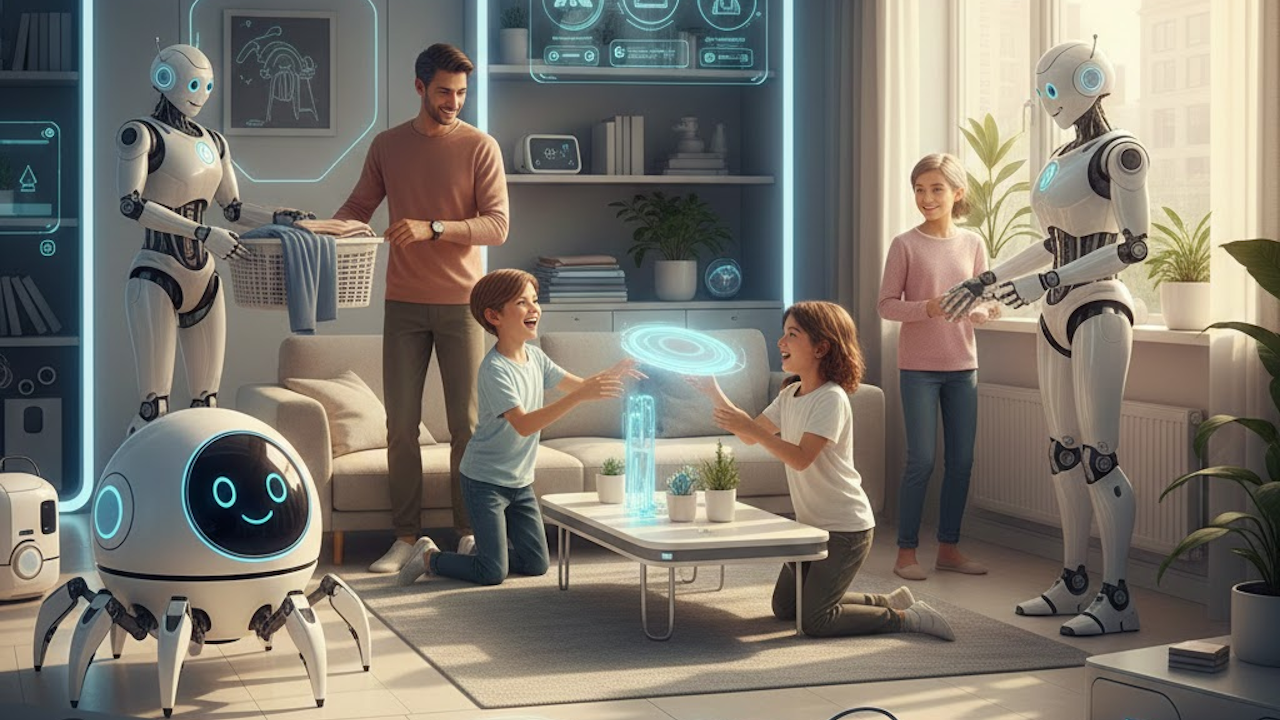
In 2026, home robots have moved from science fiction curiosities to practical household companions. These machines handle tedious tasks while adding an element of novelty and even playfulness to daily routines. From self-navigating vacuums that map your home with precision to emerging humanoid assistants that learn your preferences, robots are transforming how we maintain our living spaces. What was once a chore now feels like directing a helpful, sometimes quirky, team of digital helpers.
This shift did not happen overnight. Advances in artificial intelligence, sensor technology, and battery life have converged to make home robots more capable, affordable, and entertaining than ever. Families report that watching a robot tackle messes or assist with laundry brings a sense of wonder and relief, turning routine maintenance into a lightly gamified experience. In this article, we explore the current landscape of home robots, their key applications, standout models, benefits, limitations, and what the rest of the decade might hold.
The Evolution of Specialized Cleaning Robots
The most accessible and reliable home robots in 2026 remain the specialists, particularly robot vacuums and mops. These devices have reached a level of maturity that makes them indispensable for many households. Brands like Dreame, Roborock, Ecovacs, and Narwal lead the pack with models that combine powerful suction, advanced mopping, and sophisticated navigation.
Take the Dreame L60 Ultra PE or similar flagship models. These robots use LiDAR mapping, AI-powered obstacle avoidance, and high-pressure mopping systems with roller or spinning pads. They detect dirt levels, adjust suction and water flow automatically, and return to self-cleaning docks that empty dustbins, wash mop pads with hot water, and dry them to prevent odors. Many can climb low thresholds, handle pet hair without tangling, and operate quietly enough for use during work calls or naps.
Users often describe scheduling a daily clean as setting a “floor guardian” in motion. The robot explores the home methodically, sending app notifications or even voice updates like “Kitchen floor completed, moving to living room.” Some models integrate with smart home systems for routines tied to occupancy or time of day. Pet owners particularly appreciate features that target high-traffic areas or detect spills. The result is consistently cleaner floors with minimal effort, freeing up time for family activities or relaxation.
Lawn mowers and pool cleaners follow a similar specialized path. Husqvarna Automower models use GPS and boundary wires or wire-free navigation to maintain yards autonomously. Pool robots like the Beatbot AquaSense employ AI to map aquatic surfaces and remove debris efficiently. These bots turn outdoor maintenance into a background process, much like their indoor counterparts.
What makes these experiences fun? Many apps include cleaning history visualizations, achievement badges for streak days, or customizable cleaning zones that feel like directing a video game character. Children often watch in fascination as the robot dodges toys or navigates around furniture, sparking conversations about technology and responsibility.
Beyond Floors: Laundry, Kitchen, and Multi-Task Helpers
While floor cleaners dominate, 2026 sees growth in robots tackling other repetitive tasks. Stationary or semi-mobile units like Weave’s Isaac focus on laundry folding, offering a service-like experience in supported areas. These systems handle sorting, folding, and sometimes retrieval, reducing one of the most disliked chores.
In kitchens, early deployments of compact or desktop robots assist with simple preparations, such as making coffee or handling basic assembly. Models from companies like Urichi or Fourier demonstrate capabilities in controlled settings, including drawing simple patterns or basic cooking support. These are not yet fully autonomous chefs but provide reliable assistance for busy households.
Litter boxes have also seen robotic upgrades. The Whisker Litter-Robot series automates waste management with sensors and self-cleaning cycles, appealing to cat owners seeking hygiene without daily scooping.
These task-specific bots excel because they operate in structured environments with predictable variables. Their reliability stems from focused engineering rather than general intelligence, delivering consistent results that build user trust.
The Rise of Humanoid Home Robots
The most exciting development in 2026 is the arrival of humanoid robots designed for broader home use. Models like the 1X NEO, available for pre-order around $20,000 or via monthly subscriptions, represent the first wave of consumer-oriented humanoids shipping to select homes. These robots feature soft-body designs for safety around children and pets, dexterous hands, and AI that combines autonomy with expert remote assistance for unfamiliar tasks.
Tesla’s Optimus series aims for mass production with aggressive pricing targets in the low tens of thousands, promising capabilities like fetching items, loading dishwashers, and basic cleaning. Figure’s models, including deployments in industrial settings, showcase impressive manipulation such as making beds or coordinating multi-step tasks. Unitree’s G1 offers a more accessible entry point for developers and early adopters.
In practice, 2026 humanoids shine in supervised or semi-autonomous modes. They can handle repetitive actions like clearing tables, transferring laundry, or retrieving objects after training on your specific home layout. Demonstrations show them folding clothes, loading dishwashers, and even coordinating simple household goals. Full unsupervised operation across varied homes remains a work in progress, but the combination of onboard AI and occasional human guidance via apps or teleoperation makes them remarkably effective.
The fun factor here is undeniable. Interacting with a humanoid that responds to voice commands, learns your routines, and occasionally displays charming behaviors (like careful navigation around toys) feels like having a futuristic sidekick. Early users report naming their bots and sharing videos of successful task completions, turning mundane chores into shareable moments of triumph.
Making Chores Engaging and Family-Friendly
Home robots in 2026 go beyond utility by incorporating elements that make chores enjoyable. Voice interaction, customizable personalities, and integration with entertainment systems add personality. A robot might offer encouraging updates or playful comments during operation. Gamification in companion apps rewards consistent use or creative zone setups.
For families, these bots serve educational purposes. Children learn about programming, responsibility, and technology by helping train or monitor robots. Elderly users benefit from assistance with mobility-related tasks and companionship, reducing isolation while handling light duties.
Safety remains paramount. Modern designs include obstacle detection, soft materials, emergency stop features, and privacy controls for data collection. Most operate within defined boundaries and require user approval for new tasks.
Challenges and Considerations
Despite progress, home robots are not perfect. Battery life, navigation in cluttered or multi-level homes, and handling highly variable objects still pose hurdles. Humanoids, while promising, often need initial training periods and may rely on hybrid autonomy for complex scenarios. Costs range from a few hundred dollars for basic vacuums to tens of thousands for advanced humanoids, though subscription models and falling prices are improving accessibility.
Maintenance, software updates, and integration with existing smart homes require some technical comfort. Privacy concerns around cameras and data sharing persist, so reviewing manufacturer policies is essential. Reliability in edge cases, such as unexpected spills or rearranged furniture, varies by model.
Looking Ahead: A Robotic Future in Every Home
By the late 2020s, experts anticipate broader adoption as prices drop, capabilities expand, and ecosystems mature. Multi-robot coordination, where a vacuum teams with a humanoid for comprehensive cleaning, could become common. Advances in AI will enable more natural language understanding and adaptive learning, allowing robots to anticipate needs rather than just respond to commands.
Home robots in 2026 already deliver tangible relief and delight. They handle the drudgery while inviting curiosity and creativity into household management. Whether starting with a reliable robot vacuum or venturing into humanoid territory, these bots are redefining domestic life. Chores feel less like burdens and more like opportunities to engage with cutting-edge technology that works alongside you.
As production scales and software improves, the home of the future will likely feature a seamless blend of human and robotic effort. For now, in 2026, the bots are here, ready to make your home cleaner, your time freer, and your daily routines a bit more fun.