

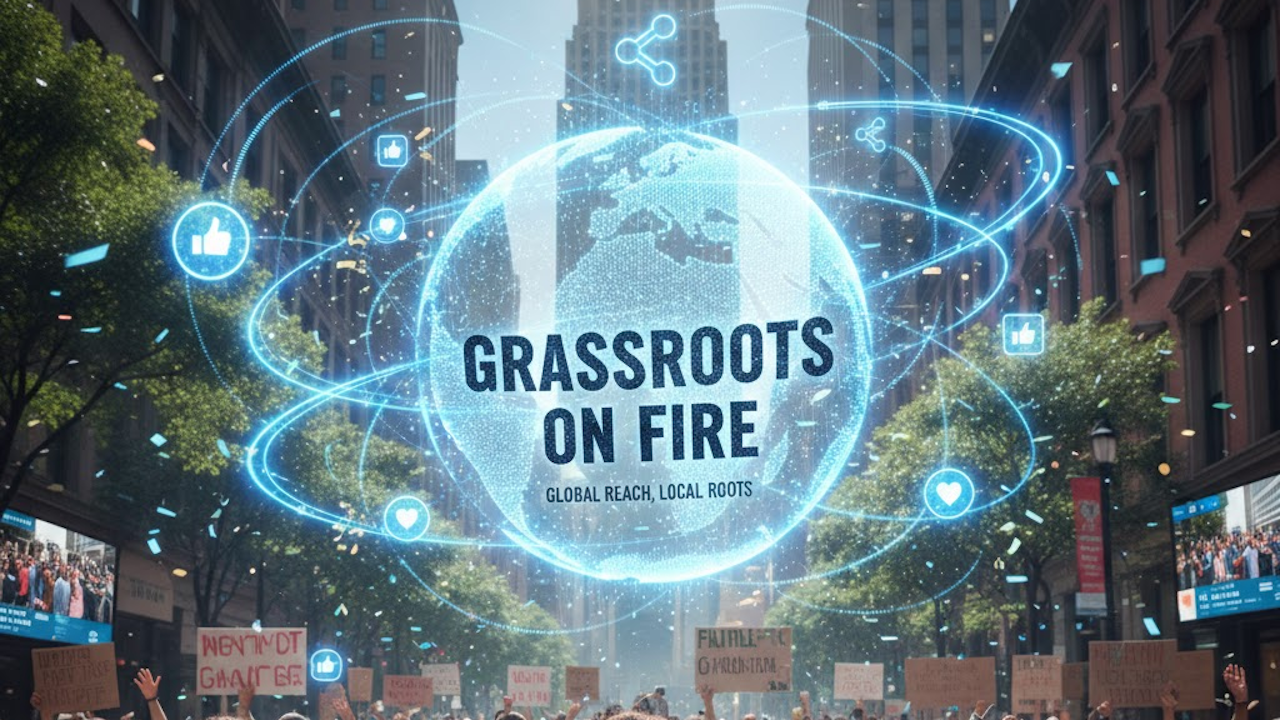
Grassroots movements have always represented the power of ordinary people organizing from the ground up to demand change. What has transformed in recent decades is the speed and scale at which these efforts can spread. A local protest, a personal story, or a simple demand for justice can now reach millions within hours, crossing borders and languages with little formal infrastructure. This phenomenon of grassroots movements going viral has rewritten the rules of activism, politics, and social change.
At its core, a grassroots movement begins with people who share a common grievance or aspiration and lack access to traditional centers of power. They rely on personal networks, community spaces, and shared values rather than hierarchical organizations or large budgets. Virality occurs when that local energy suddenly amplifies through digital tools, turning limited participation into a mass phenomenon. Social media platforms, messaging apps, and online video have become the primary accelerators. A single post, video, or hashtag can convert private frustration into public momentum almost overnight.
Before the internet, grassroots efforts spread more slowly through pamphlets, word of mouth, church networks, labor unions, and local newspapers. The civil rights movement in the United States, for example, built strength over years of careful organizing, boycotts, and marches. Information traveled through trusted community leaders and sympathetic journalists. Success required sustained physical presence and careful coordination. While powerful, these movements could be contained more easily by authorities who controlled mainstream media and public spaces.
The digital age removed many of those barriers. Smartphones put cameras and publishing tools in nearly every pocket. Platforms such as Twitter (now X), Facebook, Instagram, TikTok, and WhatsApp allow anyone to broadcast events in real time. Algorithms designed to maximize engagement reward emotional, shareable content. A video of police violence, a photograph of environmental destruction, or a personal testimony of injustice can travel farther and faster than any traditional media campaign. The result is that movements once confined to neighborhoods or cities can become national or global within days.
Several mechanisms explain why some grassroots efforts go viral while others remain local. First is authenticity. Audiences respond strongly to content that feels unpolished and genuine rather than professionally produced. A shaky phone video of a protest or a tearful personal account often outperforms slick advertising. Second is emotional resonance. Anger, hope, fear, and solidarity travel efficiently online. Content that triggers strong feelings encourages likes, shares, and comments, which in turn signal algorithms to show the material to more users. Third is network effects. When early participants belong to dense social clusters, such as university students, diaspora communities, or professional groups, the message spreads through overlapping circles. Fourth is timing. Movements that align with existing cultural conversations or moments of heightened public attention gain traction more easily. A scandal, an election, an economic crisis, or a natural disaster can create fertile ground.
Hashtags have become one of the most visible tools of viral grassroots organizing. A concise phrase like #MeToo or #BlackLivesMatter functions as both a rallying cry and a searchable archive. Participants use the tag to signal allegiance, share stories, and find one another. Over time the hashtag accumulates evidence, personal narratives, and calls to action. It also allows journalists, researchers, and policymakers to track the conversation. While hashtags can be co-opted or diluted, they remain powerful because they lower the barrier to entry. Anyone with an internet connection can join the discussion without formal membership.
Case studies illustrate both the power and the limits of viral grassroots movements. The Arab Spring uprisings of 2010 and 2011 demonstrated how digital tools could help topple long-standing regimes. In Tunisia, Egypt, and elsewhere, young people used Facebook pages and Twitter to coordinate protests, document state violence, and amplify demands for dignity and political reform. Videos of self-immolation and street confrontations circulated rapidly, drawing international attention and inspiring copycat actions across the region. Yet the aftermath revealed the difficulty of translating online energy into durable institutions. Many of the movements fragmented once the initial unifying goal of removing a dictator had been achieved.
In the United States, the Black Lives Matter movement gained massive visibility after the 2014 killing of Michael Brown in Ferguson, Missouri, and again after the 2020 murder of George Floyd. Smartphone footage of Floyd’s death under a police officer’s knee spread worldwide within hours. Protests erupted in hundreds of cities. Corporate statements, policy reviews, and cultural debates followed. The movement forced conversations about policing, racial inequality, and systemic bias into mainstream discourse. At the same time, it faced criticism over tactics, internal disagreements, and questions about long-term policy results. The viral phase created urgency, but sustaining organizational capacity proved harder.
The #MeToo movement offers another example of personal testimony going viral. Beginning with actress Alyssa Milano’s 2017 tweet inviting people to share experiences of sexual harassment and assault, the hashtag spread across industries and countries. Millions of people, predominantly women, posted their stories. High-profile figures in entertainment, media, politics, and business faced public reckoning. The movement shifted workplace norms, encouraged new legislation in some places, and made it more difficult for powerful individuals to silence accusations. Its strength lay in the accumulation of individual voices rather than a single centralized organization. Its challenge was managing the emotional toll on participants and addressing due process concerns.
Climate activism has also harnessed viral dynamics. Greta Thunberg’s solitary school strike outside the Swedish parliament in 2018 grew into the global Fridays for Future movement. Students in dozens of countries organized walkouts, often coordinated through social media. Dramatic images of young people holding signs outside government buildings and scientific institutions circulated widely. The movement succeeded in elevating climate change as a moral issue for a new generation and pressuring some governments and corporations to adopt more ambitious targets. Critics argued that symbolic strikes alone could not replace detailed policy work or technological innovation. Still, the viral framing helped expand the constituency for climate action beyond traditional environmental groups.
Farmers’ protests in India during 2020 and 2021 showed how grassroots organizing can combine digital tools with physical endurance. Agricultural communities opposed new farm laws they believed threatened their livelihoods. Protesters blocked highways, set up camps, and used WhatsApp groups, YouTube channels, and international social media to counter government narratives and solicit support from the diaspora. The sustained physical presence, combined with online amplification, eventually contributed to the repeal of the laws. The episode illustrated that virality works best when paired with offline organization and clear, concrete demands.
Not every viral moment produces lasting change. Some campaigns flare brightly and then fade. Others are captured by partisan interests or commercial actors who dilute the original message. Platforms themselves can throttle reach through content moderation, algorithmic changes, or outright bans. Governments have learned to monitor, infiltrate, or suppress online organizing. Misinformation and competing narratives can overwhelm genuine grassroots signals. A movement that relies too heavily on fleeting attention may struggle when the news cycle moves on.
Several factors determine whether viral energy converts into durable impact. Clear goals help. Vague calls for justice or systemic change can mobilize large numbers but make it difficult to measure success or negotiate outcomes. Strong local organizing provides the backbone once online attention peaks. Leadership that remains accountable to participants rather than external funders or media personalities tends to retain legitimacy. Alliances with established institutions, such as unions, churches, professional associations, or sympathetic elected officials, can translate public pressure into policy. Finally, the ability to adapt is crucial. Movements that treat digital tools as one component of a broader strategy rather than the entire strategy fare better over time.
The economics of attention also shape outcomes. Platforms profit from engagement, which means controversy and polarization often receive more amplification than careful deliberation. This dynamic can reward the most extreme voices within a movement and discourage compromise. It can also attract bad-faith actors who seek to discredit the cause through exaggeration or fabrication. Participants must therefore develop media literacy and internal verification practices to protect the integrity of their message.
Looking ahead, the relationship between grassroots movements and digital platforms will continue to evolve. Newer tools such as encrypted messaging, decentralized social networks, and artificial intelligence-generated content will create both opportunities and risks. Encryption can protect organizers from surveillance but also make coordination harder to track for researchers and journalists. Artificial intelligence can help analyze large volumes of public sentiment or generate persuasive visuals, yet it can also flood conversations with synthetic material that erodes trust. Regulatory pressure on major platforms may alter the rules of visibility, potentially favoring established media or state-aligned narratives over independent voices.
Despite these challenges, the fundamental appeal of grassroots virality remains strong. People still want to feel that their voices matter and that collective action can shift power. When a movement succeeds in going viral, it demonstrates that ordinary individuals, connected through shared conviction and modern technology, can force elites to respond. The most enduring examples combine the speed of digital networks with the patience of sustained organizing, the clarity of specific demands, and the resilience to weather both repression and internal conflict.
In the end, grassroots movements going viral represent a profound democratization of attention and narrative power. They do not guarantee justice or wise policy. They do, however, expand the range of voices that can shape public debate. Understanding the conditions that allow local grievances to become global conversations is essential for anyone who hopes to build, support, or respond to the next wave of bottom-up change. The tools will keep changing. The human desire to organize against perceived injustice will not.