

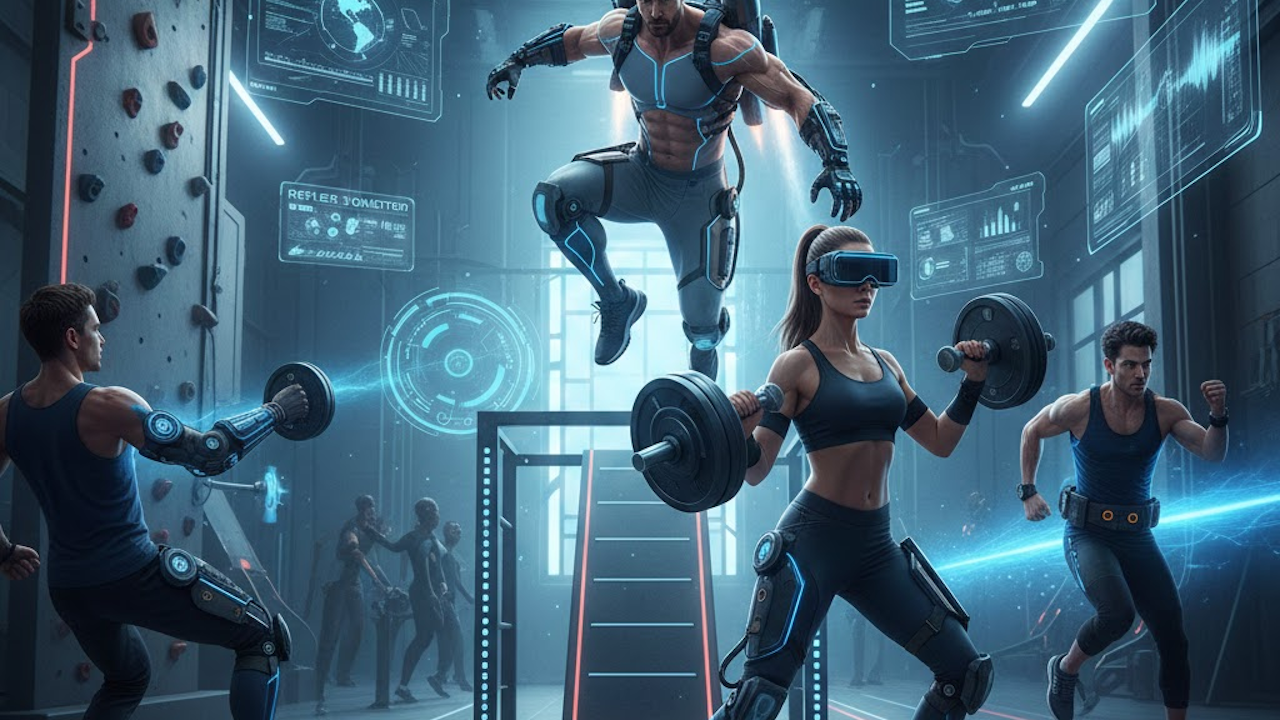
Gadgets have become powerful partners in the human quest to move faster and grow stronger. From wrist-worn sensors to robotic exoskeletons, modern technology no longer just measures performance. It actively reshapes what the body can do. These tools influence how athletes train, how workers lift and carry, and how everyday people approach fitness and health. As gadgets become more integrated with the body, the boundary between natural ability and technological assistance grows increasingly thin.
One of the most familiar examples is the fitness tracker. Smartwatches and wearable bands record steps, heart rate, sleep patterns, and training intensity. At first glance, these devices simply collect data. Their true power lies in feedback. By showing users exactly how fast they run, how hard their heart works, and how long they recover, trackers create a loop of awareness and adjustment. Runners learn to pace themselves more efficiently. Cyclists refine cadence and power output. Weightlifters monitor rest intervals and workload. The result is not just more information, but faster adaptation and stronger performance over time.
Beyond tracking, gadgets now actively enhance movement. Smart shoes, for example, use embedded sensors and responsive materials to improve running efficiency. Some models analyze stride length, impact force, and foot placement, then suggest changes through connected apps. Others adjust cushioning dynamically to reduce fatigue and injury risk. By optimizing how energy flows through each step, these shoes help runners maintain speed longer and recover more quickly. Strength gains follow naturally when the body trains with less wasted effort.
Resistance training has also been transformed by technology. Traditional weights remain effective, but digital resistance systems add precision. Machines that use electromagnetic or motorized resistance can change load instantly based on movement speed and form. If a lifter slows down, resistance adjusts to maintain optimal tension. This ensures muscles are challenged through the full range of motion. Over time, this leads to faster strength gains and better control. These systems also record every repetition, allowing athletes and coaches to analyze progress with remarkable detail.
Perhaps the most dramatic gadgets are exoskeletons and powered suits. Originally developed for military and medical use, these devices amplify human strength by supporting joints and adding mechanical force to movement. In factories and warehouses, workers wearing exoskeletons can lift heavy objects with less strain. This does not turn them into superheroes, but it reduces injury and allows them to work longer without fatigue. In rehabilitation, powered braces help patients relearn walking and regain muscle function. Here, gadgets do not just make people stronger. They restore strength that was lost.
Speed is another domain where technology excels. Reaction time training systems use lights, sounds, and sensors to sharpen neural responses. Athletes in sports like boxing, tennis, and soccer use these tools to practice rapid decision making. When a light flashes, they must move instantly to the correct target. Over thousands of repetitions, the brain becomes faster at processing signals and commanding muscles. The improvement is subtle but decisive. In competitive environments, a fraction of a second can separate victory from defeat.
Even simple gadgets can make a meaningful difference. Compression garments improve blood flow and reduce muscle vibration during movement. This can delay fatigue and enhance recovery, allowing athletes to train harder and more often. Foam rollers and percussive massage devices accelerate muscle repair by increasing circulation and reducing stiffness. By shortening recovery time, these tools indirectly increase strength and speed. The body improves not only through effort, but through efficient rest.
There are also ethical and philosophical questions surrounding these advancements. When does assistance become unfair advantage. If one athlete uses advanced sensors and adaptive equipment while another relies on basic tools, the playing field changes. In professional sports, governing bodies struggle to define limits. Technology evolves faster than rules. In everyday life, however, the goal is usually not competition but improvement and health. For most people, gadgets are tools for motivation and safety rather than shortcuts to dominance.
Another concern is dependence. When people rely too heavily on devices to guide every movement, they may lose intuitive awareness of their own bodies. A runner who cannot pace without a watch or a lifter who cannot judge effort without a screen may become less adaptable. The best use of gadgets is as teachers, not crutches. They should develop skill and understanding, then gradually fade into the background.
Looking ahead, the line between body and machine will blur further. Neural interfaces may one day allow direct communication between brain and device. Muscles could receive electrical assistance timed precisely to each contraction. Training programs might adapt in real time based on hormones, fatigue markers, and mood. These possibilities raise both excitement and caution. The promise is a future where people can move faster, lift heavier, and recover smarter than ever before. The risk is losing sight of the human element that makes effort meaningful.
In the end, gadgets do not replace discipline, curiosity, or willpower. They amplify them. A device can measure speed, but only the person chooses to run. It can enhance strength, but only the person decides to lift. When used wisely, technology becomes an ally in the pursuit of better movement. It helps the body learn, adapt, and exceed limits that once seemed fixed. Gadgets do not create strength and speed on their own. They reveal how much more of both the human body can achieve.