

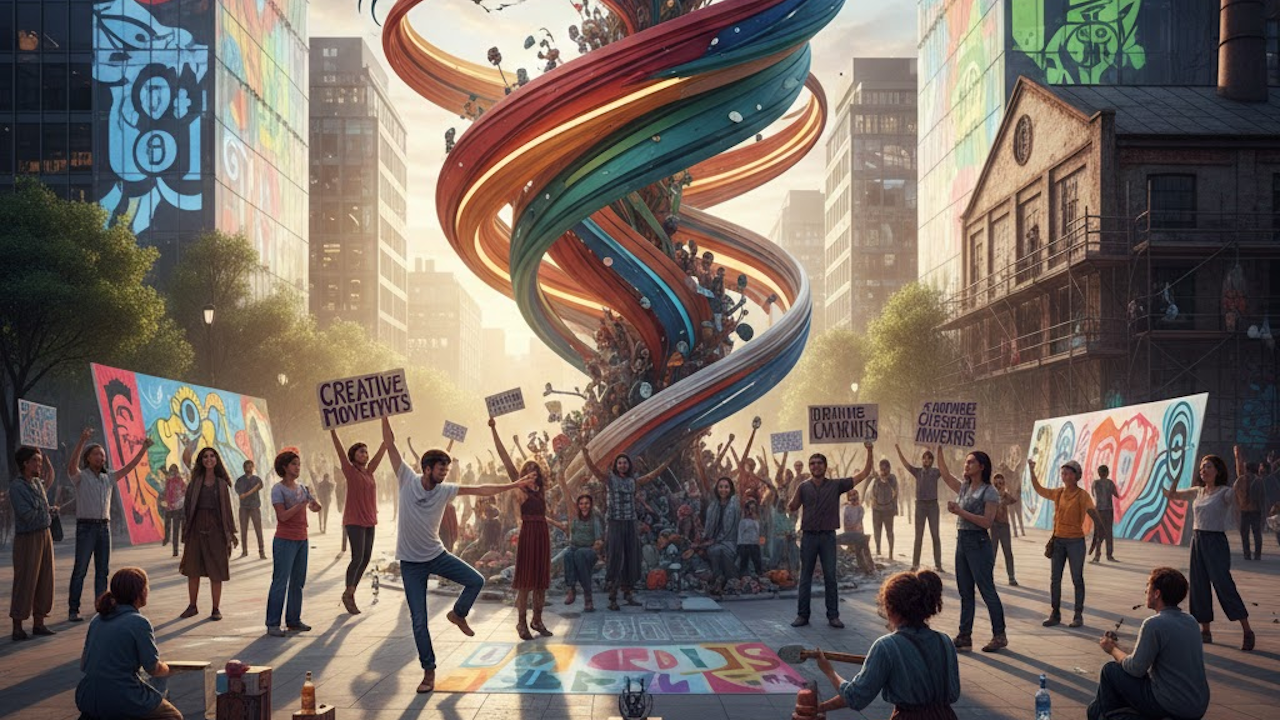
Creative movements have long served as powerful catalysts for societal transformation. From visual arts and music to literature and performance, creativity provides a unique language that transcends barriers of language, class, and politics. These movements harness imagination to challenge norms, inspire collective action, and reshape cultural narratives. In an era marked by rapid technological advancement, climate crises, and social inequalities, creative expressions continue to drive meaningful change by engaging emotions, fostering empathy, and mobilizing communities in ways that traditional activism sometimes cannot.
The roots of creative movements as agents of change trace back centuries. Consider the Renaissance period, where artists and thinkers like Leonardo da Vinci and Michelangelo did more than produce masterpieces. Their work reflected and propelled humanist ideals that questioned religious dogma and celebrated individual potential. This cultural shift laid groundwork for broader intellectual revolutions. Similarly, the Romantic movement in the late 18th and early 19th centuries reacted against industrialization by emphasizing emotion, nature, and personal freedom. Poets such as William Wordsworth and Lord Byron used their verses to critique societal mechanization and advocate for individual rights, influencing political thought across Europe.
In the 20th century, creative movements gained even greater momentum amid global upheavals. The Harlem Renaissance of the 1920s stands as a landmark example. Emerging in New York City’s Harlem neighborhood, this explosion of African American art, literature, and music challenged racial stereotypes and asserted Black identity and excellence. Writers like Langston Hughes and Zora Neale Hurston, alongside musicians such as Duke Ellington and Louis Armstrong, created works that celebrated Black culture while exposing the realities of segregation and discrimination. Their efforts not only enriched American culture but also fueled the early stirrings of the Civil Rights Movement by building pride and visibility within marginalized communities.
The protest art of the 1960s and 1970s further illustrates this dynamic. During the Vietnam War era, artists like those associated with the Art Workers’ Coalition produced posters, murals, and performances that galvanized public opposition to the conflict. Music played an equally vital role, with folk singers like Bob Dylan and Joan Baez providing anthems that united activists. Songs such as “Blowin’ in the Wind” became rallying cries, embedding anti-war sentiments into popular consciousness. These creative outputs helped shift public opinion and contributed to policy changes, demonstrating how art can amplify voices that might otherwise remain unheard.
Street art and graffiti movements have evolved into potent tools for contemporary change. Banksy, the anonymous British artist, exemplifies this through satirical stencils that critique capitalism, war, and environmental degradation. His works, often appearing overnight on public walls, spark immediate dialogue and media attention. In regions experiencing political unrest, such as during the Arab Spring uprisings, street artists in Tunisia and Egypt used murals to document oppression and envision new futures. These visual interventions transformed public spaces into forums for resistance, fostering solidarity among protesters and preserving collective memory of struggles for democracy.
Music movements continue to drive social and political shifts worldwide. Hip-hop, born in the Bronx in the 1970s, has grown into a global force for addressing inequality. Artists like Tupac Shakur and Public Enemy tackled issues of police brutality, poverty, and systemic racism through lyrics that combined raw storytelling with rhythmic innovation. In more recent decades, movements like #BlackLivesMatter have intertwined with hip-hop and R&B, where artists such as Kendrick Lamar and Beyonce incorporate activism into their performances and albums. Their work reaches millions, educating audiences and encouraging voter participation or community organizing.
Environmental creativity represents another frontier. The climate movement has embraced artistic expression to make abstract threats tangible. Projects like the Climate Ribbon initiative invite people to write personal messages on ribbons attached to public installations, symbolizing commitments to planetary health. Theater groups stage immersive performances in vulnerable ecosystems, while musicians organize benefit concerts that raise funds and awareness. These efforts humanize data-driven reports on rising temperatures and biodiversity loss, motivating individuals who might feel overwhelmed by scientific statistics alone.
Digital platforms have accelerated the reach and impact of creative movements. Social media allows artists to bypass traditional gatekeepers, sharing work instantly with global audiences. The Ice Bucket Challenge, though not purely artistic, demonstrated how viral creative participation could fund research for ALS. More directly, online campaigns featuring short films, memes, and digital illustrations have propelled movements like #MeToo. Survivors shared personal stories through poetry, illustrations, and videos, exposing widespread sexual harassment and prompting corporate and legal reforms across industries.
Literature and storytelling remain enduring drivers of empathy and change. Novels addressing migration, such as those by authors like Mohsin Hamid or Valeria Luiselli, illuminate the human cost of borders and policies. These narratives foster cross-cultural understanding and influence public discourse on immigration reform. In indigenous communities, creative writing and oral traditions preserve languages and histories while advocating for land rights. The Standing Rock protests in the United States featured artists and storytellers who documented resistance to pipeline construction, amplifying Native voices on environmental justice.
Fashion and design movements also contribute meaningfully. Sustainable fashion initiatives challenge fast fashion’s environmental toll by promoting ethical production and upcycling. Designers collaborate with activists to create garments that double as protest statements, worn during marches or featured in campaigns. This intersection of creativity and commerce raises consumer awareness about labor conditions and ecological footprints, gradually shifting market demands toward more responsible practices.
Education systems increasingly recognize the value of creative movements in fostering change. Schools and universities incorporate arts-based curricula to develop critical thinking and emotional intelligence. Programs like those using theater for conflict resolution in post-war societies help participants process trauma and build peace. By engaging young people through dance, visual arts, or music, these initiatives cultivate future leaders equipped to tackle complex global challenges with innovative perspectives.
Despite their influence, creative movements face significant obstacles. Censorship remains a persistent threat in authoritarian regimes, where governments suppress dissenting art through arrests or funding cuts. Economic pressures can marginalize independent creators, pushing them toward commercial compromises that dilute messages. Additionally, the digital age introduces issues like algorithmic bias, where platforms prioritize sensational content over substantive work, and the spread of misinformation that can undermine genuine artistic efforts.
Funding presents another hurdle. Many grassroots creative projects rely on grants, crowdfunding, or volunteer labor, limiting their scale and sustainability. However, successful models exist, such as community arts centers that blend cultural programming with social services, creating self-sustaining ecosystems of support.
The psychological power of creative movements lies in their ability to evoke emotion and build connections. While policy papers and statistics inform the mind, a powerful painting, song, or performance touches the heart. This emotional resonance motivates sustained action. Studies in psychology suggest that exposure to diverse artistic expressions enhances empathy, reducing prejudice and encouraging prosocial behavior. In this way, creativity serves as a bridge across divides, uniting people around shared human experiences.
Looking ahead, emerging technologies promise to expand the possibilities for creative activism. Virtual reality installations can simulate the impacts of climate change or historical injustices, allowing users to experience perspectives beyond their own. Artificial intelligence tools assist artists in generating new forms of expression, though they also raise questions about authorship and authenticity. Blockchain technology enables creators to maintain control over their work and monetize it directly, potentially democratizing access to resources for change-making projects.
Global collaboration will likely define future creative movements. Issues like pandemics and migration transcend borders, requiring coordinated artistic responses. International festivals and online collectives already facilitate knowledge sharing among activists and creators from different continents. These networks amplify local struggles to global stages, increasing pressure on decision-makers.
In conclusion, creative movements driving change embody humanity’s capacity for innovation in the face of adversity. They do not replace structured political or economic efforts but complement them by inspiring participation, documenting truths, and envisioning alternatives. As societies navigate unprecedented challenges, supporting and participating in these movements becomes essential. Whether through attending a local performance, sharing a meaningful artwork, or creating one’s own, individuals contribute to a collective force capable of reshaping the world. The legacy of past movements reminds us that profound transformation often begins with a single creative act, rippling outward to touch countless lives. By nurturing creativity in all its forms, we invest in a more just, compassionate, and sustainable future.