

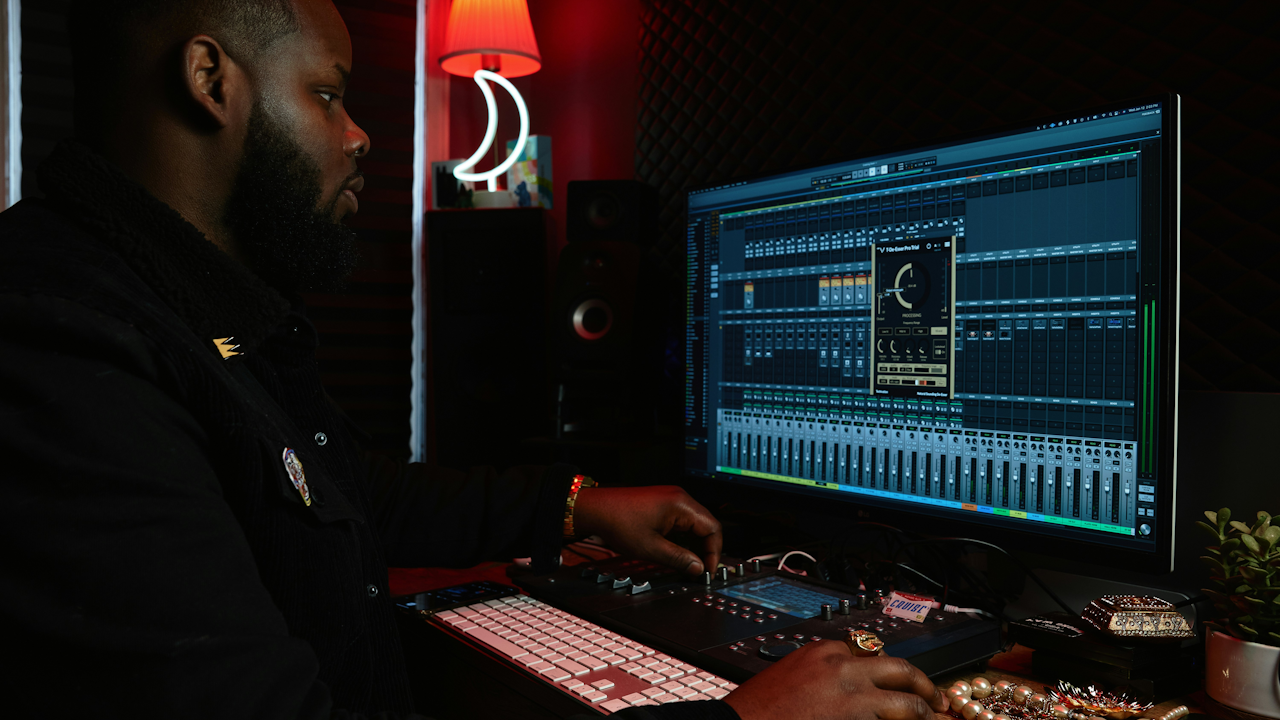
Auto-Tune stands as one of the most transformative technologies in modern music production. Introduced in the late 1990s, this pitch-correction software has reshaped how vocals are recorded, processed, and presented to audiences worldwide. Yet its very success has sparked intense debate among musicians, producers, critics, and listeners. Is Auto-Tune a genuine artistic instrument that expands creative possibilities, or has it become an overused crutch that flattens musical expression and deceives audiences about vocal talent? This article explores the technology in depth, tracing its origins, examining its artistic applications, addressing its criticisms, and considering its broader cultural impact.
The Origins and Mechanics of Auto-Tune
Auto-Tune was developed by Andy Hildebrand, a former Exxon engineer who applied his expertise in signal processing to music. Originally intended as a tool to help studio engineers correct slight pitch inaccuracies in vocal takes, the software analyzes the fundamental frequency of a sung note and shifts it to the nearest correct pitch within a chosen scale. The first commercial version arrived in 1997 from Antares Audio Technologies.
Its breakthrough moment came in 1998 with Cher’s hit song “Believe.” Producers Mark Taylor and Brian Rawling applied extreme settings to create a distinctive robotic vocal effect on the word “believe” in the chorus. This was not subtle correction but a deliberate sonic choice that became a defining feature of the track. The song topped charts globally, and Auto-Tune entered popular consciousness.
Technically, Auto-Tune works by dividing audio into small time segments, detecting the pitch, and retuning it according to user parameters. Retune speed determines how quickly the correction happens. A fast retune speed produces the hard, quantized effect associated with T-Pain and countless pop tracks. Slower settings allow more natural-sounding adjustments that preserve some of the singer’s original inflection and vibrato. Additional controls include scale selection, formant preservation to avoid the “chipmunk” effect on high shifts, and throat length modeling in later versions.
This flexibility is key to understanding the debate. Auto-Tune is not a single monolithic effect but a range of tools that can serve different purposes depending on how they are deployed.
Artistic Innovation and Creative Expression
Many artists and producers defend Auto-Tune as a legitimate artistic device that opens new avenues for creativity. Just as electric guitars introduced distortion and synthesizers brought entirely new timbres, pitch correction software allows vocalists to explore sounds that would be physically impossible or extremely difficult to achieve naturally.
T-Pain built an entire career around the overt Auto-Tune effect. Starting with his 2005 album “Rappa Ternt Sanga,” he used the technology not to hide imperfections but to create a signature vocal style that blended singing and rapping with futuristic, melodic flourishes. His approach influenced an entire generation of artists including Future, Lil Wayne during certain periods, and Travis Scott. In these cases, Auto-Tune functions as an instrument in its own right, much like a wah-wah pedal or vocoder.
Kanye West’s 2008 album “808s and Heartbreak” provides another landmark example. Following personal tragedies, West leaned heavily on Auto-Tune to convey emotional detachment and vulnerability. The album’s cold, mechanical vocal quality mirrored its themes of loss and isolation. Critics widely praised the work as innovative, demonstrating that heavy processing could serve deep artistic intent rather than mere commercial convenience.
In experimental and electronic music scenes, artists such as Imogen Heap, Bon Iver in certain projects, and various bedroom pop creators have used Auto-Tune alongside other effects like reverb, delay, and granular synthesis to craft unique sonic landscapes. These musicians treat the software as part of a broader palette, combining it with live performance techniques or real-time processing during concerts.
Some vocalists even use Auto-Tune in live settings through hardware versions or plugins in their stage rigs. This allows them to maintain consistency with studio recordings or to experiment in real time. The technology has also democratized music production. Aspiring artists without formal vocal training or expensive studio time can achieve polished results at home, fostering greater diversity of voices in the industry.
The Case Against Overuse
Despite these creative applications, critics argue that Auto-Tune has been overused to the point of musical harm. The most common complaint centers on authenticity. When nearly every pop, hip-hop, and even some rock and country release features noticeable pitch correction, listeners begin to question what they are actually hearing. Have the vocals been subtly tuned to mask mediocre singing, or does the artist possess genuine pitch control?
This concern gained mainstream attention during the rise of talent shows like “American Idol” in the 2000s. Contestants often sounded flawless on air, leading to accusations that heavy post-production created false impressions of talent. Some producers admitted to using Auto-Tune aggressively on competition shows to ensure broadcast-quality performances.
The homogenization effect represents another serious issue. When producers apply similar Auto-Tune settings across different artists and genres, music begins to sound interchangeable. A 2010s pop track might feature the same quantized vocal sheen whether performed by a seasoned diva or a social media star with limited training. This can reduce the emotional range and personal character that naturally imperfect vocals often convey. Slight pitch variations, expressive scoops, and natural vibrato carry human emotion that rigid correction can strip away.
Veteran musicians have voiced strong opposition. Producer and engineer Steve Albini, known for his work with Nirvana and PJ Harvey, has criticized Auto-Tune for removing the organic qualities that make recordings compelling. Singers such as Neil Young and Jack White have spoken out against what they see as technological deception. In country music, where vocal authenticity has traditionally been prized, the use of pitch correction sparked particular controversy in the late 2000s and early 2010s.
There are also technical limitations. Extreme Auto-Tune can introduce artifacts such as warbling or phasing sounds if not applied carefully. Over-reliance on the tool may discourage artists from developing proper vocal technique, potentially harming long-term careers when live performances expose the gap between studio product and stage reality.
Industry Impact and Cultural Shifts
Auto-Tune’s proliferation coincided with broader changes in the music industry. The rise of digital audio workstations made sophisticated processing accessible to smaller studios and independent artists. Streaming platforms reward consistent, radio-ready tracks, creating commercial pressure to use every available tool for perfection.
Data from music analytics firms suggests that pitch-corrected vocals dominate top chart positions. A study of Billboard Hot 100 tracks from the 2010s found that the vast majority employed some form of pitch correction, though exact usage statistics remain proprietary. This dominance has influenced music education as well. Some vocal coaches now teach students how to work with Auto-Tune rather than focusing exclusively on unprocessed technique.
The technology has also evolved. Modern alternatives such as Melodyne, Waves Tune, and built-in DAW features offer more transparent correction or advanced polyphonic processing that can retune chords and harmonies. Artificial intelligence-powered tools promise even more natural results by learning a singer’s unique voice characteristics. These developments may reduce some criticisms by making heavy-handed effects less necessary.
Yet the cultural conversation continues. Documentaries like “Auto-Tune: The Remix” and articles in music publications frequently revisit the debate. Some argue that complaints about Auto-Tune mirror earlier resistance to drum machines, synthesizers, or even amplification. Every new technology faces skepticism before becoming normalized.
A Balanced Perspective
The truth likely lies somewhere between the extremes. Auto-Tune is neither purely artistic savior nor complete musical villain. When used thoughtfully and creatively, it expands possibilities and allows expression that would otherwise remain inaccessible. When applied as a default setting to every vocal track without regard for artistic context, it contributes to a sameness that can make popular music feel sterile and manufactured.
Listeners and creators both bear responsibility in this equation. Audiences can demand and support music that values raw performance alongside polished production. Artists can choose when and how much to use processing based on the emotional needs of each song rather than industry expectations. Producers have the power to vary their techniques across projects, preserving distinct sonic identities.
In the end, technology itself remains neutral. A paintbrush can create a masterpiece or a lazy copy depending on the hand that holds it. Auto-Tune follows the same principle. Its value depends not on the software but on the musical decisions surrounding its application. As music continues to evolve with new tools including real-time AI processing and advanced vocal modeling, the conversation around authenticity and artistry will only grow more relevant.
The debate over Auto-Tune ultimately reflects deeper questions about what we value in music. Do we prioritize technical perfection or human imperfection? Commercial viability or artistic risk? These tensions have existed since the first recording devices captured live performances, and they will persist as long as music remains a vital form of human expression. Auto-Tune has simply brought these questions into sharper focus for the digital age.