

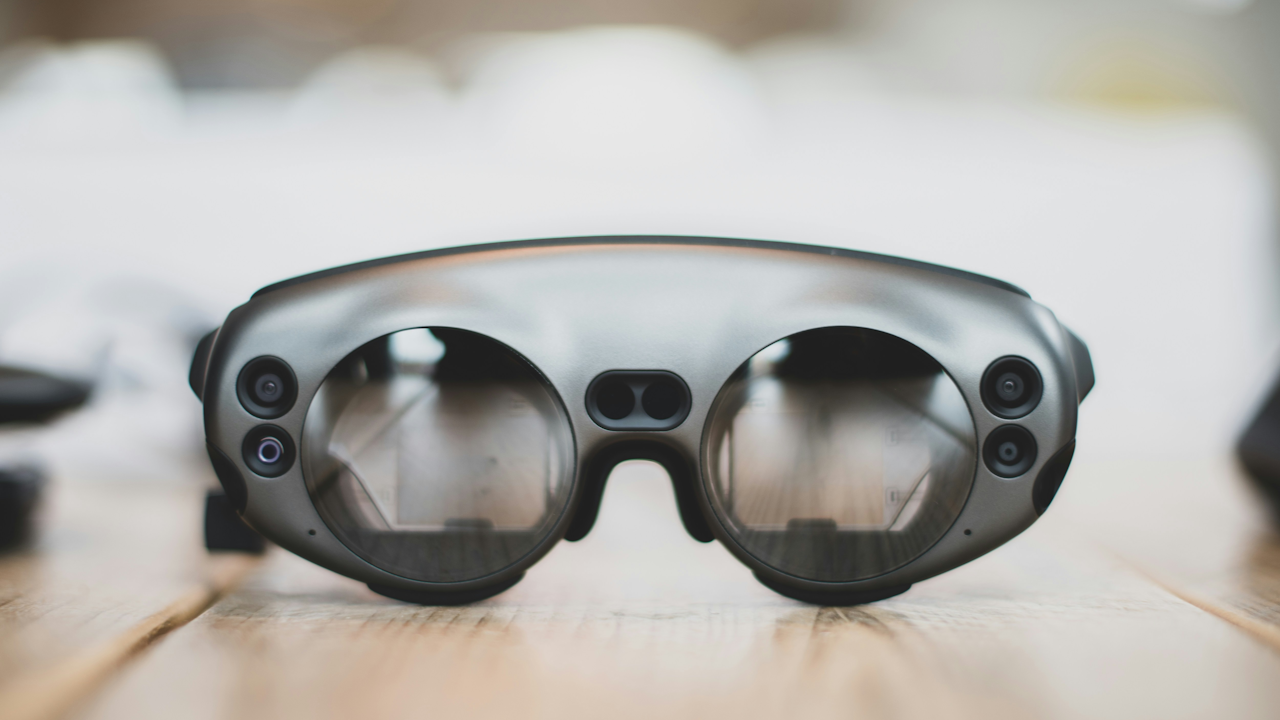
In a world where smartphones have dominated daily life for nearly two decades, a new contender is emerging that promises to upend everything. Picture this: no more pulling a device from your pocket to check notifications, navigate streets, or capture moments. Instead, information overlays your field of view seamlessly, powered by lightweight frames resting on your nose. Augmented reality glasses, or AR glasses, are no longer science fiction prototypes confined to trade shows. As of 2026, they represent a tangible shift in personal computing, blending AI assistance, virtual displays, and real-world integration in ways that smartphones never could. But are they truly poised to become the next smartphone revolution? The answer lies in examining their evolution, current capabilities, hurdles, and potential to reshape how humans interact with technology.
To understand the hype, it helps to trace the journey of AR glasses. The concept dates back further than many realize, with early experiments in heads-up displays for military pilots in the 1960s. Consumer interest exploded in 2013 when Google unveiled Glass, a pair of spectacles with a tiny projector for notifications and basic apps. It failed spectacularly due to high cost, limited functionality, and social backlash over its camera, earning the nickname “Glasshole” in some circles. Yet the failure taught valuable lessons about privacy, design, and usability. Subsequent efforts from companies like Microsoft with HoloLens targeted enterprise users for industrial applications, while consumer attempts remained niche.
The turning point arrived in the early 2020s. Meta’s Ray-Ban Stories in 2021 introduced stylish, camera-equipped glasses that looked like ordinary eyewear, handling calls, music, and photos without screaming “tech gadget.” By 2025 and into 2026, these evolved into Ray-Ban Meta Gen 2 models, incorporating advanced AI for real-time translation, object recognition, and voice assistance. Sales reportedly exceeded millions, proving that blending fashion with functionality could drive adoption. Meanwhile, Apple’s Vision Pro in 2024, though more of a mixed-reality headset than slim glasses, demonstrated the power of spatial computing, where digital elements blend with the physical world. It set a benchmark for immersion, even if its bulk and price limited it to enthusiasts.
Fast-forward to 2026, and the market has fragmented into distinct categories, each addressing different needs. On one end are AI-centric smart glasses focused on audio, cameras, and subtle assistance without heavy visual overlays. Meta’s lineup, including partnerships with Oakley for HSTN models, leads here with improved battery life, 3K video recording, and an AI companion that analyzes your surroundings on command. These feel like natural extensions of earbuds and smartwatches but on your face. Snap’s fifth-generation Spectacles, slated for wider release this year, emphasize creator tools with full AR capabilities for developers. Apple is reportedly testing multiple designs for its own entry, expected late 2026 or early 2027, prioritizing Siri-powered AI over displays initially, with cameras and microphones for contextual help. Samsung has confirmed its first AR glasses for 2026, promising immersive multimodal AI experiences via a Qualcomm chipset.
On the other side are display-focused AR glasses that project virtual screens for productivity and entertainment. Brands like Xreal, Viture, and RayNeo dominate CES 2026 highlights. The Xreal 1S offers upgraded resolution, wider field of view at 52 degrees, and a price drop to around 449 dollars, making high-quality virtual monitors accessible. Its partnership with Asus produced the ROG Xreal R1, boasting a world-first 240 hertz refresh rate on 1080p micro-OLED panels, ideal for gaming up to 171-inch projections from PCs or consoles. Viture’s Beast model stands out for its 3 degrees of freedom tracking, anchoring screens in space, while RayNeo Air 4 Pro earns praise as an affordable standalone option with full-color displays and built-in AI. Rokid’s AI Glasses Style and XGIMI’s Memomind add features like live translation and teleprompter support directly on the lenses. Google’s Project Aura, developed with Xreal, runs on Android XR and connects seamlessly with phones or PCs for glanceable notifications and apps.
These devices rely on breakthroughs in core technologies. Micro-OLED displays deliver sharp, bright visuals in compact forms, often achieving thousands of nits for outdoor visibility. Waveguide optics, as advanced by Lumus with 70-degree fields of view, bend light efficiently without distorting the real world. Power efficiency improves through chips like Qualcomm’s Snapdragon AR1 Gen 1, which handles on-device AI processing to reduce reliance on tethered smartphones. Batteries remain a challenge, but 2026 models last hours longer than predecessors, with some offering all-day standby for basic AI tasks. Integration of eye-tracking, gesture recognition, and even wristband controls in prototypes like Meta’s Orion hints at intuitive interfaces beyond touchscreens.
The case for AR glasses as a smartphone replacement builds on fundamental advantages. Smartphones demand constant attention shifts, from pocket to hand to face, fragmenting focus and contributing to neck strain or distracted walking. AR glasses keep your eyes forward, delivering information contextually. Need directions? A subtle arrow overlays the sidewalk. Receiving a message? It appears as text in your periphery without interrupting conversation. Productivity soars with virtual multi-monitor setups for remote workers, turning any space into an office. Entertainment evolves too: movies expand to theater-scale projections, games overlay enemies on your living room floor, and navigation feels intuitive rather than map-bound.
Industries stand to transform dramatically. In healthcare, surgeons could access patient data or 3D scans hands-free during procedures. Education benefits from interactive overlays, where history lessons project ancient ruins onto real sites or biology models float above a desk. Retail and manufacturing gain efficiency through assembly guides or inventory checks visible instantly. Social connections deepen with shared AR experiences, like virtual meetups where avatars appear beside you. Even daily tasks simplify: cooking with recipe steps projected on countertops, fitness with form corrections in real time, or translation for travelers conversing fluently across languages.
Yet significant barriers temper the revolution narrative. Battery life, while improved, often requires compromises between display intensity and duration. Weight and comfort matter; bulky frames cause fatigue after extended wear, though 2026 designs trend slimmer. Privacy concerns persist, as built-in cameras raise questions about constant recording and data collection. Social acceptance lags, with some users wary of looking “different” or invading others’ space. Cost remains prohibitive for many, with premium models exceeding 500 dollars, though entry-level options dip below 300. Health issues, from eye strain to electromagnetic exposure, demand ongoing study. Regulatory hurdles around data security and public surveillance could slow rollout.
Meta’s Orion prototype, shared with developers in 2026 ahead of a potential 2027 consumer version, exemplifies the gap between promise and reality. It offers full 3D immersion and eye-wrist tracking but relies on a separate compute puck for now, underscoring the miniaturization challenges ahead. Delays in projects like Meta’s Phoenix to 2027 highlight the engineering complexity of packing powerful hardware into fashionable frames. True spatial AR, where holograms interact fluidly with environments, requires advances in sensors, processing, and software ecosystems that rival or surpass today’s app stores.
Looking ahead, the trajectory points toward convergence. By the early 2030s, analysts project AR glasses could capture substantial market share as hardware shrinks, AI matures, and ecosystems expand. Companies like Google and Samsung are betting big on Android XR platforms, while Apple’s ecosystem lock-in could accelerate adoption among its users. If history repeats the smartphone pattern, early adopters will drive refinements until the technology feels indispensable. Mark Zuckerberg and other leaders have publicly stated that such glasses could render phones obsolete within a decade or two, shifting computing to an always-on, eyes-forward paradigm.
Skeptics argue smartphones will endure as companions, much like how tablets coexist with laptops. AR glasses might augment rather than replace, handling quick glances while phones manage heavy tasks. Battery constraints and the need for occasional charging could limit all-day independence. Cultural shifts toward digital minimalism might resist yet another always-connected layer. Nevertheless, the momentum is undeniable. From CES 2026 floors packed with innovative prototypes to major tech giants aligning roadmaps, 2026 marks a pivotal year where AR glasses transition from novelty to necessity for many.
In conclusion, AR glasses are not merely an incremental upgrade but a foundational change in how we access and interact with digital information. They address the core frustrations of smartphones by making technology invisible yet omnipresent. While full replacement may take years of iteration, the foundation laid in 2026, through stylish AI companions, high-refresh virtual displays, and ambitious prototypes, suggests a revolution is underway. As these devices grow lighter, smarter, and more integrated into daily routines, the question shifts from “if” to “when” they redefine personal computing. The smartphone era brought the world to our fingertips. AR glasses could place it directly in our sight, forever altering the landscape of human-machine interaction. The next chapter in tech history is not in your hand. It is on your face.