

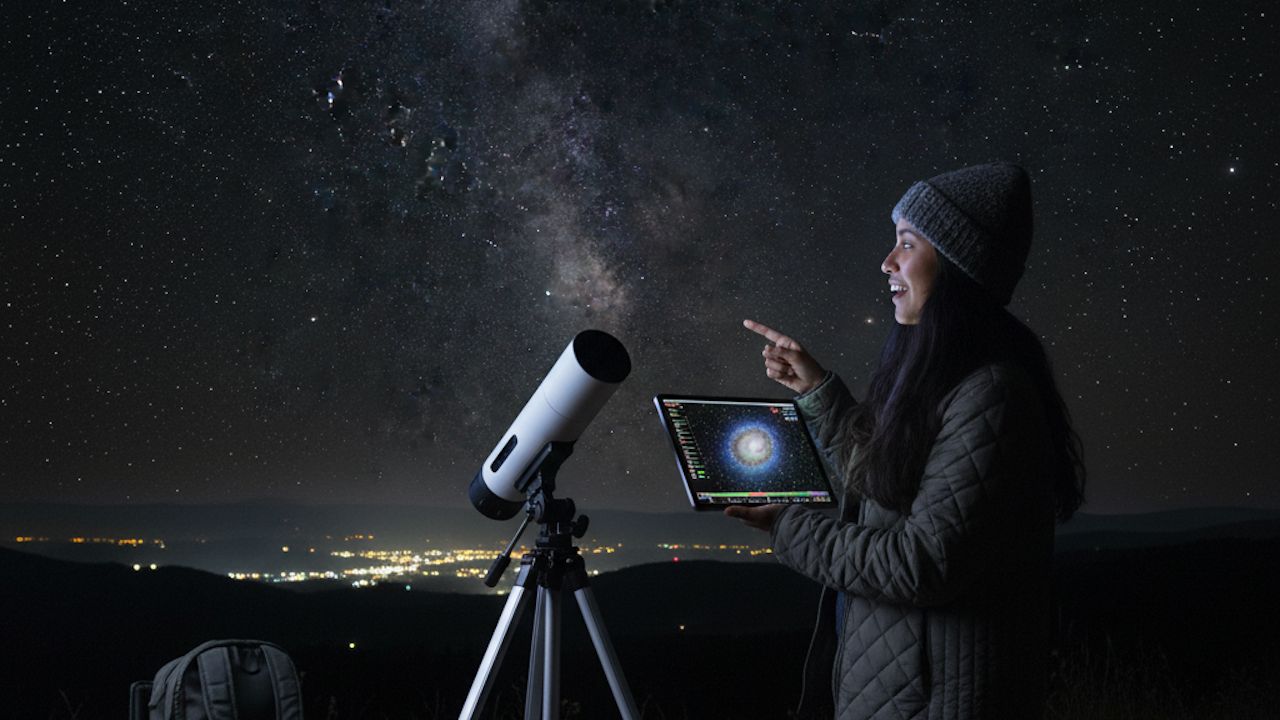
Amateur astronomy has undergone a remarkable transformation in recent years. What was once a hobby requiring years of study, complex equipment, and dark skies far from city lights has become more accessible than ever. At the heart of this change are smart telescopes. These intelligent instruments combine traditional optics with modern technology such as computerized mounts, smartphone apps, and artificial intelligence to simplify the process of observing the night sky. For newcomers and seasoned enthusiasts alike, smart telescopes lower the barriers to entry while expanding the possibilities of what can be seen and captured from a backyard or balcony.
This article explores the world of stargazing with smart telescopes. It covers their development, technical workings, practical use, popular models, best practices, and the future outlook for this exciting segment of amateur astronomy.
The Rise of Amateur Astronomy
Amateur astronomy has deep roots. For centuries, dedicated observers used simple refractors and reflectors to chart the Moon, planets, and stars. In the 20th century, larger amateur telescopes became common, but they demanded significant skill in polar alignment, star hopping, and manual tracking. Light pollution in urban areas further complicated the pursuit, often forcing enthusiasts to travel long distances for clear views.
The digital revolution changed everything. CCD cameras, GoTo mounts, and planetarium software made locating objects easier. Yet the real breakthrough came with smart telescopes that integrate all these features into user-friendly packages. Today, thousands of people discover the wonders of the cosmos without needing extensive astronomical knowledge or perfect observing conditions.
What Are Smart Telescopes?
Smart telescopes are automated optical systems designed for ease of use. Unlike traditional telescopes that require manual pointing and tracking, smart models use built-in motors, sensors, and software to align themselves and locate celestial targets automatically.
Key components typically include:
- A compact optical tube (often a refractor or catadioptric design for portability)
- A motorized alt-azimuth or equatorial mount
- GPS, compass, and level sensors for quick alignment
- A built-in camera or eyepiece with video output
- Wireless connectivity to smartphones or tablets via dedicated apps
- Image processing capabilities, sometimes enhanced by AI
The “smart” aspect comes from the integration. The telescope connects to an app that displays a digital sky map. Users select an object from the app, and the telescope slews to it, centers it, and begins tracking. Many models also offer live stacking of images, allowing faint deep-sky objects to become visible even under moderate light pollution.
How Smart Telescopes Work
The process begins with setup. Most smart telescopes require only a stable surface and a power source, often a portable battery pack. Once powered on, the telescope uses its GPS to determine location and time. It then performs a quick alignment routine, sometimes using plate-solving technology that photographs star fields and matches them against internal databases.
After alignment, the user opens the companion app. These apps feature intuitive interfaces with searchable catalogs containing thousands of objects: planets, star clusters, nebulae, galaxies, and double stars. Selecting a target sends commands to the mount, which moves precisely to the coordinates.
Tracking is handled automatically. The motors compensate for Earth’s rotation, keeping the object in view for extended periods. For imaging, many smart telescopes include sensitive sensors that capture video or still frames. Software then stacks multiple exposures to reduce noise and reveal details invisible to the naked eye.
Advanced models incorporate AI for object recognition and image enhancement. Some can automatically identify and suggest targets based on current sky conditions, time of year, and user preferences.
Benefits for Amateur Astronomers
Smart telescopes offer several advantages that have broadened participation in astronomy.
Accessibility for Beginners: Newcomers can start observing meaningfully on their first night. The frustration of hunting for faint objects or struggling with manual controls is minimized. This encourages continued engagement rather than early abandonment of the hobby.
Urban Observing: Light pollution remains a challenge, but smart telescopes paired with narrowband filters or advanced processing can reveal galaxies and nebulae from city suburbs. The ability to stack images over minutes or hours compensates for bright skies.
Educational Value: Apps often include rich information about each object, including history, scientific facts, and visibility details. Users learn while observing, creating a seamless blend of entertainment and education.
Time Efficiency: Traditional sessions involve significant time spent on setup and finding targets. Smart telescopes reduce this overhead, allowing more actual observing time, especially valuable during short winter nights or when weather windows are brief.
Documentation and Sharing: Built-in cameras make it easy to capture impressive images. These can be shared instantly on social media or astronomy forums, fostering community and motivation.
Portability: Many modern smart telescopes are lightweight and foldable, suitable for travel to darker sites or even international star parties.
Popular Smart Telescope Models
The market has grown rapidly, with several standout options appealing to different budgets and needs.
Entry-level models like the Celestron StarSense Explorer series use smartphone integration for push-to guidance, helping users manually point while the app provides real-time directions. These are affordable gateways into smart observing.
Mid-range options include the Sky-Watcher Virtuoso series or similar alt-azimuth GoTo systems enhanced with app control. They offer good optics and reliable tracking for both visual and basic imaging.
Dedicated smart telescopes have gained popularity. Devices like the Unistellar eVscope series feature built-in electronic eyepieces and powerful image processing. Their light-pollution reduction technology allows impressive views of deep-sky objects from urban environments. Users report seeing detailed structures in galaxies that would require much larger traditional telescopes under dark skies.
Another notable contender is the Vaonis Stellina, a fully automated smart telescope designed for effortless operation. It sets up quickly, handles alignment autonomously, and delivers high-quality images directly to a mobile device. Its sleek design appeals to users who value aesthetics alongside performance.
Higher-end models from brands like ZWO or Explore Scientific incorporate interchangeable eyepieces, advanced mounts, and compatibility with dedicated astro-cameras. These appeal to users who want to grow with the hobby.
When choosing a model, consider aperture size (larger gathers more light), focal length (affects magnification and field of view), mount stability, battery life, and app quality. Budgets range from a few hundred dollars for basic smart features to several thousand for premium automated systems.
Setting Up and Using a Smart Telescope
Successful stargazing with smart telescopes depends on thoughtful preparation.
Choose a location with as clear a view of the sky as possible. Even in cities, rooftops or parks can work. Avoid areas near bright lights or heat sources that cause air turbulence.
Power management is crucial. Most telescopes need a reliable 12V source. Portable power stations or quality lithium batteries prevent mid-session failures.
App familiarity pays dividends. Spend time indoors exploring the software, learning catalog navigation, and understanding settings for exposure and processing.
For visual observing, some models offer traditional eyepieces alongside digital views. Digital viewing through a screen or tablet can be more comfortable and allows multiple people to observe simultaneously.
When targeting objects, start with bright, easy ones like the Moon, Jupiter, or Saturn to verify alignment. Then progress to fainter targets. Planetary observing benefits from good seeing conditions, while deep-sky objects reward patience with longer integration times.
Regular maintenance includes cleaning optics carefully with proper tools, checking mount mechanics, and updating firmware and apps for improved performance and new features.
Advanced Techniques and Tips
Experienced users push smart telescopes further with creative techniques.
Live stacking is a game-changer. The telescope continuously adds new frames to a composite image, revealing fainter details over time. This works well for nebulae and galaxies.
Planetary imaging requires higher frame rates and shorter exposures to freeze atmospheric turbulence. Many apps include lucky imaging algorithms that select the sharpest frames.
Solar observing is possible with appropriate filters. Smart telescopes can track the Sun safely, allowing detailed views of sunspots and prominences (with proper hydrogen-alpha filters).
Time-lapse sequences capture celestial motion, such as the rotation of Jupiter’s moons or the movement of star trails when tracking is disabled.
Community involvement enhances the experience. Astronomy clubs often host sessions where members share knowledge about smart telescope optimization. Online forums provide troubleshooting advice and target recommendations based on current events like comets or supernovae.
Seasonal planning maximizes results. Summer offers Milky Way views and planets like Jupiter, while winter features Orion and its treasures. Apps help identify what is visible on any given night.
Challenges and Limitations
Despite their advantages, smart telescopes are not perfect.
Cost remains a barrier. High-quality models with excellent optics and robust software are expensive. Cheaper options may compromise on build quality or image performance.
Dependency on technology introduces vulnerabilities. Battery drain, app glitches, software updates, or connectivity issues can disrupt sessions. Clear skies with good seeing are still essential for the best results.
Learning curve exists beyond the basics. Understanding exposure settings, processing parameters, and optical limitations helps users achieve their full potential.
Light pollution still affects performance. While smart processing mitigates it, the darkest sites remain superior for faint objects.
Portability trade-offs apply. Larger aperture smart telescopes offer better light-gathering but sacrifice ease of transport compared to smaller models.
Finally, over-reliance on automation might reduce the development of traditional skills. Many enthusiasts combine smart telescopes with manual observing to maintain a deeper connection with the sky.
The Future of Smart Telescopes in Amateur Astronomy
The trajectory points toward even greater integration and capability. Artificial intelligence will likely play a larger role in suggesting observing programs, automatically processing data, and even identifying transient events like asteroids or variable stars.
Miniaturization and improved battery technology will enhance portability. Integration with augmented reality could overlay information directly onto live views.
Citizen science opportunities are expanding. Smart telescope users contribute to projects monitoring exoplanets, tracking space debris, or cataloging variable stars. Networked arrays of smart telescopes could enable collaborative observations across continents.
Affordability should improve as manufacturing scales and competition increases. This democratization will bring more diverse participants into astronomy, potentially inspiring the next generation of professional scientists.
Sustainability considerations, such as energy-efficient designs and recyclable materials, may become more prominent as environmental awareness grows within the astronomy community.
Conclusion
Smart telescopes have revolutionized amateur astronomy by making stargazing more approachable, productive, and enjoyable. They bridge the gap between casual curiosity and serious observation, allowing people worldwide to explore the universe from their own neighborhoods.
Whether you are a complete beginner hoping to see Saturn’s rings for the first time or an experienced observer seeking to capture stunning images of distant galaxies, smart telescopes offer powerful tools. Success comes from combining their technological strengths with basic knowledge of the sky, careful setup, and a sense of wonder.
The night sky has never been more accessible. With a smart telescope, clear weather, and a bit of curiosity, anyone can become an active participant in humanity’s ancient quest to understand our place in the cosmos. The future of amateur astronomy looks bright, quite literally, thanks to these intelligent instruments that bring the stars closer to us all.