

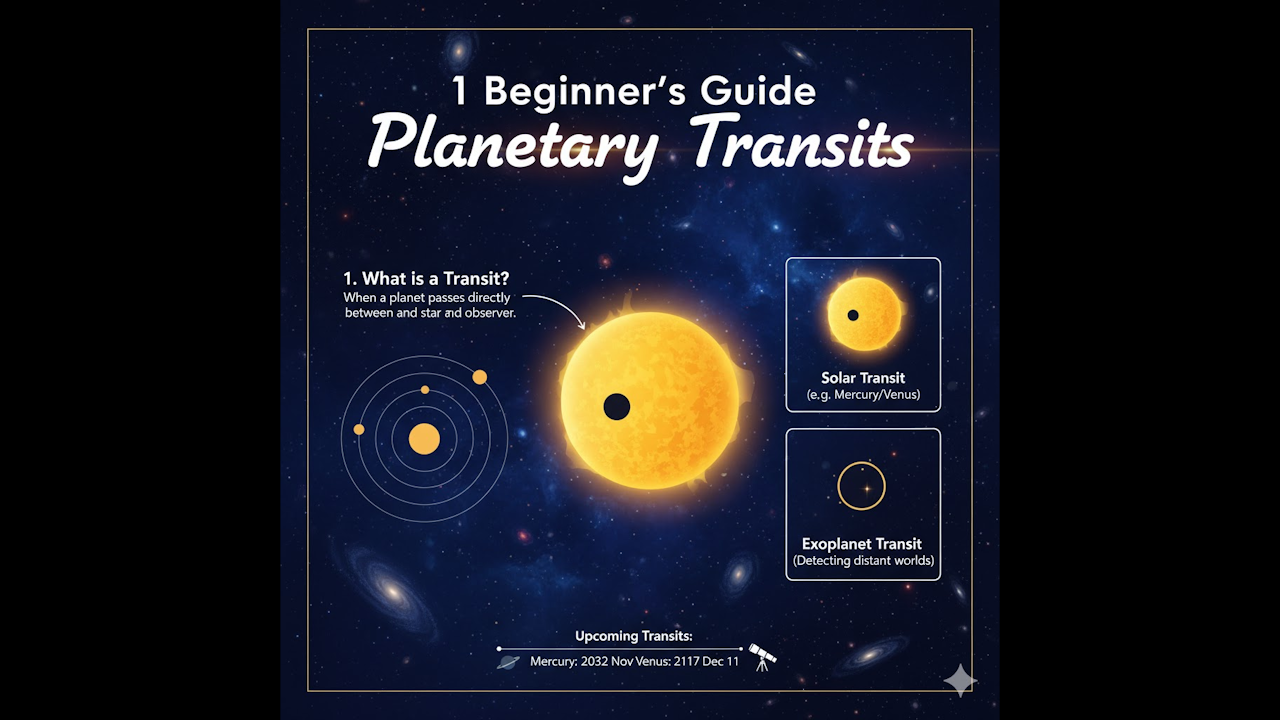
Planetary transits form one of the most practical and dynamic branches of astrology. While the natal birth chart maps the positions of the planets at the moment of your birth, transits show how the planets continue moving through the sky and interact with that fixed snapshot. Understanding transits helps you anticipate periods of change, growth, challenge, and opportunity in your life. This guide is written for complete beginners. It explains the fundamentals step by step, without assuming prior knowledge.
What Exactly Is a Transit?
A transit occurs when a planet in the current sky forms a significant geometric angle, called an aspect, with a planet or point in your natal chart. The moving planet “activates” the energy of your natal planet or the house it occupies. Transits are temporary influences that overlay your permanent natal blueprint.
Think of your natal chart as the wiring in a house. Transits are like electricity flowing through that wiring at different times. Sometimes the current is steady and supportive. Other times it is intense or disruptive. The length of a transit depends on the speed of the moving planet. The Moon transits a point in your chart for only a few hours, while Pluto can linger for years.
Key Building Blocks: Planets, Signs, Houses, and Aspects
Before diving deeper into transits, review the core elements.
Planets represent different types of energy or life areas:
- Sun: core identity, vitality
- Moon: emotions, instincts, habits
- Mercury: communication, thinking, short trips
- Venus: love, beauty, values, money
- Mars: action, drive, conflict
- Jupiter: growth, luck, expansion, beliefs
- Saturn: structure, responsibility, limitations, maturity
- Uranus: innovation, rebellion, sudden change
- Neptune: dreams, spirituality, illusion, compassion
- Pluto: transformation, power, deep psychological shifts
Signs color how planetary energy is expressed. A transit through Aries feels bold and initiating, while the same planet in Pisces feels intuitive and dissolving.
Houses show the department of life affected. The 1st house rules self-image and appearance. The 7th house rules partnerships. The 10th house rules career and public status.
Aspects are the angular relationships between planets. The most important for beginners are:
- Conjunction (0 degrees): blending, intensification
- Sextile (60 degrees): opportunity, mild support
- Square (90 degrees): tension, challenge, action needed
- Trine (120 degrees): harmony, ease, natural flow
- Opposition (180 degrees): polarity, awareness through others or balance
Major aspects usually have an orb (allowable degree range) of 8-10 degrees for transiting planets, though tighter orbs create stronger effects.
The Speed of Planets and Transit Duration
Planets move at different speeds, which determines how long their transits last.
Fast-moving planets (inner planets) create short-term influences:
- Moon: changes every few hours, useful for daily timing
- Mercury: a few days to a couple of weeks
- Venus: similar to Mercury
- Sun: about a month in each sign, but its aspects last a few days
- Mars: several weeks to a couple of months
Slower outer planets create longer, more significant life chapters:
- Jupiter: stays in a sign for about one year; aspects can last several months
- Saturn: about two and a half years per sign; major aspects often felt for a year or more
- Uranus: roughly seven years per sign
- Neptune: about fourteen years per sign
- Pluto: can spend 12-30 years in one sign depending on its elliptical orbit
Because outer planets move slowly, their transits mark major developmental stages. A Saturn return (when transiting Saturn returns to its natal position around ages 28-30) is one of the most famous long-term transits.
How to Track and Interpret Transits
Modern astrologers use software or free online tools to generate transit charts. You input your birth data to see your natal chart, then overlay current planetary positions.
When interpreting a transit, ask these questions:
- Which natal planet or point is being aspected?
- What house is the transiting planet moving through in your chart?
- What house does the natal planet rule?
- What sign is the transit occurring in?
- Is the aspect applying (getting stronger) or separating (waning)?
- Are other planets involved at the same time (multiple transits)?
A single transit rarely acts in isolation. When several planets activate the same area, the effect is amplified.
Major Outer Planet Transits: Life’s Big Lessons
Jupiter Transits Jupiter is the planet of expansion and optimism. When it conjuncts your Sun, you may feel more confident and attract opportunities. Jupiter crossing the Ascendant often coincides with new beginnings or improved physical vitality. However, Jupiter can also encourage excess, so periods of Jupiter activity require moderation. Its transits are generally welcomed as “lucky” periods, though the house involved shows where the growth occurs.
Saturn Transits Saturn teaches through limitation and responsibility. It is often called the taskmaster. A Saturn square to your Moon can bring emotional heaviness or family responsibilities. Saturn returns mark the end of one life chapter and the beginning of another, pushing you to build lasting structures. These transits feel heavy at the time but usually lead to greater maturity and achievement if you do the work.
Uranus Transits Uranus brings sudden awakenings and the urge for freedom. A Uranus opposition to your Sun (around mid-40s) is the classic mid-life crisis transit, prompting changes in identity, career, or relationships. Uranus does not tolerate stagnation. Its transits can feel disruptive, but they often liberate you from outdated situations.
Neptune Transits Neptune dissolves boundaries and heightens sensitivity. It can bring inspiration, spiritual awakening, or creative breakthroughs, but also confusion, deception, or escapism. Neptune crossing the Midheaven might idealize career dreams or dissolve previous professional identity. Grounding practices help during Neptune transits.
Pluto Transits Pluto’s transits are the most intense. They involve deep transformation, power struggles, or psychological rebirth. Pluto square Pluto (in early adulthood) often coincides with major life reevaluation. These periods strip away what is no longer authentic so something stronger can emerge. They can coincide with endings that feel fated.
Inner Planet Transits and Daily Life
While outer planets set the long-term tone, inner planets provide the daily weather. Mars transits can spark arguments or motivate new projects. Venus transits highlight relationships and finances. Mercury retrograde periods (three times a year) are famous for communication mishaps, though they are better used for review and revision rather than new launches.
The Moon’s daily transits through the houses and its aspects to natal planets help with timing smaller activities. For example, starting a project when the transiting Moon is in your 1st house and making positive aspects can add personal momentum.
Combining Transits with Other Techniques
Transits work best when viewed alongside other predictive tools:
- Progressions (secondary progressions show inner psychological development)
- Solar returns (the chart for the moment the Sun returns to its natal degree each year)
- Eclipses (powerful New or Full Moons that can activate houses or planets for up to a year or more)
A Saturn transit that coincides with a difficult progression or eclipse will feel more challenging than the same transit in a supportive period.
Common Beginner Pitfalls and Tips
Many beginners overreact to every transit. Not every square means disaster. Context matters: your age, life circumstances, and the overall chart pattern modulate the experience. A difficult transit for one person may be manageable for another depending on natal aspects.
Keep a journal. Note major transits and what happens in your life. Over time you will recognize patterns that are unique to you.
Focus on free will. Astrology shows tendencies and energies, not fixed fate. Conscious response to transits usually produces better outcomes than passive endurance.
Start simple. Track the outer planets first because their slower pace is easier to observe over months or years. Once comfortable, add inner planet activity.
Practical Example: A Saturn Transit Through the 7th House
Suppose transiting Saturn is moving through your 7th house of partnerships and makes a square to your natal Venus. You might experience a period of testing in relationships. Existing partnerships could face increased responsibilities or reality checks. New relationships started during this time might have a serious or karmic quality. The lesson is usually about building mature, realistic connections rather than chasing fantasy. After Saturn moves on, relationships that survive are often stronger and more committed.
Why Study Transits?
Transits turn astrology from abstract personality description into a living tool for self-awareness and timing. They explain why the same person can have dramatically different experiences at different ages. They offer compassion during hard periods and encouragement during expansive ones.
With patience and consistent observation, you will develop an intuitive sense of how the planets dance with your chart. That knowledge becomes a quiet companion through life’s inevitable ups and downs.
Start by pulling up your natal chart and current transits today. Notice which planets are active and in which houses. Observe without judgment. The sky is always moving, and so are the lessons it offers. Over time, planetary transits shift from mysterious cosmic events to understandable cycles that support your growth.
This foundational understanding equips you to explore more advanced techniques later, such as transit cycles to specific degrees, midpoint transits, or harmonic charts. For now, focus on watching the planets move and learning from your own life as the ultimate teacher.