

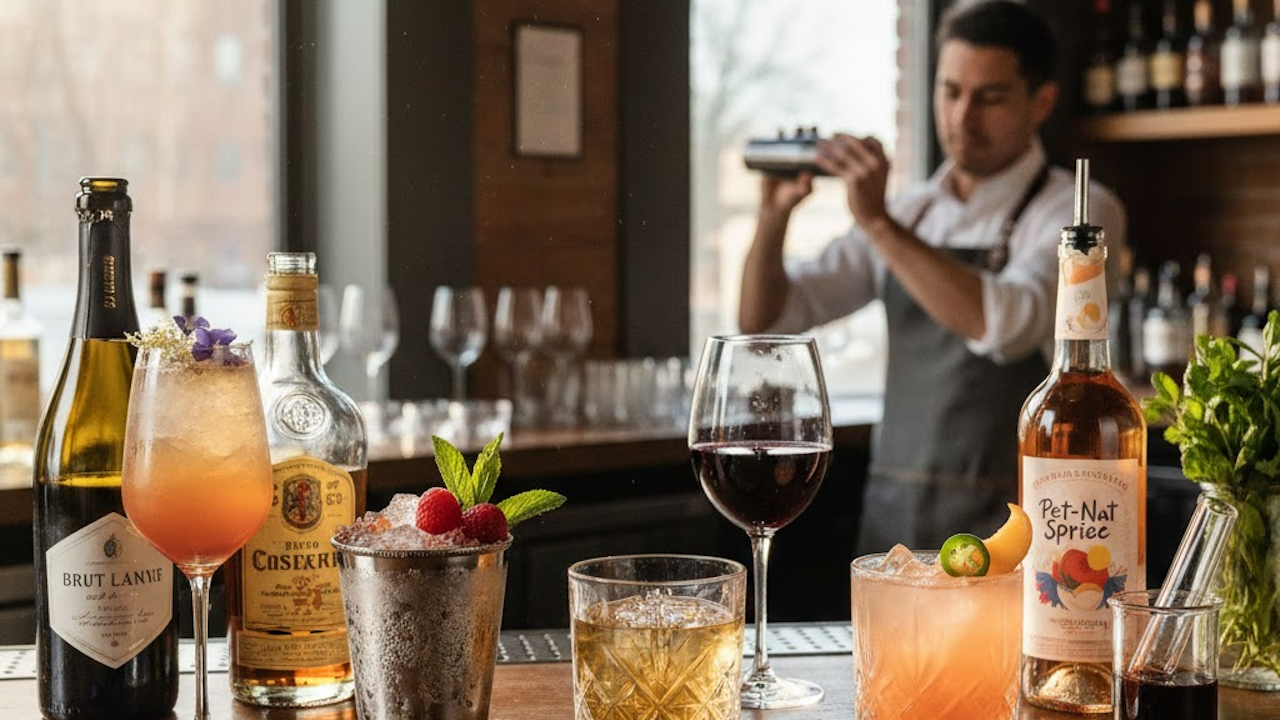
The world of mixology is currently witnessing a sophisticated takeover. While the classic martini and the rugged old fashioned will always have their place, a new protagonist has emerged behind the bar: wine.
Once relegated to a simple glass of red or white, wine is being reimagined as a versatile, complex base for creative cocktails. Bartenders are no longer treating wine as a standalone beverage but as a dynamic ingredient that offers acidity, tannins, and a depth of flavor that spirits alone sometimes lack.
The Evolution of the Wine Cocktail
Historically, mixing wine with other ingredients was often a way to mask poor quality or oxidation. Think of the traditional Sangria or the Kalimotxo (red wine and cola). However, the modern movement is different. It is driven by the use of premium vintages, artisanal vermouths, and high quality sparkling wines.
The rise of the “low ABV” (alcohol by volume) movement has also played a significant role. Consumers are increasingly looking for drinks that allow them to socialize longer without the heavy hit of a high proof spirit. Wine cocktails provide the perfect middle ground, offering a lighter profile that remains incredibly flavorful.
The Core Categories of Wine Mixology
To understand how wine is shaking up bars, it helps to look at the three primary ways it is being utilized in modern recipes.
1. The Effervescent Sparklers
Sparkling wine is the most common entry point for wine cocktails. Beyond the standard Mimosa or Aperol Spritz, bartenders are using Prosecco, Cava, and Champagne to add texture and “lift” to drinks.
- The French 75 Variation: Instead of gin, many bars are experimenting with floral liqueurs like elderflower or violet, topped with a dry Brut.
- Sbagliato Modernization: The “Mistaken Negroni” replaces gin with sparkling wine, creating a bitter yet refreshing profile that is less aggressive than the original.
2. Fortified and Aromatized Powerhouses
Sherry, Port, and Vermouth are technically wines, but their fortified nature makes them the “secret weapons” of the cocktail world.
- Sherry Cobblers: These are making a massive comeback. By using Fino or Amontillado sherry, bartenders can create a nutty, dry, and savory drink that pairs beautifully with fresh berries and citrus.
- White Port and Tonic: A staple in Portugal that has moved into global craft bars. It offers a brighter, slightly sweeter alternative to the classic Gin and Tonic.
3. Still Wine as a Modifier
Using still red, white, or rosé wine as a primary mixer is perhaps the most creative frontier.
- The New York Sour: This classic, featuring a red wine float over a whiskey sour, has inspired a wave of “float” experiments.
- Rosé Slushies and Spritzes: Rosé is no longer just for summer afternoons. Its high acidity makes it a brilliant partner for botanical gins and spicy syrups like ginger or peppercorn.
Popular Flavor Profiles in Modern Wine Drinks
| Wine Type | Common Pairing Partners | Flavor Result |
| Sauvignon Blanc | Cucumber, Mint, Gin | Crisp, vegetal, and ultra-refreshing |
| Cabernet Sauvignon | Blackberries, Bourbon, Cocoa | Rich, dark, and sophisticated |
| Riesling | Peach, Jalapeño, Tequila | A balance of stone fruit sweetness and heat |
| Chardonnay | Honey, Lemon, Oak-aged Rum | Buttery, bright, and complex |
Why Bartenders Love the Trend
For a mixologist, wine offers a unique “acid structure.” While citrus provides a sharp, immediate sourness, wine provides a more integrated acidity that lingers on the palate. Furthermore, the tannins in red wine can provide a mouthfeel similar to barrel-aged spirits, allowing for “spirit-forward” drinks that aren’t actually high in alcohol.
The sustainability factor is also a bonus. Using a wine that might have been open a day too long for a perfect glass pour but is still vibrant enough for a syrup or a mixed drink helps bars reduce waste.
The Future: From Natural Wines to Wine Syrups
As the natural wine movement continues to grow, expect to see more “funky” and “pet-nat” cocktails. These wines bring a cloudy, yeasty, and often sour profile that mimics the complexity of craft kombucha or sour beers. Additionally, many bars are now reducing wine into concentrated syrups to add intense grape flavor without diluting the drink’s strength.
The wine cocktail is no longer a footnote on the menu. It is a testament to the fact that when we break the rules of tradition, we often find something much more interesting in the glass.