

The two-party system in the United States has long dominated American politics, with the Democratic and Republican parties shaping elections, policy debates, and national discourse for over a century and a half. Yet for many young Americans, particularly those in Generation Z and the millennial cohort, this system inspires little confidence and even less loyalty. Recent polls paint a stark picture of disaffection. A record 45 percent of all Americans now identify as political independents, with majorities of Gen Z adults (56 percent) and millennials (54 percent) claiming no party affiliation. In the Harvard Youth Poll from fall 2025, which surveyed adults ages 18 to 29, 44 percent described themselves as independent or unaffiliated, while negative impressions of both parties prevailed. Fifty-eight percent offered a negative one-word description of Democrats, most commonly “weak,” and 56 percent did the same for Republicans, most often “corrupt.” Forty percent applied negative terms to both parties simultaneously.
This widespread skepticism goes beyond mere apathy. Young people increasingly view the two-party arrangement as unresponsive, self-serving, and incapable of tackling the challenges that define their lives. They see a system mired in polarization, beholden to special interests, and disconnected from the economic and social realities facing those under 35. The result is not just lower voter turnout in some cycles or higher rates of independent identification, but a deeper erosion of faith in democratic institutions themselves. To understand why, it helps to examine the structural, economic, cultural, and experiential factors at play.
One core reason is the perception that both parties prioritize power and donor interests over the public good. Young voters frequently describe the parties as corrupt or ineffective because campaign finance rules allow massive inflows of money from corporations, wealthy individuals, and political action committees. This creates an impression that elected officials answer first to lobbyists rather than constituents. For instance, housing affordability ranks as a top government priority across party lines among young people in the Harvard poll, yet meaningful federal action on zoning reform, supply expansion, or incentives for new construction has remained elusive for years. Critics on the left argue Democrats talk about affordability without delivering transformative change, while those on the right contend Republicans favor tax cuts for developers over direct relief for renters and first-time buyers. Either way, the outcome feels the same: gridlock that benefits entrenched real estate interests.
Economic insecurity amplifies this distrust. Young Americans entered adulthood amid the aftermath of the 2008 financial crisis, the gig economy boom, soaring student debt, and now persistent inflation and housing costs that make the traditional markers of stability, homeownership, stable careers, and family formation, seem out of reach. Total student loan debt exceeds 1.7 trillion dollars, with average borrowers owing tens of thousands, and many feel both parties have failed to provide lasting relief. Democrats have pushed for forgiveness programs and free community college, but implementation has been uneven and often blocked by courts or congressional opposition. Republicans emphasize personal responsibility and vocational training but offer fewer direct solutions for those already burdened by loans taken out under promises of higher earnings that have not materialized for everyone. Housing follows a similar pattern. In many cities, median home prices require incomes far above what entry-level jobs or even mid-career salaries provide, and rental markets remain tight. Polling shows that nearly three-quarters of financially struggling young people cite cost of living and inflation as top concerns, yet neither party has engineered a comprehensive breakthrough on these fronts.
This economic strain fosters a sense that the two-party system is rigged against the rising generation. Older Americans benefited from post-World War II prosperity, relatively affordable education, and wages that kept pace with productivity gains for decades. Younger cohorts have watched wages stagnate relative to living costs while corporate profits and executive compensation have climbed. They see politicians from both sides decry inequality during campaigns only to deliver incremental tweaks or partisan tax policies that do little to close the gap. A Johns Hopkins study on generational divides in politics found that younger respondents expressed deeper dissatisfaction with how the political system functions and placed less trust in parties to reflect their views. More than 60 percent of Gen Z respondents agreed that the nation’s government design needs significant change regardless of who holds office.
Hyper-polarization compounds the problem. Young people have come of age during an era of intense partisan warfare that began in earnest in the 1990s and accelerated through social media. Cable news, Twitter (now X), TikTok, and Instagram expose them constantly to outrage cycles, where each party portrays the other as an existential threat. This environment discourages compromise and rewards extremism. Legislative gridlock follows, with frequent government shutdown threats, debt-ceiling standoffs, and stalled bills on infrastructure, immigration, and entitlement reform. Young independents in an NBC News poll expressed particular frustration, with 65 percent of Gen Z independents saying neither Democrats nor Republicans fight for people like them. They witness Democrats and Republicans alike engage in performative politics, investigations, and culture-war battles that generate headlines but deliver few tangible improvements in daily life.
Neither party fully aligns with the mix of values held by many young Americans. On social issues, Gen Z tends to support progressive stances on topics such as LGBTQ rights, racial equity, and climate action, which draws some toward Democrats. Yet many also express libertarian leanings on free speech, criminal justice reform, and skepticism of heavy government regulation or endless foreign interventions, areas where Republicans sometimes appeal. The result is alienation from both. Polls show young people are not uniformly shifting left or right but instead rejecting party labels altogether. A Tufts University CIRCLE report noted that only 36 percent of youth agree that U.S. democracy today can address the country’s issues, and just 16 percent believe it works well for young people specifically. This skepticism extends to the belief that voting changes little because the system funnels power through two entrenched machines.
Historical events have also shaped this worldview. Many millennials remember the Iraq and Afghanistan wars launched under Republican leadership and continued under Democrats, followed by the 2008 recession that upended job markets just as they entered the workforce. The COVID-19 pandemic response, with its mix of lockdowns, stimulus checks, supply-chain disruptions, and inflation, further eroded confidence regardless of which party held the White House. Young people watched as promises of unity and competence gave way to partisan finger-pointing. Scandals, from insider trading allegations against lawmakers to ethical lapses in both parties, reinforce the narrative that politicians are in it for themselves. Social media accelerates this exposure, allowing instant documentation of hypocrisy, such as elected officials railing against corporate greed while accepting large donations or living insulated lives far removed from the struggles of constituents.
Broader institutional distrust plays a role too. Young Americans report low confidence in Congress, the presidency, mainstream media, and large technology companies alike. Gallup data consistently shows Gen Z expressing the lowest trust levels in these entities compared with older groups. This cynicism is not abstract; it stems from lived experience. Many young workers navigate precarious employment in the gig economy, where benefits are scarce and algorithmic management dictates schedules. They face mental health challenges exacerbated by economic pressure and social media, yet see political debate consumed by wedge issues rather than practical solutions like expanded mental health access or vocational pathways that do not require four-year degrees.
Structural features of the American electoral system perpetuate the two-party duopoly. Winner-take-all elections and single-member districts, combined with campaign finance laws and ballot access rules, make third-party or independent candidates viable only in rare cases. Duverger’s law, the political science principle that first-past-the-post voting favors two dominant parties, explains why even popular independent movements struggle to gain traction. Young voters recognize this dynamic and feel trapped. They may flirt with third-party ideas or ranked-choice voting reforms, but the major parties control the rules and have little incentive to change a system that preserves their power.
Demographic and cultural shifts widen the generational divide. Baby boomers and older generations came of age when party identification was more stable and trust in institutions higher. They remember a time of clearer ideological distinctions and less media fragmentation. Younger cohorts, by contrast, grew up with the internet, globalization, and rapid social change. They prioritize authenticity and results over loyalty to party brands. When politicians appear scripted, evasive, or focused on fundraising rather than problem-solving, young people tune out. An AP-NORC poll found adults under 30 more likely to reject party labels and less inclined to view voting as essential compared with older Americans.
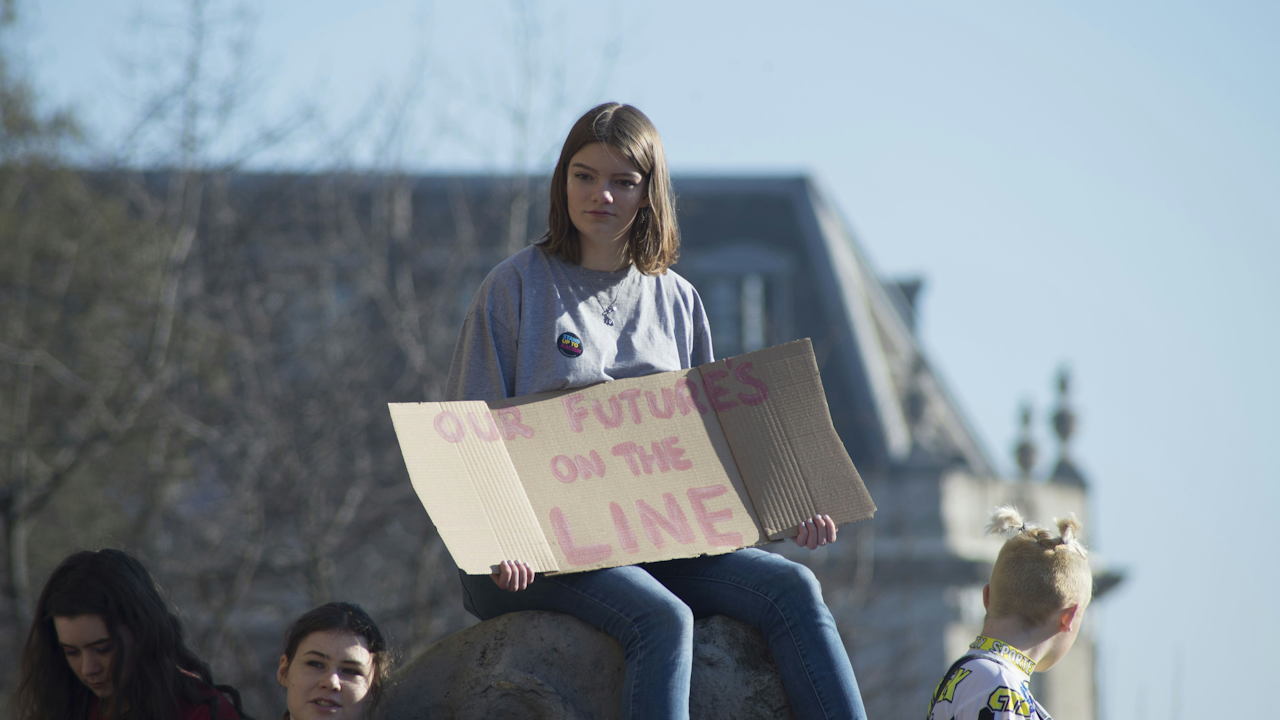
Despite these trends, young people are not uniformly disengaged. Many participate in protests, advocacy, and local politics where they perceive more direct impact. Some gravitate toward populist figures who promise to disrupt the status quo, whether from the left or right. Yet overall enthusiasm remains muted. In the Harvard poll, only 11 percent of young adults believed the country was headed in the right direction, and support for major parties often reflected caution rather than conviction.
This distrust carries implications for the future of American democracy. A generation that views the two-party system as broken may demand reforms such as open primaries, independent redistricting, or ranked-choice voting to reduce polarization and increase accountability. Others may simply withdraw, leading to lower participation and greater influence for highly motivated partisan bases. The risk is a feedback loop where declining trust produces poorer governance, which in turn deepens cynicism.
Ultimately, young people’s rejection of the two-party system reflects a rational response to observable failures. They see polarization that prevents progress, economic policies that leave them behind, and institutions that appear more interested in self-preservation than service. Whether this disaffection leads to constructive change or further alienation depends on how the parties, and the system itself, respond. For now, the data suggest that millions of young Americans are waiting, not with optimism, but with a clear-eyed demand for something better than the status quo.