

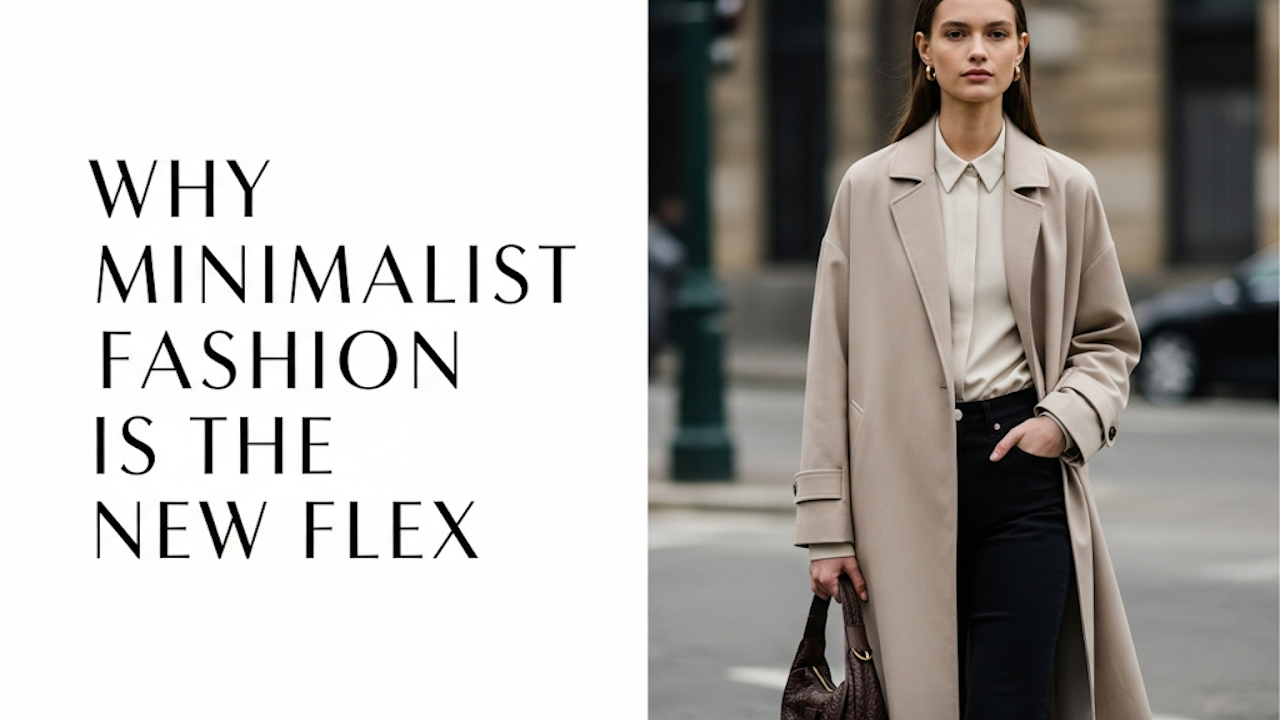
In a world saturated with logos, trends, and constant visual noise, minimalist fashion has quietly become the ultimate marker of taste and power. What began as a practical response to cluttered closets and fleeting fads has evolved into something far more potent: a deliberate statement of discernment. The new flex is no longer about owning the flashiest piece or stacking the most recognizable brands. It is about curating a wardrobe of timeless, high-quality garments that require no explanation, no branding, and no apology. Minimalist fashion signals that you have the confidence to stand out by blending in, the resources to invest in pieces that endure, and the self-awareness to reject the cycle of overconsumption. This is not mere simplicity for its own sake. It is a calculated rebellion against excess, and it has reshaped how status is performed in fashion today.
The roots of minimalist fashion stretch back decades, but its current dominance feels freshly urgent. Think of the pared-down silhouettes of the 1990s, when designers like Jil Sander and Helmut Lang stripped away ornamentation to let fabric and cut speak for themselves. Or recall the quiet power of a perfectly tailored white shirt or a pair of straight-leg trousers in neutral tones. Today, that ethos has exploded into the mainstream under labels such as The Row, Toteme, and Khaite, as well as more accessible lines from COS and Everlane. These brands do not rely on seasonal hype or celebrity endorsements. Instead, they bet on the idea that a single cashmere sweater or a flawless pair of leather trousers can outlast dozens of trend-driven items. The result is a wardrobe that feels both effortless and elite, precisely because it refuses to compete for attention.
One reason minimalist fashion now functions as the new flex is its alignment with the rise of quiet luxury. For years, status in fashion meant visible wealth: monogrammed bags, oversized logos, and flashy accessories that announced your spending power from across the room. That approach worked in boom times when conspicuous consumption was the goal. But economic uncertainty, social media fatigue, and a cultural craving for authenticity have flipped the script. Quiet luxury celebrates pieces that only insiders recognize as expensive. A Loro Piana cashmere hoodie or a pair of Brunello Cucinelli trousers may look unremarkable to the untrained eye, yet they cost thousands and are crafted from materials that feel almost weightless. Wearing them signals that you do not need to prove anything. You understand quality on a deeper level. This is stealth wealth in action, and it has become the preferred language of the truly affluent, from tech executives in Silicon Valley to creative directors in New York and London. In boardrooms and on red carpets alike, the absence of branding speaks louder than any logo ever could.
Sustainability has also propelled minimalist fashion into its current position of prestige. Fast fashion has trained consumers to buy cheap, wear once, and discard, creating mountains of textile waste and ethical nightmares in supply chains. Minimalism offers a direct counterpoint. By focusing on fewer, better items made to last, it reduces environmental impact without sacrificing style. A capsule wardrobe of ten versatile pieces in black, white, beige, and gray can replace an entire closet of seasonal trends. Brands that prioritize organic cotton, recycled wool, and traceable sourcing gain extra cachet because they prove that luxury and responsibility can coexist. Consumers who adopt this approach are not just dressing well; they are performing virtue in a visible yet understated way. In an age when every purchase is scrutinized for its carbon footprint, owning a wardrobe that avoids waste has become a sophisticated form of moral signaling. It says you have the foresight and discipline to think beyond next season.
The psychology behind minimalist fashion explains why it feels so powerful. Cluttered closets mirror cluttered minds, and the act of editing down to essentials brings clarity and calm. Psychologists have long noted that decision fatigue drains energy; when your wardrobe offers endless choices, getting dressed becomes a chore rather than a pleasure. Minimalism eliminates that friction. A limited palette and consistent silhouettes mean every item pairs with everything else, freeing mental space for more important matters. This mindset shift extends beyond clothing. People who embrace minimalist fashion often report similar principles in their homes, schedules, and relationships. They value experiences over possessions and depth over breadth. In a culture obsessed with productivity and self-optimization, this intentional restraint reads as strength. It demonstrates control over impulses and a refusal to be manipulated by marketing. The flex is internal: you have mastered your own desires.
Cultural and economic forces have accelerated this trend. The pandemic forced many to reevaluate priorities while working from home and staring at the same four walls. Zoom calls rewarded simple, polished looks over elaborate outfits. Meanwhile, inflation and supply chain disruptions made consumers wary of disposable purchases. Investing in durable, versatile garments suddenly felt prudent rather than austere. Social media platforms, once engines of trend-chasing, began rewarding authenticity and slow living. Influencers who once posted daily hauls pivoted to capsule wardrobe challenges and thrift flips that celebrated longevity. Even high-profile celebrities have embraced the look. When actors and musicians appear in neutral tailoring or oversized coats without visible labels, they project an image of unassailable confidence. The message is clear: true icons do not need to chase relevance; they define it through restraint.
Minimalist fashion also thrives because it is inherently democratic yet exclusive. Anyone can attempt it, but executing it well demands knowledge, patience, and resources. A basic black turtleneck from a fast-fashion retailer might mimic the aesthetic, but it will pill, fade, and lose shape within months. The real flex comes from pieces that improve with age: a leather jacket that softens over years, a silk blouse that drapes better after repeated wear, or jeans that mold to your body over time. Building such a wardrobe requires research into fabrics, construction techniques, and fit. It rewards those who can distinguish between a well-made seam and a cheap one, or between genuine cashmere and an acrylic blend. This expertise itself becomes a status symbol. In an era of information overload, possessing the discernment to choose correctly sets you apart. It is the fashion equivalent of knowing which wine to order without glancing at the price list.
Practicality further cements minimalist fashion as the new flex. A capsule collection travels effortlessly, packs light for business trips or vacations, and adapts to changing weather or occasions with minimal effort. One blazer, two pairs of trousers, three shirts, and a few knitwear pieces can create dozens of outfits. This efficiency appeals to busy professionals who value time as much as money. It also appeals to those navigating hybrid work environments, where the line between professional and personal blurs. A minimalist outfit looks polished in a meeting and relaxed at dinner without requiring a wardrobe change. Versatility has always been practical, but in today’s fast-paced world, it has become luxurious. Time saved from decision-making or shopping becomes time spent on creativity, family, or rest. The flex is no longer measured in square footage of closet space but in the freedom that comes from owning less.
Critics sometimes dismiss minimalist fashion as boring or elitist, arguing that it lacks personality or creativity. Such objections miss the point. Minimalism does not erase individuality; it amplifies it. When the clothes recede into the background, the wearer’s posture, gait, and presence take center stage. A well-cut coat reveals confidence more clearly than any print or embellishment ever could. Personality emerges through subtle choices: the way a scarf is draped, the proportion of a hemline, or the texture contrast between fabrics. True minimalists treat their wardrobe like a uniform that supports rather than distracts from their identity. Moreover, the movement is not monolithic. Some incorporate architectural details or unexpected materials while staying within a restrained color story. Others mix high and low pieces, pairing an expensive coat with affordable basics. The common thread is restraint as a form of power. It takes courage to stand in a room full of trends and choose simplicity.
Looking ahead, minimalist fashion shows no signs of fading. Economic pressures, climate awareness, and a collective exhaustion with novelty suggest it will only grow stronger. Emerging designers are already experimenting with modular garments that can be reconfigured for different uses, extending the life of each piece even further. Technology may play a role too, with innovations in fabric durability and sustainable dyeing making quality more accessible. Yet the core appeal remains human and timeless: the desire to live deliberately. In a noisy world, the quietest choice often carries the most weight.
Ultimately, minimalist fashion is the new flex because it reflects a deeper cultural evolution. It celebrates quality over quantity, intention over impulse, and presence over performance. It proves that true luxury is not about having more but about needing less. Those who master it do not just dress well; they signal that they have figured out what matters. In doing so, they redefine status for a new generation: not through what they own, but through what they choose to live without. The wardrobe of the future is smaller, sharper, and infinitely more powerful. It is not a trend. It is a philosophy worn on the body, one perfectly tailored piece at a time.