

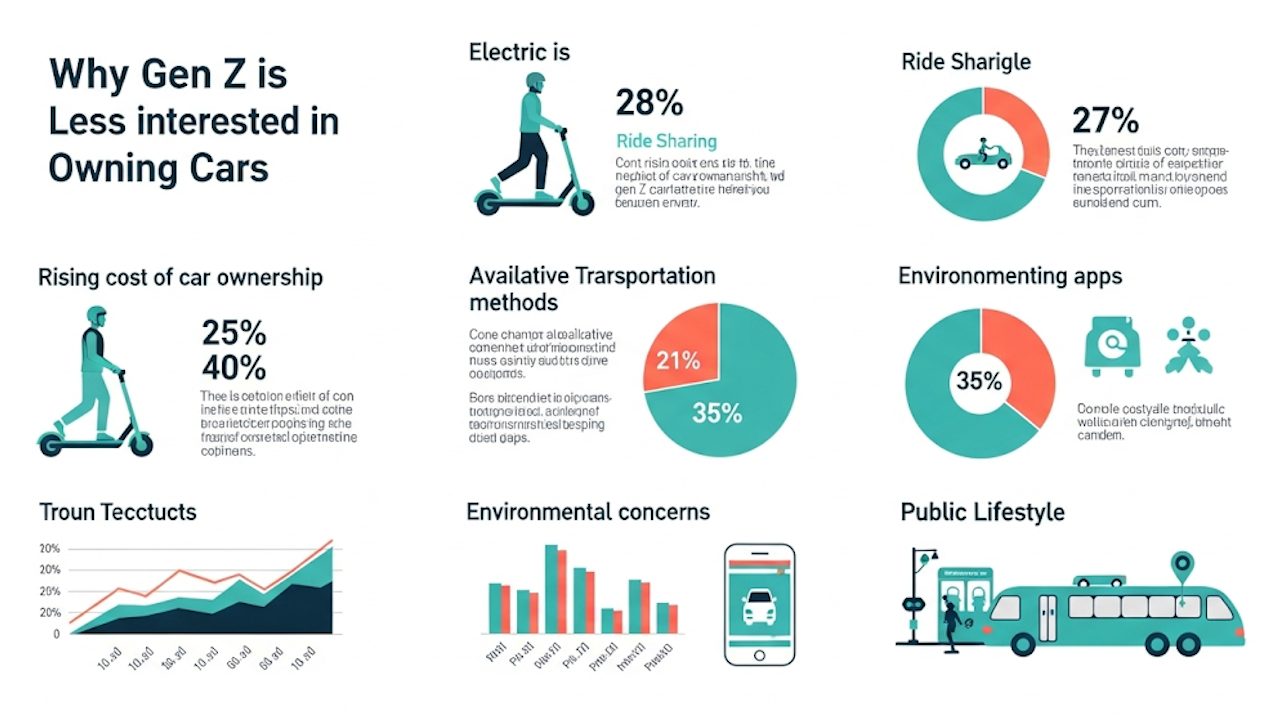
Generation Z, born roughly between 1997 and 2012, now spans teenagers to late twenties and represents a significant portion of the population entering prime car-buying years. For decades, obtaining a driver’s license and purchasing a vehicle marked a clear rite of passage into adulthood. Yet data reveals a marked departure from this pattern. In 1997, 43 percent of 16-year-olds held driver’s licenses. By 2020, that figure had fallen to 25 percent. Among adults aged 20 to 25, license possession stood at 90 percent in 1997 but dropped to 80 percent by 2020. Only 54 percent of Gen Z respondents in a major consumer survey view car ownership as important, compared with 69 percent of baby boomers.
This shift does not mean Gen Z avoids mobility entirely. Recent 2025 surveys show 66 percent using private vehicles weekly or more, a slight increase from the previous year. Many purchase their first car before age 21, often opting for used models. Nevertheless, the share of new-vehicle registrations by adults aged 18 to 34 has declined from 12 percent in early 2021 to below 10 percent in recent quarters. New-car purchase intention sits at just 29 percent for Gen Z, lower than for millennials or older groups. The reasons behind this tempered enthusiasm for ownership run deep, spanning economics, technology, culture, environment, and lifestyle. Understanding them offers insight into broader changes in how young adults navigate daily life and what it means for transportation systems ahead.
Economic Realities Create a High Barrier to Entry
Financial pressures stand as the most immediate and tangible deterrent. The average price of a new car has climbed sharply in recent years, reaching approximately 44,600 dollars. Monthly payments have risen 30 percent over four years, with nearly one in five new vehicles now carrying payments above 1,000 dollars. For many in Gen Z, these numbers simply do not fit within tight budgets shaped by student debt, stagnant real wages, and escalating costs for housing and essentials.
College tuition has more than doubled since the 1970s, leaving graduates with loan balances that often take years to repay. At the same time, entry-level salaries have not kept pace with inflation in living expenses. Rent, once averaging around 350 dollars per month in the mid-1980s, now commonly exceeds 1,100 dollars in many markets. Young adults must prioritize rent, food, utilities, and debt repayment over a depreciating asset that demands ongoing fuel, insurance, and repair outlays. Surveys consistently rank affordability as the top obstacle: 34 percent of Gen Z cite inability to afford the desired vehicle, 24 percent highlight excessive maintenance costs, and 31 percent point to high interest rates.
Insurance adds another layer of strain. Young drivers face some of the highest premiums, sometimes hundreds of dollars monthly, due to limited driving history and statistical risk profiles. Supply-chain disruptions and broader inflation have compounded vehicle prices, making even modest used cars feel out of reach for those starting careers or still in school. In this environment, ownership feels like an unnecessary financial burden rather than an empowering step. Many delay the decision or skip it altogether, viewing the capital tied up in a car as better allocated elsewhere.
The Convenience of Shared and On-Demand Mobility
Ride-sharing platforms, public transit improvements, and micromobility options have fundamentally altered the calculus of getting around. Apps such as Uber and Lyft allow users to summon a ride within minutes, often at a fraction of the total cost of ownership. Electric scooters and bike-share programs fill gaps in urban areas, while expanded bus and rail networks provide reliable alternatives in cities. For Gen Z, who grew up with smartphones as extensions of daily life, these tools feel intuitive and sufficient.
Urban residents in particular see little need for a personal vehicle when parking is scarce, traffic is heavy, and alternatives abound. College campuses and early-career neighborhoods frequently offer robust transit passes or discounted shared services. The flexibility of paying only for the trip used appeals to those whose schedules fluctuate with classes, internships, part-time jobs, or social plans. Ownership, by contrast, demands constant attention: registration, inspections, oil changes, and the risk of breakdowns. When a shared ride or transit option handles the same route without those responsibilities, the appeal of a garage-bound car diminishes.
Environmental Awareness Shapes Mobility Choices
Gen Z stands out for its heightened concern about climate change and personal carbon footprints. Growing up amid widespread discussions of global warming, extreme weather events, and sustainability campaigns has instilled a preference for lower-impact transportation. Traditional internal-combustion vehicles rank low on their list of environmentally friendly options, while walking, cycling, public transit, and electric alternatives rank higher. This perspective encourages many to question whether owning a car aligns with their values.
Interest in electric vehicles exists, yet practical hurdles persist. Upfront costs, charging infrastructure gaps, and range anxiety deter some despite long-term savings on fuel. Recent data even shows a modest decline in Gen Z enthusiasm for EVs, from higher peaks a few years ago, as economic pressures weigh heavier than idealistic goals. Still, the generational ethos favors reducing personal vehicle reliance where possible. Many opt for multimodal routines that minimize driving altogether, such as combining biking with occasional rideshares. This conscious choice reflects a broader cultural shift: mobility is valued, but ownership is not automatically equated with responsibility or status.
Lifestyle Priorities and Digital Nativism
Beyond dollars and emissions, Gen Z approaches life with different priorities than earlier generations. Experiences often trump possessions. Travel, hobbies, social connections, and personal growth take center stage. Remote and hybrid work arrangements, accelerated by recent global events, have reduced or eliminated daily commutes for many. When a car sits idle most days, the rationale for owning one weakens.
As digital natives, Gen Z came of age with instant access to information, entertainment, and social interaction online. Video calls, streaming services, and e-commerce reduce the need for physical travel in ways previous generations could scarcely imagine. Independence no longer hinges solely on car keys; it arrives earlier through smartphones and later through delayed traditional milestones such as homeownership or marriage. Research comparing licensing rates between millennials (teens in 2009) and Gen Z (teens in 2017) attributes part of the decline to increased educational trips and immersion in a digital world where cars feel less essential for freedom.
Obtaining a driver’s license requires time, money for lessons and tests, and access to a practice vehicle. For teens balancing academics, extracurriculars, and part-time work, the payoff may seem distant. Some cite anxiety around driving or simply lack the immediate need in walkable or transit-rich environments. The result is a generational postponement of licensure and ownership that compounds over time.
Urbanization, Policy, and Infrastructure Trends
Demographic patterns reinforce these choices. A larger proportion of Gen Z lives in or near major cities compared with previous generations at the same age. Dense urban cores emphasize transit, cycling lanes, and pedestrian-friendly design. Parking fees, congestion charges, and limited space make car storage expensive and inconvenient. National and local policies increasingly support alternatives, including investments in high-speed rail corridors and expanded public transit networks. These systemic factors make car ownership less practical and less necessary.
In Europe and parts of Asia, similar patterns appear even more pronounced, with higher adoption of shared-mobility bundles and leasing options that integrate ride-hailing or scooter access. Gen Z consumers in these markets show openness to reducing private-car reliance in favor of integrated multimodal plans.
Nuances and Counter-Trends in Recent Data
The picture is not uniformly one of rejection. Some 2025 surveys indicate Gen Z driving more frequently than in prior years, with private-vehicle usage rising and infrequent use dropping. Many still value cars for personal freedom, safety, and control, especially in suburban or rural settings where alternatives are sparse. A notable share purchases vehicles early in life, albeit often used models or through creative financing. Enthusiast interest in certain cars persists among subsets of the generation.
These data points suggest pragmatism rather than outright abandonment. Gen Z may own cars when circumstances demand it but approach the decision transactionally, without the emotional or cultural weight previous generations assigned. They weigh total cost of ownership carefully and remain open to future technologies such as improved autonomy or subscription services that could lower barriers. The overall trend, however, remains a reduced emphasis on traditional ownership compared with baby boomers or even millennials at equivalent life stages.
Implications for the Automotive Industry and Society
Automakers and dealers face a clear mandate to adapt. Affordability must take center stage through smaller, lower-priced models, attractive financing, and value-oriented used-car programs. Digital-first buying experiences appeal strongly to Gen Z, who report feeling overwhelmed by traditional dealership processes more than older buyers. Simplifying choices, offering transparent pricing, and integrating online tools could recapture interest.
Sustainability messaging resonates, but it must pair with realistic solutions rather than premium pricing alone. Flexible ownership models, such as short-term leases bundled with shared-mobility credits, align with Gen Z preferences for options over commitment. As autonomous and electric technologies mature, they may address range and environmental concerns while reducing maintenance burdens.
On a societal level, lower car ownership among young adults could ease urban congestion, lower emissions, and encourage healthier active-transport habits. Yet it also raises questions about access to jobs, healthcare, and opportunities in car-dependent regions. Policymakers must ensure equitable transit expansion and support for those who still require vehicles. Over time, these shifts may accelerate a move toward mobility-as-a-service ecosystems where personal ownership becomes one option among many.
Looking Ahead
Generation Z’s tempered interest in owning cars stems from a perfect storm of economic constraints, technological alternatives, environmental values, and evolving definitions of independence. While recent upticks in driving frequency show the trend is not linear, the long-term pattern points toward selectivity and flexibility in mobility choices. Cars will likely remain relevant, but their role is changing from a default symbol of adulthood to a deliberate tool chosen only when alternatives fall short.
As this generation gains economic footing and influences markets, industries and infrastructure will need to evolve alongside them. The future of transportation may feature fewer personally owned vehicles per capita, more integrated shared systems, and greater emphasis on sustainability and convenience. For Gen Z, freedom on the road no longer requires a set of keys in every pocket. It arrives instead through whatever combination of options best fits their budgets, values, and lifestyles. The open road endures, yet the vehicles traveling it may look and function differently than in generations past.