

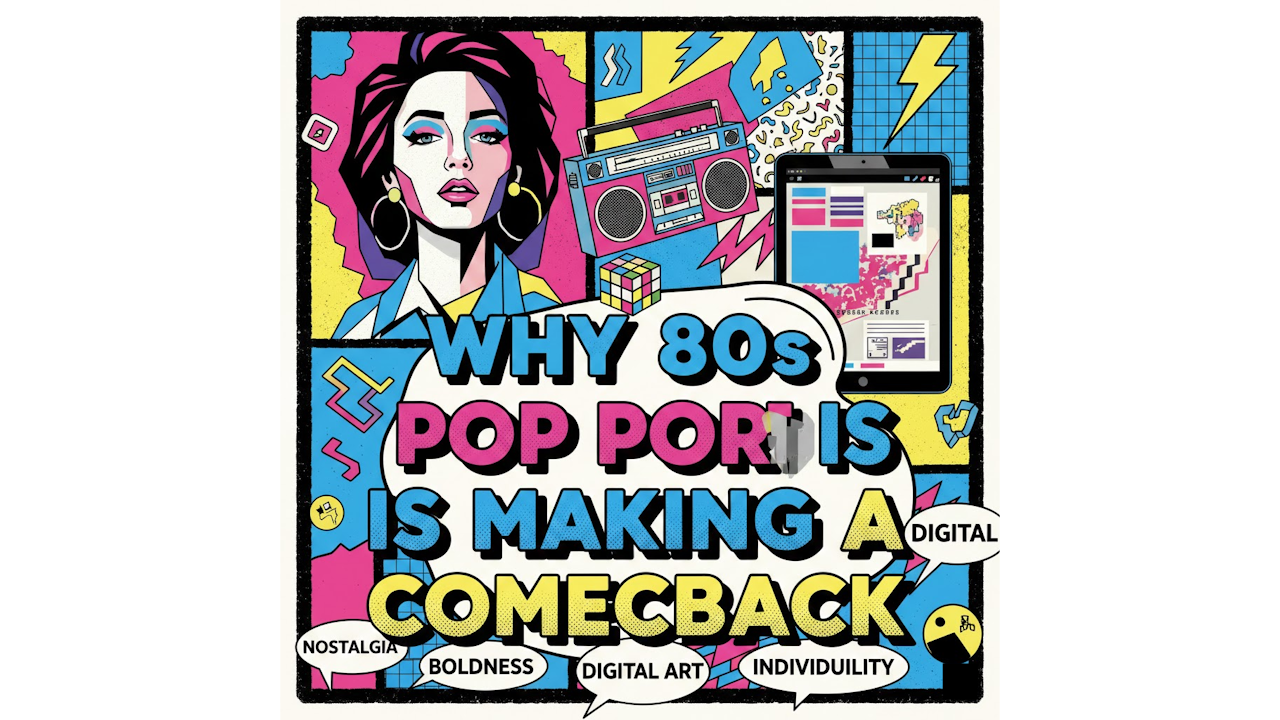
In recent years, a vibrant and unapologetically bold aesthetic has been resurfacing across galleries, fashion runways, social media feeds, and even home decor. Bright colors, graphic lines, consumer imagery, celebrity icons, and a mix of irony and celebration define this resurgence. It draws heavily from the neo-pop or 1980s pop art movement, an energetic evolution of the 1960s original. This revival feels timely in our current cultural moment, blending nostalgia with commentary on today’s hyper-visual world.
To understand the appeal, it helps to revisit the roots. Pop art first emerged in the mid-1950s in Britain and the United States, challenging traditional fine art by embracing mass media, advertising, and everyday consumer objects. Artists like Andy Warhol turned soup cans and Marilyn Monroe into icons, blurring lines between high and low culture. By the 1970s, the movement had waned amid shifts toward minimalism and conceptual art. Then came the 1980s, when a new generation revived and transformed it into what became known as neo-pop.
The 1980s version was louder, flashier, and more excessive. It mirrored the decade’s booming economy, rise of MTV, personal computers, global consumerism, and celebrity culture. Artists embraced spectacle, kitsch, appropriation, and bold visuals. They reacted against the austerity of previous trends by reintroducing figuration, pleasure, and direct engagement with popular imagery. Key figures included Jeff Koons with his shiny balloon animals and vacuum cleaners that celebrated (and critiqued) commodity fetishism, Keith Haring whose energetic lines and public murals brought street energy into galleries, and Kenny Scharf who infused playful, cartoonish elements drawn from urban life.
This era also saw influences from graffiti and street art, merging with pop sensibilities. The style featured electric colors, oversized forms, ironic takes on luxury, and a sense of maximalism that matched the decade’s shoulder pads, big hair, and synthesizer-driven pop music. It was both a celebration of abundance and a sly commentary on it.
Cultural and Economic Parallels Fueling the Revival
One major driver of the comeback is the striking similarity between the 1980s and today. Both periods feature economic booms followed by uncertainty, rapid technological change, and intense media saturation. In the 1980s, cable television and home video exploded visual culture. Today, smartphones, Instagram, TikTok, and AI-generated imagery create an even more overwhelming flood of pictures. Bold, graphic pop art cuts through the noise. Its immediate, shareable quality makes it perfect for digital platforms.
Nostalgia plays a huge role too. Millennials and Gen Xers who grew up with 1980s influences now hold cultural and economic power. They seek comfort in familiar aesthetics during turbulent times. Meanwhile, younger generations discover the era through shows like Stranger Things, retro playlists on streaming services, and vintage fashion revivals. Old music accounts for a large share of streams, and 1980s-inspired sounds appear in hits by artists like The Weeknd and Dua Lipa. This sonic nostalgia spills over into visual realms.
Fashion has been a key vector for the revival. Runways and street style frequently reference 1980s excess: oversized silhouettes, neon accents, bold prints, and graphic motifs. Influencers recreate 1980s scenes in dead malls or vintage outfits, going viral and inspiring new audiences. Designers draw from the era’s playful mixing of high and low, much like neo-pop artists did. This extends to accessories, home goods, and even album covers that echo the bright, illustrative style.
The Role of Social Media and Digital Culture
Social media algorithms favor eye-catching, colorful content. 1980s pop art aesthetics thrive here because they are instantly recognizable and emotionally resonant. Filters, memes, and digital art tools allow anyone to experiment with pop-inspired looks. NFT markets and digital collectibles in the early 2020s echoed Warhol’s multiples and Koons’ commodification themes, though with new technology.
Contemporary artists build on this foundation. Some revisit consumer icons with updated twists, critiquing fast fashion, social media influencers, or environmental impact through plastic-like forms and mass-produced imagery. Others blend pop with street art, digital glitches, or global perspectives, creating “glocal” versions that speak to local issues within universal visual languages. The movement’s flexibility allows it to address today’s concerns like identity, technology, and sustainability while retaining its fun, accessible core.
Galleries and auctions reflect renewed interest. Works by 1980s icons command high prices, and younger artists inspired by them gain attention. Exhibitions revisit the New York scene of the era, highlighting connections between Haring, Basquiat, Warhol, and others. This historical appreciation coincides with market demand for bold, statement-making pieces that stand out in modern interiors.
Broader Societal Reasons
Several deeper factors contribute. In an age of information overload, pop art’s clarity and directness offer relief. Its ironic yet celebratory tone suits a culture that both mocks and embraces consumerism. Celebrity and influencer culture echo the 1980s fascination with stardom, making appropriation of faces and brands feel relevant. Economic inequality and questions of value in art mirror past debates, giving neo-pop strategies fresh bite.
The DIY spirit of 1980s street art resonates with today’s maker culture and social activism. Haring’s public works inspire murals and community projects. The movement’s inclusivity, crossing fine art with popular forms, appeals to diverse creators. Global versions, such as political pop in other regions, show how the style adapts across cultures.
Fashion and music cross-pollination strengthens the trend. Synthwave and retrowave sounds pair naturally with visual aesthetics featuring neon, grids, and retro futurism. Home decor trends include pop-inspired prints, posters, and furniture that add energy and personality. Brands use the style in marketing for its youthful, memorable impact.
Examples in Contemporary Practice
Modern creators draw explicit inspiration. Some produce portraits of 1980s music icons in graphic styles reminiscent of the era. Others experiment with paint markers or digital tools to capture bold outlines and comic-like imagery. Interior designers incorporate 1980s pop elements into spaces for instant vibrancy. Even product design, from apparel to accessories, features the flashy, excessive language.
The revival is not purely nostalgic. Artists update the approach for current issues. Digital pop addresses screen culture and algorithms. Eco-pop critiques plastics and consumption through ironic use of synthetic materials. These evolutions keep the movement alive rather than frozen in the past.
Critics note that in a fragmented cultural landscape, pop art provides shared references. Its accessibility democratizes art appreciation, much as it did decades ago. At the same time, sophisticated layers of meaning satisfy those seeking commentary on society.
Challenges and Criticisms
Not everyone embraces the trend without reservation. Some argue that heavy commercialization dilutes the critical edge, turning subversion into decoration. Others worry about superficial nostalgia that ignores the era’s complexities, such as economic divides or the AIDS crisis that affected artists like Haring. Yet many creators navigate these tensions by infusing works with contemporary awareness, ensuring relevance.
The cycle of revival itself reflects art history patterns. Styles return as new generations reinterpret them. The 1980s neo-pop already revived 1960s pop; today’s version builds on both with added technological and global layers.
Looking Ahead
As we move further into the 2020s and beyond, 1980s pop art influences show no signs of fading. Its combination of joy, critique, boldness, and accessibility fits an era hungry for both escapism and engagement. Whether through major museum retrospectives, independent artist studios, viral social content, or everyday consumer products, the aesthetic continues to evolve.
This comeback reminds us that art movements are never truly gone. They adapt, resurface, and gain new meanings. In embracing the flashy, graphic, and iconic language of 1980s pop art, contemporary culture reconnects with a time of big dreams and bold statements while addressing today’s realities. The result is a lively dialogue between past and present that enriches visual culture for everyone.
The vibrant lines, saturated hues, and cultural reflections keep drawing us in, proving that some aesthetics are timeless in their ability to capture the spirit of their age and speak to new ones. As more creators and audiences engage with this revival, 80s pop art solidifies its place not just as nostalgia but as a living, breathing part of our ongoing artistic conversation.