

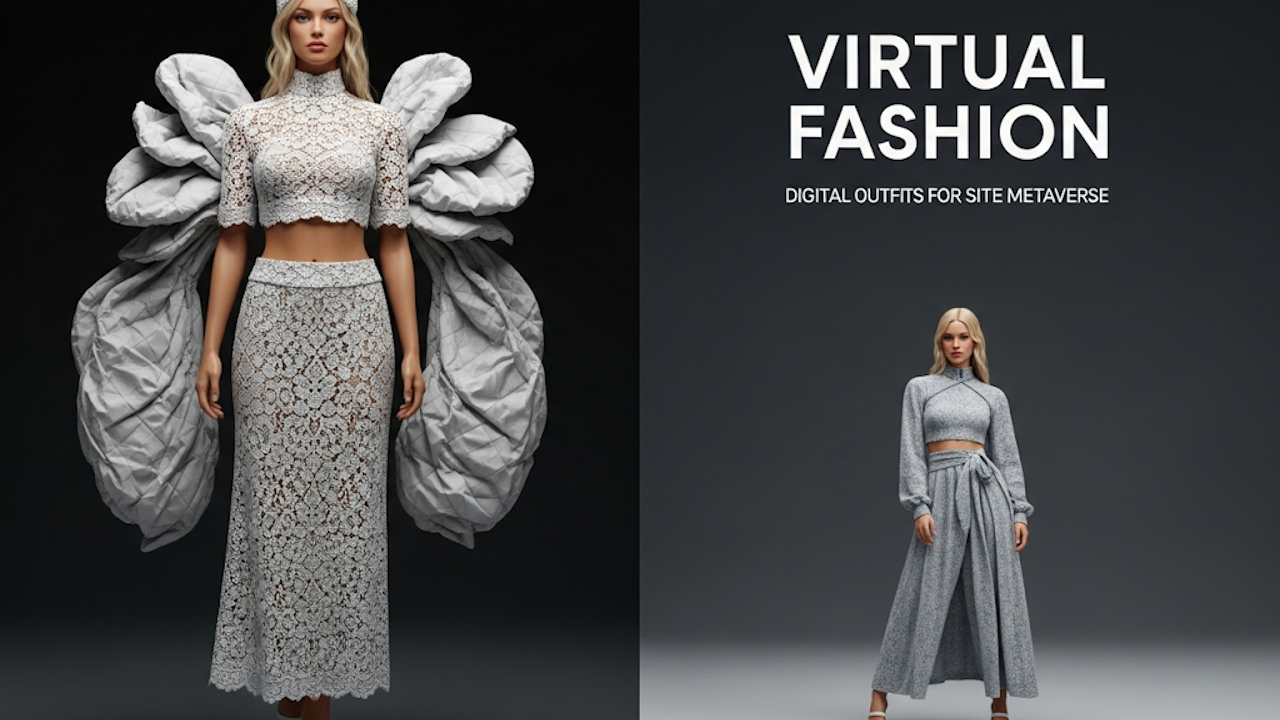
The fashion industry stands at a pivotal crossroads where pixels have become as coveted as fabric. Virtual fashion, often called digital clothing or metaverse wearables, refers to garments and accessories designed exclusively for avatars in immersive digital environments. These outfits exist purely in the virtual realm, allowing users to dress their online personas in styles that range from hyper-realistic replicas of real-world couture to fantastical creations impossible to produce physically. As the metaverse expands, virtual fashion has evolved from a niche curiosity in early online games into a multibillion-dollar sector reshaping how people express identity, consume style, and even think about ownership.
This shift reflects broader changes in how society interacts with technology. In the metaverse, users spend hours in virtual spaces for socializing, gaming, working, and shopping. Their avatars become extensions of self, and clothing serves as a powerful tool for self-expression. Unlike physical fashion, which faces constraints of materials, sizing, and seasonality, digital outfits offer limitless customization, instant changes, and global accessibility. A single designer can reach millions without factories, supply chains, or shipping delays. As of 2026, the fashion metaverse market has reached approximately 4.42 billion dollars and continues expanding rapidly, driven by immersive technologies and consumer demand for personalized digital experiences.
The roots of virtual fashion trace back decades, long before the term metaverse entered mainstream vocabulary. Early experiments appeared in online worlds such as Second Life, launched in 2003, where users bought and sold digital clothing for their avatars using in-world currency. These items were simple 3D models layered onto customizable characters, but they demonstrated the appeal of virtual self-presentation. Gaming platforms like World of Warcraft and The Sims further popularized digital attire, though it remained tied to gameplay rather than standalone fashion statements.
The real acceleration began around 2020 with the rise of non-fungible tokens, or NFTs, on blockchain networks. Suddenly, digital clothing gained verifiable scarcity and ownership. Brands and independent designers minted unique outfits as NFTs, allowing buyers to prove authenticity and resell them on secondary markets. The 2021 NFT boom propelled virtual fashion into the spotlight, with high-profile sales capturing headlines. By the mid-2020s, the sector had matured beyond speculation. Platforms integrated advanced 3D rendering, augmented reality overlays, and cross-platform compatibility, turning digital outfits into everyday staples for avatar wardrobes. What started as pixelated shirts in virtual chat rooms has become sophisticated, physics-simulated garments that drape, flow, and react to movement in real time.
At its core, a digital outfit consists of layered 3D models, textures, and animations compatible with specific avatar systems. Designers use software like Blender, CLO3D, or specialized metaverse tools to sculpt garments that conform to body shapes, support animations such as walking or dancing, and incorporate effects like shimmering fabrics or dynamic patterns. These files are lightweight enough for real-time rendering yet detailed enough to appear photorealistic under virtual lighting. Users equip outfits via simple inventory menus, swapping entire looks in seconds. Some platforms support partial layering, letting avatars mix a virtual jacket over a base shirt or add accessories like jewelry and hairstyles.
Interoperability remains a key technical goal. Ideally, a single outfit purchased on one platform could transfer seamlessly to another. Standards such as ERC-721 for NFTs and emerging protocols for 3D assets aim to make this possible, though full cross-platform support is still developing. In practice, many outfits remain platform-specific for now, optimized for the unique avatar engines of each world.
Several platforms dominate the virtual fashion landscape in 2026. Roblox leads with its massive user base of young creators and players. The platform hosts thousands of experiences where users buy, trade, and showcase digital clothing using Robux currency. Fashion brands have built dedicated worlds within Roblox, turning them into virtual malls and runways. Fortnite, another gaming giant, integrates cosmetic skins and outfits into its battle royale and creative modes. Limited-time collaborations turn digital attire into cultural events, with players eager to unlock rare looks.
Decentraland and The Sandbox represent blockchain-native metaverses. Built on Ethereum and other networks, these decentralized worlds emphasize user ownership. Land parcels function as virtual real estate, and wearables trade as NFTs on integrated marketplaces. Users attend virtual fashion weeks, browse designer stores, and even host their own shows. Meta’s Horizon Worlds and other VR-focused spaces prioritize immersive social interactions, where avatars mingle in 3D environments and try on outfits in real time. Additional platforms like Zepeto and Spatial cater to mobile-first audiences, broadening access beyond high-end VR hardware.
Major fashion houses have embraced these ecosystems with enthusiasm. Gucci pioneered the space with its Gucci Garden experience on Roblox, where visitors explored a digital replica of the brand’s Florence archive and purchased exclusive virtual items. The Italian luxury label followed with NFT drops and collaborations, including partnerships that blended physical and digital elements. Nike acquired RTFKT, a digital sneaker studio, and launched Nikeland within Roblox, complete with mini-games and customizable athletic wear. Visitors could earn virtual shoes through challenges and wear them across experiences.
Louis Vuitton celebrated its anniversary with a mobile game featuring NFT rewards and virtual trunks. Adidas created immersive showrooms and collaborated with Bored Ape Yacht Club for limited-edition digital gear. Balenciaga, Burberry, and Prada have all staged virtual events or released collections tailored for avatars. These moves are not mere experiments. They generate new revenue streams while engaging younger demographics who spend significant time online. Traditional retailers and fast-fashion labels have followed suit, recognizing that virtual fashion lowers barriers to entry for emerging designers and democratizes high-end aesthetics.
The technologies powering virtual fashion combine several cutting-edge fields. Blockchain ensures ownership and provenance through NFTs, preventing counterfeiting and enabling royalties for creators on resales. 3D modeling and real-time rendering engines, often powered by Unreal Engine or Unity, deliver lifelike visuals. Augmented reality allows users to preview digital outfits on their real bodies via smartphone cameras, bridging the gap between virtual and physical worlds. Artificial intelligence accelerates design by generating patterns, suggesting color palettes, and even simulating fabric behavior under different lighting conditions.
Sustainability emerges as one of the strongest arguments for virtual fashion. Traditional clothing production consumes vast resources. A single physical garment can require thousands of liters of water and emit significant carbon dioxide during manufacturing, dyeing, and transport. Digital outfits eliminate these impacts almost entirely. One analysis indicates that producing a virtual garment emits up to 97 percent less carbon dioxide and uses no water at all. Brands can prototype designs digitally, reducing the need for physical samples that often end up in landfills. Consumers avoid overconsumption cycles by refreshing wardrobes instantly without waste.
Economically, virtual fashion creates opportunities beyond physical retail. Designers earn directly from sales and secondary markets, bypassing traditional gatekeepers. Independent creators build thriving businesses selling unique looks on NFT marketplaces. Brands tap into new demographics, fostering loyalty through exclusive events and limited drops. The sector also stimulates related industries, from 3D artists to virtual event planners. Market projections vary, but analysts consistently forecast strong growth, with some estimating the broader digital clothing space expanding at compound annual rates exceeding 25 percent through the 2030s.
Despite its promise, virtual fashion faces notable challenges. Interoperability issues frustrate users who want their favorite outfit to appear consistently across platforms. Technical fragmentation means an asset optimized for Roblox may not render correctly in Decentraland without costly adaptations. Intellectual property concerns persist, as copying digital designs remains easier than replicating physical couture, though blockchain tracking helps mitigate theft.
Adoption barriers include the digital divide. Not everyone owns the hardware or possesses the technical literacy to navigate metaverse platforms. Environmental critiques of blockchain, particularly energy use in older proof-of-work networks, have drawn scrutiny, although newer proof-of-stake systems have reduced footprints dramatically. Overhype from the early NFT era led to market corrections, leaving some observers skeptical about long-term viability. Privacy and security also matter, as avatars linked to real identities could expose users to data risks in open virtual spaces.
Success stories illustrate the potential despite these hurdles. In 2022 and beyond, virtual fashion weeks in Decentraland attracted global audiences, featuring runway shows streamed to thousands. Brands reported strong engagement metrics, with participants spending more time in immersive experiences than in traditional digital advertising. Independent designers have sold collections for thousands of dollars per piece, proving that creativity, not just brand prestige, drives value. Gaming communities have turned outfit trading into a vibrant economy, with rare skins commanding premium prices on secondary markets.
Looking forward, several trends will define the next phase of virtual fashion. Artificial intelligence will streamline design workflows, allowing creators to iterate faster and personalize outfits at scale. Generative tools could produce infinite variations based on user preferences, making every avatar truly unique. Augmented reality will expand beyond try-ons into everyday life, letting people overlay digital accessories onto real-world video calls or social feeds. Phygital experiences, which blend physical and digital elements, will grow in popularity. A buyer might purchase a physical jacket and receive its virtual twin automatically, wearable in the metaverse while the real item hangs in their closet.
Interoperability standards are likely to advance, supported by industry consortia and open-source protocols. This would unlock true ownership, where a digital outfit travels with the user across worlds like a passport. Sustainability-focused initiatives may incorporate digital product passports on blockchain, tracing both virtual and physical items for transparency. Social and cultural shifts will continue as younger generations prioritize digital identity. Gen Z and Millennials already view virtual fashion as a legitimate form of self-expression, on par with physical trends.
In conclusion, virtual fashion represents more than a technological gimmick or marketing ploy. It signals a fundamental reimagining of the fashion industry, one where creativity flourishes without material limits, sustainability improves, and access expands to anyone with an internet connection. Digital outfits for the metaverse empower users to experiment boldly, express individuality, and participate in a global creative economy. As platforms evolve and technologies mature, the line between real and virtual style will blur further, creating hybrid experiences that enrich both worlds. The future of fashion is not confined to hangers or runways. It lives in the infinite canvas of the metaverse, where every pixel tells a story and every outfit invites endless possibility.