

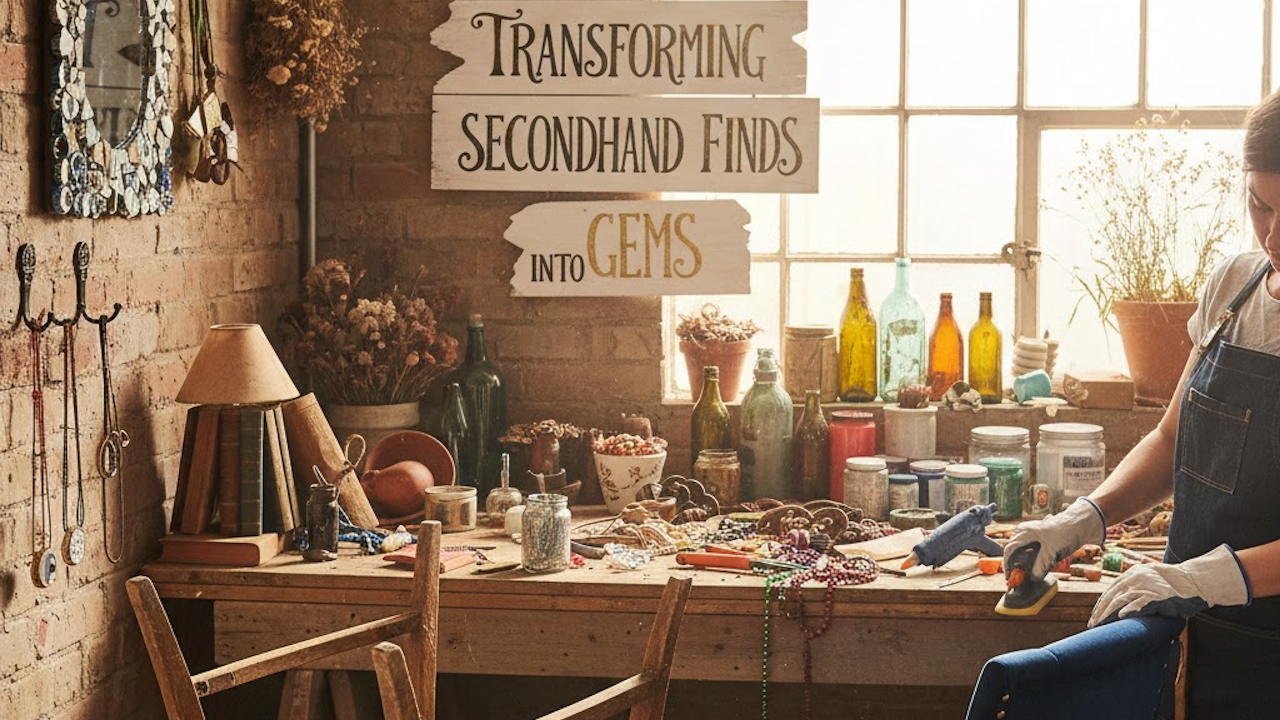
The hunt begins in crowded aisles or cluttered tables where time has left its mark on once loved objects. A chipped teapot sits beside a stack of faded linens. A wooden frame with peeling gilt leans against a bin of mismatched hardware. These secondhand finds carry stories from previous homes and owners, yet many people walk past them without seeing the potential that lies beneath the dust and wear. The real reward comes when those overlooked items receive thoughtful attention and emerge as something fresh, beautiful, and personal. This process of transformation turns ordinary secondhand pieces into genuine gems that brighten homes, refresh wardrobes, and express individual creativity.
Secondhand shopping offers far more than lower prices. It supports a circular approach to consumption that keeps usable materials in circulation instead of sending them to landfills. Every rescued garment or piece of furniture reduces the demand for new resources and the energy required to manufacture replacements. At the same time, the practice delivers unmatched character. Mass produced items rarely carry the patina of age or the subtle irregularities that make a transformed piece feel alive. A dresser refinished by hand or a blouse altered to fit perfectly becomes a conversation starter and a source of quiet pride for its new owner.
Success starts with knowing what to look for during the search. Solid construction matters more than perfect appearance. Check wooden furniture for sturdy joints and minimal warping. Examine clothing seams for strength and fabric for stains that might respond to treatment. Glass and ceramic pieces should be free of large cracks, though small chips can often be hidden or incorporated into the design. Hardware such as knobs, hinges, and pulls frequently survives in good condition even when the surrounding piece needs work. Color and style can be changed, but poor underlying quality cannot be fixed easily. Patience and a discerning eye turn random browsing into a purposeful treasure hunt.
Preparation forms the foundation of every successful project. Begin by cleaning thoroughly. A gentle wash with mild soap and water removes surface grime from most nonporous items. Textiles benefit from a hot wash cycle or a careful hand cleaning followed by air drying. Wood surfaces may need light sanding to smooth rough spots and help new finishes adhere. Take time to assess each piece honestly. Note areas of damage, missing parts, and overall proportions. Sometimes the best decision is to pass on an item that would require more effort than the result justifies. Other times, a single flaw becomes the starting point for an imaginative solution.
Fashion and accessories offer some of the most accessible entry points into transformation. A simple cotton dress with an outdated neckline can be updated by removing the collar and adding a contrasting fabric facing. Jeans that no longer fit can be cut into shorts or turned into a sturdy tote bag with minimal sewing. Sweaters with holes in the elbows become cozy pillows or blanket squares when felted and stitched together. Dyeing provides another powerful tool. A faded cotton shirt or set of linen napkins can be submerged in a natural or commercial dye bath to create a fresh, coordinated look. Embellishments such as patches, embroidery, or fabric paint allow further personalization without advanced skills. Even costume jewelry finds new purpose when cleaned with a baking soda paste and vinegar solution, then restrung on fresh cord or turned into magnets and hair accessories.
Home decor transformations often deliver the most dramatic before and after moments. Picture frames serve as the backbone of many projects. Several matching frames painted the same color and hung in a grid create an instant gallery wall. A single large frame can become a serving tray when fitted with a piece of glass or sealed wood. Old wooden crates stack into modular storage or mount on the wall as rustic shelving. Vases and glass bottles clean up beautifully with a soak in vinegar water followed by polishing. Some crafters tint clear glass with diluted paint or turn bottles into pendant lights by adding simple hardware. Teapots and teacups find second lives as flower vases or small planters when drainage holes are added carefully with a specialized drill bit.
Furniture makeovers reward patience with striking results. A tired side table or nightstand often needs only sanding, a coat of primer, and fresh paint in a color suited to the room. Distressing the edges after painting reveals hints of the original wood and adds character. Hardware updates change the entire personality of a piece. Replacing plastic knobs with ceramic or brass pulls instantly elevates a basic dresser. Reupholstering a chair seat requires basic tools and fabric but transforms a sagging seat into a comfortable focal point. Even larger items such as doors or shutters become headboards, room dividers, or decorative wall art when cleaned, painted, and mounted creatively.
Jewelry boxes and small wooden containers invite detailed surface work. After removing old linings, a coat of chalk paint followed by decoupage with patterned napkins or tissue paper creates a custom look. Light distressing and new hardware complete the refresh. Silver platters and trays respond well to chalk paint applied lightly so some of the original pattern shows through. These pieces then function as wall art, decorative catchalls, or serving pieces depending on the finish chosen.
Several projects illustrate the range of possibilities with clear steps. Consider a wooden jewelry box found for a few dollars. First, remove the fabric lining and any loose hardware. Lightly sand the exterior to create a smooth base. Apply two thin coats of white chalk paint, allowing full drying time between coats. Cut a decorative napkin into panels that fit the top, sides, and drawer fronts. Brush decoupage glue onto the painted surface, lay the napkin carefully to avoid wrinkles, and seal with additional glue layers. Add a light sanding to the edges for a worn look, then attach new knobs or pulls. The finished box looks custom and coordinates with any bedroom or dressing area.
Another approachable project uses an old wooden tray. Clean the surface thoroughly and sand lightly if needed. Paint the outer rim in a soft driftwood gray or other neutral tone. Inside the tray, apply decoupage glue and position a sheet of decorative paper or a large scale napkin design. Smooth carefully and seal with multiple thin coats of glue or a protective varnish. The result serves as a stylish catchall for keys and mail or as a base for a seasonal tablescape.
A third example involves turning a simple hard cover book into decorative art. Remove the pages carefully if only the cover is wanted, or keep the book intact for a different effect. Paint the cover in a solid color or apply decoupage images from other printed materials. Once dry, the book can stand on a shelf as sculpture, serve as a riser for a small plant, or join a stack that forms a unique side table base. These projects require modest supplies and time yet produce pieces that feel far more valuable than their original cost.
Challenges arise in almost every transformation, yet most have straightforward solutions. Stubborn odors in textiles or wood can be addressed by airing items outdoors for several days or using an odor eliminating spray safe for the material. Missing hardware can be replaced with new or salvaged pieces from other finds. Lack of advanced skills should not discourage beginners. Many beautiful results come from simple painting, gluing, and basic stitching. Online tutorials and community workshops provide guidance when needed. The key is starting small and building confidence with each completed piece.
The practice also builds community. Thrift stores, garage sales, and online marketplaces connect people who share an appreciation for resourceful creativity. Social media groups dedicated to upcycling share successes and troubleshooting advice freely. Local repair cafes and maker spaces sometimes host events focused on giving new life to old objects. These connections reinforce the idea that transforming secondhand finds is not a solitary hobby but part of a larger movement toward mindful consumption.
Over time, the habit of seeing potential everywhere changes how a person interacts with the material world. A walk through a secondhand shop becomes less about acquisition and more about possibility. The satisfaction of wearing a garment that was altered by hand or displaying a lamp made from a rescued vase far exceeds the fleeting pleasure of buying something new and identical to everyone else’s. Each gem created carries the quiet knowledge of its journey from discard to delight.
The environmental benefits accumulate with every project. Less waste enters the landfill. Fewer new items are manufactured. Resources already extracted continue to serve useful purposes. At the same time, the aesthetic reward is deeply personal. A home filled with transformed pieces tells a story of care, ingenuity, and attention that no catalog arrangement can replicate.
Beginning the practice requires little more than curiosity and a willingness to experiment. Start with one small item that catches the eye. Clean it, consider its possibilities, and take the first step toward renewal. The results may surprise even the most hesitant beginner. What was once overlooked becomes a source of daily pleasure. What was once discarded becomes a gem that enriches both the space it occupies and the person who brought it back to life. In this way, secondhand finds continue their stories in new and beautiful chapters.