

In an era dominated by towering stadium tours, laser-lit spectacles, and meticulously layered studio productions, the appeal of NPR’s Tiny Desk Concerts stands out as something profoundly simple yet revolutionary. Picture this: a musician or band squeezed behind a cluttered office desk, surrounded by a handful of NPR staffers who double as the audience, performing songs with little more than a guitar, a keyboard, or a few handheld instruments. No pyrotechnics. No backing tracks. No Auto-Tune. Just voices, strings, keys, and the occasional percussion, all captured in raw, unfiltered glory. What began as a casual experiment in 2008 has grown into a cultural touchstone, proving time and again that music’s greatest power often emerges when everything extraneous is stripped away. This is the story of Tiny Desk Concerts and the enduring magic of stripped-down music, a format that reminds us why live performance still matters in a world of infinite digital distractions.
The origins of Tiny Desk trace back to a moment of frustration at the South by Southwest festival in Austin, Texas, in 2008. Bob Boilen, then the creator and host of NPR’s All Songs Considered, and his colleague Stephen Thompson had ventured to see a set by folk singer-songwriter Laura Gibson. The venue was packed and noisy, the sound system inadequate for the intimate folk style Gibson brought to the stage. Unable to hear much of anything over the crowd chatter, Thompson turned to Boilen with a half-joking suggestion: why not invite her to play right at Boilen’s desk back at the NPR offices in Washington, D.C.? It was meant as a quip, a way to highlight the absurdity of trying to appreciate quiet music amid chaos. But Boilen, with his background in television production and audio engineering, saw potential. A few weeks later, when Gibson was touring through D.C., she took them up on the offer. She performed a short set in the NPR Music offices, perched literally behind Boilen’s workspace. The video, shot simply with a couple of cameras and edited by Boilen himself, was uploaded to the NPR website. In the introduction, Boilen and Thompson appeared on camera to explain the lark, wondering aloud if it might be the start of something or perhaps nothing at all.
That first session, featuring Gibson’s gentle, introspective folk tunes, marked the birth of what would become Tiny Desk Concerts. The name itself carried a layer of personal history. Boilen had once played in a 1970s psychedelic dance band called Tiny Desk Unit, a fact that inspired the playful title when the series needed one. Early installments were sporadic and low-key, posted on a simple blog. The second concert came courtesy of producer Robin Hilton, who invited Vic Chesnutt. Others followed, including artists like The Avett Brothers and Death Cab for Cutie. What started as an in-house curiosity quickly gained traction through word of mouth and online shares. Viewers were drawn not just to the performances but to the intimacy of the setting. Here was music presented without pretense, in a space that felt like an extension of everyday life rather than a manufactured stage.
Over the years, the format solidified into something instantly recognizable. Performers arrive at NPR’s headquarters, often with minimal gear. A typical set lasts around 15 to 20 minutes, featuring three to five songs rearranged for the confined space. The desk itself remains Boilen’s actual workspace, complete with computer monitors, papers, and personal touches that ground the experience in reality. The audience, limited to NPR employees, sits close enough to make eye contact with the artists. No elaborate lighting or sound engineering beyond basic microphones. This restraint forces creativity. Artists must adapt their hits or deep cuts to acoustic arrangements, highlighting nuances that full-band productions might obscure. A booming anthem becomes a hushed ballad. A complex electronic track transforms into something played on a single keyboard or looped pedals. The result is vulnerability laid bare.
Bob Boilen served as the primary host and producer for more than a decade, personally overseeing hundreds of sessions until his retirement from NPR in late 2023. Under his guidance, and later with successors like Robin Hilton and Bobby Carter, the series expanded dramatically. By the mid-2010s, Tiny Desk had become a platform that could launch careers or revitalize them. Emerging indie acts found themselves sharing space with established stars. The series diversified over time, moving beyond its early focus on indie rock and folk to embrace hip-hop, R&B, world music, and more. Critics initially noted a narrower scope in the early days, often centered on what some described as hipster-infused indie sounds, but the lineup evolved to include everyone from T-Pain to Usher, from Hozier to Dua Lipa.
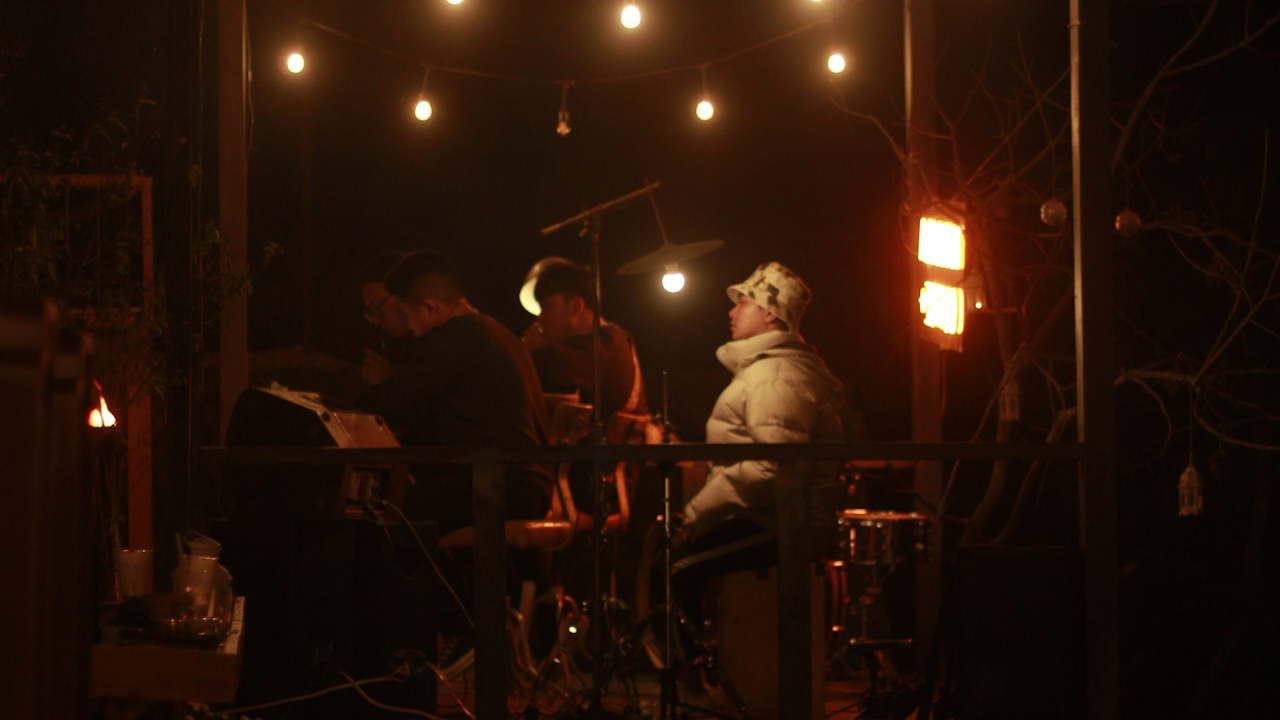
The true turning point in Tiny Desk’s reach came during the global pandemic in 2020. With NPR offices shuttered and live performances impossible, the team pivoted to Tiny Desk (Home) Concerts. Artists filmed their own sessions from living rooms, backyards, or makeshift home studios. The spirit remained identical: stripped-down arrangements in an intimate setting, just relocated. Dua Lipa delivered a vibrant set from her home, reimagining dance-pop tracks with acoustic elements. Jacob Collier turned his space into a one-man orchestra of layered vocals and instruments. Spanish artist C. Tangana crafted an ambitious yet simple performance that felt both ambitious and grounded. These home editions not only sustained the series through lockdowns but expanded its global footprint, inviting international acts who might never have traveled to D.C. The format proved resilient, drawing even larger audiences craving connection during isolation. What had been a niche office ritual became a lifeline for music lovers worldwide.
At its core, the power of Tiny Desk Concerts lies in the stripped-down approach to music itself. In an industry where studio wizardry can polish away imperfections and Auto-Tune can smooth every vocal waver, these performances demand authenticity. Stripped-down music strips away the scaffolding of production, exposing the bones of a song: the melody, the lyrics, the emotional core. A singer’s voice cracks with genuine feeling during a ballad, revealing the humanity behind the hit. A guitarist’s fingers dance across strings without the buffer of effects pedals, showcasing technical prowess in its purest form. This minimalism fosters a deeper listener connection. Viewers feel as though they are in the room, part of that small circle of colleagues witnessing something special rather than passive consumers of a spectacle.
Consider how this format transforms familiar songs. An artist known for high-energy anthems might slow things down, allowing lyrics to breathe and resonate in ways stadium crowds rarely allow. Themes of love, loss, struggle, or joy emerge sharper, unclouded by reverb or crowd noise. The intimacy encourages storytelling between songs, too. Artists share anecdotes about their creative process or personal inspirations, turning the performance into a conversation. This vulnerability builds trust. Fans see the musician not as a distant icon but as a fellow human pouring out their craft in a space no grander than a cubicle.
The broader appeal of stripped-down music predates Tiny Desk, of course. One can trace echoes to MTV Unplugged in the 1990s, where bands like Nirvana and Eric Clapton traded electric fury for acoustic reflection. Or to earlier folk traditions, where troubadours performed with nothing but voice and instrument in small venues. Yet Tiny Desk takes this concept further by embedding it in an everyday office environment. The contrast heightens the effect. Music that might blast from car speakers or festival stages suddenly occupies the same mundane space where people check email or eat lunch. This juxtaposition underscores a key truth: great music does not require grandeur. It requires heart, skill, and presence.
Psychologically, stripped-down performances tap into our innate craving for authenticity in a filtered world. Social media and streaming platforms bombard us with curated perfection, from flawless Instagram feeds to algorithm-optimized playlists. Tiny Desk counters that with imperfection. A missed note or a spontaneous laugh from the audience becomes part of the charm. Listeners report feeling more emotionally moved by these sessions than by polished album versions. The format also levels the playing field. A bedroom songwriter with a single guitar can stand alongside a chart-topping superstar, both judged on the same raw merits. This democratizing effect has helped countless artists gain visibility. T-Pain’s 2014 Tiny Desk, where he performed without Auto-Tune and proved his vocal mastery on ballads, went viral and reshaped perceptions of his artistry. Mac Miller’s reflective set highlighted his introspective side in ways his produced tracks only hinted at. Anderson .Paak and The Free Nationals brought funk and energy to the desk with minimal gear, showcasing how rhythm and groove thrive even in confinement.
Beyond individual careers, Tiny Desk has influenced the music industry at large. Record labels now see the value in acoustic sessions as promotional tools. Artists routinely prepare special arrangements for such intimate formats, recognizing their power to connect with fans on a personal level. The series has amassed hundreds of millions of views across its catalog, with standout performances racking up tens of millions individually. In a fragmented media landscape, where attention spans are short, Tiny Desk offers sustained engagement. Viewers often watch full sets in one sitting, drawn by the narrative arc of the performance and the quiet thrill of discovery.
Critics and fans alike praise this approach for its role in combating musical overload. In an age of constant noise, from 24-hour streaming to algorithm-driven discovery, the quiet power of a single voice or a lone piano chord cuts through. It invites active listening rather than passive consumption. Lyrics that might get lost in a dense mix suddenly demand attention, revealing poetic depth or social commentary previously overlooked. For genres like hip-hop or R&B, where production often defines the sound, the stripped-down version forces a reevaluation. Rhymes land with precision when unadorned. Vocal runs showcase control without digital assistance. The result is a renewed appreciation for craft over spectacle.
Of course, not every artist thrives equally in this environment. Some require the full sonic palette of their bands or electronic elements to shine. Yet even those who adapt successfully often discover new facets of their own work. The constraint sparks innovation. A drummer might switch to hand percussion or body rhythms. A vocalist might layer harmonies live with loop pedals. These adaptations become highlights, turning potential limitations into creative triumphs. The small audience adds another layer: performers feed off the immediate reactions, the chuckles, the nods, the applause that feels personal rather than arena-sized.
As the series approaches two decades, its legacy continues to unfold. Successors to Boilen have maintained the ethos while embracing new voices and formats. International editions and collaborations have further broadened its scope. Yet the fundamental appeal remains unchanged: music at its most elemental. In a world increasingly mediated by screens and algorithms, Tiny Desk offers a reminder of the profound human need for shared experience, even if that sharing happens through a video window.
Ultimately, the Tiny Desk Concerts phenomenon illustrates a timeless principle about art. When we remove the distractions, the excess, and the artifice, what remains is connection. Stripped-down music does not merely entertain. It reveals. It comforts. It challenges. It unites listeners across backgrounds by focusing on the universal language of melody and emotion. Whether performed behind an office desk in D.C. or from a living room halfway across the globe, these sessions capture music’s essence in its purest form. They prove that sometimes the smallest stage yields the largest impact, and that in the quiet spaces between notes, the most powerful stories unfold. As long as artists continue to bare their souls in intimate settings, the Tiny Desk revolution will endure, inspiring generations to appreciate the raw beauty of sound unadorned.