

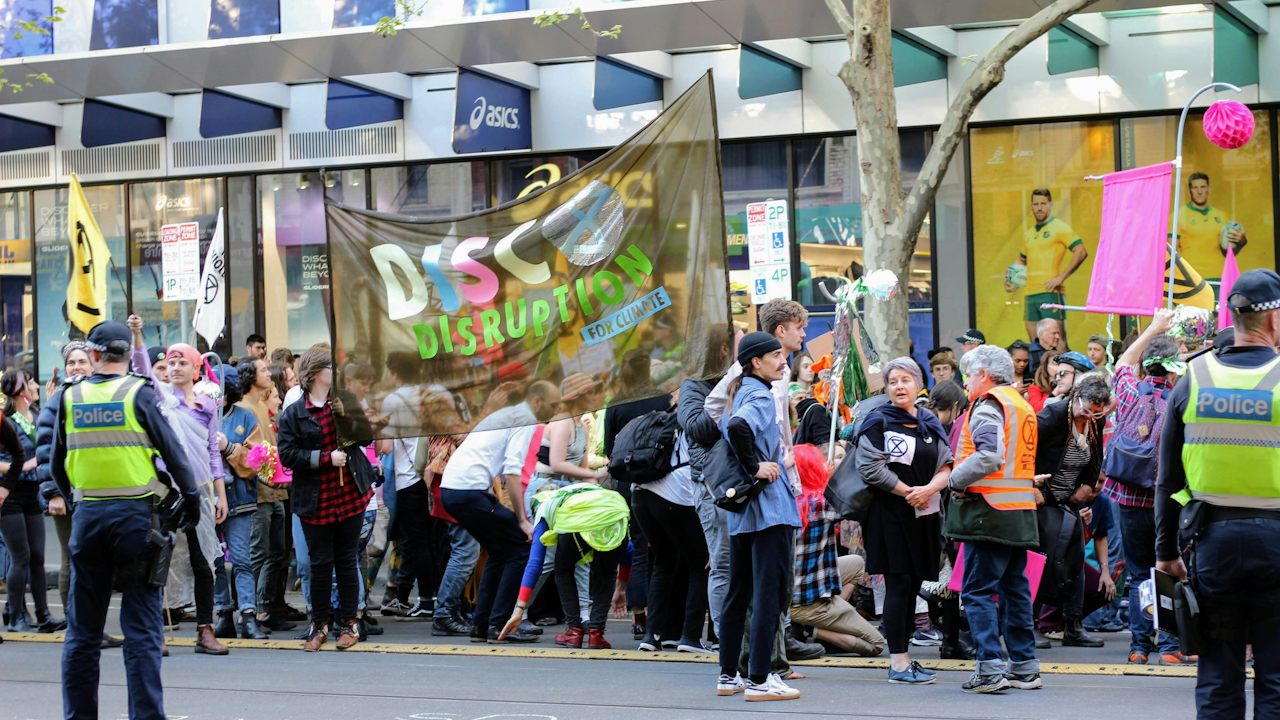
Music has long stood as one of the most potent forces in human history. It transcends language barriers, stirs emotions that words alone cannot reach, and binds strangers into a collective force capable of challenging empires. In the context of protests and revolutions, songs do not merely accompany events. They shape them. They become anthems that echo through generations, symbols of defiance that regimes cannot easily silence, and instruments of unity that transform isolated grievances into mass movements. From the cobblestone streets of revolutionary France to the digital squares of modern uprisings, music has repeatedly proven its capacity to mobilize, inspire, and endure. This article explores the enduring power of music in political upheaval, examining its historical role, the psychological mechanisms behind its influence, key case studies across continents and eras, and its evolving significance in the twenty-first century.
The roots of music as a revolutionary tool stretch back centuries, intertwined with the very birth of modern nation-states and social movements. Consider the French Revolution of 1789. As crowds stormed the Bastille and the old order crumbled, a marching song emerged that would define the era and beyond. La Marseillaise, composed by Claude Joseph Rouget de Lisle in 1792, began as a call to arms for French volunteers defending the revolution against invading forces. Its lyrics, filled with imagery of tyranny and the call to arms, spread rapidly among soldiers and civilians alike. The song’s rhythmic intensity and soaring melody made it impossible to ignore. It was sung in streets, battlefields, and assemblies, forging a sense of national purpose amid chaos. So powerful was its impact that it became France’s national anthem, a status it retains today despite periodic controversies. The anthem’s survival illustrates a core truth: revolutionary music often outlives the regimes it helps topple or defend.
Across the Atlantic, similar patterns unfolded during the American struggle for independence and later internal conflicts. During the lead-up to and throughout the Revolutionary War, folk tunes and adapted hymns served as morale boosters and recruitment tools. Yankee Doodle, originally a British mockery of colonial fighters, was reclaimed and repurposed by American patriots, its playful melody turned into a badge of pride. In the nineteenth century, the fight against slavery and the push for civil rights drew heavily on spirituals and work songs born in the fields and churches of the American South. These songs encoded messages of hope and resistance in biblical metaphors, allowing enslaved people to communicate plans for escape or rebellion under the watchful eyes of overseers. The Underground Railroad, for instance, relied on coded lyrics in songs like Follow the Drinking Gourd, which directed fugitives toward freedom using references to the North Star. Music here functioned as both a practical signal and a spiritual lifeline, sustaining communities through unimaginable hardship.
The twentieth century amplified music’s role in global struggles for justice and self-determination. The labor movements of the early 1900s in the United States and Europe embraced folk traditions to highlight worker exploitation. Woody Guthrie’s This Land Is Your Land, written in 1940 as a direct response to the patriotic but exclusionary God Bless America, critiqued inequality and celebrated the common people. Guthrie’s ballads traveled with union organizers, becoming staples at rallies and strikes. Across the Atlantic, in the lead-up to World War II and during anti-fascist resistance, songs like the Spanish Civil War anthem ¡Ay Carmela! united international brigades against Franco’s forces. These examples show how music adapts to local contexts while retaining universal themes of solidarity and defiance.
One of the most profound demonstrations of music’s power came during the American Civil Rights Movement of the 1950s and 1960s. In churches, on marches, and in jail cells, activists turned to songs rooted in the African American spiritual tradition. We Shall Overcome, adapted from earlier gospel hymns, became the unofficial anthem of the movement. Its simple, repetitive structure allowed thousands to join in without rehearsal, creating an auditory wall of sound that projected unity and resolve. Singers like Pete Seeger, Joan Baez, and Mahalia Jackson lent their voices to freedom rides and sit-ins, amplifying the message through recordings that reached living rooms across the nation. Bob Dylan’s Blowin’ in the Wind captured the restlessness of a generation questioning war, racism, and injustice. When Martin Luther King Jr. led the March on Washington in 1963, the air filled with the strains of hymns and new protest songs, reinforcing the moral authority of the cause. Music did not just accompany the movement. It sustained it through arrests, violence, and setbacks, providing emotional resilience when physical strength faltered.
Farther afield, music played a decisive role in dismantling apartheid in South Africa. Under a regime that banned political gatherings and censored speech, songs became a primary mode of expression. Traditional Zulu and Xhosa chants evolved into toyi-toyi, a rhythmic dance and chant used in street protests that combined physical movement with vocal defiance. Artists such as Miriam Makeba and Hugh Masekela, exiled from their homeland, carried the struggle to the world stage. Makeba’s Pata Pata and her renditions of traditional melodies blended entertainment with subtle political critique, raising international awareness. Inside South Africa, underground cassette tapes circulated freedom songs that mocked the authorities and celebrated resistance leaders. When Nelson Mandela was released in 1990 after 27 years in prison, crowds greeted him with songs that had kept the flame alive. The soundtrack of the anti-apartheid struggle demonstrated music’s ability to evade censorship. A regime could confiscate pamphlets, but it could not stop a melody hummed in a township or broadcast from neighboring states.
Latin America offers another rich tapestry of musical resistance. In Chile during the 1970s, under the brutal dictatorship of Augusto Pinochet, the Nueva Canción movement emerged as a direct challenge to state terror. Singer-songwriters like Víctor Jara and Violeta Parra drew on folk traditions to denounce oppression and celebrate the poor. Jara’s songs, such as Te Recuerdo Amanda, blended tenderness with pointed social commentary. Arrested during the 1973 coup, Jara was tortured and killed, his hands broken to prevent him from playing guitar. Yet his music survived, smuggled out and sung in exile communities and clandestine gatherings. Similar patterns appeared in Argentina’s Dirty War, where mothers of the disappeared marched in silence but later incorporated songs into their weekly vigils at the Plaza de Mayo. In Brazil, during the military dictatorship, tropicália artists like Caetano Veloso used psychedelic rock and poetry to subvert authority, blending local rhythms with global influences in ways that authorities struggled to suppress.
The late twentieth and early twenty-first centuries witnessed music’s power in Eastern Europe and beyond. During Czechoslovakia’s Velvet Revolution in 1989, rock bands like the Plastic People of the Universe, long persecuted under communist rule, became symbols of cultural defiance. Their underground performances inspired students and workers to take to the streets, culminating in the peaceful overthrow of the regime. In Poland, the Solidarity movement drew on folk and rock anthems to unite shipyard workers and intellectuals. Across the Soviet bloc, bootleg recordings of Western rock and local protest songs fueled a youth culture that rejected state ideology. The fall of the Berlin Wall in 1989 was accompanied by spontaneous singing and impromptu concerts, underscoring how music could mark both the beginning and the end of revolutions.
More recently, the Arab Spring uprisings of 2010 and 2011 showcased music’s adaptability in the digital age. In Tunisia, where the spark ignited, rapper El Général’s song Rais LeBled circulated via social media, its raw lyrics exposing corruption and unemployment. In Egypt’s Tahrir Square, protesters blasted songs by Mohamed Mounir and others, creating a festival-like atmosphere amid tear gas and tanks. Hip-hop and rap, with their emphasis on rhythm and rhyme, proved ideal for conveying complex political grievances in concise, memorable forms. In Syria, despite the descent into civil war, musicians continued to produce anthems of resistance even as violence escalated. These movements illustrated how technology amplifies music’s reach. A song recorded on a smartphone can travel globally in seconds, inspiring solidarity from distant cities and pressuring governments through international opinion.
The psychological and sociological mechanisms that make music such a formidable force in protests deserve closer examination. Neurologically, music activates multiple brain regions simultaneously, including those tied to emotion, memory, and motor control. Rhythm synchronizes heart rates and movements among listeners, fostering a sense of collective identity often described as “entrainment.” In a crowd, singing together releases oxytocin, the bonding hormone, reducing fear and enhancing trust. Lyrics provide narrative frameworks that transform personal suffering into shared struggle, making abstract ideals like justice or freedom feel immediate and attainable. Music also bypasses rational censorship. A catchy tune can embed subversive ideas in the mind, resurfacing unbidden even under threat. In authoritarian contexts, this makes songs particularly dangerous to power structures. Regimes have long recognized this threat, banning certain artists, destroying instruments, or criminalizing public performance. Yet suppression often backfires, granting the music martyr status and wider circulation.
Music’s versatility further enhances its revolutionary potential. It can be solemn and mournful, as in laments for fallen comrades, or exuberant and defiant, as in victory marches. Ballads tell stories that educate new generations about past injustices. Anthems create instant recognition and belonging. In multicultural movements, songs blend traditions, forging hybrid identities that reflect the coalition nature of many protests. Moreover, music is participatory. Unlike speeches or manifestos, it invites everyone to contribute, democratizing the act of resistance. A grandmother singing alongside students creates a visual and auditory tableau of unity that photographs and videos capture and spread.
Contemporary examples continue to affirm these dynamics. During the 2014 Umbrella Movement in Hong Kong, the hymn Glory to Hong Kong emerged as a de facto anthem, its orchestral swells and Cantonese lyrics expressing both hope and resolve. Protesters sang it in shopping malls and on university campuses, turning everyday spaces into sites of defiance. In Belarus following the disputed 2020 election, musicians and choirs performed banned songs in public, risking arrest to signal solidarity with opposition figures. In the United States, the Black Lives Matter movement drew on a rich lineage of protest music, with artists like Kendrick Lamar and Beyoncé incorporating themes of systemic racism into chart-topping tracks. During the 2022 Russian invasion of Ukraine, folk songs and modern anthems unified the nation and rallied international support, with President Volodymyr Zelenskyy even incorporating musical references in his addresses.
Even as technology evolves, challenges persist. Commercialization can dilute protest music’s edge, turning radical anthems into background tracks for advertisements. Streaming platforms algorithmically favor apolitical content, limiting visibility. Authoritarian governments have grown sophisticated, using digital surveillance to monitor lyrics and online distribution. Yet musicians adapt. Underground networks, encrypted apps, and live-streamed performances circumvent controls. Global collaborations allow artists from different continents to amplify one another’s messages, creating transnational soundtracks of resistance.
Looking ahead, the power of music in protests and revolutions shows no sign of waning. Climate activism, indigenous rights movements, and struggles for gender equality increasingly incorporate songs that blend traditional forms with electronic beats or hip-hop. Artificial intelligence may generate new protest tracks, but the human impulse to sing in the face of injustice remains irreplaceable. Music’s ability to capture the ineffable, to turn despair into determination, ensures its place at the forefront of social change.
In the end, the power of music lies in its intimacy and its scale. A single voice raised in song can inspire thousands. A melody carried across borders can topple walls. Whether hummed in secret or belted out in open squares, songs remind us that revolutions are not only fought with weapons or votes but with the rhythms of the human spirit. As long as injustice exists, music will continue to give voice to the voiceless, unite the divided, and echo the demand for a better world. Its legacy is written not in history books alone but in the collective memory of those who have marched, sung, and changed the course of nations.