

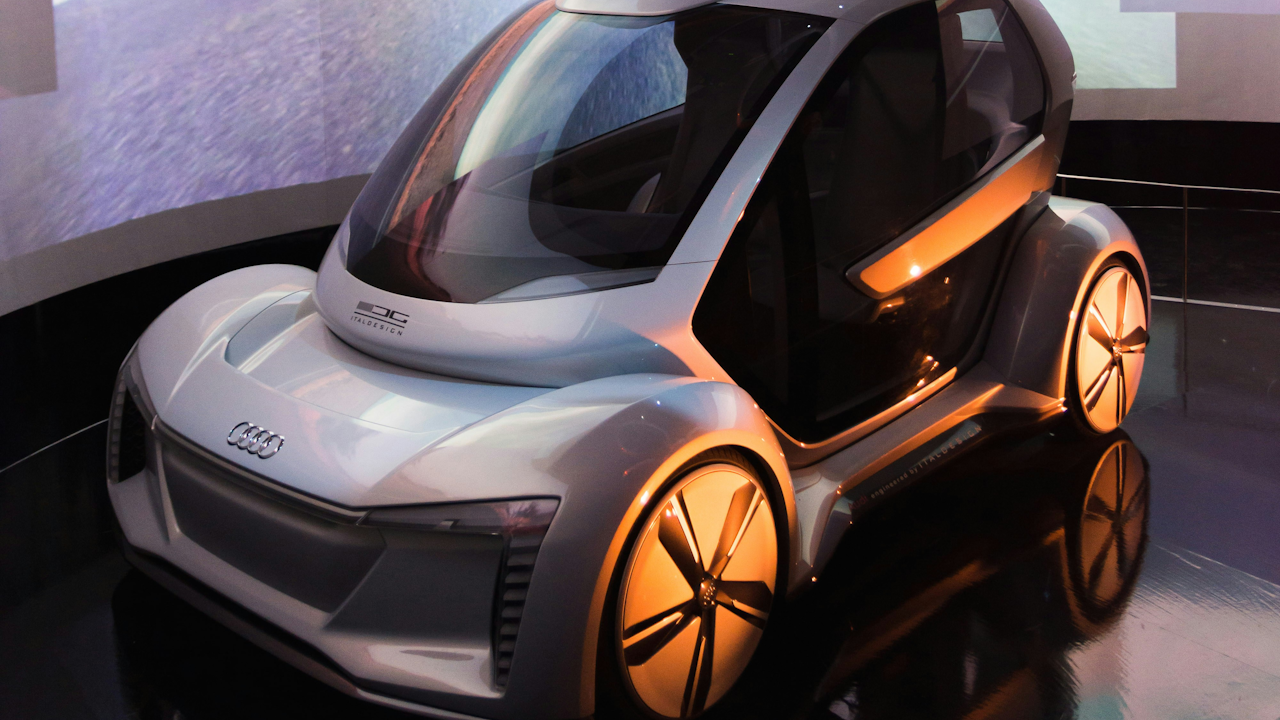
Concept cars represent the purest expression of automotive creativity, where manufacturers unleash designers to explore ideas unbound by cost, safety regulations, production feasibility, or everyday practicality. Over the decades, these one-off prototypes have ranged from visionary glimpses of future mobility to outright eccentric experiments that seem plucked from science fiction or fever dreams. Some drew inspiration from aircraft, nuclear technology, or marine life, while others prioritized emotion, modularity, or sheer shock value over any semblance of normal transportation. What unites the most bizarre examples is their willingness to ignore convention entirely, often resulting in vehicles that could never reach a showroom floor yet captured public imagination and occasionally influenced subtler production features years later. This article examines a selection of the strangest concept cars in history, from the atomic ambitions of the mid-20th century to the whimsical oddities of the digital age, highlighting their designs, the thinking behind them, and the reasons they faded into legend rather than reality.
The Ford Nucleon of 1957 stands as perhaps the ultimate symbol of 1950s atomic-age optimism pushed to absurd extremes. Ford designers envisioned a compact sedan powered not by gasoline but by a miniaturized nuclear reactor housed in the rear, drawing on submarine technology to generate steam that would drive the wheels. The car promised an astonishing 5000 miles of range before the reactor capsule needed swapping at specialized stations, eliminating traditional fuel stops forever. Its layout featured a cab-forward cabin positioned well ahead of the front axle to shield occupants from radiation, paired with a low-slung body, bubble canopy roof, and jet-like tail fins. The wheelbase measured under 70 inches despite an overall length exceeding 16 feet, creating comical proportions that prioritized balance around the heavy power source. Engineers at the time assumed nuclear fission would soon become compact and affordable enough for civilian use, replacing gas stations with reactor exchange facilities. In practice, the concept remained a non-running scale model displayed at auto shows, as insurmountable hurdles like massive shielding requirements, prohibitive costs, regulatory nightmares, and growing public concerns over nuclear safety rendered it impossible. The Nucleon encapsulated an era when technology seemed limitless, yet it also underscored the gap between futuristic fantasy and engineering reality.
Shifting to the 1930s, the Dymaxion by Buckminster Fuller introduced an entirely different brand of eccentricity. Conceived in 1933 as a streamlined, three-wheeled vehicle aimed at revolutionizing personal transport, it boasted fuel efficiency exceeding 30 miles per gallon and seating for up to 11 passengers in a pod-like cabin. The design drew from Fuller’s broader philosophy of maximum efficiency with minimal materials, featuring a rear-mounted engine driving the single rear wheel while the front two wheels steered. Its teardrop shape minimized drag, and the body wrapped around passengers in a manner resembling an early minivan or even a land-bound airship. Only three prototypes were built, one of which suffered a fatal accident that tarnished its reputation. Fuller intended the Dymaxion as a practical solution for urban and highway travel in a resource-conscious future, but its unconventional handling, vulnerability in crosswinds due to the tall profile, and departure from four-wheel norms doomed it to obscurity. It remains a landmark of visionary design that influenced later aerodynamic studies without ever entering series production.
Another prewar oddity, the 1938 Phantom Corsair, took art deco futurism to theatrical heights. Built by Rust Heinz and the Bohman and Schwartz coachbuilding firm on a Cord 810 chassis, this one-off featured a seamless, UFO-inspired aluminum body with enclosed wheels, a tapered nose, and no traditional grille. Powered by a front-wheel-drive V8 producing 190 horsepower, it could reach 115 miles per hour and seated six in luxurious comfort. The interior included hidden compartments, a compass, and even a dashboard-mounted altimeter, evoking a private yacht on land. Heinz planned limited production, but the handmade construction and exorbitant costs limited it to a single example that toured auto shows and appeared in films. Its radical departure from contemporary styling, combined with the onset of World War II, ensured it stayed a unique curiosity rather than a blueprint for mainstream vehicles.
The Alfa Romeo BAT series from the early 1950s pushed aerodynamic experimentation into surreal territory. Designed by Bertone on Alfa Romeo 1900 chassis, the BAT 5, 6, and 7 featured enormous bat-wing fins, sharply raked windshields, and tapering rear sections that achieved drag coefficients better than many modern hybrids. These Italian concepts prioritized wind-cheating shapes over practicality, with the fins serving as stabilizers and the overall form resembling abstract sculptures on wheels. Each iteration refined the theme further, culminating in the BAT 7’s extreme profile. Bertone built them as show cars to demonstrate design prowess, and while they influenced later Alfa styling cues, their impractical interiors and fragility prevented any roadgoing future. The series highlighted postwar Europe’s fascination with speed and form, proving that beauty and bizarre geometry could coexist on four wheels.
General Motors’ Firebird I from 1953 embodied the jet-age mania of the 1950s more literally than most. This single-seat concept resembled a fighter aircraft grafted onto a car chassis, complete with a massive tail fin and a gas-turbine engine delivering 370 horsepower. GM positioned it as a rolling laboratory for turbine technology, capable of theoretical speeds approaching 200 miles per hour. Subsequent Firebird II and III models refined the theme with four seats, improved stability, and even more dramatic fins, but all shared the core absurdity of adapting aircraft propulsion to public roads. The Firebird program generated publicity at Motorama shows and demonstrated turbine feasibility, yet noise, heat, fuel consumption, and lack of everyday usability kept the technology from production cars. These concepts captured a cultural moment when the line between car and plane blurred in the public imagination.
Fast-forward to 1980 and the Citroën Karin, which redefined bizarre geometry with its pyramidal form. Unveiled at the Paris Motor Show, the Karin featured a truncated pyramid body with flush glass panels, butterfly doors, and an interior where the driver sat centrally flanked by two passengers in a triangular arrangement. The roof measured roughly the size of an A3 sheet of paper, emphasizing extreme wedge styling that prioritized visual drama over headroom or rollover safety. Designer Trevor Fiore created it as a styling exercise during a period when Citroën sought attention without a new production model ready. Hydropneumatic suspension and a front-mounted four-cylinder engine were planned in theory, but the concept existed solely as a static display. Its razor-sharp angles and unconventional seating made it a showstopper, yet practical concerns like visibility, crash protection, and market appeal ensured it never advanced. The Karin influenced later Citroën design language in subtler ways but remains one of the decade’s most polarizing experiments.
The 1990 Plymouth Voyager III took modularity to ridiculous lengths. This concept combined a supermini front section with a detachable MPV rear pod, creating an eight-seater family hauler that could split into a two-door three-seater in seconds. Both halves had independent engines, and the front module could hitch to motorhomes or pickup beds. Plymouth aimed to solve family transport dilemmas by offering transformable versatility, but the complexity, weight, and questionable safety of the joining mechanism rendered it unviable. Revealed at the Chicago Auto Show, it challenged conventional minivan norms yet solved no real problems that consumers actually faced. The Voyager III exemplified Detroit’s occasional tendency to overengineer solutions for imagined needs.
By the early 2000s, concepts grew more whimsical. The 1999 Honda Fuya-Jo, or “sleepless city,” transformed a small car into a mobile nightclub. Intended for young urban clubbers, it featured a standing-room interior with DJ-style dashboard controls, booming speakers, and capacity for four revelers. The name evoked late-night energy, but the design sacrificed comfort and safety for atmosphere. Honda displayed it at the Tokyo Motor Show as a cultural statement rather than a serious proposal, highlighting how concepts could mirror youth trends without intending production.
The 2001 Toyota Pod pushed emotional connectivity further. Developed with Sony, this pod-like city car featured sensors that detected driver moods and responded with color-changing exterior lights, emotive facial expressions via headlights, and even a companion robot dog integration. Its squishy, rounded body and tiny scale emphasized friendliness over performance. The Pod aimed to humanize mobility in an increasingly digital world, yet its gimmicky features and lack of practical range kept it as a Tokyo show curiosity. It foreshadowed later connected-car technologies in milder forms.
Ford’s 2005 SYNus took paranoia as its muse. Designed amid post-9/11 anxieties, this armored box on wheels featured gun-slit windows, deployable metal shutters, a vault-like rear door with a spinning handle, and an interior resembling a high-security bunker. Inspired by urban survival and Brinks trucks, it reflected fears of city driving rather than aspiration. The name played on “sinus” for its sealed environment, but the dystopian aesthetic and impracticality ensured it stayed on the drawing board. The SYNus captured a fleeting cultural moment of insecurity translated into steel.
Finally, the 2008 BMW GINA Light Visionary Model brought fabric to the forefront of automotive design. Built on a Z8 chassis, it wore a stretchable polyurethane-coated Lycra skin over an aluminum frame. Electro-hydraulic actuators allowed the body to wrinkle open for doors, raise eyelids over headlights, or even expose the engine through a central slit. The acronym stood for Geometry and Functions In ‘N’ Adaptations, emphasizing adaptability. Designer Chris Bangle’s team created it to explore how cars could interact dynamically with drivers, but the delicate material and maintenance issues confined it to concept status. The GINA demonstrated that even premium brands could embrace the uncanny valley for innovation.
These bizarre concept cars, spanning nearly a century, illustrate the automotive world’s enduring willingness to dream beyond the ordinary. Many were born from technological optimism, cultural shifts, or simple showmanship, and while few influenced direct production models, their collective legacy appears in incremental advances like improved aerodynamics, modular interiors, and expressive lighting. In an industry increasingly focused on electrification and autonomy, the spirit of these oddballs endures as a reminder that progress often begins with the audacious and the absurd. They entertain, provoke, and occasionally inspire, proving that the road to the future sometimes requires a detour through the truly strange.