

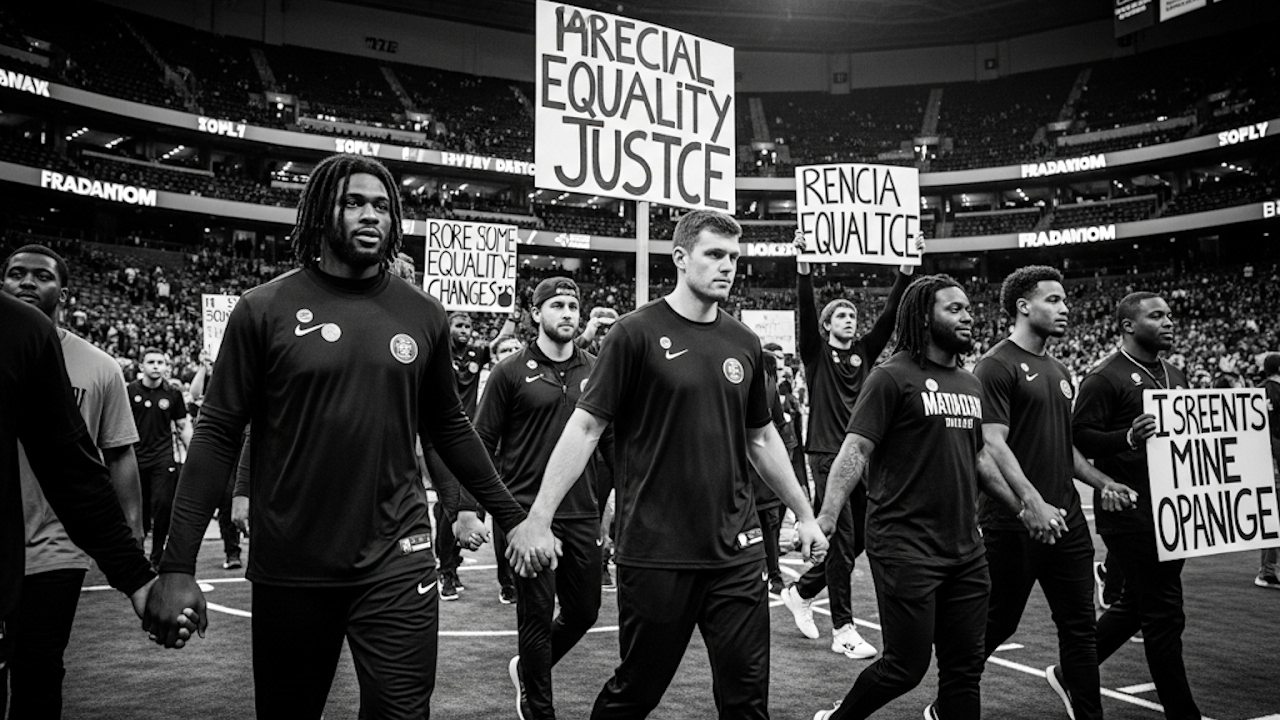
Sports have always served as more than entertainment or competition. They function as public stages where athletes, teams, and organizations confront the realities of inequality, discrimination, and power imbalances. The intersection of sports and social justice reveals how athletic platforms can amplify marginalized voices, challenge systemic injustices, and drive broader societal conversations. This relationship is neither new nor accidental. It emerges from the simple fact that sports mirror society: they include participants from every background, operate under rules that can either reinforce or dismantle barriers, and command audiences that span nations and generations. When athletes step beyond the field or court to address issues like racial equity, gender rights, economic disparity, or human rights abuses, they transform games into catalysts for change.
The roots of this intersection trace back through modern history, though echoes exist even earlier. In the United States, for example, the exclusion of Black athletes from professional leagues until the mid-20th century reflected the legal and cultural segregation of the Jim Crow era. Jackie Robinson’s integration into Major League Baseball in 1947 stands as a foundational moment. Robinson endured death threats, racial slurs from opponents and fans, and isolation from some teammates, yet he performed at an elite level while maintaining composure. His success did not end racism in baseball or American life, but it dismantled the myth that Black athletes lacked the skill or character for the highest levels of competition. Robinson’s story illustrates how sports can force society to reconcile its stated ideals of meritocracy with its practices of exclusion. Similar patterns appeared globally. In South Africa under apartheid, the white minority regime used sports to project an image of normalcy while enforcing racial separation. International pressure, including boycotts by nations and athletes, eventually contributed to the regime’s isolation and eventual dismantling. These early examples established a pattern: when sports exclude or discriminate, they invite scrutiny that extends far beyond the playing surface.
One of the most visually striking and symbolically powerful moments in this history occurred at the 1968 Summer Olympics in Mexico City. American sprinters Tommie Smith and John Carlos, after winning gold and bronze in the 200-meter dash, raised black-gloved fists during the national anthem in what became known as the Black Power salute. Their gesture protested racial injustice in the United States, including poverty, police brutality, and the lack of economic opportunity for Black Americans. The International Olympic Committee responded by expelling them from the Games and stripping their medals, yet the image endures as a landmark of athlete activism. Smith and Carlos faced immediate backlash, including death threats, but their action inspired future generations. It demonstrated that the Olympic podium, intended as a neutral space for celebration, could become a global microphone for dissent. The gesture also highlighted tensions within sports governing bodies, which often prioritize institutional neutrality over individual expression.
Muhammad Ali’s career provides another defining case. In 1967, at the height of his boxing dominance, Ali refused induction into the U.S. military draft for the Vietnam War. He cited his religious beliefs as a Muslim and his opposition to what he viewed as an unjust conflict that disproportionately affected Black Americans. “I ain’t got no quarrel with them Viet Cong,” he famously stated. The decision cost him his heavyweight title, his boxing license, and years of prime earning potential. Convicted of draft evasion, Ali appealed his case all the way to the Supreme Court, which overturned the conviction in 1971. By then, public opinion on the war had shifted, and Ali’s stance earned him admiration as a principled resistor rather than a traitor. His activism extended beyond the ring to civil rights rallies and anti-poverty efforts. Ali’s example showed how an athlete’s refusal to participate in state-sanctioned violence could reshape public discourse and force reevaluation of patriotism itself.
The late 20th and early 21st centuries brought new dimensions to this intersection. In tennis, Billie Jean King fought for gender equality both on and off the court. Her 1973 “Battle of the Sexes” victory over Bobby Riggs drew massive attention to pay disparities and sexism in sports. King also founded the Women’s Tennis Association and advocated for Title IX legislation, which transformed opportunities for female athletes in American education. Her work demonstrated that social justice in sports encompasses gender as much as race. Similarly, in the 1980s and 1990s, athletes like Magic Johnson used their platforms to destigmatize HIV/AIDS after his 1991 diagnosis, shifting public perceptions and funding research. These cases expanded the scope of athlete influence from civil rights to public health and gender equity.
Colin Kaepernick’s protest in 2016 reignited debates in a new era of social media and instant global visibility. As a quarterback for the San Francisco 49ers, Kaepernick began kneeling during the pre-game national anthem to protest police brutality and racial inequality. The gesture drew from a suggestion by a former Green Beret and aligned with the growing Black Lives Matter movement. Initially met with limited attention, it exploded into a national controversy after then-President Donald Trump denounced it as disrespectful to the military and the flag. Kaepernick was effectively blackballed from the NFL, never playing another game despite proven competence. Yet his action prompted other athletes across leagues to kneel or raise fists, and it forced leagues to confront their own histories. The NFL eventually acknowledged systemic racism in a 2020 video statement, and several teams committed resources to social justice causes. Kaepernick’s protest, though costly personally, accelerated corporate and institutional responses that might otherwise have lagged.
The year 2020 marked a watershed. Following the murder of George Floyd by Minneapolis police, athlete activism surged. In the NBA, players boycotted playoff games after the shooting of Jacob Blake in Kenosha, Wisconsin. The league responded by allowing players to wear social justice messages on jerseys and painting “Black Lives Matter” on courts. The WNBA, long a leader in activism, saw players like Natasha Cloud and others organize voting drives and community initiatives. Major League Baseball, the NHL, and soccer leagues worldwide issued statements and paused games. These actions occurred amid a global pandemic that highlighted health disparities along racial and economic lines. Sports, which had paused for public health reasons, resumed with explicit ties to justice movements. The visibility of professional athletes wearing masks, distributing aid in communities, and speaking at protests underscored their roles as community leaders beyond entertainment.
Beyond the United States, sports and social justice intersect in international arenas. The International Olympic Committee has faced criticism for awarding hosting rights to nations with poor human rights records. The 2022 Beijing Winter Olympics drew protests over China’s treatment of Uyghur Muslims and suppression of dissent in Hong Kong. Athletes like American skier Eileen Gu navigated dual citizenship and cultural expectations while some nations issued diplomatic boycotts. Earlier, the 1980 Moscow Olympics boycott by the United States and allies protested the Soviet invasion of Afghanistan, showing how sports can serve as geopolitical tools. In soccer, campaigns against racism in European leagues have included player-led initiatives like taking knees before matches and organizations such as Kick It Out. These efforts address fan abuse, underrepresentation in coaching, and institutional biases.
Economic dimensions add complexity. Athletes today wield financial power through endorsements, name, image, and likeness (NIL) deals in college sports, and ownership stakes. LeBron James, for instance, has invested in media companies and community projects while speaking on voting rights and police reform. His “More Than an Athlete” mantra encapsulates the shift. Yet this power creates tensions. Sponsors sometimes withdraw support when activism alienates segments of the audience, as seen in mixed corporate responses to Kaepernick. Fans occasionally demand that athletes “shut up and play,” arguing that sports should provide escape from political divisions. This perspective, often voiced by commentators and some owners, claims that injecting social issues dilutes the purity of competition or alienates paying customers. Proponents of activism counter that silence equates to complicity and that athletes, as citizens with unique platforms, have a responsibility to address injustices they experience or witness. Data from polls during the Kaepernick era showed divided public opinion along racial and political lines, illustrating how sports reflect societal polarization.
Critics of the intersection sometimes point to hypocrisy within sports. Professional leagues profit enormously from athletes, many from disadvantaged backgrounds, while ownership remains overwhelmingly white and male. Coaching and front-office diversity lags behind player demographics. Women’s sports still face funding gaps, media coverage disparities, and unequal pay, as highlighted by U.S. women’s soccer team lawsuits. Transgender inclusion debates, particularly in women’s categories, pit fairness in competition against human rights and mental health considerations. Governing bodies like World Athletics have imposed restrictions based on testosterone levels, sparking lawsuits and scientific disputes. These controversies reveal that social justice questions in sports often involve trade-offs rather than simple solutions.
Despite challenges, the impact of this intersection is measurable. Athlete activism has correlated with policy shifts, including NFL rule changes on player safety and concussion protocols after public pressure, expanded voting access initiatives funded by teams, and increased corporate diversity pledges. Globally, sports boycotts helped pressure South Africa toward democracy. In the United States, figures like Robinson and Ali contributed to the momentum of the civil rights movement by humanizing its demands. Sports also foster empathy across divides: fans who cheer for diverse athletes may develop broader understandings of shared humanity. Community programs tied to teams, such as youth academies in underserved areas or environmental initiatives by athletes like soccer star Megan Rapinoe on climate awareness, extend influence beyond protests.
Looking forward, emerging issues will test this intersection further. Mental health advocacy by athletes like Simone Biles, who prioritized well-being over competition at the 2020 Tokyo Olympics, challenges the “tough it out” culture. Climate justice gains traction as extreme weather disrupts events and athletes from vulnerable regions speak out. Economic inequality persists, with calls for revenue sharing and player unions strengthening. As social media empowers individual voices and NIL rules empower college athletes, the platform for activism expands. Governing bodies must balance commercial interests with ethical responsibilities, including human rights in event hosting and equitable treatment of all participants.
In the end, the intersection of sports and social justice endures because sports occupy a unique cultural space. They unite people in shared passion while exposing fault lines of division. Athletes who leverage their visibility do not always achieve immediate victories, but they force uncomfortable questions and plant seeds of progress. Society benefits when games become forums for truth-telling rather than mere distractions. The history of this relationship shows that silence is rarely neutral and that principled action, even at personal cost, can bend the arc of justice. As long as sports reflect human society, with all its flaws and potential, they will remain vital arenas for advancing dignity, equity, and fairness for everyone.