

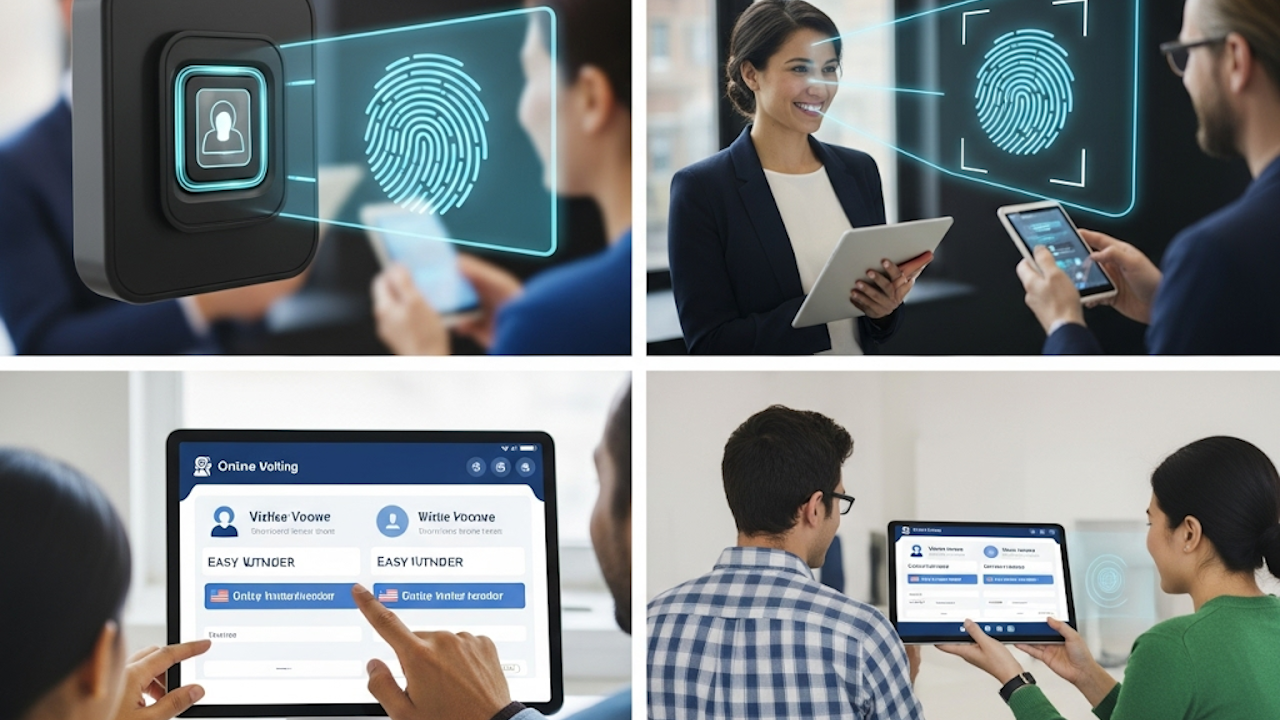
Democracy thrives on participation, yet traditional voting methods have long struggled with accessibility, efficiency, and public trust. Long lines at polling stations, postal delays, and concerns over fraud have prompted nations to explore alternatives. As technology advances, online ballots combined with biometric security emerge as a promising evolution. These systems allow voters to cast ballots from any internet-connected device while using unique biological traits like fingerprints or facial scans to verify identity. This fusion could reshape elections by making them more inclusive and secure, but it also raises profound questions about cybersecurity, privacy, and equity. The future of voting lies not in rejecting innovation but in harnessing it responsibly to strengthen democratic foundations.
Voting has evolved dramatically over centuries. Ancient assemblies relied on voice or show of hands, while modern democracies adopted secret paper ballots in the 19th century to curb intimidation. The 20th century introduced mechanical lever machines and punch cards, followed by electronic voting devices in the 2000s. These early digital tools sped up counting but exposed vulnerabilities, such as software glitches and disputed tallies. Online voting takes this progression further by shifting the process to the internet, eliminating physical polling sites entirely in some cases. Biometric security adds a layer of personal verification, drawing on advancements in sensors and artificial intelligence to confirm that the voter is who they claim to be and that no one else can impersonate them.
Estonia stands as the clearest real-world example of online voting’s potential. The Baltic nation pioneered internet voting, known locally as i-Voting, in 2005. Citizens use a government-issued digital ID card, mobile ID, or smart ID to log in securely from anywhere in the world during an advance voting period. Votes are encrypted, and the system separates voter identity from the ballot before tallying to preserve secrecy. Adoption has grown steadily. By the 2023 parliamentary elections, more than 51 percent of votes were cast online, marking the first time a majority in a national election occurred digitally. In the 2025 local municipal elections, roughly 45.8 percent of participants chose i-Voting. Estonians abroad, numbering in the hundreds of thousands, have cast ballots from over 140 countries. The system has proven resilient in practice, with no successful large-scale disruptions reported despite multiple elections. Officials credit its design, modeled after advance and postal voting safeguards, for building public confidence in a highly digital society.
Biometric security complements online ballots by addressing one of the core challenges of remote voting: proving identity without in-person checks. Traditional methods rely on passwords, PINs, or mailed credentials, which can be shared, stolen, or forgotten. Biometrics leverage what is inherently unique to each person. Fingerprint scanners, once common in high-security settings, now integrate into smartphones and dedicated voting kiosks. Facial recognition, enhanced by liveness detection algorithms, analyzes subtle movements, skin texture, or blood flow to distinguish a live voter from a photo or mask. Iris scans and voice biometrics offer additional options. In a biometric-enabled system, a voter might scan their face or thumbprint via an app to unlock their ballot, ensuring one person, one vote. Emerging applications pair this with multi-factor checks, such as a one-time code sent to a registered device.
The technological backbone for these systems draws from several cutting-edge fields. End-to-end verifiable voting protocols allow individuals to confirm their ballot was cast as intended and counted correctly without revealing choices to others. Blockchain technology has gained attention here, creating decentralized, tamper-resistant ledgers where each vote forms an immutable record. Votes are encrypted and hashed into blocks, making alterations detectable across the network. Some prototypes combine blockchain with biometrics for voter registration and authentication. Cloud infrastructure handles secure storage, while quantum-resistant encryption prepares for future threats from advanced computing. Artificial intelligence plays a growing role in detecting anomalies, such as unusual login patterns that might signal coercion or hacking attempts.
The advantages of online ballots secured by biometrics are compelling. First, convenience could boost voter turnout dramatically. In many democracies, participation hovers between 50 and 70 percent, with barriers like work schedules, disability, or distance disenfranchising millions. A smartphone-based system lets voters participate from home, during breaks, or while traveling. Overseas citizens and military personnel benefit enormously. Second, results arrive faster. Traditional counting can take days or weeks; digital systems deliver near-instant tabulation once polls close. Third, cost savings accrue over time. Fewer polling stations mean reduced staffing, paper, and logistics expenses. Fourth, fraud prevention strengthens. Biometrics make duplicate voting or impersonation far harder than signature checks or ID cards, which can be forged. In regions with histories of electoral manipulation, such as parts of Africa or Asia, biometric voter rolls have already cut ghost voters and multiple registrations.
Real-world pilots illustrate these gains. Platforms like Voatz in the United States have enabled secure mobile voting in select elections, using biometric selfies matched against government ID photos alongside blockchain ledgers. As of late 2025, the system had served over five million voters across various jurisdictions. In Uganda, authorities prepared for the 2026 general elections by deploying biometric voter verification kits nationwide. Fingerprint and facial recognition devices at polling stations aim to streamline identification and curb irregularities. These examples suggest that when implemented thoughtfully, the technology enhances rather than undermines trust.
Yet significant challenges persist, demanding careful navigation. Cybersecurity remains the foremost concern. Internet-connected systems are inherently exposed to malware, phishing, denial-of-service attacks, and state-sponsored hacking. A compromised voter device could alter a ballot before transmission, or a central server breach might expose data. Experts have long warned that no current technology fully guarantees the secrecy, security, and verifiability of ballots sent over the public internet. Estonia’s system, while successful domestically, has faced scrutiny from independent analysts who highlight procedural gaps and potential vulnerabilities to foreign interference, particularly given the nation’s geopolitical context near Russia. Without a voter-verified paper trail in fully online setups, audits become complex and disputes harder to resolve.
Privacy issues compound the risks. Biometric data is immutable; a stolen fingerprint or facial template cannot be changed like a password. Centralized databases storing this information invite breaches, raising fears of mass surveillance or identity theft. Compliance with strict regulations, such as data minimization and consent requirements, is essential. The digital divide poses another barrier. Not everyone owns a smartphone or has reliable broadband, particularly in rural areas or among older populations and lower-income groups. Online systems could inadvertently exclude these voters, exacerbating inequalities rather than reducing them. Coercion presents a subtler threat: family members or employers might pressure voters in private settings, unlike the relative anonymity of polling booths. Accessibility for those with disabilities must also be prioritized through voice-guided interfaces or alternative biometric methods.
Technical limitations in biometrics themselves cannot be ignored. Environmental factors, such as dirty fingers or poor lighting, can cause false rejections. Spoofing attacks using high-resolution prints or deepfake videos challenge even advanced liveness detection, though 2026 trends in AI-driven presentation attack detection are improving resilience. Scalability for national elections with millions of simultaneous users tests infrastructure limits, potentially leading to delays or outages on election day.
Innovations are addressing these hurdles. Hybrid models offer a balanced path: voters choose between online, in-person, or mail options, with biometrics mandatory for digital channels. Multi-layered security combines biometrics with hardware tokens, zero-knowledge proofs that verify votes without exposing details, and post-election audits using statistical sampling. Decentralized identity solutions let voters control their data via personal devices rather than government databases. International standards for e-voting protocols, discussed at forums like the E-Vote-ID conference, promote best practices in cryptography and usability testing. Governments can invest in public education campaigns to build digital literacy and transparency demonstrations that let citizens audit sample processes.
Global adoption varies but shows momentum. Beyond Estonia, several European nations have experimented with limited online pilots for expatriates or local referendums. Switzerland has tested secure systems for overseas voters. In Asia and Latin America, biometric registration is common for voter rolls, paving the way for full online integration. The United States has seen incremental progress through state-level mobile pilots, though widespread federal adoption lags due to federalism and caution. Corporate shareholder meetings and organizational elections already use similar secure online platforms, providing low-stakes testing grounds. Projections suggest that by 2030, a handful of countries could conduct majority-online national elections, with biometrics as the standard authenticator.
Ethical and societal implications extend beyond mechanics. Trust is paramount; citizens must believe the system reflects their will accurately. Over-reliance on technology might erode confidence if glitches occur or if algorithms appear opaque. Equity demands that implementation include outreach to underserved communities and fallback options. Data protection laws must evolve to cover biometric voting explicitly, balancing security with individual rights. There is also the risk of a surveillance creep: biometric databases built for elections could tempt expansion into other government functions. Policymakers must weigh these against the moral imperative of maximizing participation in an age of declining civic engagement.
Looking to 2030 and beyond, the vision sharpens. Smartphones could fully replace polling stations for most voters, with seamless biometric apps integrated into national digital wallets. Artificial intelligence might predict turnout patterns to allocate resources dynamically or flag irregularities in real time. Quantum computing threats will drive encryption upgrades, while augmented reality interfaces could make ballot marking intuitive even for novices. Universal digital identity frameworks, already advancing in places like India and the European Union, will underpin secure access. Yet success hinges on collaboration among technologists, election officials, civil society, and voters. Pilot programs must expand with rigorous independent testing, and legal frameworks should mandate transparency and recourse for disputes.
In conclusion, online ballots fortified by biometric security represent a bold step toward more responsive democracy. They promise higher turnout, swifter results, and stronger safeguards against traditional fraud. Pioneers like Estonia demonstrate feasibility, while emerging tools in biometrics and blockchain address longstanding weaknesses. Nevertheless, the path forward requires vigilance against cyber threats, unwavering commitment to privacy, and deliberate efforts to bridge divides. The future of voting is not inevitable but chosen. By prioritizing security, inclusivity, and verifiability, societies can ensure that technological progress reinforces rather than undermines the fundamental right to shape governance. The ballot of tomorrow may be digital, but its integrity must remain as sacred as ever.