

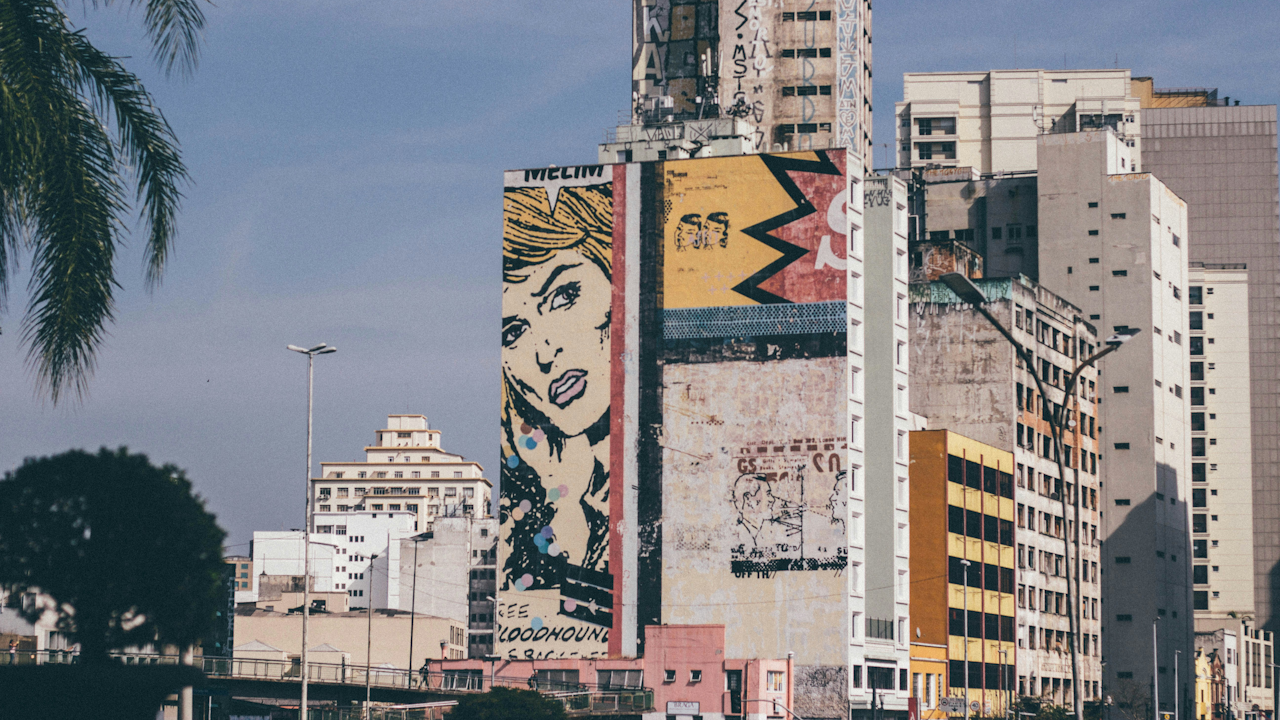
Walk down a once-forgotten alley or along a drab industrial wall in any major city today and you might encounter a burst of color, a towering portrait, or a swirling narrative that stops you in your tracks. What was once blank concrete or peeling paint now pulses with life, telling stories of struggle, joy, resistance, and hope. Street art, particularly large-scale murals, has moved far beyond simple decoration. It has actively reshaped how people experience urban environments, turning neglected neighborhoods into destinations, sparking community dialogue, and even influencing local economies and safety. Cities once defined by decay or division now carry new identities thanks to these public canvases. This transformation did not happen overnight. It grew from rebellious roots into a global movement that continues to redefine what cities can be.
The story begins in the mid-twentieth century amid the grit of American cities. In the 1960s, young people in New York City and Philadelphia started leaving their marks through simple tags, names scrawled in marker or spray paint on subway cars, buildings, and bridges. What began as personal signatures evolved rapidly. By the 1970s and early 1980s, subway trains became rolling galleries of intricate, colorful pieces that covered entire cars. Artists pushed boundaries with style, scale, and message. Philadelphia developed its own parallel scene, with crews claiming walls and creating bold works that spoke to local realities. At the time, authorities viewed most of this activity as vandalism. Cities launched aggressive cleanup campaigns, treating paint as a problem to erase rather than an expression to understand.
A shift occurred as certain artists brought more deliberate imagery and social content into public spaces. Figures such as Keith Haring used chalk drawings in subway stations to address issues like AIDS, drug use, and apartheid with accessible, repeating symbols. Jean-Michel Basquiat moved from street poetry and crowns to gallery recognition while retaining raw urban energy. These creators helped bridge the gap between underground practice and wider appreciation. By the late 1980s and 1990s, stencil techniques, wheat-pasted posters, and massive painted murals gained traction. Artists realized that scale and permanence could amplify voices that mainstream institutions often ignored. Cities slowly began to see potential rather than pure liability. Programs that once fought graffiti started commissioning murals as alternatives, channeling creative energy into sanctioned projects that built rather than destroyed.
One of the clearest examples of this evolution playing out on a citywide scale is Philadelphia. In the mid-1990s, what began as an anti-graffiti initiative under city leadership grew into the Mural Arts Program, now recognized as the largest public art program of its kind in the United States. Over four decades, the effort has produced thousands of murals across neighborhoods. The approach emphasizes collaboration: artists work with residents, schools, and community groups to choose themes that reflect local histories, struggles, and aspirations. Murals appear on rowhouse walls, underpasses, parking structures, and even airport buildings. One massive work at the Philadelphia International Airport covers thousands of square feet and celebrates movement and energy. Another honors local heroes and everyday life.
The results extend beyond aesthetics. Recent research examining areas around new murals installed between 2007 and 2023 found measurable drops in crime, including significant reductions in daytime incidents and nighttime property crime. Residents report greater pride in their surroundings. Visitors arrive specifically for guided mural tours, supporting local businesses and creating jobs for artists and educators. The program contributes millions annually to the creative economy while employing hundreds of artists each year. Philadelphia earned the nickname “Mural Capital of the World” through consistent effort rather than a single flashy project. Blank walls that once invited tags now host conversations about identity, health, and justice. The city demonstrates how sustained, community-centered public art can serve as infrastructure for social cohesion.
Across the Atlantic, another iconic transformation unfolded on what was once one of the world’s most infamous barriers. After the Berlin Wall fell in November 1989, artists wasted little time claiming the eastern side of a remaining stretch in the Friedrichshain district. In 1990, 118 artists from 21 countries painted more than 100 works along 1.3 kilometers of concrete. The East Side Gallery opened officially that September as the world’s longest open-air gallery. The timing captured raw emotion: joy at the end of division, hope for unity, and remembrance of lives lost or restricted under the former regime.
Famous pieces include a depiction of Soviet leader Leonid Brezhnev and East German leader Erich Honecker locked in a fraternal kiss, a colorful Trabant car bursting through the wall, and numerous calls for peace, freedom, and democracy. The murals turned a symbol of oppression into one of liberation and creativity. Today the site draws millions of visitors yearly. It holds protected heritage status and continues to spark reflection on history, borders, and human connection. What was a deadly no-man’s land became a living monument where people gather, photograph, and discuss. The transformation shows how art can reframe painful infrastructure into a site of shared memory and forward-looking dialogue. Even as some sections have required restoration due to weathering and urban development pressures, the gallery remains a powerful reminder that walls can divide or, when repurposed, unite.
On the other side of the Americas, Rio de Janeiro’s favelas offer a different but equally striking story of visual and social renewal. In the late 2000s and early 2010s, Dutch artists Haas and Hahn launched the Favela Painting project. Working with local residents, they covered entire hillsides and clusters of houses in vibrant geometric patterns and large-scale murals. Projects in places such as Santa Marta and Vila Cruzeiro turned previously monochromatic or rundown exteriors into landscapes of color and imagery. The effort was never purely cosmetic. Community members participated in planning and execution, shifting perceptions both internally and externally.
Residents gained a renewed sense of ownership and pride in their neighborhoods. The bright interventions attracted positive media attention and visitors who might otherwise have avoided the areas. While challenges like poverty and infrastructure gaps persist, the paintings helped humanize places long stigmatized in popular imagination. Similar community-driven mural efforts have appeared in other Brazilian cities and beyond, proving that large-scale color and imagery can serve as catalysts for dignity and visibility. These projects illustrate how street art can operate at the hyper-local level, reshaping daily lived experience one wall at a time.
The influence of such transformations extends well beyond the specific neighborhoods involved. Economically, murals and street art districts frequently boost tourism and foot traffic. Visitors plan trips around open-air galleries, supporting restaurants, shops, and guided experiences. Property values in surrounding blocks sometimes rise as areas gain cultural cachet and perceived safety. Cities gain branding advantages; a reputation for vibrant public art can attract creative industries, events, and investment. Socially, the works provide platforms for voices that might otherwise remain unheard. Murals address racism, environmental concerns, gender equality, mental health, and historical injustices. They turn passive walls into active participants in public discourse.
Community engagement often lies at the heart of lasting impact. When residents help choose themes or assist in creation, the resulting pieces foster belonging and reduce alienation. Studies and anecdotal evidence link such projects to improved perceptions of safety and stronger neighborhood identity. In places recovering from economic decline or social fragmentation, murals can act as visible signs of investment and care. They signal that a street or district matters.
Yet the story contains important tensions. The line between celebration and co-optation remains debated. What begins as grassroots expression sometimes faces pressure to become sanitized or commercial once cities or developers recognize its appeal. Gentrification presents a recurring concern: art can raise an area’s profile and rents, eventually displacing the very communities whose stories the murals often celebrate. Some original creators find themselves priced out or see their aesthetic language adopted by brands and institutions far removed from street contexts.
Preservation poses another challenge. Outdoor works weather, fade, or face demolition during redevelopment. Iconic sites such as the former 5 Pointz complex in Queens, New York, where generations of graffiti artists painted massive layered works, were whitewashed despite protests and legal efforts. The loss highlighted conflicts between property rights, cultural heritage, and the ephemeral nature of much street art. Legal frameworks struggle to keep pace with art forms that thrive on accessibility and change.
Commercialization adds further complexity. High-profile artists achieve auction records and museum shows, raising questions about authenticity and accessibility. When street-derived works enter luxury markets, some observers worry the rebellious spirit dilutes. At the same time, broader recognition has opened doors for more artists and encouraged cities to fund programs rather than simply police walls.
Looking forward, street art and murals continue evolving. Contemporary themes increasingly tackle climate crisis, migration, indigenous rights, and digital-age isolation. Artists incorporate new tools such as augmented reality layers accessible via smartphones, eco-friendly paints, and interactive elements that invite participation. Festivals and city-sponsored initiatives now operate on nearly every continent, from Melbourne’s laneway revitalization to emerging scenes in Seoul, Cape Town, and beyond. The movement has globalized while retaining strong local flavors shaped by each city’s history and challenges.
Technology may expand possibilities, yet the core power remains human and tactile. A mural painted with neighbors still creates connections that screens cannot replicate. The physical presence of large-scale work in shared space forces encounters across social divides. People who might never enter a gallery stop, look, and sometimes talk with strangers about what they see.
Ultimately, murals that redefined cities demonstrate a simple yet profound truth: urban environments are not fixed. They are canvases shaped by collective imagination and effort. From Philadelphia’s community-led renaissance and Berlin’s wall of memory to Miami’s warehouse rebirth and Rio’s hillside color, these projects prove that paint and vision can alter trajectories. They turn liabilities into landmarks, silence into statements, and isolation into invitation. As cities face ongoing pressures from inequality, climate change, and rapid development, the lessons of street art remain relevant. When communities claim their walls and stories, they reclaim agency over their surroundings. The result is not merely prettier streets but more connected, expressive, and resilient places. Street art continues to remind us that every city holds untapped potential waiting for the right colors and courage to bring it forward.