

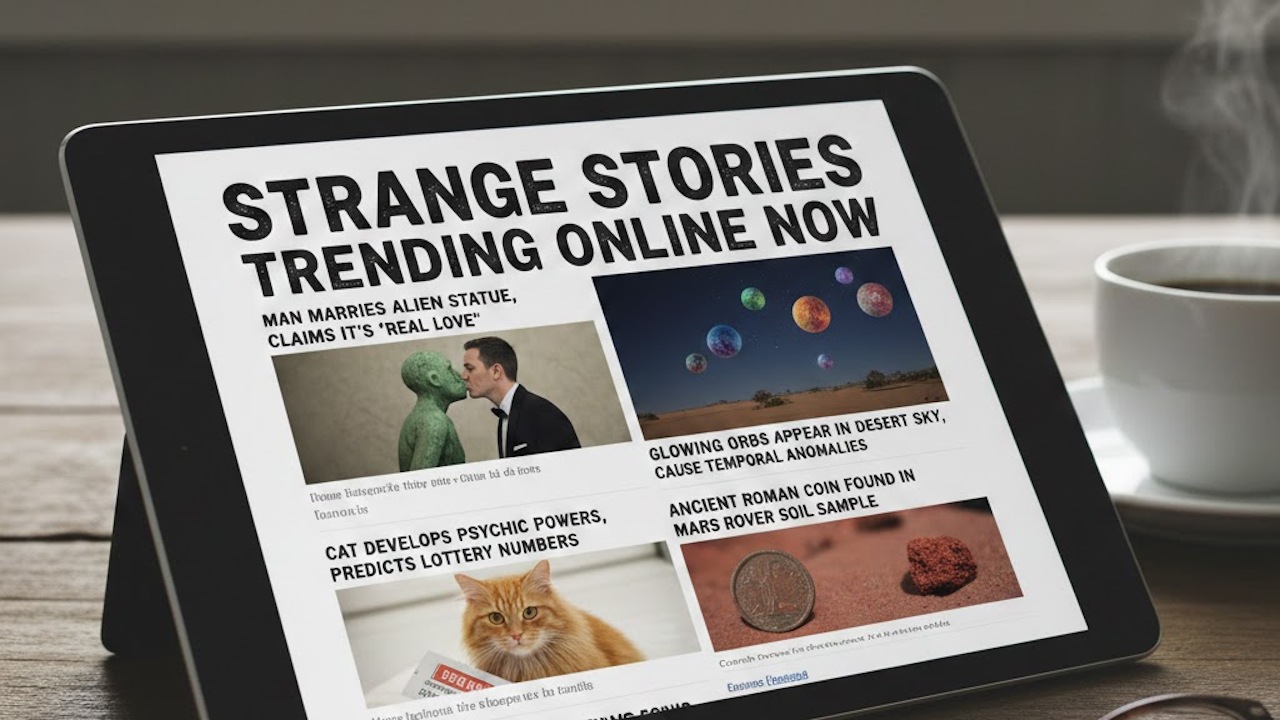
Introduction to the Unusual
In today’s digital age, the online landscape is inundated with an eclectic range of stories, but few capture the public’s imagination quite like strange stories. This genre encompasses a myriad of narratives, often highlighting the bizarre, the uncanny, and the inexplicable aspects of life. From mysterious happenings to peculiar personal accounts, these tales evoke curiosity and wonder, drawing in audiences across various demographics. The fascination with strange stories can be attributed to their ability to challenge the ordinary and ignite our innate desire for exploration and understanding.
Social media platforms play a crucial role in bringing these unusual narratives to the forefront. In an era where information spreads at lightning speed, platforms such as TikTok, Twitter, and Reddit facilitate the quick dissemination of weird and wonderful tales. As users share their experiences or stumble upon unexpected events, these stories often go viral, reaching wider audiences than ever before. The interactive nature of social media allows for immediate feedback, creating a sense of community around shared interests in the bizarre and the extraordinary.
Furthermore, psychological studies suggest that strange stories resonate with audiences due to their inherent unpredictability and emotional engagement. Individuals are naturally drawn to narratives that provoke strong emotional responses, whether it be fear, amusement, or intrigue. In essence, the allure of strange stories lies not only in the content itself but also in the communal experience of sharing, discussing, and sometimes even debunking these narratives. This collective engagement fosters a deeper connection among users, contributing to the increasing popularity of such unusual occurrences in contemporary storytelling.
Bizarre Personal Accounts and Experiences
In recent times, the internet has become a canvas for individuals to share their bizarre personal accounts and experiences, offering a fascinating glimpse into the strange occurrences that some people encounter. Platforms like TikTok and Reddit have transformed anecdotal storytelling into viral narratives, allowing users to connect through shared feelings of fear, intrigue, and curiosity.
One notable example involves a TikTok user recounting a chilling experience with what they believed to be a supernatural presence during a camping trip. The story resonated widely, attracting a myriad of comments from individuals claiming similar encounters, thereby creating a sense of community around collective fears. Such accounts not only serve as entertainment but also ignite discussions about the unknown, making listeners question the boundaries of reality.
Moreover, Reddit has a multitude of threads dedicated to the theme of unsettling personal experiences. Subreddits like r/paranormal and r/AskReddit often feature posts where users share their most bizarre encounters, ranging from inexplicable events to eerie coincidences. These narratives reflect a human fascination with the supernatural and the inexplicable, allowing profiles of various users to emerge as modern-day storytellers whose experiences spark curiosity and debate.
Another striking account involved a person who encountered a stranger in a seemingly deserted area who seemed to predict their next actions. This perplexing interaction, shared across social media, prompted discussions about intuition and the potential for unseen connections between individuals. As these stories circulate, they compel people to consider not just the content of the accounts but also their broader impact on societal perceptions of strange events.
The Rise of Urban Legends and Myths
The resurgence of urban legends and myths in today’s digital landscape illustrates how folklore can adapt and thrive in contemporary society. These narratives, often derived from cultural fears or societal norms, have found new life on various online platforms, shaping our engagement with storytelling in an innovative manner. With the proliferation of social media, these stories spread rapidly, allowing them to evolve in ways that reflect modern anxieties and interests.
Urban legends, once confined to whispered tales among friends, have become shared experiences on the internet, taking form in memes, viral videos, and blog posts. Notable examples include the story of “Creepy Clowns” that swept through various social media channels, awakening a collective sense of unease. Such stories often originate from anecdotal accounts or fears related to current events, highlighting how they resonate with societal themes while also adapting to modern communication methods.
Additionally, internet culture plays a significant role in the transformation of these myths. As users contribute their interpretations and variations, the legends morph into layered narratives, making them pertinent to ongoing conversations about technology, safety, and identity. This reflects a shift from localized legend-telling to a global discourse, where stories can transcend geographical boundaries and cultural differences.
The cultural significance of urban legends extends beyond mere entertainment; they serve as a mirror to our collective psyche, revealing underlying truths about societal values and apprehensions. Consequently, the evolution of urban legends in the digital age not only captures public fascination but also highlights the enduring human need for narrative and myth-making as a means of processing the complexities of modern life.
Conclusion: The Fascination with the Strange
The allure of strange stories is both captivating and significant, serving as a lens through which we can explore the complexities of human experience. These narratives often resonate with our innate curiosity, prompting us to delve into the unknown and the unexplained. Whether it is tales of the paranormal, unusual occurrences, or the deeply unexpected, such stories provide a unique form of entertainment and engagement that transcends the ordinary fabric of daily life.
Strange stories often foster communities where individuals gather to share, discuss, and analyze various anomalies, enriching our social interactions. Online platforms serve as fertile ground for these conversations, allowing individuals from disparate backgrounds to connect over shared experiences or beliefs in the bizarre. This sense of belonging—nurtured by an appreciation for the unusual—can be deeply satisfying and affirming. Indeed, it encourages a broader exploration of human narratives, the unexpected twists in our lives that bind us together as a society.
Furthermore, engaging with strange stories can be cathartic, enabling individuals to confront fears, question norms, and explore boundaries in a safe and imaginative space. Reflecting on our own strange experiences allows us to recognize the diversity of human life and the myriad ways in which we navigate our realities. In sharing these accounts, we create a tapestry of collective memory, highlighting the vibrant, often surreal aspects of existence.
Ultimately, the fascination with the strange highlights an essential part of human culture, one that thrives on curiosity and connection. As we continue to share these captivating stories, we not only entertain ourselves but also nurture the rich and varied narrative landscape that defines us as a society.